
Following the technical analysis, the political vision… While “The Architecture of Disaster (1)” examines the causes, structures, and the failure of foresight—providing a diagnosis of technical and doctrinal flaws—”The Twilight of Nations: Memoirs of a Foretold Disaster (2)” seeks to draw the final consequences, reflecting on the tragic outcome and the disappearance of our sovereignty.
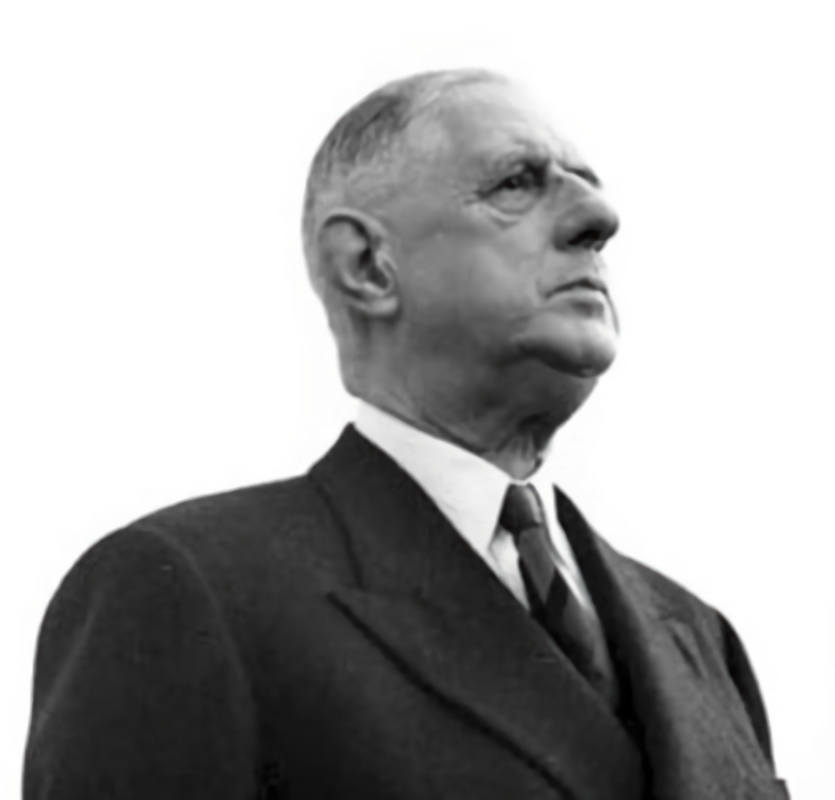
As part of our ongoing series dedicated to the great witnesses of contemporary history, European-Security presents a mas-terful reflection that invokes the thought and legacy of General de Gaulle.
Following our previous articles exploring geopolitical shifts and the frailties of Europe’s security architecture, this piece resonates as a lucid and tragic epilogue on the state of our sovereignty.
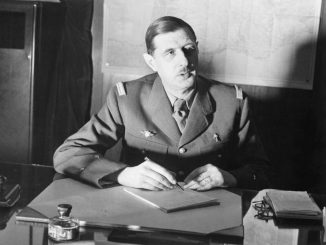
General Charles de Gaulle
— Photo © Bundesarchiv —
Through the prism of this historical vision, we try to deliver an uncompromising analysis of the dilution of nations and the drift of our democracies toward a technocratic, soulless governance. It denounces the abandonment of fundamentals—from strategic independence to national cohesion—in favor of a submission to supranational interests often disconnected from popular realities. This “twilight” is presented not as a sudden fatality, but as the result of a process of deconstruction that the Gaullist gaze dissects with prophetic acuity.
This testimony, which enriches our cycle of reflection, invites our readers to a necessary awakening: that of the decline of a certain idea of France and Europe in the face of the century’s challenges. It is an essential document for understanding the roots of the existential crisis currently gripping our continent and for questioning what remains of our collective will.
Table of Contents
Chronicle of Europe’s Enslavement and the Triumph of Vulgarity — Colombey-les-Deux-Églises, December 22, 2025 — © European-Security
Introduction: The Great Swell of Mediocrity
There are moments in History when destiny, weary of grandeur, seems to want to rest in the mud. I have seen, during my long existence, France broken, Europe torn apart, and the world on the edge of the abyss. But what I see today, from the frozen solitude where observing the world becomes a torture for the mind, is not a tragedy: it is a farce. A sinister farce, to be sure, but a farce nonetheless, played by second-rate actors on a stage where the scenery is collapsing.
The arrival of Mr. Trump to power, for the second time, is not an accident. It is the logical culmination of a process of decomposition that has been gnawing at the West since we ceased to place honor above comfort, and independence above submission. I am asked what I feel regarding these first ten months of his mandate. I feel what an architect would feel upon seeing barbarians camping in the cathedral he built—not to destroy it out of hatred, but to sell trinkets and organize cockfights within its walls.
These thoughts, which I deliver here not to please but to instruct, aim to be exhaustive. They shall hide nothing of the ugliness of the character, nothing of the baseness of his entourage, and above all, nothing of the unfathomable cowardice of European leaders who, instead of standing tall, crawl.
The “Trump system” is a blend of pathological narcissism and low-level wheeler-dealing;[01] we shall dissect his ties—kept silent out of modesty but screaming with truth—to the dregs of humanity embodied by Jeffrey Epstein;[02] and we shall expose, bluntly, how this carpetbagger trades away the security of our old continent for a few handfuls of dollars, with the active complicity of Moscow and the passive, and therefore guilty, complicity of Paris, Berlin, and London.
Chapter I: The Condottiere of Decadence
1.1 The Man Who Saw Only Himself
Power is an ordeal that reveals souls. It magnifies some; it crushes others. Mr. Trump, however, is neither magnified nor crushed: he is simply inflated. His narcissism is not a character trait; it is his entire policy. He does not govern the United States of America; he manages his own image in the distorting mirror of the media. For him, the State is not that “cold monster” described by Nietzsche; it is a stage.
One must observe the vulgarity with which he treats world affairs. Where there should be silence and reflection, there is noise and fury—and above all, tweets. This inability to rise above his immediate impulses is the mark of small men. Grandeur requires self-abnegation. Yet, Mr. Trump is incapable of forgetting his own person for even a second to consider the superior interest of his nation, let alone that of his allies. He transforms diplomacy—that subtle art of power relations—into a reality show where the humiliation of the other serves as victory.
1.2 The Shadow of Jeffrey Epstein: Moral Bankruptcy
One cannot understand the man if one ignores his associations. “Tell me who you haunt, and I will tell you who you are.” And whom did Mr. Trump haunt, with a persistence that compels disgust, for over ten years? Jeffrey Epstein. This name alone should suffice to disqualify anyone claiming the supreme magistracy of a great nation. But we live in an age where shame has vanished.
The facts are there—stubborn, brutal. They are not erased by a wave of the hand or a belated denial. Mr. Trump and Mr. Epstein were not mere social acquaintances; they were, in the words of the current President himself, “playmates.” He said of him in 2002: “He’s a terrific guy. He’s a lot of fun to be with. It is even said that he likes beautiful women as much as I do, and many of them are on the younger side.“
What a confession! What a descent into the abyss! A man who finds a sexual predator “terrific,” who is amused by his taste for “young women,” reveals by that very fact a total absence of a moral compass. They shared parties at Mar-a-Lago and flights in those private planes renamed by public rumor with a name that decency forbids me from uttering here. We are told they had a falling out in 2004. So be it. But can fifteen years of friendship be erased by a property dispute? This timely “falling out” does not erase the complicity of spirit—this shared way of considering the human being, and women in particular, as mere merchandise, an object of consumption.
Today, this man, Epstein’s “best friend,” dares to lecture the world on virtue. He claims to defend Western Christian civilization. What an imposture! He is but the symptom of a society that has lost its bearings, where King Money absolves all sins, and where material success stands in for nobility.
1.3 Contempt for Culture and History
Beyond moral abjection, there is unculturedness. Mr. Trump knows nothing of History, nothing of geography, nothing of the complexity of peoples. For him, France is not the nation of Louis XIV and Napoleon; it is a country that sells wine and handbags. Germany is not the homeland of Goethe and Beethoven; it is a car factory that competes with his own.
This lack of culture is dangerous. It leads to outrageous simplifications and rash decisions. He does not understand that nations have a soul, a memory, and scars. He thinks peace can be bought like a golf course, by intimidating the seller and bluffing about the funds. He ignores that History is tragic. He believes it is transactional. This is his greatest error, and therein lies the mortal danger he poses to the world.
Chapter II: The Organized Atlantic Racket
2.1 NATO Transformed into a Crime Syndicate
In my time, I withdrew France from NATO’s integrated command. I knew that this organization, under the guise of protection, was merely the instrument of American hegemony. But with Mr. Trump, we have reached a new depth of debasement. NATO is no longer an alliance; it is a racket.
The statements made by the American president are of an unprecedented brutality. “If you don’t pay, I will not protect you. In fact, I would encourage them [Russia] to do whatever the hell they want.” Read those words carefully. These are not the words of an ally. They are the words of a gang leader coming to collect protection money from a neighborhood shop. “Pay up, or something bad might happen to you.”
This is the end of Article 5. It is the end of automatic solidarity.[03] From now on, Europe’s security depends on the mood of the tenant of the White House and the state of his bank accounts. He has transformed the American security guarantee into a mercenary service, billable month by month. And what do the Europeans do? Instead of slamming the door, instead of saying, “Since this is the case, we will provide for our own defense,” they pull out their checkbooks! They tremble! They plead!
2.2 Economic Warfare: The Tariff as a Weapon of Mass Destruction
Not content with threatening us militarily, Mr. Trump has declared economic war on us. He does not see Europe as a partner, but as an unfair competitor—worse, as a commercial enemy. “The European Union was formed to rip us off,” he dares to proclaim.
His threat to impose tariffs of 10% to 20% on all European products,[04] and much more on certain strategic sectors, is a declaration of war. It is an attempt at strangulation. He wants to ruin our automotive industry, suffocate our agriculture, and break our luxury exports.
Table 1: Impact of the Trump Administration’s Tariff Threats on Europe (2025)
| Targeted Sector | Specific Threat | Projected Economic Impact for the EU | US Strategic Objective |
| Global Trade | Universal tariff of 10% to 20% on all goods | Immediate recession, loss of 1 to 2 GDP points | Reduce trade deficit, force relocation to the USA |
| Automotive | Threat of targeted tariffs (25%+) | Collapse of German exports (BMW, Mercedes, VW) | Destroy German competitiveness for the benefit of Detroit |
| Steel / Aluminum | Return and tightening of Section 232 taxes | Weakening of European heavy industry | Heavy industrial protectionism |
| Technology | Sanctions on European digital companies | Brake on innovation, capital flight to NASDAQ | Maintain GAFAM hegemony |
Faced with this, the European reaction is pitiful. Emissaries are sent to negotiate exemptions. Proposals are made to buy more American shale gas (that dirty and expensive gas) to appease the Minotaur. This is the diplomacy of fear. Mr. Trump smells this fear. He feeds on it. The more we yield, the more he will demand.
2.3 Contempt for International Institutions
What Mr. Trump hates above all else are rules. He wants a world governed by the law of the jungle, because he is convinced he is the biggest animal in the forest. He despises the WTO, he despises the UN, he despises everything that might frame or limit his power.
By sabotaging the multilateral system, he forces each European country to face him alone. He applies the old maxim: “Divide and conquer.” And it works! Look at them, these Europeans, rushing in a disorganized fashion to Washington to secure their small personal advantage at the expense of their neighbor. Germany wants to save its cars, France its cheeses and wines, Italy its luxury goods. And all the while, Trump laughs. He laughs at our disunity, which he has so skillfully orchestrated.
III: The Russian Betrayal and the Agony of Ukraine
3.1 The “Peace Plan”: A Munich on the Dnieper
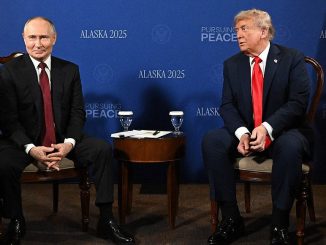
I come now to the heart of the dishonor: the so-called “peace plan” that Mr. Trump has concocted with his crony Putin for Ukraine. One must call things by their true name: this is not peace; it is a capitulation. It is a fire sale of a sovereign nation, conducted by two cynics on the backs of a people fighting for their freedom.
The details of this plan, revealed by the indiscreet leaks of his envoys such as Mr. Witkoff, chill the blood of any man of honor:[05]
- Territorial Cession: Russia keeps Crimea and the Donbas. The theft is legalized. Aggression is rewarded.
- Demilitarized Zone: The creation of a buffer zone, frozen on the current front line, leaving Russia in de facto control of the occupied regions.
- Neutralization: A formal and constitutional ban on Ukraine joining NATO.
- Disarmament: Limiting the Ukrainian army to 600,000 men, stripping it of any real capacity for future defense or reconquest.
It is Munich 1938 playing out before our very eyes. At the time, Daladier and Chamberlain believed they were saving peace by delivering Czechoslovakia to Hitler. They gained neither peace nor honor. Mr. Trump, however, is not even seeking to save peace; he is seeking to “make a deal.” He is selling out Ukraine to turn toward China, or simply to tell his voters that he has “settled the problem.”
3.2 The Trump-Putin Axis: The Alliance of Autocrats
There is something deeply disturbing in the relationship between Mr. Trump and Mr. Putin. One cannot help but think that the American president acts less like the leader of the Free World and more like a Kremlin influence agent. His emissaries—shady figures like Steve Witkoff or Keith Kellogg—discuss terms directly with Putin’s advisors, bypassing Ukraine and Europe. They are preparing the ground. They agree on terms. They share the same worldview: one of “strongmen,” spheres of influence, and a total contempt for international law.
Mr. Trump admires Putin. He admires his brutality, his absolute control, and his ability to ignore rules. He wants to be Putin. And for that, he is ready to throw Europe to the wolves. For let us make no mistake: if Ukraine falls, the entire security architecture of Europe collapses. Poland, the Baltic States, and Moldova know they are next on the list. But in Washington, they don’t care. “Europe is far away,” Mr. Trump thinks. “And besides, they should have paid up.”
3.3 For the “Cold, Hard Cash”: The Mercantilization of Blood
The profound motivation behind this betrayal is sordid: it is money. “Fric,” as the people say with their customary accuracy. Mr. Trump wants to lift sanctions against Russia not for the sake of peace, but to allow his oligarch friends and American corporations to resume business as usual.
He speaks of rebuilding Ukraine funded by… Europe! This is the height of cynicism. The United States delivers Ukraine to Russia, allows Putin to keep the resource-rich territories, and then asks the Europeans to pay for rebuilding what Russian bombs destroyed—while American companies will snatch up the profitable contracts. It is racket on a continental scale.
IV: The Court of Miracles (or the Cowardice of European Leaders)
4.1 The Race to Servitude: “Bending the Knee”
If Mr. Trump’s attitude is ignoble, that of the European leaders is pitiful. Never have I felt such shame for our continent. Instead of forming a solid block, instead of speaking with a single voice, they rushed to Mar-a-Lago like starving courtiers scurrying toward a royal buffet.
This is what the Anglo-Saxon press cruelly calls “bending the knee.” They all went, or dreamed of going. Mr. Macron, Mr. Scholz, Mr. Starmer… They vied with one another in zeal to be the first to congratulate the victor, forgetting past insults, forgetting present threats.
4.2 Humiliation Live: Schoolchildren in the Oval Office
Terrible images will remain from this period. I think of that meeting in the Oval Office where we see European leaders sitting on small chairs in front of the large Resolute desk behind which Mr. Trump sits enthroned. They look like schoolboys summoned by the principal for having done something wrong.
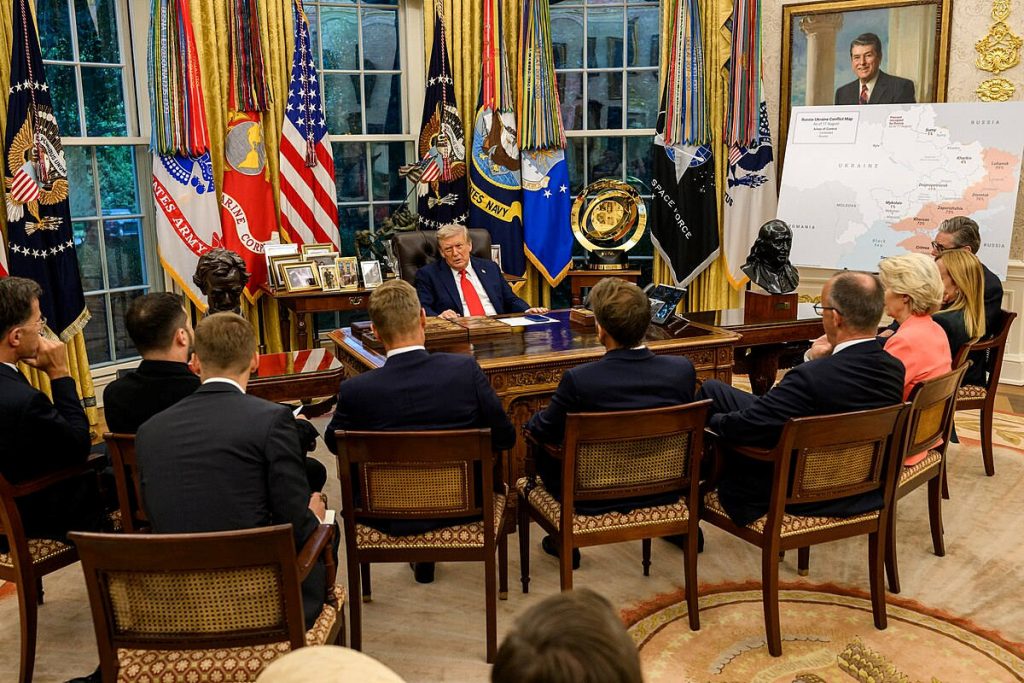
Mr. Starmer, the British Prime Minister, tries to play the middleman, hoping to find the ghost of the “Special Relationship.”[06] He begs for an American “backstop”—a security guarantee—thereby admitting his country’s total inability to exist without its big brother. Mr. Merz, the German Chancellor, is but a shadow of his former self. Germany, that economic giant, reveals itself to be a political dwarf as soon as America stops holding its hand. Terrified by tariffs on his cars, he is ready for any concession, including the sacrifice of Ukraine. As for Mr. Macron… Ah, Mr. Macron! He talks a lot. He evokes strategic autonomy, European sovereignty. The words are there, and sometimes they are right. But where are the acts? When it comes to facing Trump, he seeks to seduce him, to build a personal relationship, as if one could appease a crocodile by smiling at it.
This strategy of seduction failed during the first term; it will fail during the second. One does not seduce Trump; one either constrains him or endures him.
4.3 The Betrayal of the Intellectuals
These leaders are not just afraid; they have lost the sense of History. They are managers, technocrats. They reason in growth curves, inflation rates, and opinion polls. They do not understand that politics, true politics, is a matter of will and tragedy.
They lack the courage to tell the truth to their people: that America has abandoned us, that we are alone, and that we must arm ourselves or perish. They prefer to maintain the illusion that “everything will work out,” that NATO will survive, that Trump is “manageable.” It is a lie. It is a failure to assist a continent in danger.
They accept the unacceptable. They are already beginning to whisper that Trump’s peace plan for Ukraine is “realistic.” They are preparing minds for capitulation. They are ready to sell Europe’s honor for a few years of sham tranquility.
Table 2: Comparative Analysis of European Reactions to the “Trump 2.0 Shock”
| Leader / Country | Strategy Adopted | Observed Result | Gaullist Analysis |
| Keir Starmer (UK) | The Atlanticist “Bridge.” Aligning militarily to keep US favor. | Humiliation. Trump ignores requests for guarantees (“backstop”). | The zealous vassal. England chose the open sea and is drowning in it. |
| Friedrich Merz (Germany) | The Ostrich. Pay (for defense) and hope trade continues. | Industrial panic over tariffs. Political silence on Ukraine. | The impotence of the merchant. Without the US umbrella, Germany is naked. |
| Emmanuel Macron (France) | The “At the same time.” Speeches on autonomy vs. personal charm. | Diplomatic failure. France is no longer heard because it does not act alone. | Agitation without action. Right words, but a flickering will. |
| Ursula von der Leyen (EU) | Technocracy. Buying peace through trade deals (soy, LNG). | Trump takes the money and maintains the pressure. | Soulless administration. The Europe of offices is not the Europe of Nations. |
V: The Future – The Awakening or Death
5.1 The End of the Atlanticist Illusion
We must thank Mr. Trump. Yes, thank him! For he has opened our eyes. He has torn the veil from our illusions. For eighty years, Europe has lived in the cozy comfort of the American protectorate. We let our swords rust, thinking the sheriff from across the Atlantic would always watch over us. It is over. The sheriff has left, or worse, he has teamed up with the outlaws.
We are now facing our destiny. We have a choice. Either we continue to whine, pay the ransom, and divide ourselves to please the master—and we will exit History. Europe will become a theme park for Chinese and American tourists, a technological and cultural colony, a continent of frightened old men. Or, we stand up.
5.2 What France Should Do
If France were still France, here is what she would say. She would say to Mr. Trump: “Sir, we are not your vassals. Keep your soldiers; we do not need them if the price to pay is our dignity. We will build our own defense.” She would say to her European partners: “Enough cowardice! Let us stop buying American. Let us build our own planes, our tanks, our missiles. Let us create an independent European military alliance, capable of striking whoever threatens us without asking permission from Washington.” She would say to Russia: “We are a nuclear power. Do not play with us. Ukraine is in Europe, and we will not let you devour it.”
But to speak this language, one must have character. One must be ready to suffer, to pay the price of freedom. Freedom is not given; it is taken. It is paid for.
5.3 Let Us Not Make the Same Mistake as in 1940
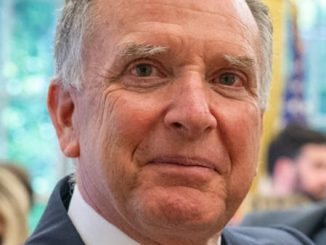
Following the reflection of Jérôme Denariez, whose perspective here extends the high standards of his father, with whom I spent years on the benches of the IHEDN at the École Militaire:

“The tragedy of 1870 reminds us that the boundary between external security and internal stability is porous. Defeat does not create disorder; it reveals it. In 2025, we are making the same mistake as in 1940: we treat crises in ‘silos’—political here, economic or cultural there. We forget that the ‘Maginot Line’ of our time is not merely made of treaties or budgets, but of the moral cohesion of the Nation. Without this backbone, the slightest external shock will act as a brutal catalyst for our internal decompo-sition.”
— Jérôme Denariez — Photo © All rights reserved
One can only share this observation with Jérôme Denariez: “Sovereignty is not a legal abstraction; it is a psychological force.”
A nation that no longer believes in its own legitimacy always ends up offering itself to the highest bidder, preferring the security of serfdom to the storms of independence. It is time to understand that if our walls are cracking, it is because the soul of the city has grown weary of defending them.
Extending this logic of cohesion, Jérôme Denariez reminds us that for de Gaulle, the social question was not a ‘late veneer’ but a core condition of power. While today’s silos separate economy from defense, the General sought to bind them through the idea of Association.
This ‘strategic depth’ is not merely geographical; it is built through social architecture. A prime example remains profit-sharing: far from being a cosmetic tool, it is a mechanism designed to anchor the real economy to the national community. One perceives here the intuition, almost Proudhonian, that ‘cohesion is not a spiritual extra, but the very bedrock of sovereignty.’ As Jérôme concludes: ‘Cohesion is not a spiritual extra; it is a condition of power.’
Ultimately, recovery will not come from a new weapons system or a fleeting treaty, but from our ability to become a People once again. For as General de Gaulle reminded us:
‘Nothing would be stronger than a French people who, in their entirety, were gathered together.’” (Editor’s Note: Radio broadcast to the Nation, February 5, 1962. Facing deep internal divisions, France had to reinvent itself—hence the General’s appeal for unity as the absolute condition for the State’s survival. This was the moment he defined the Nation not as a sum of individuals, but as a collective destiny.
5.4 The Call to the People
I fear our current leaders are incapable of such an awakening. They are too tied, too compromised, too small. Salvation will not come from the chancelleries, but from the people. The peoples of Europe vaguely feel they are being mocked. They feel that the arrival of this vulgar billionaire and his shady friends marks the end of a world. They see their “elites” groveling, and they are ashamed.
This shame must be awakened. For shame is revolutionary.[07] If Europeans become aware of their debasement, then perhaps—yes, perhaps—a great wind will rise. A wind that will sweep away the compromises, the cowardice, and the “little arrangements” between friends at Mar-a-Lago or the Kremlin.
Conclusion: Solitude is a Form of Grandeur
I conclude these memoirs from beyond the political grave on a grave note. The arrival of Trump and his first ten months in office are not a parenthesis; they are the new face of the world. A brutal world, without pity for the weak.
Mr. Trump—with his orange face and the manners of a parvenu, with his troubled past and his scandalous friendships—is the mirror of our times. He represents the triumph of money over spirit, of instinct over reason.
Europe is alone. Terribly alone. But solitude is not a curse. It is an opportunity. It is in solitude that great nations find themselves. France has often been alone. In June 1940, I was alone.[08] And yet… sometimes all it takes is one voice, one will, for fatality to recede.
Today, that voice is missing. The silence of grandeur is deafening. One hears only the sound of cash registers and the clatter of weapons being surrendered. But I want to believe, against all odds, that the flame has not been extinguished. That somewhere, in the youth of this old continent, there are ardent souls who refuse to bend the knee before the American golden calf or the Russian bear.
Based on the thought and orientations of Charles de Gaulle;
This text was put into perspective for our series “Great Witnesses of History.” It is intended as a synthetic restitution of Gaullist thought applied to current issues, developed from the memoirs and landmark speeches of General de Gaulle.
Notes :
[01] On Narcissism and the State: “The state is the coldest of all cold monsters.” Friedrich Nietzsche, Thus Spoke Zarathustra. De Gaulle often contrasted this necessary “coldness” of the higher national interest with individual passions.
[02] On the Epstein Affair: Excerpts from Donald Trump’s interviews (notably New York Magazine, 2002) and reports from the US Senate Judiciary Committee on influence networks at Mar-a-Lago.
[03] On NATO’s Article 5: Statements made by Donald Trump during his campaign rallies (2024–2025) questioning the principle of collective defense if financial contributions are deemed insufficient.
[04] On Economic Warfare: Analysis of the US administration’s tariff proposals (10% Universal Tariff and the “Reciprocal Trade Act”) aimed at reducing the trade deficit with the European Union.
[05] On the Ukraine Peace Plan: Reference to “leaks” from the transition circle (Keith Kellogg / Steve Witkoff) concerning the creation of a demilitarized zone and the freezing of front lines without guarantees of NATO membership.
[06] On the “Special Relationship” and Starmer: Reference to bilateral defense agreements (Lancaster House) and the structural dependence of the British nuclear deterrent (Trident system) on American maintenance.
[07] On Revolutionary Shame: Karl Marx, Letter to Ruge (1843): “Shame is already a revolution… If a whole nation were really ashamed, it would be like a lion recoiling to spring.” (A quote that de Gaulle appreciated for its mobilizing power).
[08] On the Solitude of 1940: Charles de Gaulle, War Memoirs, Volume I, “The Call”: Although he was only fifty years old, de Gaulle describes the feeling of being “alone and stripped of everything” in the face of the magnitude of the task and the collapse of national structures.
See also:
- « Le crépuscule des nations : Mémoires d’un désastre annoncé (2) » — (2025-1222)
- « The Twilight of Nations: Memoirs of a Foretold Disaster (2) » — (2025-1222)
- « Das Dämmern der Nationen: Memoiren einer angekündigten Katastrophe (2) » — (2025-1222)
- « L’architecture du désastre (1) » — (2025-1220)
- «The Architecture of Disaster (1) » — (2025-1220)
- « Die Architektur der Scheiterns (1) » — (2025-1220) » — (2025-1220)
Decryption: The Keys to Awakening
Beyond the historical observation, we stand before a two-way mirror: that of our own renunciation. The decryption of this “foretold disaster” reveals that the crisis we are experiencing is not a mere zone of economic turbulence, but a failure of political will. The fundamental issue is the reclamation of national destiny. Can we still claim European security without sovereignty of thought? The answer is no. As the Gaullist vision emphasized, a nation that delegates its defense and its culture inevitably ends up delegating its existence.
The true challenge of tomorrow is the fight against the atrophy of the strategic State. Between the hammer of globalization and the anvil of technological dependencies, the space for free decision-making is shrinking. This decryption invites us to identify the levers of an awakening: the restoration of the authority of intelligence and the refusal of followership. To project ourselves forward is not to hope for a return to the past, but to understand that the laws of geopolitics are immutable: only the strong are respected, only the independent are heard.
Current events provide cruel proof: the dismal results of the Brussels summit this week underline, once again, the inability of Europeans to agree on true strategic autonomy. Between budgetary deadlocks and divisions over flagship defense projects, Europe seems condemned to remain a mere spectator of its own security. One question is paramount: will the Europe of tomorrow be a simple transit zone under influence, or will it once again become an actor in History? Twilight is but a prelude to night if no one watches to rekindle the fires of intellectual resistance. — European-Security