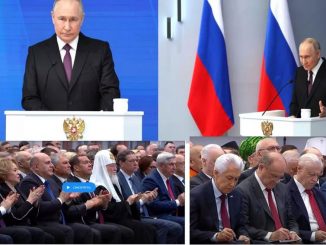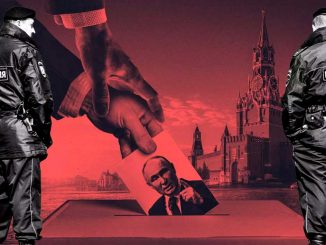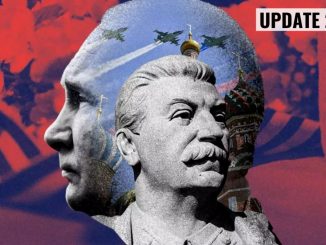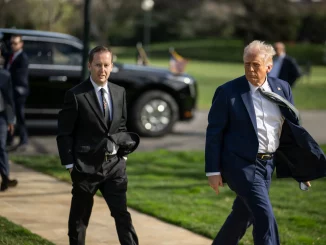
Since Donald Trump’s return to the White House, U.S. foreign policy has devolved into a labyrinth of contradictions. While the “President of Peace” campaigned on isolationism, 2025 has seen a surge in military interventionism, leaving allies and rivals alike in a state of strategic vertigo. This analysis deconstructs the enigmatic ties between Trump and the Kremlin, navigating the fog of “kompromat” theories and the brutal reality of Washington’s internal power struggles.
Psychologically, Putin has mastered the art of the “one-on-one” to manipulate a president often described as a consummate narcissist. By mirroring Trump’s anti-liberal values, the Kremlin has successfully steered key American policies toward Russian interests. Yet, the recent overthrow of the Maduro regime in Venezuela—a staunch Moscow ally—proves that Trump is not merely a puppet, but a leader caught in a fierce “civil war” within his own administration. On one side, MAGA isolationists push for the abandonment of Ukraine; on the other, Reaganite hawks fight to preserve America’s role as a global superpower.
Is the “America First” doctrine ultimately serving Washington or Moscow? As the President pivots between issuing ultimatums to Putin and rolling out red carpets in Anchorage, the world watches a superpower whose compass is no longer national interest, but the personal whims of its commander-in-chief. This is the critical question Laurence Saint-Gilles addresses in her latest investigation.
Table of Contents
by Laurence Saint-Gilles [*]— Paris, April 15, 2026 [**]
The Paradox of Trumpian Foreign Policy
Since Donald Trump’s return to the White House, U.S. foreign policy has become so unpredictable, chaotic, and bewildering that it seems to defy any form of rationalization or classification. Although Trump campaigned on a platform of isolationism to justify abandoning Ukraine, the United States has never been as interventionist as it has been since his reelection. In just one year, the Republican administration has carried out more airstrikes than during the entire Biden presidency. The self-proclaimed “peace president,” who once dreamed of a Nobel Prize, now appears tempted by an all-out use of force.
According to the recently published National Security Strategy, there is supposedly no contradiction: “President Trump’s foreign policy […] is driven primarily by what serves America’s interests or, in short, the ‘America First’ principle.” It further states: “The affairs of other countries only concern us if their activities directly threaten our interests.”[01] National interest—defined in its narrowest sense—has become the sole compass of American policy, coupled with President Trump’s personal “morality” as the new international norm. This shows how thorny any effort to identify the guideline of American foreign policy proves to be.
Aligning with Russian Interests
For when it comes to “national interest,” Trumpism has primarily served that of Russia over the past year. Despite its indecisive appearance, the Trump administration has sent consistent signals toward Russia: appointing Russophile figures to steer U.S. policy in favor of Russian interests; issuing executive orders that dismantled safeguards aimed at protecting the U.S. from foreign interference; adopting the Russian narrative regarding Ukraine and President Zelensky; staging the special relationship between Donald Trump and the master of the Kremlin, contrasting with his open contempt for NATO allies; stigmatizing the leaders of a “liberal and decadent” EU; and a “peace plan” for Ukraine imported from Moscow. The common thread among the controversial decisions of 2025 was their perfect alignment with Putin’s goals. As Françoise Thom pointed out: “Since Trump’s rise, one thing is glaringly obvious: the contrast between the chaos sowed by the mercurial President Trump and the extreme consistency of the measures taken to implement a unilateral disarmament of the United States in the face of Russia and to serve Russian interests. In this specific area, the Trump administration demonstrates a persistence that is absent from all other spheres of its initiatives.”[02]
The Trump-Putin Axis: A Reassessment
The shared geopolitical interest in sabotaging the multilateral world order and the ideological alignment of MAGA with Russian anti-liberal rhetoric suggested the formation of a Trump-Putin axis sealed upon the coffin of Ukraine. However, the U.S. military operation in Venezuela, which led to the overthrow of Nicolas Maduro, seems to challenge this interpretation of a diplomacy exclusively aligned with Moscow. After Bashar al-Assad, another Moscow ally has been ousted from power, while Trump ramps up pressure on Cuba and the Tehran regime. Are we witnessing yet another impulsive reversal by Donald Trump or a genuine strategic shift? And how should we interpret the confusion of Trumpist foreign policy?
Trump, Putin’s “Puppet”? [03]
Until recently, the alignment of the Trump administration with Moscow’s objectives was explained by old ties with Russia, to which the Republican President had allegedly contracted a kind of debt. Is Donald Trump not indebted to the Kremlin for interfering twice in the American electoral process to allow him to win the presidential election? While the Mueller probe did not prove Donald Trump’s complicity in the 2016 Russian interference, the latter was nonetheless proven by U.S. intelligence agencies and confirmed by the courts.[04] The courts demonstrated the proximity of several campaign members to individuals close to the Russian government, who were convicted, such as Paul Manafort or attorney Michael Cohen. During the 2024 campaign, the Russians reiterated their support: fresh suspicions of collusion weigh on the Republican candidate’s team. His manager, Susie Wiles, was indeed co-chair of a lobbying firm working for Russian oligarchs.[05] The disinformation strategy this time used different channels: instead of Russian trolls, the Kremlin funded American influencers very active on X. Finally, the Russians did not hesitate to use kompromat in an attempt to entrap Joe Biden, accused of corruption in the Smirnov case. [06]
The “Obliged” President and the Asset Profile
Trump has thus become the obliged party of the Russians, who expected returns for his victory. Following his election, Nikolai Patrushev, a close confidant of the Russian President, was quick to remind that to win the election, Donald Trump “had relied on certain forces to which he had obligations. And as a responsible person, he will be obliged to fulfill them.”[07] A few days later, propagandist Margarita Simonyan was even more explicit, urging Donald Trump to allow the return of Russia Today to the United States and reminding that her network had served as a breeding ground for future Trump administration members like Health Secretary Robert Kennedy Jr. or Pete Hegseth, chosen to lead the Pentagon.[08]
The first appointments showed that Trump understood the warning: he assigned sensitive roles to figures considered openly pro-Russian: Tulsi Gabbard, known for her steadfast support of dictator Bashar al-Assad and for her loyalty to Kremlin theses, was named Director of National Intelligence, thus granting Russia a window into the 18 U.S. intelligence agencies. As for the FBI, it was entrusted to Kash Patel, a declared enemy of this federal agency since it investigated the ties between Russia and Donald Trump’s team in 2016. Putin could not have dreamed of a better panel!
Agent or Asset?
These choices reignite speculation regarding the nature of the ties between Donald Trump and Russia. Is he an agent or an asset? The first thesis seems unlikely. Donald Trump’s unpredictable personality and “his angry and undisciplined nature” disqualify him for this role.[09] One can hardly imagine him submissively following a handler’s orders. According to Todd Loventhal, it seems more likely that Donald Trump is what a KGB manual calls a “special confidential contact” acting “on the basis of ideological and political affinity, material interest, friendly relations, or others established with intelligence officers,” toward whom they have no obligation.[10] Confidential contacts have been used by Soviet intelligence as disinformation channels toward government circles as part of active measures designed to steer a country’s political life.
Donald Trump’s case indeed fits quite well with the profile of an asset. As early as the mid-1970s, Trump, married to a Czechoslovak model, was spotted by the STB, “the Czech sister of the KGB.” Its agents bet on this charismatic businessman to renew American-Czech ties.[11] But, like other Eastern European services, the STB also played the role of “headhunter” for the KGB. During a trip to Russia in the middle of perestroika, Trump established ties with shady oligarchs close to the KGB who invested in his real estate projects in Florida. His dependence on Russian money and his legendary vanity—Trump even sold his name to a brand of vodka—made him easy prey for Russian services.[12] The theory of “Agent Krasnov”—the code name under which Trump was allegedly recruited, according to Alnur Mussayev, former head of intelligence in Kazakhstan—has however never been proven. However, the fact that he was unable to realize his dream of building his Trump Tower in Moscow would confirm that the relationship between Trump and Russian services was not “consummated.” Several experts and former CIA officers conclude that Trump was probably a KGB “asset” in the 1980s and that he probably ignored it.[13] Could the disclosure of these secret relations then constitute an embarrassing file capable of pressuring Donald Trump?
The Shadow of Kompromat and the Epstein Lead
The theory of blackmail exercised on Donald Trump stems from the 2017 Steele Dossier revelations, which mention the existence of compromising videos. Disinformation experts quickly proved it was a fake and do not exclude that it was fabricated by the Russians to put Trump under pressure on the eve of his inauguration.[14] Putin himself contributed to giving credit to these allegations during the joint press conference at the Helsinki summit in July 2018 by mentioning these videos. On the day after Trump’s reelection, the Russians celebrated his victory in their own way by broadcasting nude photos of Melania on the most-watched Russian television channel—dating back to her modeling days—a subliminal message to remind Donald Trump that they could reveal more compromising secrets.[15]
But the most serious lead in favor of blackmail remains the Epstein affair. A former friend of Trump, millionaire Jeffrey Epstein, imprisoned in 2019 (and found dead in his cell), was not only a crook at the head of a vast prostitution network of young girls, he was also the linchpin of a kompromat empire linked to Russian services.[16] Paradoxically, it was the MAGA conspiracy theorists who clamored during the 2024 campaign for “the list” of Epstein’s clients to expose the Washington Democratic establishment. Trump had promised his followers to shed light on this case. But things got complicated for him when the House of Representatives inquiry committee demanded the passage of a law forcing the Justice Department to publish the Epstein files. However, the Department, led by loyalist Pam Bondi, did not make the documents public, and many pieces were redacted.
The Ego as a Weapon of Influence
Other clues seem to support the honey trap thesis: the Epstein case resurfaces every time Trump seems to distance himself from Russia. For instance, when on July 14, 2025, Donald Trump issues an “ultimatum” to Vladimir Putin to accept a ceasefire in Ukraine, Epstein’s name reappears in the press like a jack-in-the-box, forcing Trump to justify himself the next day. And, among the rare House Republicans to pressure for the publication of the files, we find the unavoidable Marjorie Taylor Greene, the “parrot” of the Kremlin, who suddenly became Trump’s bête noire.[17] Finally, in the documentary Russian Spies Conquering America, General Kalugin, former head of Soviet espionage in the U.S., and John Brennan, former head of the CIA, testify that Putin knew things about Trump.[18] But neither of them provided proof.
We may never know the exact nature of the information Russia holds on Trump: whether it involves corruption dating back to his time with oligarchs and the Russian mafia, a sexual scandal, or treason. But even assuming the Russians hold proof, would its disclosure shake Donald Trump, who has already survived other scandals? Finally, one cannot exclude that these rumors themselves are a machination by Putin to discredit American democracy by making its president look like a puppet.
While kompromat is a lever to trap individuals and force cooperation, the ego has always been an effective tool. As KGB manuals remind us, a recruiter does not need pressure to hold influence over a target. It is enough to establish a bond of friendship and flatter their ego: “Flattery is his most important tool.”[19] No one can doubt that Donald Trump is sensitive to flattery. Psychologists describe Trump as a “consummate narcissist,” and this personality trait represents a vulnerability that a former recruiter like Vladimir Putin knows perfectly how to exploit. Trump tirelessly seeks the admiration of dictators like Putin or Xi Jinping, whom he inwardly considers superior beings and with whom he identifies. In fact, Putin does not need to hold embarrassing secrets to influence him; he only needs to maintain his psychological grip.
Strategic Infiltration and the Greenland Case
this, Putin has an infallible weapon: the man-to-man “one-on-one,” creating the illusion of a friendly relationship. As soon as Putin senses he is losing influence over his target, he resorts to the staging of the “phone call” and thus succeeds in putting Trump back on the right path. This tactic is perfectly proven: last spring, while the signing of a mineral agreement seemed to permanently link the United States to Ukraine’s fate, Putin, after a “long-awaited conversation,” managed to convince President Trump to renounce the new round of sanctions he had announced.[20] Trump is an asset all the more docile because Putin has succeeded in convincing him that they both share the same geopolitical vision and, ideologically, the same liberal enemies.
Finally, to ensure that his prey cannot escape his control, the Russian president has placed an entire network of “moles” in strategic positions within the administration. The most emblematic case is that of Sergio Gor, former White House Personnel Director, at the center of a scandal due to the mystery surrounding his birthplace—information essential for his clearance. The American press revealed that Gor was not of Maltese origin as he claimed, but a former Soviet citizen. Yet he was responsible for recruiting 4,000 members of the presidential administration and had access to the sensitive personal information of thousands of candidates for national security positions![21]
Could the inconsistencies of Trump’s foreign policy be the result of a script of manipulations? The case of Greenland is illuminating. Trump’s desire to annex this territory finds no rational explanation. Trump may keep repeating that the United States has a vital need for Greenland for its security, but this argument does not hold. Since World War II, the United States has obtained the right to establish military bases there and, under a 1951 agreement, updated in 2004, they have carte blanche to strengthen their military presence or modernize their facilities. Certainly, Greenland, rich in natural resources and located at the crossroads of the world’s major shipping routes, is coveted by Russia and China; but the latter’s efforts to establish “Polar Silk Road” infrastructure there faced vetos from Denmark and the United States.[22]
The explanation is rather to be sought in Trump’s personality: greed (seizing rare earths is a true obsession for him) or, alternatively, vanity: the annexation of Greenland would make Trump the first president since Theodore Roosevelt to offer a new territory to the United States, which would de facto become the largest country in the world. Enough to compensate for the frustration of not having obtained the long-coveted Nobel Prize! His letter addressed to the Norwegian Prime Minister, where he links his desire to annex Greenland to the fact that Norway refused to award him this distinction, leaves little doubt about his motivations…[23] This affair is a godsend for Russia. Not only does it contribute to the disintegration of the international order based on law, but above all, it causes an unprecedented crisis in transatlantic relations: thanks to Donald Trump, Putin is on the way to achieving the goal the Soviets never managed during the Cold War: the decoupling of European security from that of the United States.
The Illusionist?
However, it would be reductive to see Trump as a mere puppet of the Kremlin. This interpretation seems to be invalidated by the recent setbacks inflicted on Russia. After Bashar al-Assad in Syria, Russia has just lost another ally with the capture of Nicolas Maduro by American forces. Moscow was an essential partner of the Maduro regime, which constituted “an important link in the international sanctions-bypassing system set up after the invasion of Ukraine.”[24] Operation Absolute Resolve was conducted with an efficiency that contrasts with the failure of Putin’s “special operation.” It is a stinging blow for the Russian president, already criticized for his passivity by the ultra-nationalist movement. But disavowals also come from regime loyalists, like the oligarch Oleg Deripaska, who fears seeing the United States take hold of more than half of the world’s reserves and lower oil prices, which would further degrade Russia’s budgetary situation.[25]
Trump has not succeeded in his bet to end the war in 24 hours as he promised. Since his return to power, American management of the war in Ukraine seems most random as reversals are frequent and spectacular. In the spring, the lines began to move in favor of Kyiv, following a meeting in Jeddah where the Ukrainians accepted the ceasefire proposed by Donald Trump, the loss of 20% of their territory and, above all, a mineral agreement, more equitable than the previous one. What followed looked like an endless diplomatic ballet: the back-and-forth of Steve Witkoff, the eternal optimist, between Moscow, Washington and Riyadh, and Trump’s Jupiterian fits of rage calling Putin “crazy” on Truth Social then changing his mind after a “very productive” call. After the martial “July 14 ultimatum,” Trump rolled out the red carpet for the Russian president on August 15 during a bilateral summit in Anchorage, which turned into a fiasco but offered Putin an international platform.[26] Yet, on September 23, Trump made a bombshell statement, ensuring that Ukraine could regain its territory in its original form and perhaps even “go further” against Russia.[27]
The Battle of the Clans
These reversals and inconsistencies cannot be explained exclusively by the American president’s versatile mood. According to the New York Times, the soap opera we have been witnessing since the beginning of 2025 is explained primarily by the power struggles between the two rival factions of the Republican administration: the MAGA isolationist branch and the Reaganite hawks.[28] The former is led by Vice President J.D. Vance and his loyalists, notably Pete Hegseth at the Pentagon and his advisors Elbridge Colby and Dan Caldwell. It is to them that we owe the “de facto anti-Ukrainian policy” of the United States.[29]
The “War Within the War”: Factional Infighting
Mr. Hegseth and his advisors undermined, sidelined, or silenced front-line generals and administrative officials favorable to Ukraine.[30] Since Donald Trump was eager to close a deal and believed the advantage should go to the strongest side, this group sought to influence the President’s perception. Their goal was to convince him that Russia was winning the war and that, instead of wasting U.S. military stockpiles in Ukraine, it would be better to reallocate them to Asia or the Middle East.
At the beginning of his term, Trump was convinced that the Russians were ‘invincible,’ but certain military figures managed to persuade him otherwise. The leader of the pro-Ukraine faction, General Keith Kellogg, a long-time acquaintance of Trump, became his envoy for Ukraine and Russia. This 80-year-old veteran had served in the U.S. Special Forces and led a team of paratroopers trained to jump behind Soviet lines; however, for Vance, Kellogg was no hero—he was merely a ‘Cold War relic.’[31] Vance eventually convinced Trump to remove Russia from Kellogg’s responsibilities, with the help of his chief of staff, Susie Wiles. To handle discussions with the Russians, the anti-Ukraine clan relied on another of Trump’s associates: Steve Witkoff, a former real estate developer and the President’s golf partner, who had ties to Kirill Dmitriev, whom he met during a trip to Saudi Arabia.
Throughout the year 2025, the two camps waged a ‘war within the war’ to influence the American president’s perception. It was Pete Hegseth, to whom the President had given ‘carte blanche,’ who blocked the delivery of 18,000 artillery shells promised to Ukraine in the very first days, without consulting the President.[32] Every time these decisions drew the disapproval of American generals—notably that of the Chairman of the Joint Chiefs of Staff, General Charles Brown—Fox News commentators like Brian Kilmeade or General Keane intervened with Trump to ask him to reverse his decision. Trump’s perception of the conflict began to change in the spring: the hearing of General Cavoli, Supreme Allied Commander Europe, before the Senate in April 2025, provided conviction that Ukraine’s defeat was not inevitable. Furthermore, Ukrainian lobbying efforts gained ground with the rallying to the Ukrainian cause of Pastor Mike Burns, the president’s spiritual advisor, and MAGA influencer Ben Shapiro.
The CIA: Ukraine’s Unlikely Ally
“Most importantly, Ukraine seems to have found a new ally in John Ratcliffe, the Director of the CIA. While the Pentagon marginalized pro-Ukraine generals, Ratcliffe increased his staff and the funding for his programs in that country. During the suspension of aid to Ukraine in March 2025, after the U.S. military ended intelligence sharing, Ratcliffe successfully convinced Donald Trump that this decision endangered his agents and secured the continuation of information sharing regarding Russian threats inside Ukraine. It was a CIA analyst who identified the weak point of Russian energy infrastructure—a critical piece of equipment for refineries that is so difficult to replace or repair that refineries would remain out of service for weeks. Thanks to CIA intelligence, Ukrainian drone attacks in Russia began to pay off: they reportedly cost Russia $75 million a day and caused gasoline lines across the country. The CIA also helped the Ukrainians send drones against ‘ghost fleet’ ships in the Black Sea and the Mediterranean. Informed of the success of this operation, Donald Trump praised ‘the discreet role played by the United States in these blows dealt to the Russian energy industry.’ This gave him maneuverability and a means of pressure, he told Mr. Ratcliffe, while the Russian president ‘continues to lead him on.’[33]
Following the success of his secret drone operation inside Russia, Zelensky sent a delegation of aides to the White House with this message: ‘We are not losing. We are winning!’ This is exactly the kind of language that needed to be addressed to the American president. Trump does not like losers. Moreover, the Ukrainian operation, the expedition in Venezuela, and the boarding of Russian tankers demonstrated to Trump that Russia was ‘only a paper tiger.’[34] It was the realization that a defeat of the USSR in Afghanistan was possible that pushed President Reagan to order ‘the most important secret operation the CIA had ever conducted’ in a territory controlled by the USSR.
The Illusionist and the National Security State
“Also, let us not remain focused on presidential gesticulations. Like an illusionist, Trump puts on a show and creates a smokescreen that conceals what is unfolding within the corridors of power. Against all odds, despite the undermining efforts of the pro-Russian wing, the National Security State—the institutional machinery established during the Cold War to ensure U.S. security—is demonstrating its resilience for the time being. The recent successes of the CIA and its director John Ratcliffe have reconciled Trump with the intelligence community, much to the despair of Tulsi Gabbard, who has fallen from grace: ‘Within the services, the Deep State uses intelligence as a weapon to attempt to undermine progress toward peace in Ukraine, accusing some of its agents of being “warmongers” who play on fear and hysteria to justify the continuation of the war.’[35] Thanks to the tactic of ‘back channels’ and the naivety of someone like Steve Witkoff, Putin believed he could maneuver until he achieved victory, but time has not worked in his favor as he had hoped. While negotiations stall, Russia bogs down in Ukraine, and the state’s coffers empty, President Putin watches helplessly the debacle that Trump is inflicting on his allies.
To be sure, Donald Trump will likely not risk a direct confrontation with Vladimir Putin, who retains an ascendancy over him. However, by relying on the CIA, he could adopt a bypass strategy aimed at isolating Russia. Trump has proven he is capable of duplicity, and if the opportunity arises, he will have no scruples about discarding his blackmailer.
Laurence Saint-Gilles
[*] Laurence Saint-Gilles is an Associate Professor of History at Sorbonne University’s Faculty of Arts, where she specializes in the history of international relations. A distinguished Fulbright Scholar, she has dedicated her doctoral thesis and extensive research to the evolution of Franco-American diplomatic and cultural ties. She is notably the author of Les États-Unis et la nouvelle guerre froide (Sorbonne University Press, 2019), a seminal work among her numerous publications on transatlantic security and diplomacy.
[**] A French version of this article was originally published on Desk Russie on January 31, 2026. This English translation by European-Security is republished with the gracious permission of Laurence Saint-Gilles.
Endnotes
[01] National Security Strategy, The White House, 2025.
[02] Françoise Thom, « Le projet russe pour les États-Unis », Desk Russie, 29/03/2025.
[03] Franklin Foer, traduit par Yann Champion, « Trump le pantin de Poutine », Slate, 13/07/2016.
[04] U.S. Department of Justice, Report On The Investigation Into Russian Interference In The 2016 Presidential Election Volume I of II Special Counsel Robert S. Mueller, III, Washington, D.C., March 2019.
[05] Heidi Seigmund Cuda, “Investigation : Zarina Zabriski Reports on Trump Chief of Staff’s Russian Ties”, Bette Dangerous.
[06] Laurence Saint-Gilles, « Subversion des élites et corruption des masses : comment l’ingérence russe gangrène la vie politique américaine », Desk Russie, 2/06/2024.
[07] Jordan King, “Donald Trump Has ‘Obligations’ to Those Who Brought Him to Power—Putin Ally”, Newsweek, 12/11/2024.
[08] Françoise Thom, « Le clonage du poutinisme », Desk Russie, 22/12/2024.
[09] Todd Loventhal, « La désinformation ciblant les décideurs politiques », European Security, 3/08/2025.
[10] Ibid.
[11] “Czechoslovakia spied on Donald and Ivana Trump, communist-era files show”, The Guardian, 15/12/2016.
[12] Ibid.
[13] Michael J. Morell, “I Ran the CIA now I’am Endorsing Hillary Clinton”, The New York Times, 5/08/2016.
[14] Jane Meyer, Christopher Steele, “The Man Behind the Trump Dossier”, The New Yorker, 12/03/2018.
[15] Maya Mehrara, “Russian State TV Airs Melania’s Nudes on Prime Time”, Newsweek, 8/11/2024.
[16] Françoise Thom, « La Russian Connection de l’affaire Epstein », Desk Russie, 28/07/2025.
[17] “Inside Marjorie Taylor Greene’s Break with Trump and MAGA”, The New York Times, 31/12/2025.
[18] Antoine Vitkine, Les espions russes à la conquête de l’Amérique, Nilaya production/France Télévision, 1ère diffusion en 2024.
[19] Todd Loventhal, op.cit.
[20] Laurence Saint-Gilles, « Trump est-il en train de sortir de l’emprise de Poutine » ? La Croix, 30/05/2025.
[21] Laurence Saint-Gilles, « Le “Serpent” », Desk Russie, 28/07/2025.
[22] Stefan Wolff, « Trump veut annexer le Groenland, un pari risqué et vain », The Conversation, 13/01/2026.
[23] Clément Machecourt, « Je ne me sens plus tenu de penser uniquement à la paix : La lettre délirante de Trump au Premier ministre norvégien », Le Point, 19/01/2026.
[24] Bernard Chappedeleine, « La Russie, perdante ou gagnante du renversement de Maduro ? », Institut Montaigne, 7/01/2026.
[25] Ibid.
[26] Lors de la conférence de presse qui clôture le sommet, Poutine se félicite d’avoir obtenu la prise en considération par Trump des « causes profondes de cette crise », sous-entendu la nazification des élites ukrainienne ou le génocide des russophones du Donbass qui serviraient de « base au règlement du conflit ukrainien ». Voir « Vladimir Poutine ou la manipulation de Donald Trump », Guillaume Lancerau, Le Grand Continent, 16/08/2025.
[27] Florian Chaaban, « Guerre en Ukraine : la valse des revirements de Donald Trump en cinq épisodes », Toute l’Europe.
[28] “The Separation: Inside the Unraveling U.S.-Ukraine”, New York Times, 30/12/2025.
[29] Ibid.
[30] Ibid.
[31] Ibid.
[32] Ibid.
[33] Ibid.
[34] Peter Dickinson, “Trump calls Russia a ‘paper tiger’ because he believes Putin is losing”, Atlantic Council, 25/09/2025.
[35] Citée par Bastien Bouchard, « On va là où personne d’autre ne peut aller et on fait des choses que personne d’autre ne peut faire : comment le directeur de la CIA a réconcilié Trump avec les espions américains », Les Echos, 6/01/2026.