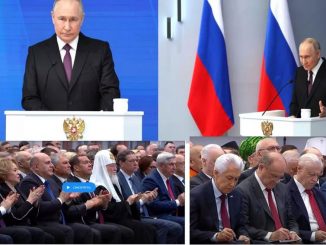
When respect for international law and existing conventions vanishes, humanity inevitably regresses toward a primitive state where only brute force prevails. A fundamental question arises today: Is this chaos truly what the world desires, or is it merely the calculated ambition of a handful of unrestrained autocratic heads of state? These leaders, whose most visible talent is personal enrichment at the expense of their own citizens’ well-being, seem to excel only in the art of provoking global disorder.
Yet, the vast majority of nations worldwide intend for the rules of civilization to be respected. One can imagine this community of nations making its voice heard with firmness to restore the Rule of Law where rogue or failed states disregard it. The Strait of Hormuz is today the front line of this struggle: there, the strict application of the Montego Bay Convention constitutes the ultimate bulwark against a return to arbitrary rule and maritime racketeering.
The author of this analysis, Admiral Dayras,[*] speaks with particular authority: he personally held high-level operational commands. Upon returning to civilian life, he served notably as an expert consultant to the International Maritime Organization (IMO). Drawing on this extensive experience at the heart of global diplomatic and operational machinery, he demonstrates why the free world is now determined to enforce this treaty, the guarantor of freedom of navigation
by Jean-Patrick Dayras in Levant Time — 10 April 2025
The terms of the ceasefire agreement – set to last for a limited period of two weeks – remain, as presented unofficially, ambiguous. Iran is reported to have agreed to reopen the Strait of Hormuz, described as a major concession in exchange for the ceasefire.
The strait meets the criteria defined by the 1982 United Nations Convention on the Law of the Sea as an international strait.
Section 2 of the Convention outlines the definition of an international strait and sets out the rules governing the passage of ships through its waters and the overflight of aircraft above it.
Article 37
“This section applies to straits which are used for international navigation between one part of the high seas or an exclusive economic zone and another part of the high seas or an exclusive economic zone.”
Article 38 – Right of transit passage
“1 – In straits referred to in article 37, all ships and aircraft enjoy the right of transit passage, which shall not be impeded (…).”
“2 – Transit passage means the exercise in accordance with this Part of the freedom of navigation and overflight solely for the purpose of continuous and expeditious transit of the strait between one part of the high seas or an exclusive economic zone and another part of the high seas or an exclusive economic zone.”
The term “reopening” could have serious implications for the future of navigation and passage through the strait for all non-Iranian or non-Omani vessels. It implies that the strait was closed and will now be reopened by Iran. In other words, it suggests that the strait belongs to Iran, which can shut or open it at will – or manage it jointly with Oman.
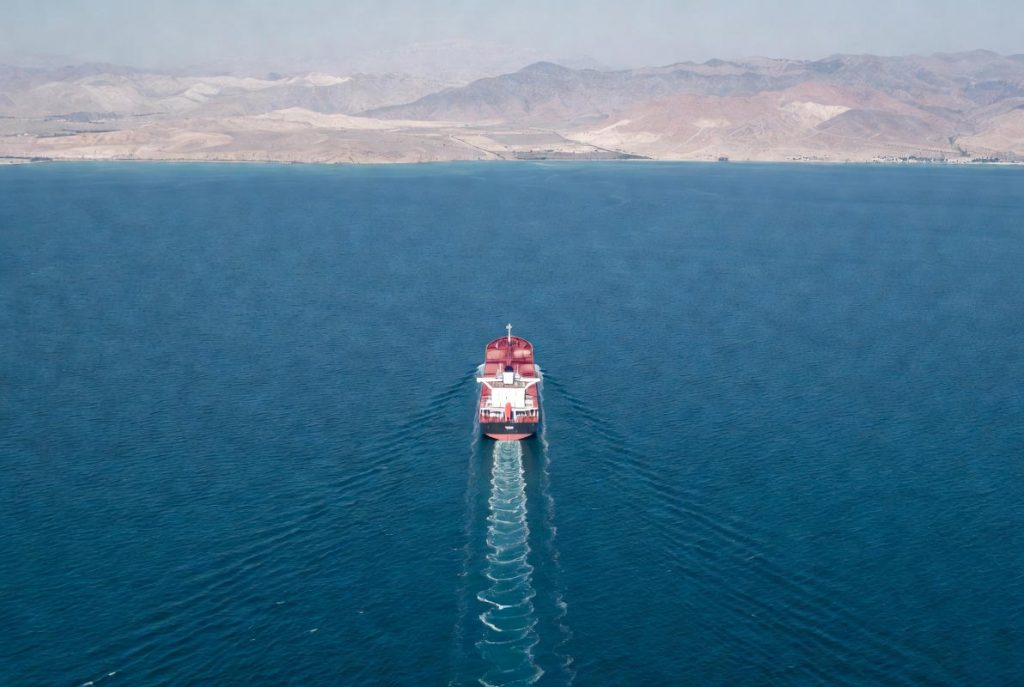
This would effectively mean that the Strait of Hormuz is no longer treated as an international strait, and its use could be subject to fees or obligations, including the requirement to pay a transit fee. Such a scenario would have significant repercussions for shipping costs across the Arabian-Persian Gulf.
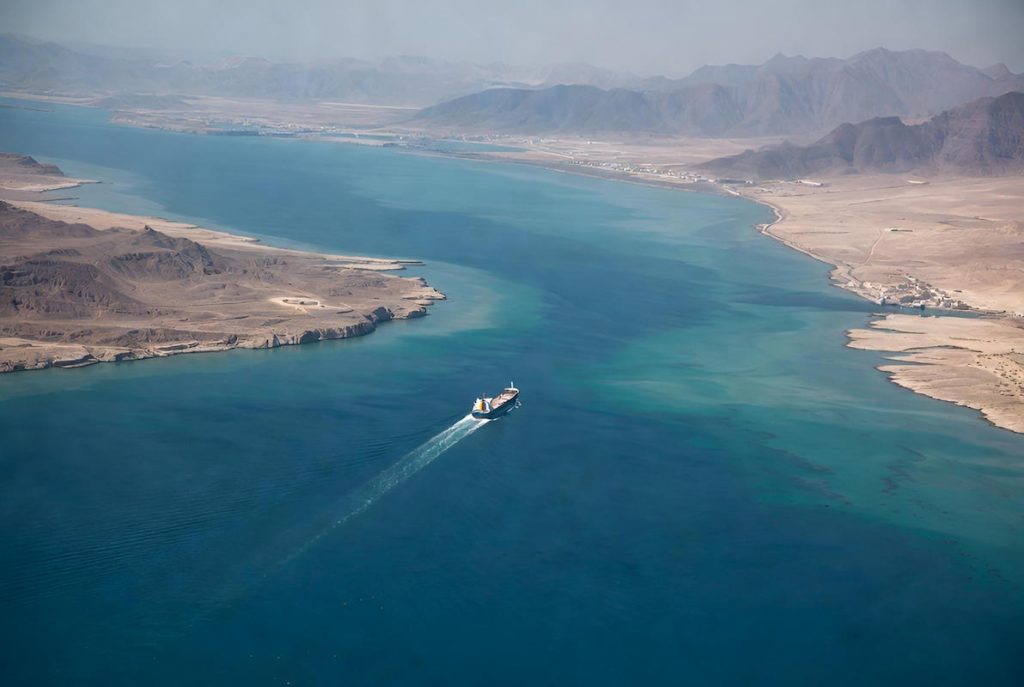
Such a situation could then be replicated elsewhere: the Bab-el-Mandeb, Malacca, Lombok, the Sunda Strait, Gibraltar, why not, as well as the Dardanelles, the English Channel, Russia’s northern coast – which is already being considered by that country – and even the Northwest Passage. All are international straits and passages vital for global trade and maritime traffic.
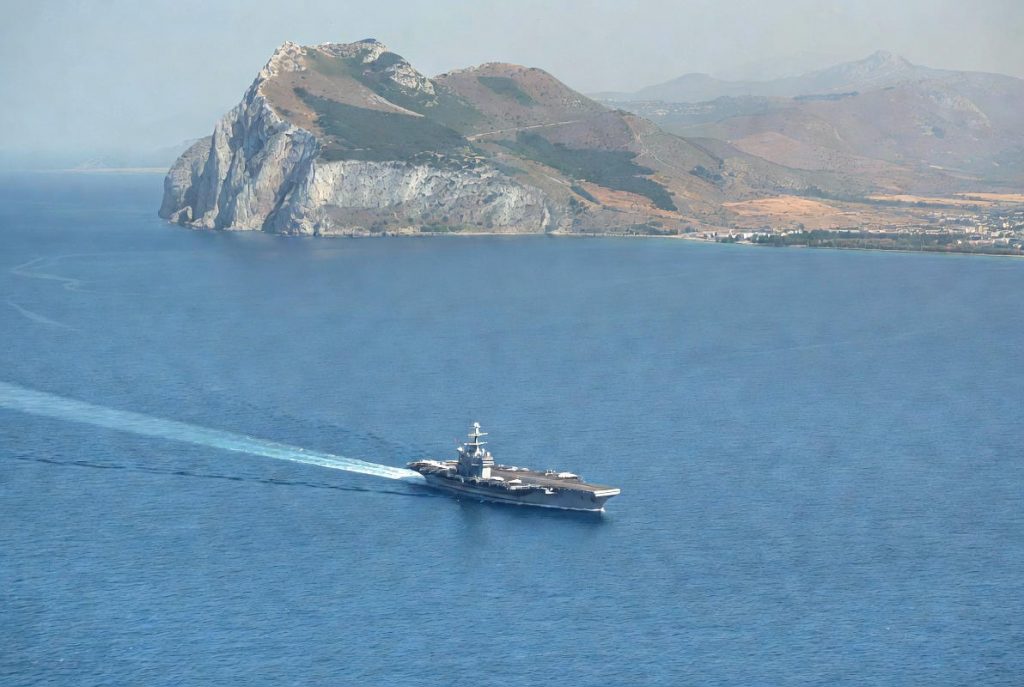
Would it not have been wiser to use alternative wording, such as “lifting the blockade of the Strait of Hormuz” or “halting threats to block the Strait of Hormuz,” or any other formulation that clarifies that Iran had taken actions contrary to the Convention and the definition of an international strait?
If the negotiators have indeed used the phrasing currently being reported – let us hope that is not the case – it is likely because the Iranians, perhaps more clear-sighted than their counterparts, have a medium to long-term plan in mind. One can only hope they do not.
Jean-Patrick Dayras
[*] Jean-Patrick Dayras: Rear Admiral in the French Navy; naval aviator; specialist in maritime air operations and commando missions; held senior operational positions. After returning to civilian life, he served as an expert consultant to the International Maritime Organization (IMO).