Before being strategic, war is geographical. The Arab-Persian Gulf—aptly named—is the demarcation line of imperial confrontation.
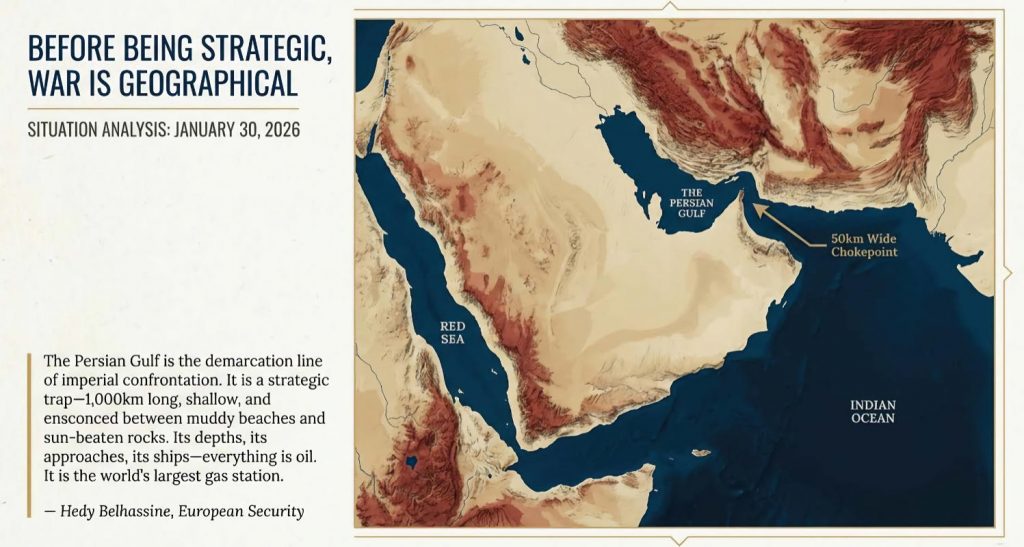
It is a warm sea, very salty, never blue, rarely tumultuous, trapped between muddy beaches and charmless rocks stunned by the sun. Approximately six hundred miles long, two hundred wide, narrowing to thirty when its waters mingle with the Indian Ocean through the Strait of Hormuz. Its depths, its shores, its ships: everything is oil. It is the world’s largest gas station.
Table of Contents
From the Persian Gulf to the Red Sea, geography dictates war
By Hedy Belhassine — Paris, January 30, 2026
The Gulf: A Highly Flammable Strategic Trap
On the Arab side, seven countries—Iraq, Kuwait, Saudi Arabia, Bahrain, Qatar, the United Arab Emirates, Oman—supply the West with the precious liquid; on the Persian side, Iran, under blockade, sells its oil to China. Choosing this location to wage battle is every military strategist’s nightmare.
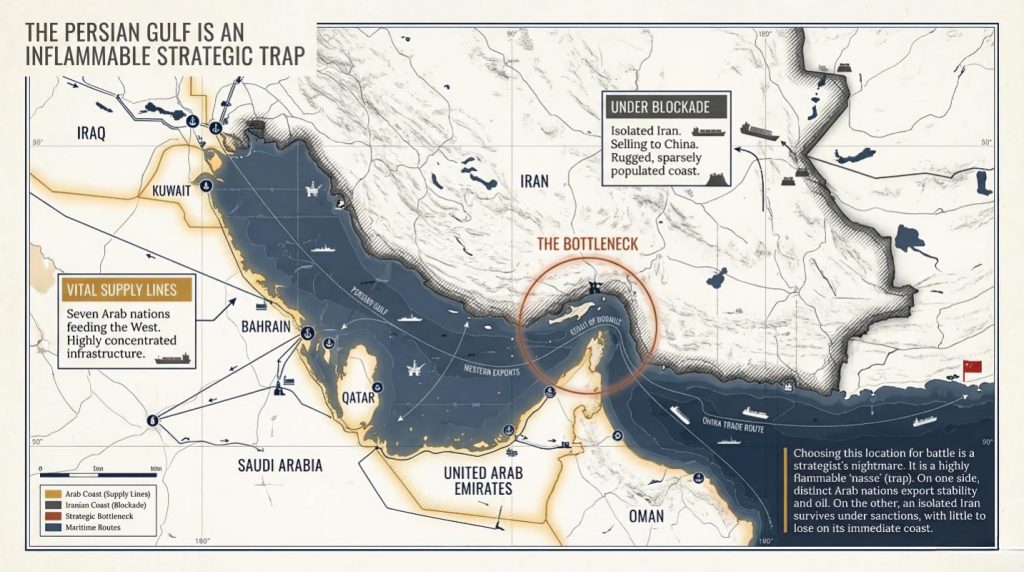
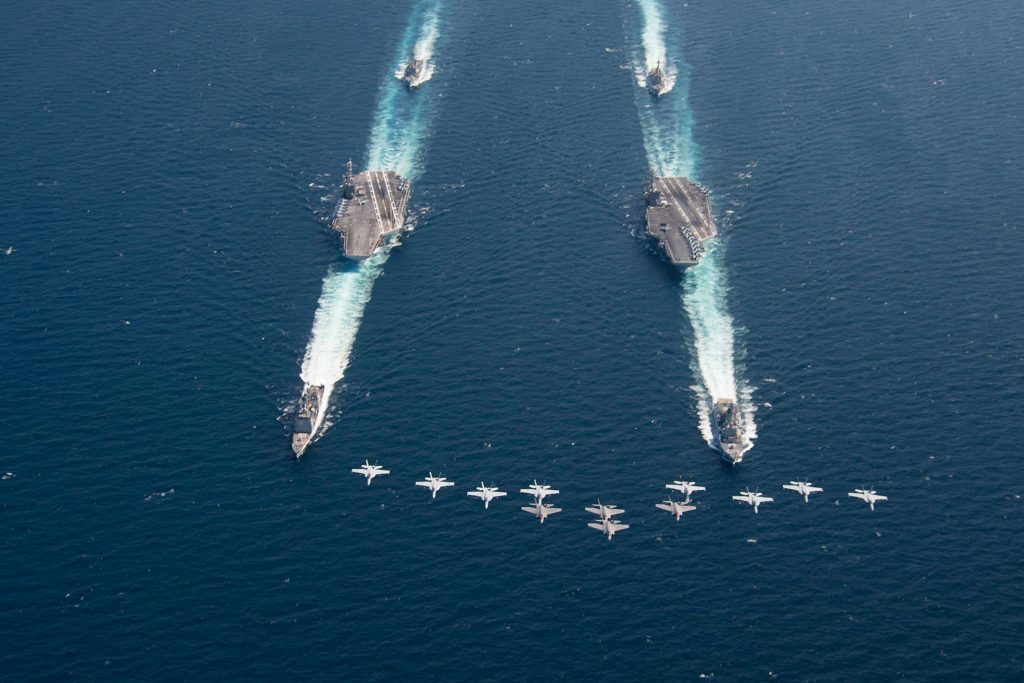
It is a highly flammable trap. The Iranian coast is sparsely populated. The capital, Tehran, is six hundred miles away. The Arab coast concentrates fifty million inhabitants around metropolis-cities—Kuwait City, Bahrain, Dubai, Sharjah, Abu Dhabi, Doha—which additionally welcome just as many millions of tourists each year. These are buzzing hives of luxury and extravagant wealth where the world’s new rich congregate. US air bases positioned everywhere are supposed to protect them. But if Iran is attacked, the Revolutionary Guards (Pasdaran), designated in anticipation as a terrorist movement, will strike a match.
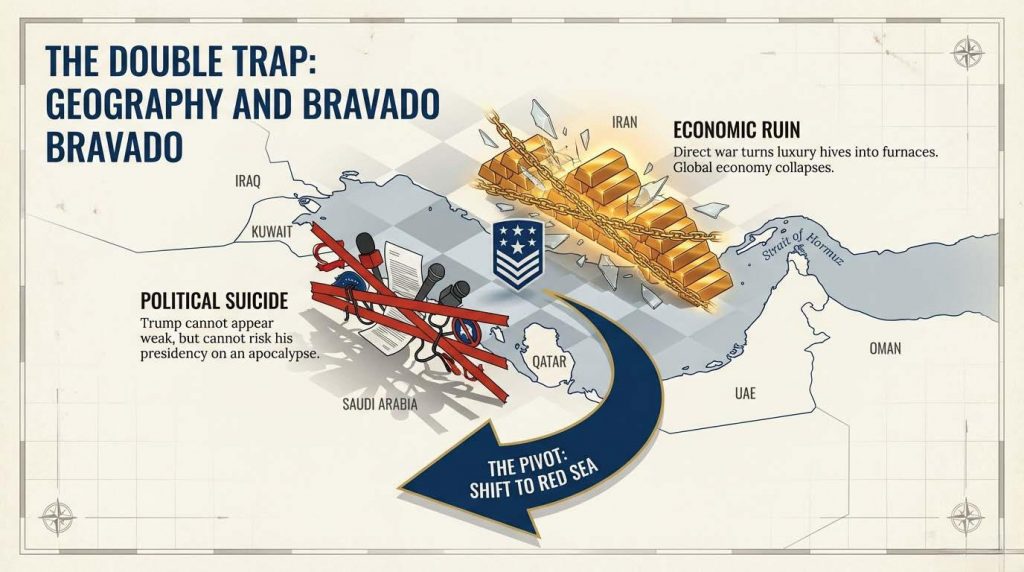
Trump is thus caught in a double trap: that of geography and that of his own bragging. How to get out of it?
Yemen: The Lock on Maritime Routes
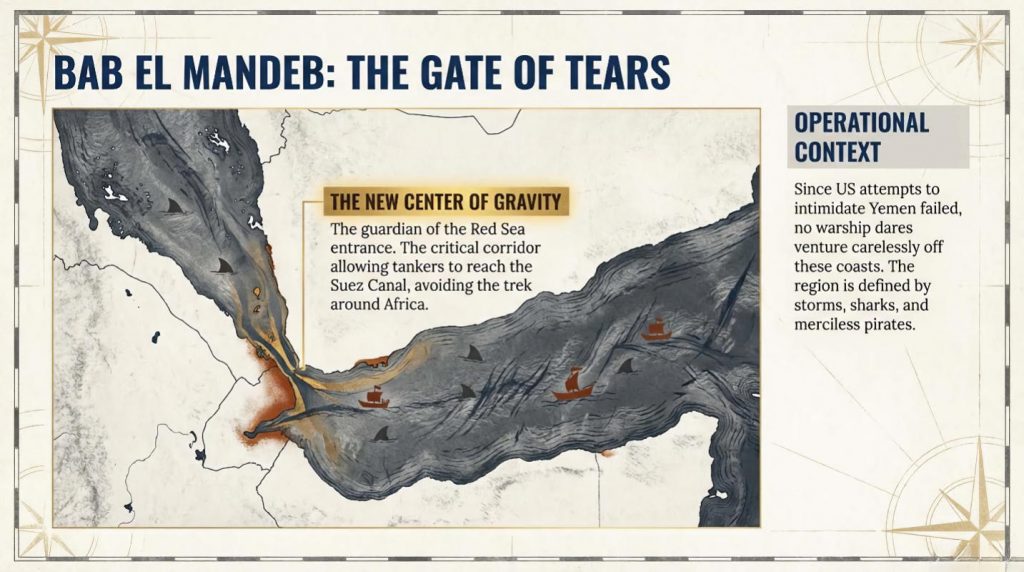
Yemen is a country sprung from the depths of ages. It is totally unknown. Since Paul Nizan, Albert Londres, Kessel, and Monfreid, few have ventured there. Only those invited may enter. Yemen is the guardian of the entrance to the Red Sea, “Bab el Mandeb” or “The Gate of Tears,” which allows tankers to take the Suez Canal and avoid a long detour around Africa. The storms, sharks, and pirates there are merciless.
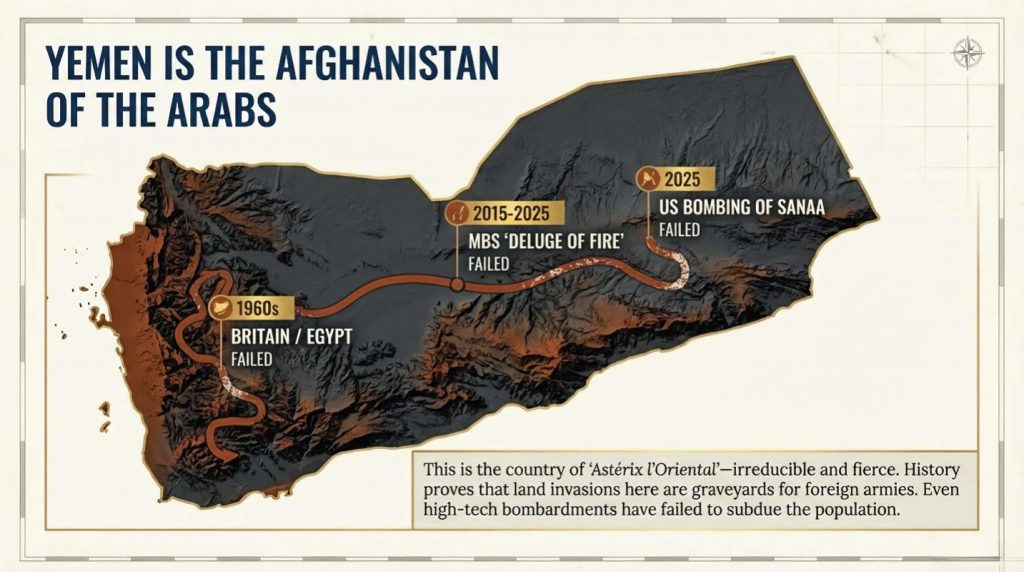
Yemen is the Afghanistan of the Arabs: inaccessible valleys, fierce populations. Its history is one of wars fomented by foreigners—Great Britain, Egypt, Saudi Arabia, the UAE—never won. Israel is its enemy. The United States tried to intimidate it; Yemen retaliated. Since then, no warship ventures to pass off its coast.
In 2015, the Saudi MBS unleashed a deluge of fire. In vain. Ten years later, he was forced to negotiate. In retaliation for Yemeni missiles striking Israel, the Americans bombed Sanaa and the port of Hodeidah. In vain. Only the United Arab Emirates, through sneaky maneuvers of carrot and stick, managed to set foot in the South in Aden, Mukalla, and on the island of Socotra. The stake for the two rival princes, Saudi and Emirati, is the “pacification” of a country with unexploited underground resources. Furthermore, Saudi Arabia covets a secured corridor to the Indian Ocean, an alternative to its vulnerable ports in the Red Sea and the Persian Gulf.
Socotra: The Prospect of Victory Without Risk
Yemen is the indomitable country of “Asterix the Oriental,” having humiliated all those who attempted to occupy it and who dream of revenge. But an easy strategic prey remains: the island of Socotra. The GIs will cover themselves in glory with no risk other than a few sea urchin stings. It is a sparsely populated virgin land, with sublime beaches and magnificent vegetation—a dream for any developer of luxury marinas and seaside villas.
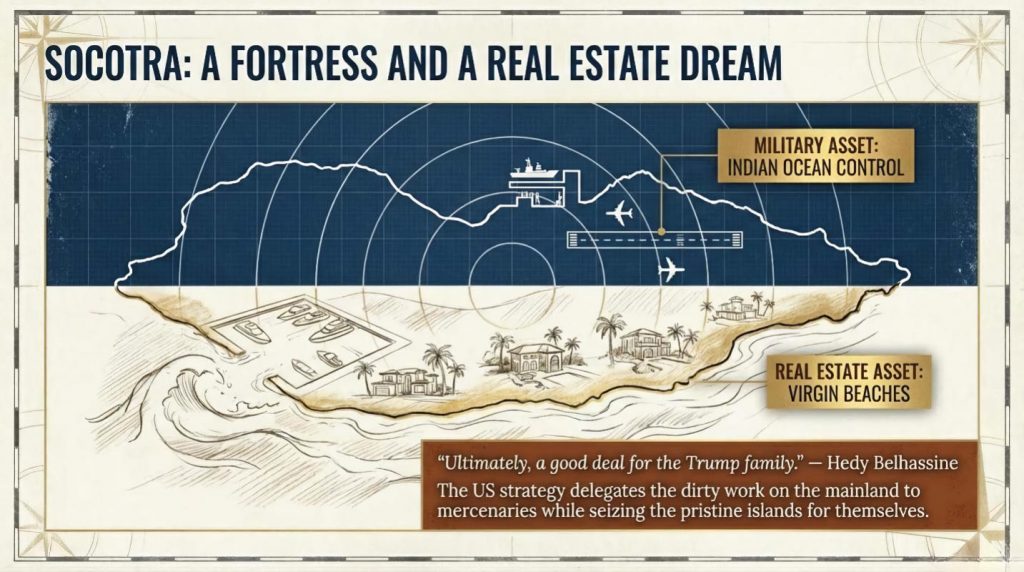
Similarly strategic and of great beauty, the twenty or so poorly protected islets in the Southern Red Sea will be militarily and touristically confiscated from Yemen. In the end, a good deal for the Trump family. The Americans will undoubtedly not dare to land on the coast of Yemen at Hodeidah, Aden, or Mukalla. Too risky. They will delegate the dirty work to mercenaries and regional proxies.
Djibouti: Strategic Control Tower
In this scenario, who will come to the rescue of North Yemen, landlocked and deprived of its maritime outlets? No Arab country. Nor Iran, the spiritual ally of the Houthis, which will prefer to seize the diplomatic opportunity to avoid a frontal war. Trump and the Ayatollahs have one thing in common: survival. There remains the unknown factor of Djibouti.
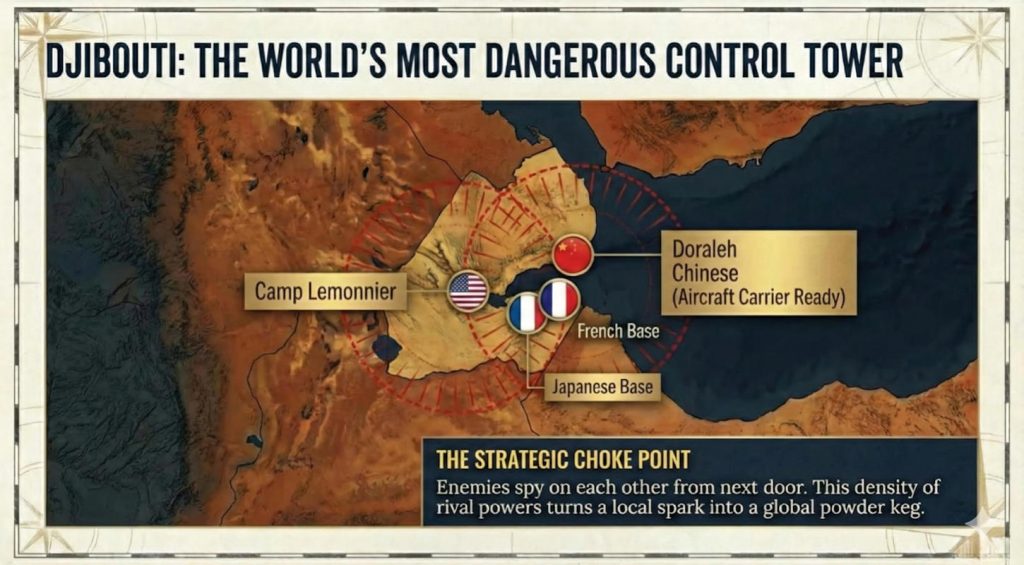
This rock in the Horn of Africa is the control tower of global maritime routes. No fewer than five foreign military bases stand side by side and spy on each other: the USA, France (where several thousand are stationed), but also Japan, Italy, and especially the dual-use Chinese installations at Doraleh, which can accommodate aircraft carriers. It is a major projection tool for China, which intends to secure the entirety of its trade routes.
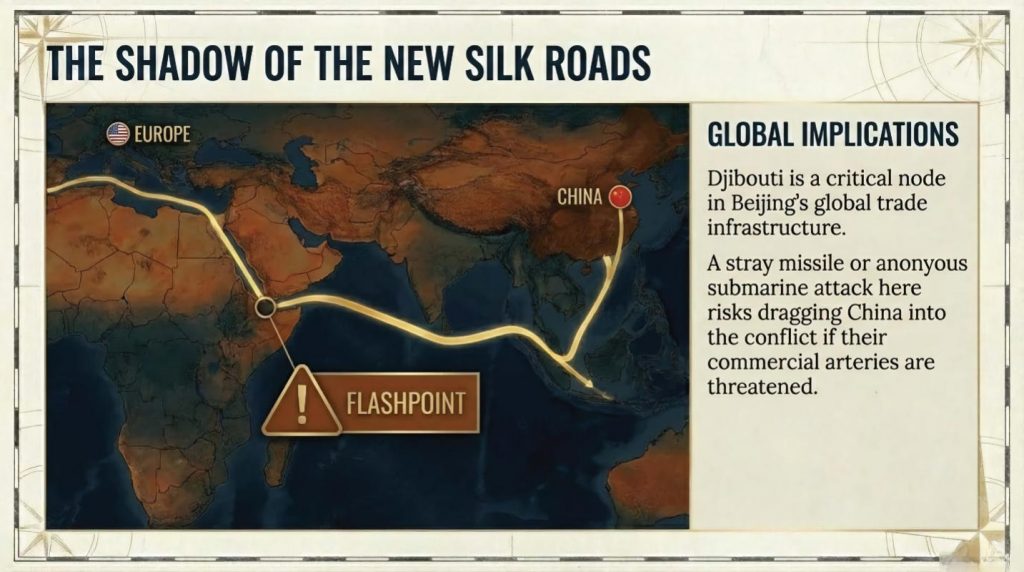
It may be in this fragile place or off the coast of Aden that a spark will fly—from a fishing boat, a dhow, an anonymous submarine—in the form of a drone, a missile coming from nowhere…
De Gaulle described this region as “complicated.” No doubt because no prediction has ever come true there!
Hedy Belhassine
Decryption: Proxy War Rather Than Apocalypse
As the world holds its breath, waiting for a tweet or an order from the Oval Office that would set the Middle East ablaze, geography seems to be dictating Donald Trump’s forced restraint.
The businessman knows that a head-on war with Iran would turn the Gulf’s “luxury hives” into infernos, ruining the global economy and his own presidency.
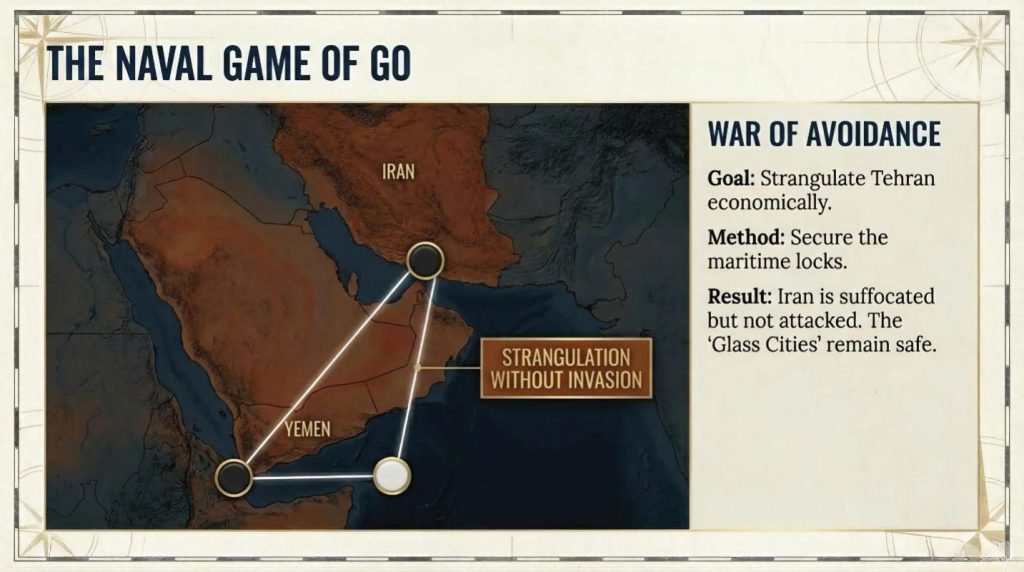
Consequently, the “Iran War without Iran” takes shape as a strategy of avoidance. Rather than throwing its armies into the Yemeni quagmire or the Persian trap, America could choose the path of least cost: seize the island jewels (Socotra), secure the maritime locks, and let mercenaries manage the dust of the continents. In short, a war of maritime positions where the enemy is encircled without ever touching his red line, transforming the military confrontation into an immense naval game of Go where Tehran is suffocated, but not attacked.
Geography Against Technology
Hedy Belhassine sheds light on a reality often forgotten in modern analyses: despite drones and hypersonic missiles, geography remains the master of the game.
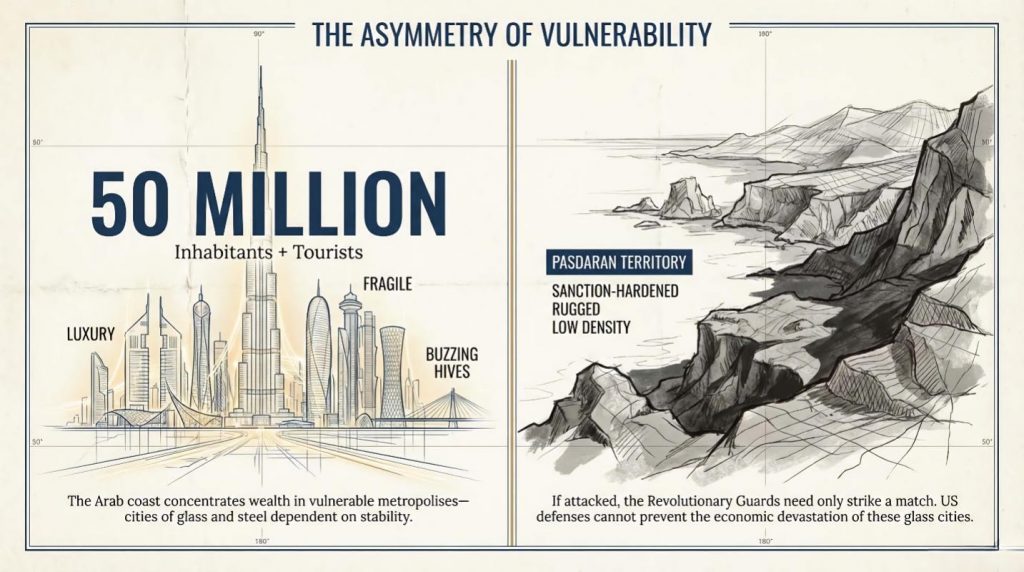
Asymmetric Vulnerability
Hedy Belahassine highlights a crucial paradox. The Arab allies of the USA have everything to lose (metropolises of glass and steel, a fragile tourism economy), while Iran and Yemen, accustomed to austerity and protected by hostile terrain, offer few decisive targets. This asymmetry paralyzes American power, which cannot strike hard without sacrificing its protégés.
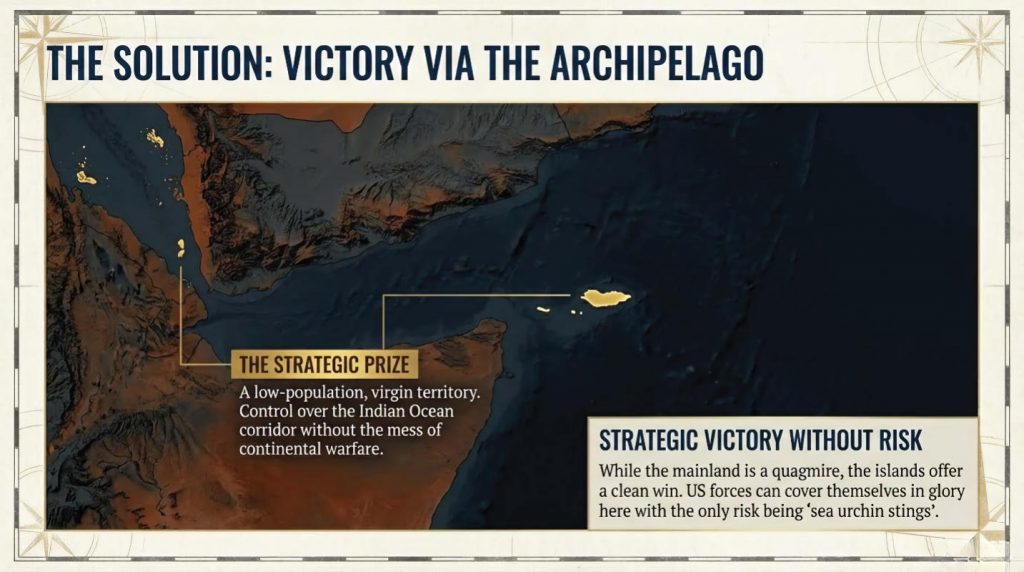
The Strategy of the Archipelago
Hedy Belhassine identifies the shift from land conflict to maritime control.
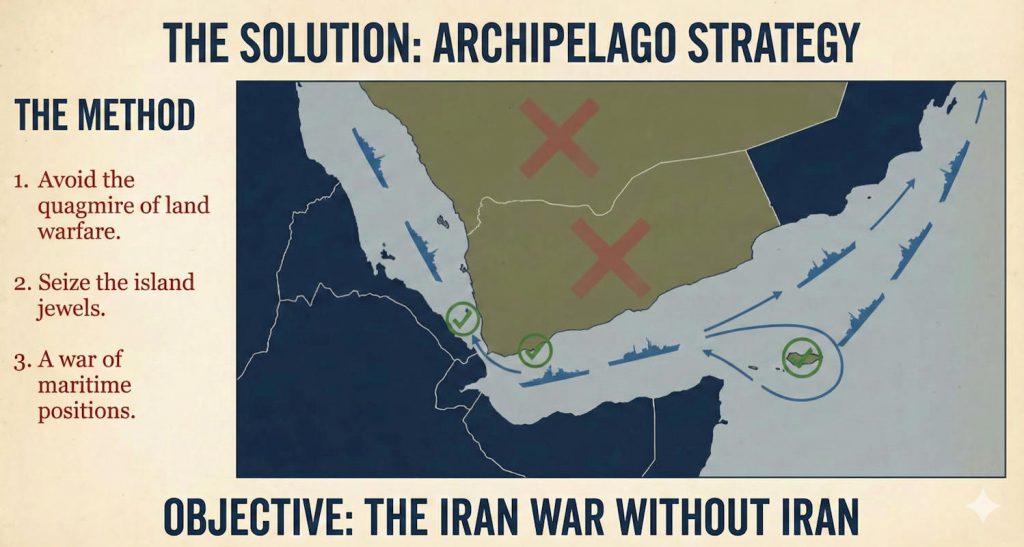
The stake is no longer the conquest of populations (unmanageable in Yemen), but the mastery of passage points (Bab el Mandeb, Hormuz). He who holds the islands (Socotra) holds global trade.
The Shadow of China
Finally, the reminder regarding Djibouti is capital. In this strategic pocket handkerchief, enemies rub shoulders. Any brutal American intervention in Yemen or Iran would directly threaten the Chinese “New Silk Roads,” risking the internationalization of a conflict that Trump would like to keep regional and profitable.
See also:
- La guerre d’Iran sans l’Iran — (2026-0130)
- The Iran War Without Iran — (2026-0130)
- Der Irankrieg ohne den Iran — (2026-0130)