Vice-amiral (2s) Christian Girard - Photo © DR
Admiral Christian Gérard

Decoding: On the War in Ukraine

The Essentials by Vice-Admiral Christian Girard (ret.) — Toulon, 25 September 2026. Ukraine has held. Ukraine is holding. The total war launched by Russia against its neighbour in February 2022 drags on. No reasonable prospect […]
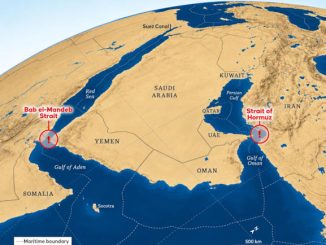
Bab el mandeb — Carte Levant Time/Roger Barake
Jérôme Denariez

Ormuz, Red Sea: The Gulf War Enters European Budgets

Iran will likely emerge from the conflict weakened. That does not mean the United States will emerge victorious. For several weeks now, this war has been acting less on territories or military capabilities than on flows, delays, costs, and expectations. For European companies building their 2027 budgets, Hormuz is no longer a distant geopolitical question.

[…]

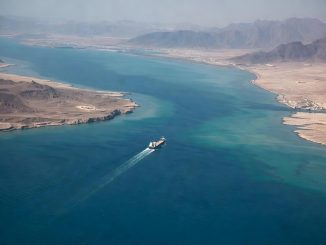
Détroit de Bab el Mandeb — Photo © European-Security
Admiral Christian Gérard

The Bab-el-Mandeb Strait — Toward European Action?

Admiral Christian Girard offers here a technical and historical corrective that stands in sharp contrast to the media excitement of the moment. While television panels sound the alarm over the simultaneous closure of the Arabian Peninsula’s two great maritime chokepoints, he recalls a structural difference too often overlooked: Hormuz has no maritime alternative whatsoever, whereas Bab-el-Mandeb can always be bypassed via the Cape of Good Hope — a route already carrying a large share of traffic since 2024.

[…]

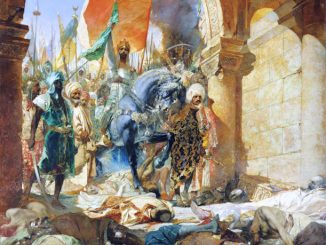
Entrée de Mhemet II dans Constantinople en 1876 par Benjamin Constant — Photo Musée des Augustins
Françoise Thom

Count Dracula’s Food Chain

Why does Putin persist so relentlessly in trying to destroy Ukraine, at a cost in blood and treasure that even his own services must surely judge unsustainable? In this piece, historian Françoise Thom sets aside the usual explanations — revenge for the 2004 Orange Revolution, a desire to humiliate the West, fear of a democratic beacon on Russia’s doorstep — as insufficient on their own. Instead, she starts from the Russian president’s own words, increasingly unguarded with age and the habit of absolute power: in 2024, he admits that peace bores him and that action, even in the form of whistling bullets, reassures him; in 2026, he worries about what Russians will do once the war ends; and, speaking to teachers, he bluntly compares the world to a food chain in which orcas tear apart polar bears — a lesson, he says, that should be taught to children to justify the war.

[…]

Mohammed Ben Salmane — Portrait © European-security
Hedy Belhassine

Macron and Ben Salman’s Amusement Park

There are meetings at the Élysée that make less noise than they should, and others that make a great deal of noise for, in the end, not very much — or rather, for something else entirely. Saudi Crown Prince Mohammed Bin Salman’s visit to Paris falls squarely into that second category, and Hedy Belhassine takes visible delight in picking it apart.

On paper, the story of the day was a €6 billion leisure park in Cergy-Pontoise, presented with great fanfare by the President as the biggest deal since Disneyland Paris. In substance, some twenty agreements were signed that day — and curiously, it was the sole manga-and-video-game project that made headlines, while Israel’s recognition conditioned on a Palestinian state, the Iranian and Yemeni threat to the Kingdom, the Turkish-Pakistani-Saudi defence pact, and the near-rupture in Riyadh-Abu Dhabi relations all slipped completely under the radar.

Belhassine doesn’t stop there: he digs up a forgotten ghost, that of Gaith Pharaon — a colourful Saudi financier who, in the 1980s, already owned a 55-hectare plot in… Cergy-Pontoise, where he had built an amusement park, Mirapolis, liquidated two years after its inauguration by Jacques Chirac. A curse that may well repeat itself — unless, as the author suggests between the lines, the real strategic project lies elsewhere: in a certain “Prometheus Plan,” priced at €620 billion.

Hold on tight — the irony here is wielded like a blade.

[…]

Le tableau de bord des horloges : production, R&D, déploiement, maintenance — piloter simultanément plusieurs temporalités, l’enjeu central d’une BITD moderne — Illustration IA © European-Security
Jérôme Denariez

A Defense Industrial Base, Several Clocks

Debates about the war economy are often reduced to a question of volume: how many shells, drones, armored vehicles, billions? This reading is necessary, but insufficient. The war in Ukraine shows that a defense industrial base does not run on a single rhythm. It must simultaneously maintain platforms designed to last decades, mass-produce consumable equipment, modify systems within weeks, replace an unavailable supplier, finance ramp-ups in output, and keep producing even as its own industrial depth becomes a target.

[…]

Il ne s’agit pas de sauver le soldat Trump, mais de défendre l’Europe — Photo © European Security
Admiral Christian Gérard

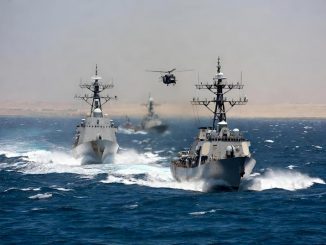
The Strait of Hormuz Reopened?

The renewed American military offensive against Iran resumed in February 2026, following the twelve-day war launched by Israel in June 2025. The last two months have been marked by geostrategic uncertainty — mutual threats of destruction, legal claims, bombardments in the Gulf, clashes in the strait, a ceasefire agreed and swiftly denounced. Yet an uncertain and unstable status quo now appears to have settled in between Iran and the United States, particularly regarding the Strait of Hormuz, as well as the conflict’s other stakes, with each side firmly holding its positions and claims.

[…]

Le 54ème Salon du Bourget, du 19 au 25 juin 2023
Jérôme Denariez

The Price France Pays Three Times

France is not at war. Yet it is already paying the bill: costlier energy, disrupted supply chains, public finances under strain. Jérôme Denariez makes the case without detours — war is written into the accounts […]