The renewed American military offensive against Iran resumed in February 2026, following the twelve-day war launched by Israel in June 2025. The last two months have been marked by geostrategic uncertainty — mutual threats of destruction, legal claims, bombardments in the Gulf, clashes in the strait, a ceasefire agreed and swiftly denounced. Yet an uncertain and unstable status quo now appears to have settled in between Iran and the United States, particularly regarding the Strait of Hormuz, as well as the conflict’s other stakes, with each side firmly holding its positions and claims.
The Essentials
- Following Admiral Cooper’s (CENTCOM) August 28, 2026 announcements, the central section of the Strait of Hormuz has reportedly been demined by the Americans with the help of private contractors — with no detail on the means used or when they were deployed
- The announcement belongs primarily to the information war, whose global economic effects outweigh the operational reality
- Oil traffic is resuming, but remains considerably reduced, probably under US Navy protection and despite sporadic Iranian attacks
- Iranian offensive capabilities have been significantly reduced by recent American air strikes, though Washington is not seeking to take control of the Iranian coastline
- The current status quo suits the American strategy of gradually strangling the Iranian economy, but also electoral considerations and a US military logistics chain showing signs of strain
- The conflict’s other stakes (relations with Israel, the nuclear and ballistic dossier, the nature of the regime) continue behind the scenes via Pakistan, off the media’s radar — and without the Europeans
Contents
by Vice-Admiral Christian Girard (ret.) — Toulon, August 29, 2026.
According to very recent statements from Admiral Cooper, head of American operations in the region (CENTCOM), the strait’s central section has reportedly been demined by the Americans with the help of private contractors. Using what kind of means, deployed since when? The absence of concrete information in answer to these questions raises serious doubts — not about the outcome, but about the nature of the operations conducted and their real purpose.
The announcement belongs primarily to the information war, whose global economic reverberations matter more than the operational reality itself. President Trump’s multiple and contradictory statements have lost all credibility, and the approach of the midterm elections is leading him to divert media attention — and thus his own discourse — from an issue that remains a top priority for the global economy.
The very reality of the demining has not been proven. It has already been the subject of earlier commentary, alongside an assessment of the very real global economic consequences that political and legal statements about the strait’s legal status have had on maritime shipping insurance and on the world petroleum products market.
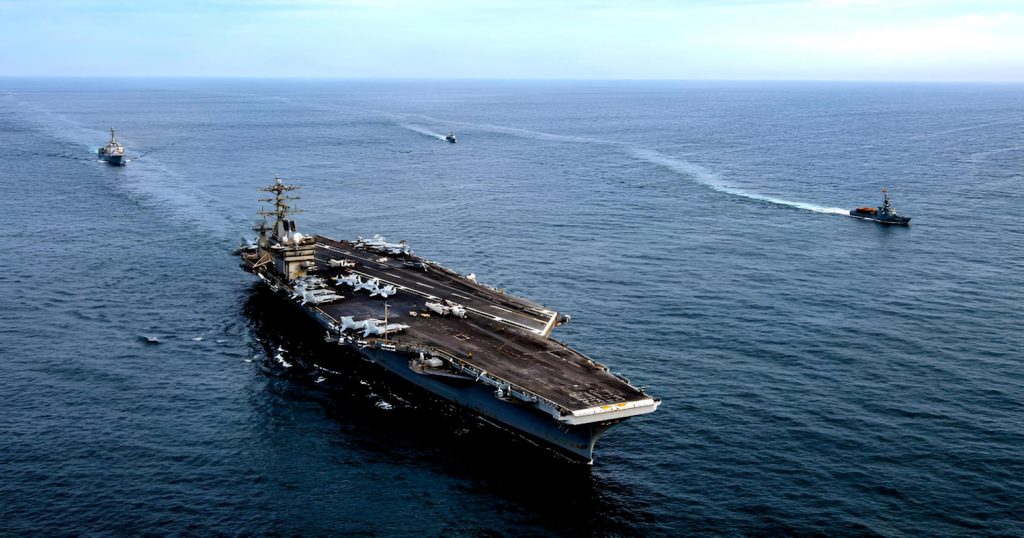
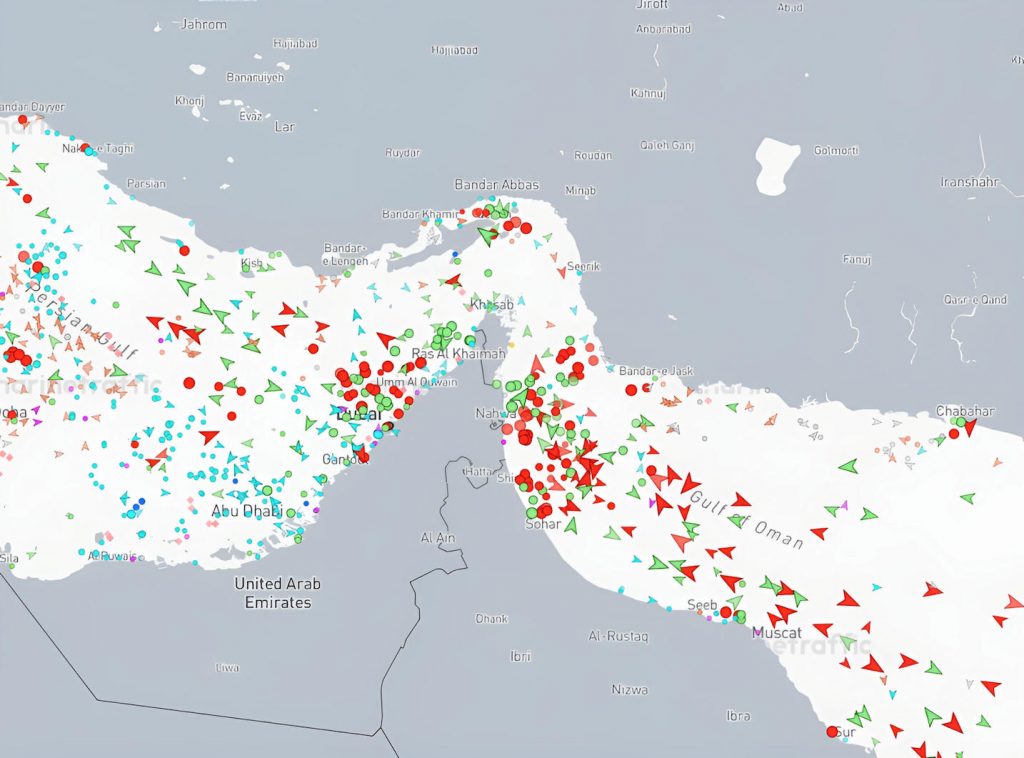
On the operational side, even considerably reduced, oil tanker traffic has been resuming for some time now, probably under the protection of the US Navy, though sporadic Iranian attacks continue. Does this mean the Iranians no longer have the intelligence means to effectively control traffic by identifying and systematically attacking it? That is certainly the case, at least in part, following the recent American air strikes on the strait’s coastline. Iranian offensive capabilities have probably been considerably reduced, if not entirely destroyed. Yet despite their military superiority, the United States is refusing to take control of the Iranian coastline of the Gulf, and of the strait in particular — which is understandable given the recent history of American interventions on the ground and the current domestic political situation.
Can the false ceasefire now in place last?
It suits the American strategy of gradually strangling the Iranian economy, as well as upcoming electoral considerations — but also the fatigue of American military resources, whose logistics show signs of strain. The current American strategy can only produce decisive effects over the long term. Previous analyses have shown that historically, such strategies do not prevail. The operational stake now lies in the resilience of Iranian military power, and in its ability to retain control of the strait even as the balance of forces turns increasingly against it. Iran, meanwhile, continues to claim control over traffic while negotiating the terms with Oman.
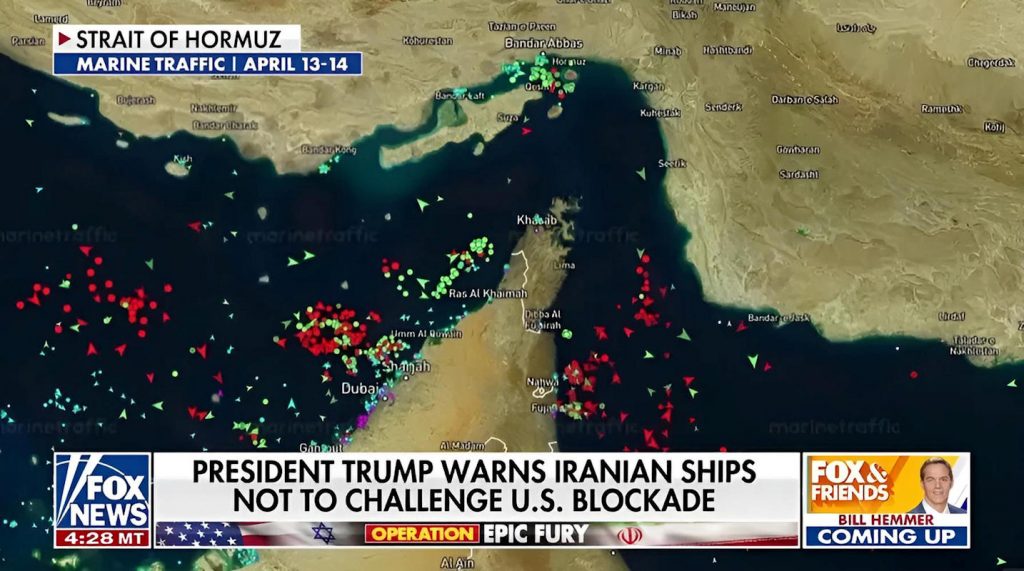
When Donald Trump publishes maps of the strait under the American flag, he signals that the strait is gradually coming under US control. The coming weeks will confirm — or not — this reality, which will be measured by the actual resumption of oil traffic.
As for the war’s other, genuine stakes — relations with Israel, the nuclear and ballistic dossier, the nature of the regime — they have certainly not disappeared, and are likely still being negotiated diplomatically through Pakistan. They have suddenly dropped off the media’s radar, with European countries regrettably still absent from negotiations with Iran.
Will Iran be effectively supported by Russia and China, in particular militarily? That seems likely — the war risks dragging on as in Ukraine, not only in the fog but above all in indecision, with a very negative short-term outcome and an unfavourable long-term outlook for the United States, but also for the Europeans, whose absence will not shield them from the consequences of the major geopolitical transformation now underway in the Middle East, one they are not party to, even though they were once at the forefront of negotiations with Iran over its nuclear programme in 2015.
Christian Girard
[1] « The Blockade of the Strait of Hormuz (1) » — (2026-0429)
[2] « Should We Save Soldier Trump? (2) » — (2026-0514)
See also:
- « Le détroit d’Ormuz réouvert ? » — (2026-0829)
- « Die Straße von Hormus wieder geöffnet? » — (2026-0829)
- « The Strait of Hormuz Reopened? » — (2026-0829)
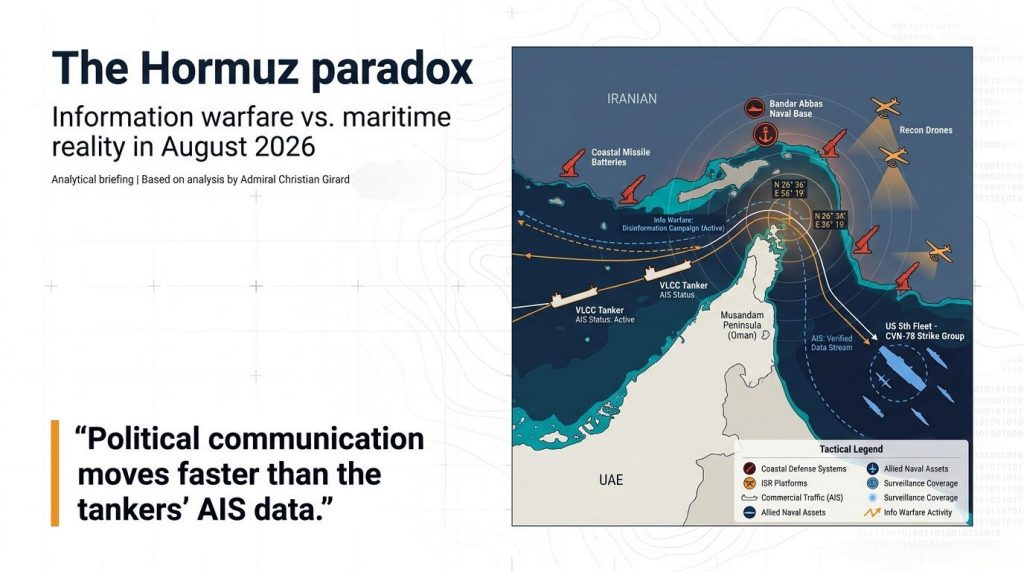
Analysis: The War of Numbers Behind the War of Information
Admiral Girard is right to be wary of announcement effects. The data available as of the date of his article confirms, in hard figures, the gap he identifies between American communication and the reality of shipping traffic.
Before the war, the Strait of Hormuz carried an average of 21.6 million barrels per day in the fourth quarter of 2025. By the second quarter of 2026, in the midst of the conflict, that volume had collapsed to 4.9 million barrels per day — a drop of more than 75%. The crisis peaked in early March, when traffic fell to a single commercial vessel on March 7, against a historical average of 138 ships a day.
This is the context in which Admiral Cooper’s announcement — the one Admiral Girard is responding to — must be read. As of August 28, 2026, the very day his article was published, the sources flatly contradict one another: CENTCOM claims, via CBS News and IranWire, that the strait’s shipping lanes have been cleared of IRGC mines and are open, but shipping companies remain unconvinced. Traffic data itself diverges sharply depending on the source: the latest published PortWatch reading, dated August 23, recorded three transits against a pre-crisis baseline of 85 a day, while Lloyd’s List Intelligence, cited by USNI News as a single unverified source, reported 114 transits over the week of August 17-24, up more than 30% week-on-week. Such a gap between two readings of the same traffic, on the same date, speaks volumes about the opacity Admiral Girard denounces.
The oil market itself leaves little room for ambiguity: Brent crude was trading at $88.29 a barrel on August 28, still far above pre-war levels. Persian Gulf exports, according to Goldman Sachs, have indeed climbed back to 15-16 million barrels a day, but remain 7 to 8 million barrels below pre-conflict volumes, even though they now far exceed the low point of 5-6 million reached in March.
The US military, for its part, claims an active role in this partial recovery, stating it has helped transport more than 660 million barrels of oil through the strait since early May — roughly 7 million barrels a day over recent weeks — even as one RBC analyst cited by CNBC estimated, around the same time, that the war was still costing the global market about 8 million barrels a day.
These figures therefore validate, point by point, Admiral Girard’s intuition: the announced demining has not yet produced any measurable, verifiable effect on actual traffic, and the gradual recovery in exports owes far more to the attrition of Iranian offensive capabilities and to the ongoing Iran-Oman negotiations than to any genuine “liberation” of the strait. Political communication, as so often, is outrunning the tankers’ AIS data.