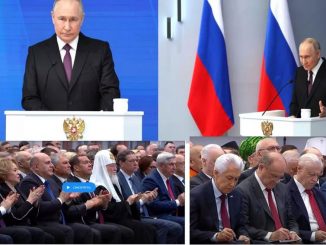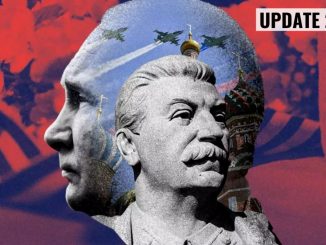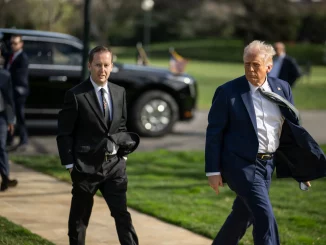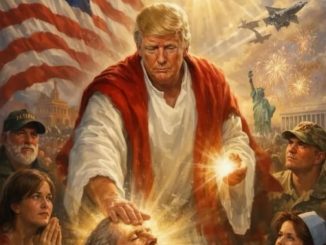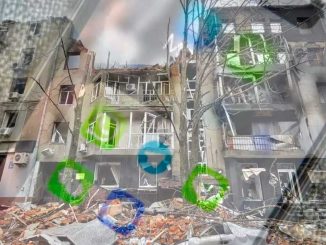
In 2026, Trump’s America dismantled in a single year what fifty years of transatlantic diplomacy had patiently built. Facing it, Europe — and Germany in particular — watches the void open up without yet daring to fill it.
The Flag Nobody Wants to Pick Up
If I had to sum up this piece in a single drawing, I would choose this excellent cartoon by Patrick Chappatte, published in Der Spiegel, which says almost everything in one satirical image. Trump, baseball bat in hand, has just reduced the Press and the University to rubble — the very pillars of what used to be called the free world. In his other hand, a flag: “Leader of the Free World.” He holds it out, almost with contempt. “Want this? I don’t need it anymore.” Facing him, a helmeted man, the word “Germany” stamped on his helmet, hesitates, hands trembling, unable to make up his mind to take it.
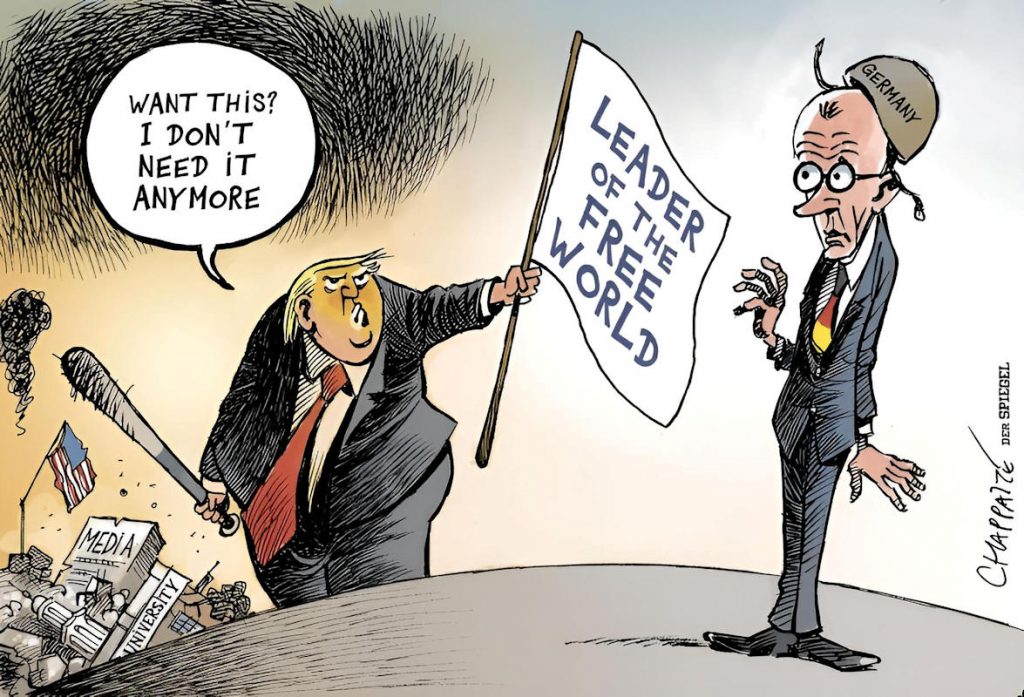
That is the whole scene of 2025-2026 summed up in a single pen stroke. And it raises a question that neither Washington nor Berlin seems in any hurry to settle: if America truly gives up carrying this flag, who picks it up.

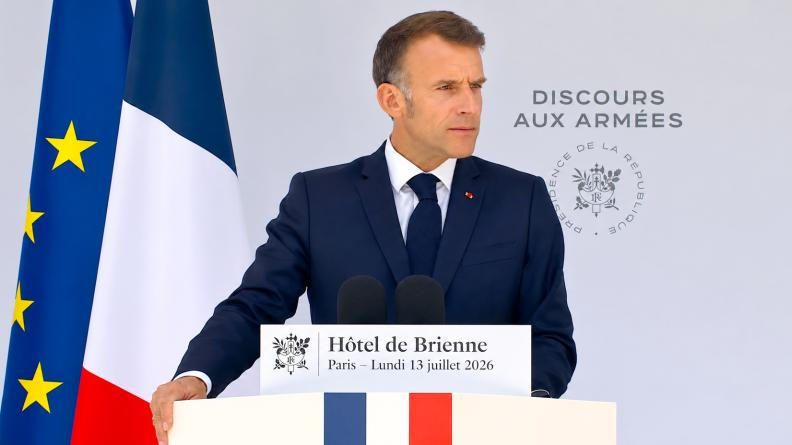
Contents
by Joël-François Dumont — Paris, le 26 août 2026.
Introduction: Never Depend on a Single Protector
De Gaulle had learned the lesson long before the question became urgent again. He did not need to cite 1920 to remember it: the US Senate, by twice refusing to ratify the Treaty of Versailles, had left Europe the sole guarantor of a peace it no longer had the means to guarantee — a twenty-year “pause” before the very same Germany returned, more devastating still. It was this lesson, more than any other, that guided France’s withdrawal from NATO’s integrated command in 1966 and its choice of an independent nuclear deterrent: never let the country’s security rest on a single external promise, however solid it may seem at the time.
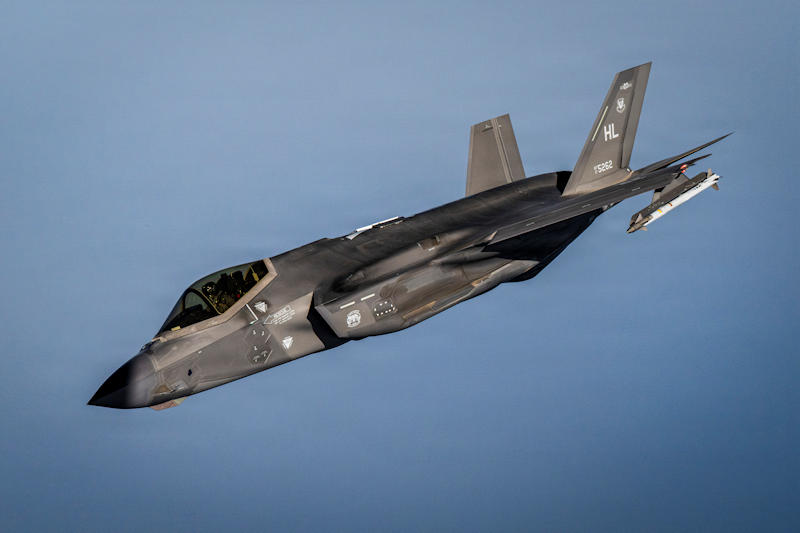
That caution could be summed up in a more homespun phrase: never put all your eggs in one basket — something Germany, by buying F-35s rather than a European alternative, appears to have forgotten today. And yet it once made the opposite choice: the Transall for transport, the Alpha Jet for training — two successful Franco-German programmes, built at a time when states still made the calls, when they had genuine conductors rather than egos to manage.
Trump and the Transatlantic Rupture
In a single year, Donald Trump did what fifty years of tension, oil crises, and disagreements over Iraq or Iran had never managed to do: he gave America’s own allies the feeling that it was no longer a partner but a variable they now had to watch warily. The Gulf, burned by brutal diplomatic reversals.
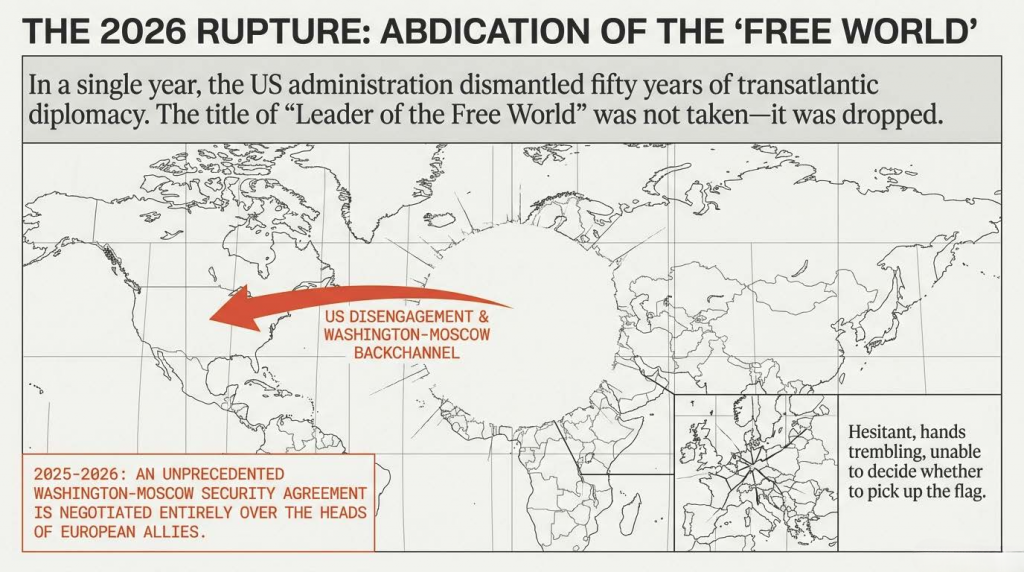
Japan, Taiwan, South Korea, forced to reconsider their certainties about the value of an American umbrella they had taken for granted. And Europe, a spectator to a Washington-Moscow rapprochement being negotiated, as a Le Monde op-ed already summed it up in March 2025, over the heads of those most directly concerned. If this is not called betrayal, it is at any rate felt as such in Asia, in the Middle East, and in Europe alike.
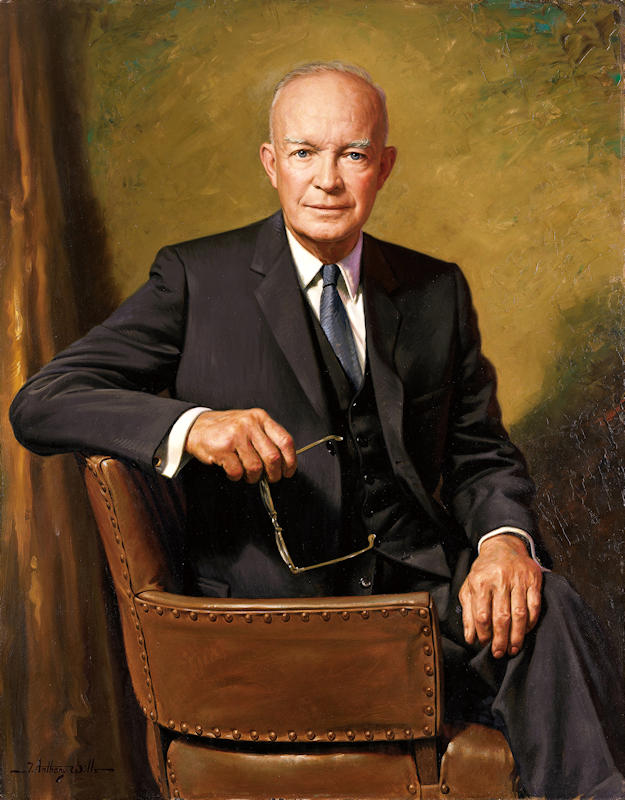
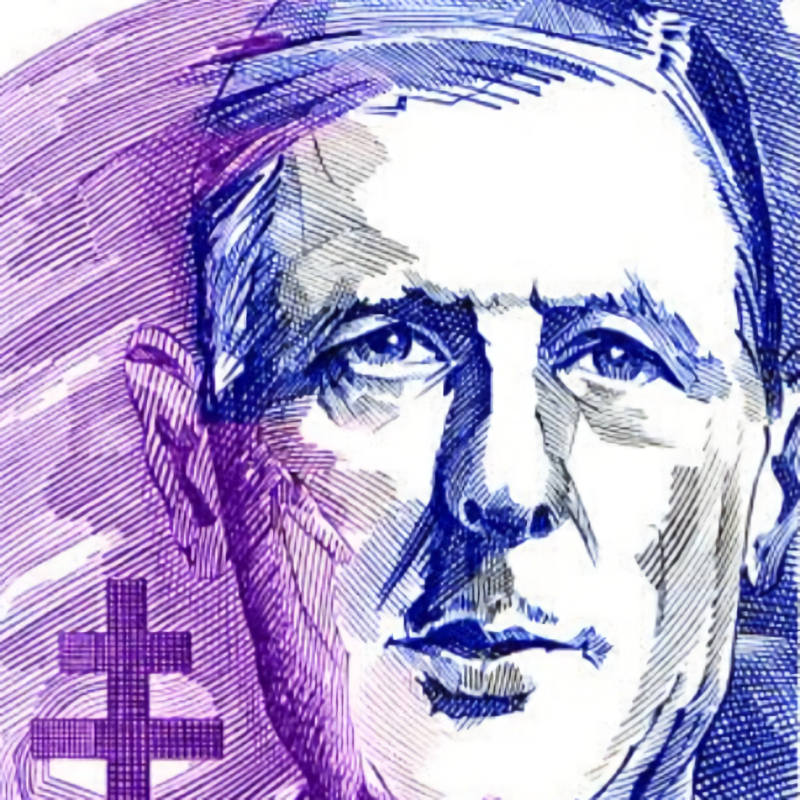
None of this should have surprised anyone who had read de Gaulle. In November 1959, in the thick of his dispute with Eisenhower, the General was already asking: who can guarantee that the two powers holding the nuclear monopoly would not, one day, come to an understanding to divide up the world between them? Sixty-six years later, a Trump-Putin agreement negotiated without the Europeans gives that question a relevance that no one in Brussels or Berlin had seriously anticipated.[01]
De Gaulle was not alone in seeing it coming. Four years after the signing of the Élysée Treaty, he confided to Alain Peyrefitte an unsparing diagnosis of the future of relations with Washington: the Americans, he said, would end up being hated by everyone — including their most unconditional allies.[02] Thirty years later, it was François Mitterrand’s turn to state the same finding in even blunter terms: France, he confided to Georges-Marc Benamou shortly before his death, was at war with America — an economic war, permanent, with no visible casualties, but a war to the death all the same, against a “voracious” country in pursuit of “power shared with no one over the world.”[03]
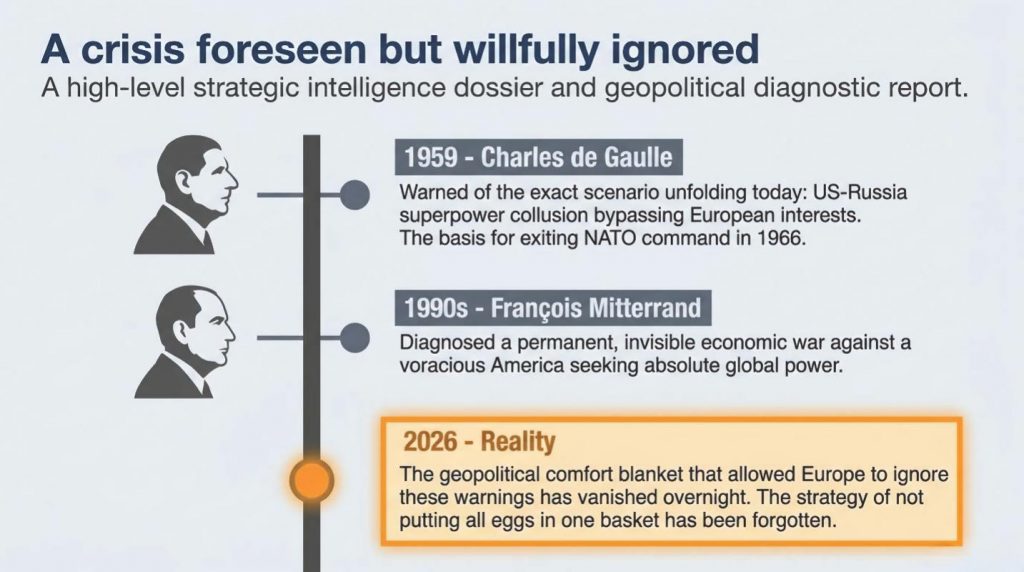
Three French presidents, three generations, one and the same diagnosis, repeated each time: Atlantic dependence was never a smooth, quiet river. What changes in 2025-2026 is that the comfort which once allowed everyone to avoid drawing the consequences has vanished overnight.

That is precisely the thesis defended by Emmanuel Todd and Régis Debray, taken up and developed on this site. The American walk-away, however brutal, does not condemn Europe — it liberates it. Todd goes further, turning the dominant narrative on its head: Europe believed it was allying itself with the camp of Good against that of Evil, when in reality it had chained itself to a power whose nihilism, in his view, exceeds that of the very adversary it claimed to be fighting. Debray, for his part, invokes the figure of the Herodian — that collaborator who imitates the victor rather than resisting him — to describe a Europe that has become a museum, a backdrop for wedding photographs, while the powers that actually matter keep acting, projecting, giving offence.

The counterpoint offered by Admiral Christian Girard, in that same piece, nonetheless deserves a hearing before one gives in to the thesis’s appeal: Todd and Debray, he argues, are guilty of excessive abstraction.
“Europe” is not a fully formed political actor — it is an assembly of co-owners with no chairman, structurally incapable of carrying a single strategic decision.
The only tangible reality remains that of the nations: France, Germany, each with its own means, its own reflexes, and — this is the whole subject of this body of work across six previous instalments — its chronic inability to agree with the other on what matters most.
Vice-Admiral Christian Girard © Photo All Rights Reserved
The counterpoint offered by Admiral Christian Girard, in that same piece, nonetheless deserves a hearing before one gives in to the thesis’s appeal: Todd and Debray, he argues, are guilty of excessive abstraction.
“Europe” is not a fully formed political actor — it is an assembly of co-owners with no chairman, structurally incapable of carrying a single strategic decision. The only tangible reality remains that of the nations: France, Germany, each with its own means, its own reflexes, and — this is the whole subject of this body of work across six previous instalments — its chronic inability to agree with the other on what matters most.
The Bridge, Not the Abstraction
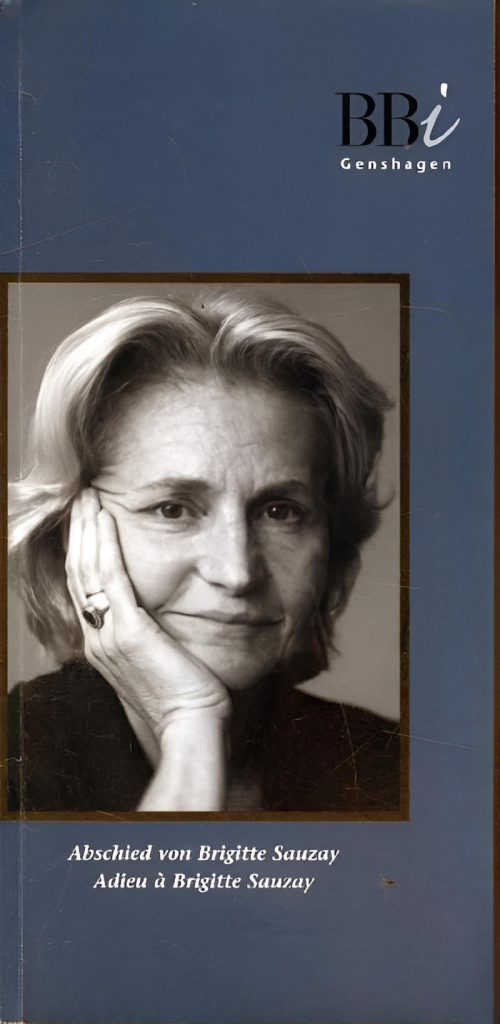
There are figures who build bridges between two countries without ever seeking recognition. Brigitte Sauzay was one of them, and among the most discreet. Born in 1946, she spent half a century at the heart of Franco-German relations — interpreter to Georges Pompidou, Valéry Giscard d’Estaing and then François Mitterrand, before becoming, a rare thing for a Frenchwoman, Chancellor Gerhard Schröder’s personal adviser on Franco-German affairs.
Together with the historian Rudolf von Thadden, coordinator of Franco-German cooperation from 1999 to 2003, a man steeped in French culture, they founded the Berlin-Brandenburg Institute, the BBI, in Genshagen, which later became the Genshagen Foundation. For years, she worked to develop Franco-German youth exchanges — a commitment the OFAJ (the Franco-German Youth Office) still honours today through one of its programmes, which bears her name.
She passed away in 2010. She also left behind three books, including Le Vertige allemand (“The German Vertigo”), publi-shed in 1985 by Olivier Orban — four years before the fall of the Wall — in which she had already detected, beneath the country’s unrest (anti-nuclear pro-tests, demonstrations against the Euro-missiles, the rise of the Greens), a desire for reunification that few dared voice at the time. She invoked Nietzsche there, in a line that seems tailor-made for this instalment as much as for hers: “The Germans are always the day before yester-day and the day after tomorrow.”
Photo (BBi) Berlin-Brandenburgische Institut © Genshagen Foundation
Passing through Paris, she once shared with me a diagnosis that has stayed with me: “the exotic dimension of the Franco-German relationship has disappeared.” Each of the two countries now sees in the other exactly what it had always tended to see — a partner, perhaps a privileged one, but nothing more — “it is onto Europe itself that this expectation has been transferred, this desire for discovery that once played out exclusively between Paris and Bonn.”
Perhaps it is precisely this shift that explains the fragility Admiral Girard points to: we have entrusted to a chairmanless abstraction the expectation we no longer knew, or no longer wished, to address directly to our neighbour.
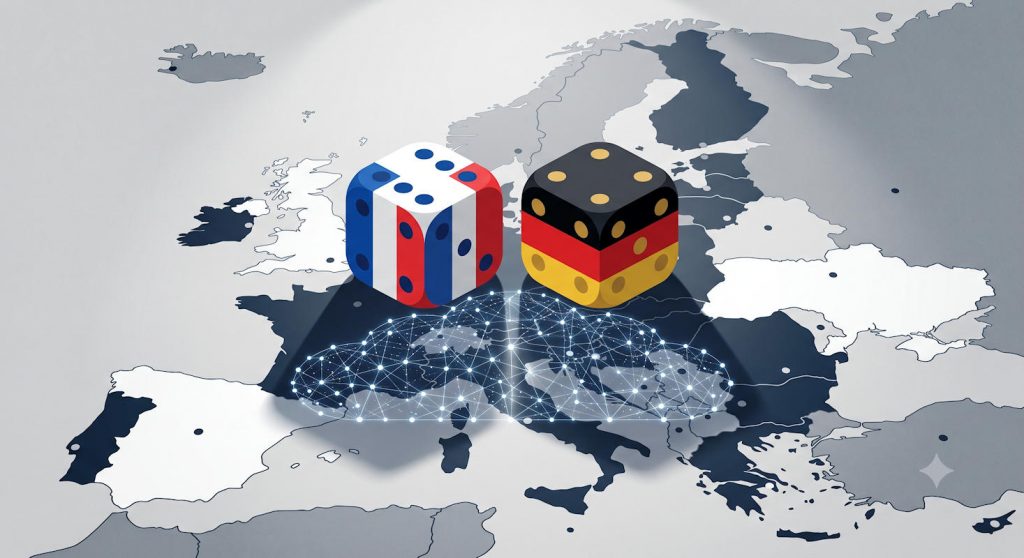
This is where the thread reconnects with what we already knew. The American walk-away does not pose a question to “Europe” in general. It poses a precise question to two countries in particular: France, clear-sighted but politically weakened; Germany, wealthy but paralysed. And that is the question we must now look squarely in the face.
Germany Sabotaging Itself
There is a scene, this Wednesday 26 August 2026, that is worth every statistic put together: two major French dailies, Les Échos and Le Figaro, devote their business front pages, on the very same day, to the agony of Volkswagen. That the most sober of France’s economic press should come to describe a German giant as being “in the eye of the storm” is no accident of timing — it is a symptom.

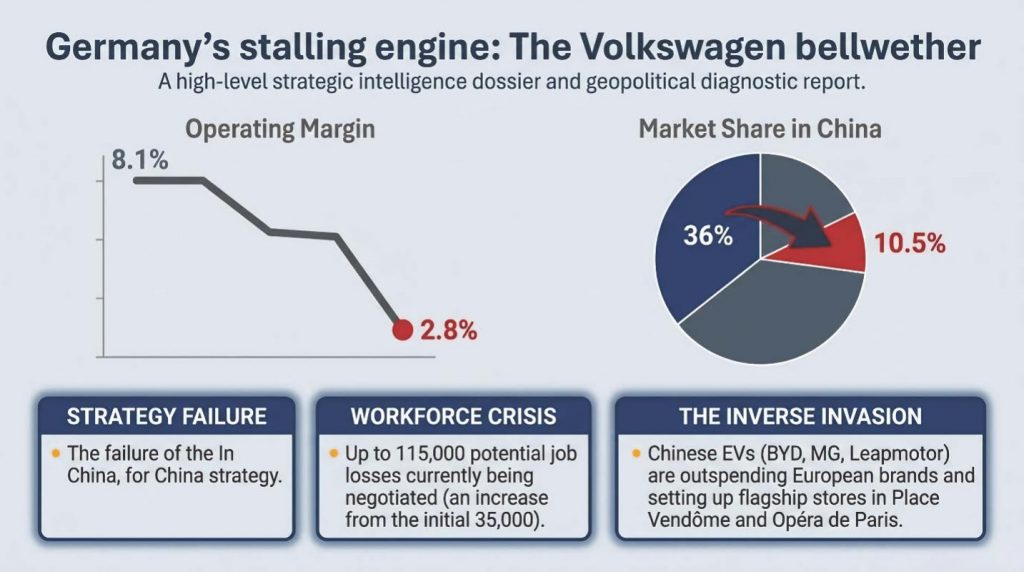
The Wolfsburg group had already committed, at the end of 2024, to eliminating 35,000 jobs by 2030. It is now negotiating 50,000 more — unions are privately citing a total figure that could top 115,000 positions. Its operating margin, still at 8.1% in 2022, collapsed to 2.8% in the first half of 2025. On its own historic home turf, China, its market share has fallen from 36% at its 2017 peak to 10.5% today — the “In China, for China” strategy, launched three years ago to produce as fast as local manufacturers, simply has not worked.
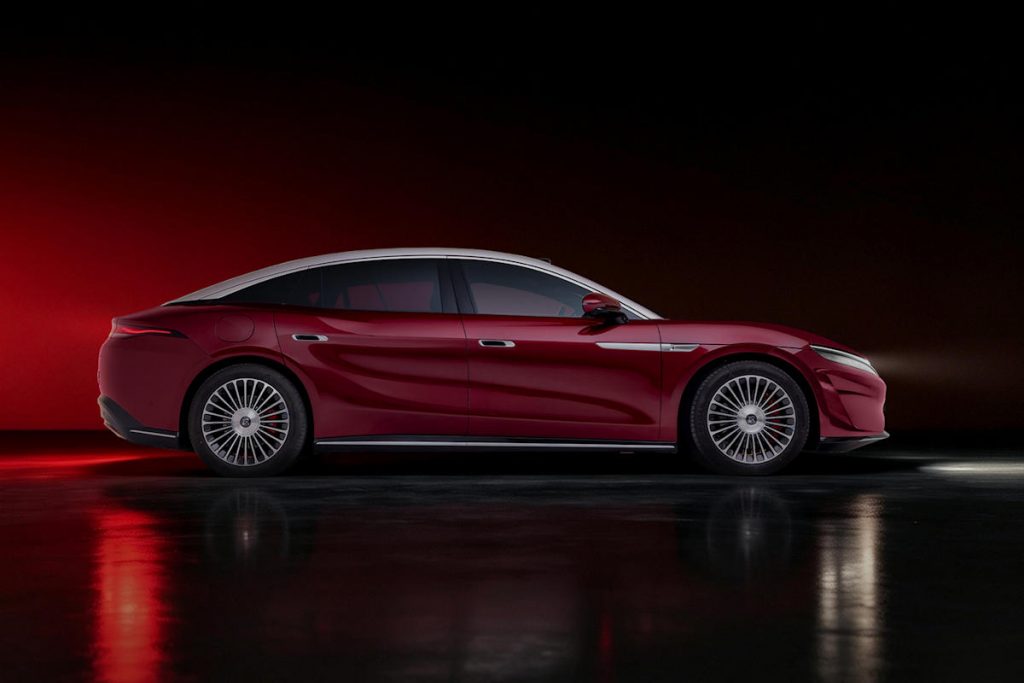
Even in Europe, where Volkswagen remains the leading manufacturer, Chinese brands — BYD, MG, Omoda & Jaecoo, Leapmotor — are spending considerable marketing budgets, setting up shop on Place Vendôme and at the Paris Opera, and steadily eating into the market.

Volkswagen is not an isolated industrial accident. It is a magnifying mirror of what is affecting the German economy as a whole: a badly managed electric transition, a commercial dependence on the East and on China that recalls, in an even more dangerous form, the one once denounced over Russian gas, and an automotive sector — the pride of the German economic model for decades — now faltering at the very moment the country needs all its productive strength.
Because it is not only the factories that are emptying out. So are the minds. In 2025, nearly 289,000 Germans left their country — a level not seen since 2016 — for a net migration deficit of more than 96,000 people. Nearly two-thirds of those leaving are aged between 25 and 40; three out of four hold a degree. That is precisely the segment of the population the German economy needs most, the very one that should be carrying the industrial and military rebuilding the country has been announcing since 2022.

According to a March 2026 poll, one young German in five is now considering leaving for good. Switzerland, Austria and Spain top the list of destinations — countries where, tellingly, neither salaries nor industrial prestige alone explain the appeal: it is political polarisation and uncertainty about the country’s future that weigh most heavily on the decision to leave.
And this is where the circle closes on the domestic fragility already noted in the previous instalment.
A chancellor, Friedrich Merz, caught up in an internal CDU revolt, at the mercy of the slightest misstep ahead of regional elections where the AfD is neck-and-neck with, or ahead of, his own party in several Länder.
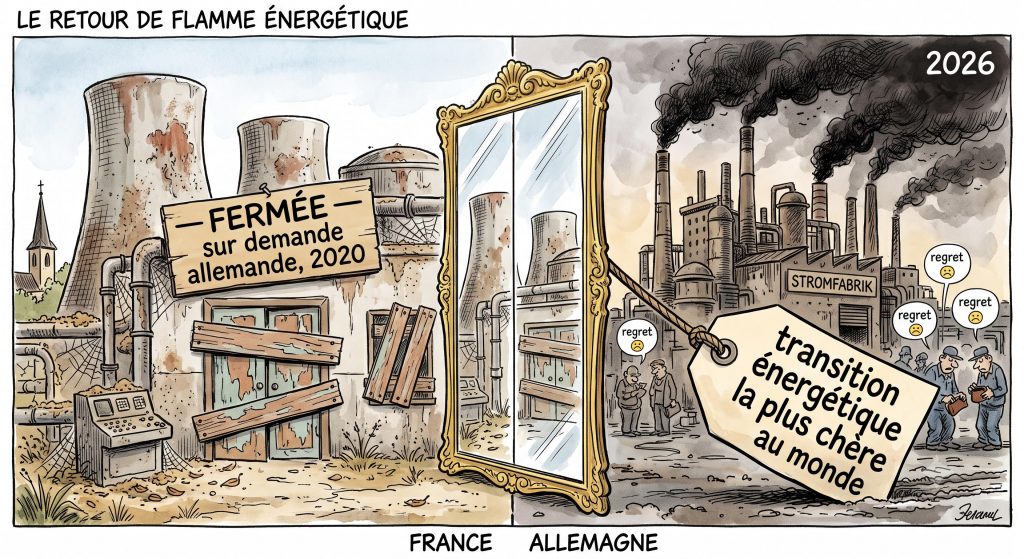
An energy sector in disarray — nuclear power abandoned, reserves at rock bottom, a return to coal, a widening deficit. An automotive industry, the country’s proudest asset, laying off tens of thousands. A graduate generation voting with its suitcases.

Faced with all this, Germany has the financial means to become Europe’s leading military power — Merz himself has promised it.
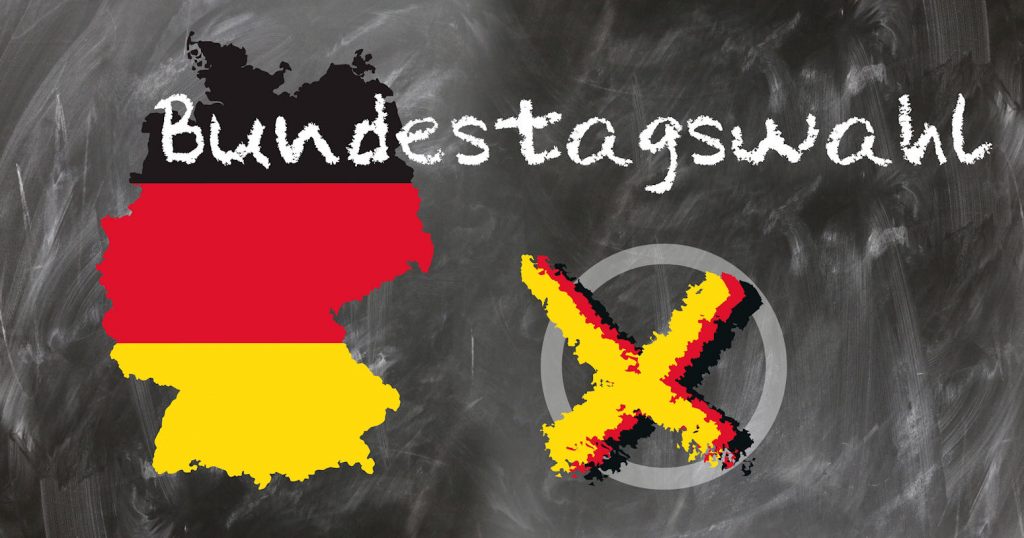
But building an operational air force takes fifteen years, not two. Training an officer takes years, not months. And money, however abundant, has never been enough on its own to buy time, doctrine, or — perhaps most gravely — the political imagination needed to turn this crisis into a rebound rather than a shipwreck.
“Imagination is more important than knowledge,” a certain Albert Einstein wrote in 1929 — born German, forced to flee his country four years later. Nearly a century before the 289,000 departures of 2025, he had already, without knowing it, summed up what his native country was about to lose, and continues to lose today: not knowledge, of which Germany still has plenty, but the imagination to make something of it.
France, Clear-Sighted but Cash-Strapped
On the French side, the picture is almost a mirror image. Where Germany has the means but lacks the will and the imagination to use them, France has strategic clarity — on Ukraine, on European rearmament, on the need not to depend on a single protector — but no longer the treasury to fund it without limit.
French public debt reached, in the first quarter of 2026, €3.536 trillion, or 117.5% of GDP — a level that kept climbing throughout the year. Every budget is now negotiated under pressure from jittery rating agencies and a European Commission that regularly calls Paris to order over its deficit. In this context, every euro spent on defence, however justified in the face of Russia and the American walk-away, must be fought for against every other line of an already exhausted budget — health, pensions, education. Emmanuel Macron may well be right on the substance; he says it, however, with the voice of a country that has less and less means to act on its own conclusions.
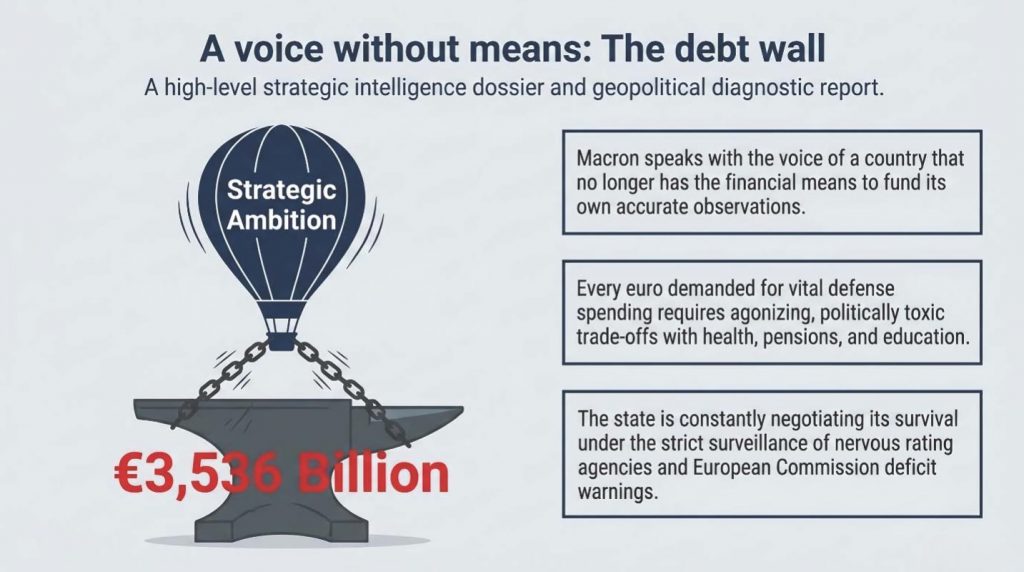
That is the whole French paradox of 2025-2026: the country that sees the present emergency most clearly is also the one with the least room to act on it. And perhaps it is this contradiction, more than any personal weakness of character, that explains why Macron’s clear-sightedness on Ukraine and rearmament has never translated, at home, into the political weight that such clarity would have deserved.
Joël-François Dumont
Sources
[01] Maurice Vaïsse, “The words of General de Gaulle in 1959 fit the reality of 2025,” Le Monde, 6 March 2025
[02] Alain Peyrefitte, C’était de Gaulle, Fayard/Gallimard
[03] François Mitterrand, quoted by Georges-Marc Benamou, Le Dernier Mitterrand, Plon, 1996
[04] “Farewell to History: Autopsy of a Europe Without a Destiny,” European-Security
[05] “Volkswagen’s future at the heart of a genuine arm-wrestle” and “The manufacturer under pressure in the strategic Chinese market,” Les Échos, 26 August 2026; “Stormy meeting with employees, restructuring on the horizon… Volkswagen in the eye of the storm,” Le Figaro, 26 August 2026
[06] RTS, “Germany is increasingly emptying itself of its young graduates, disillusioned by the state of the country,” June 2026; Konrad Adenauer Foundation, study cited, May 2026
[07] Albert Einstein, interview with George Sylvester Viereck, “What Life Means to Einstein,” The Saturday Evening Post, 26 October 1929
[08 ]INSEE, “At the end of the first quarter of 2026, the public debt ratio stands at 117.5% of GDP,” Informations rapides no.158, June 2026
See also:
- « France-Germany: The Machinery of Hatred 1805-1871 (1) » — (2026-0814)
- « France-Germany: The March Toward the Abyss 1871-1914 (2) » — (2026-0816)
- « France-Germany: The Paroxysm, 1914–1945 (3) » — (2026-0819)
- « France-Germany: From Ruins to an Emerging Europe, 1945-1959 (4) » — (2026-0820)
- « France-Germany: The Axis and Its Trials 1958-1989 (5) » — (2026-0821)
- « France-Germany: Love Me, Love Me Not 1990-2025 (6) » — (2026-0824)
- « France-Germany: Quo Vadis? 2025-2026 (7) » — (2026-0826)
Decryption: An Imagination on Standby
There is an almost cruel symmetry between the two countries that, more than any other European tandem, ought to be driving the surge this moment demands. Germany has the money but not the time, not the doctrine, and — Einstein could not have put it better — not the imagination. France has the clarity but no longer the means: every strategic conviction, in Paris, runs up against a wall of debt that leaves no room to translate it into action commensurate with the stakes.
Two different forms of the same affliction, at bottom. Volkswagen laying off tens of thousands while its best graduates pack their bags for Switzerland or Austria. A German chancellor at the mercy of the slightest misstep ahead of regional elections where the far right is nipping at his own party’s heels. A French president who reads Ukraine and European rearmament correctly, but who says so with the voice of a country under agency watch, where 117.5% of GDP in public debt turns every euro of defence spending into a painful trade-off.
And all the while, the clock is running. Neither Berlin nor Paris controls the timetable of what lies ahead — the war in Ukraine, an American disengagement confirmed month after month, a China advancing its industrial pawns while Europe debates its procedures. The delay the two capitals have accumulated, tangled up in their own egos and electoral calculations, is not the kind of delay one makes up with a last-minute sprint. Building an army takes fifteen years. Structurally fixing a debt takes a decade. Winning back the trust of a generation that has already packed its bags cannot be decreed in a single quarter.
So the question this seventh instalment poses is not quite the same as the one the sixth one posed. It is no longer simply a matter of noting that the Franco-German couple never existed — that finding has already been made. The question now is whether, absent a couple, two countries left on their own can still, each in its own way, pull themselves together in time. Georg Bucksch called for the return of great servants of the state. That wish still stands. But for it to come true, egos would finally have to yield before the deadline — France and Germany, failing to find each other again, would each have to find their own fundamentals again, before History, once more, decides in their place.
The flag Trump let fall is still there, on the ground. To this day, no one has yet picked it up.