Wealth makes you noticeable; visibility makes you discoverable; discoverability makes you vulnerable. You do NOT need to have known Epstein, or appear in any actual wrongdoing, to find yourself in the crosshairs.
The Essentials
- The Epstein files are entering public view. The Epstein Files Transparency Act, passed by Congress in November 2025, requires the Justice Department to publish “all documents and records … relating to Jeffrey Epstein” in a searchable and downloadable format.
- The disclosures are already driving public interest. On 12 December 2025, Congressional Democrats unveiled 19 photos from Epstein’s private estate; media outlets stress that appearing in such an image is “not evidence of wrongdoing”.
- For ultra-wealthy individuals the unique risk is visibility: names linked to personal information in an easily searchable form can make people discoverable, even if they had no involvement with Epstein.
- The danger is “symbolic violence”: vandalism, stalking, ambush or confrontation at a home, or threatening messages left at an address.
- Standard home defenses assume criminal motives like theft; they are not designed to stop protesters, internet mobs or obsessed stalkers.
- The answer is protective intelligence: a digital-footprint audit, address anonymization, staff briefings, online monitoring and behavioral response planning.
Contents
by Michael Braun, founder and CEO of MSB Protection (Beverly Hills, California) — First published on the MSB Protection blog, 12 December 2025; adapted for European Security with the author’s approval. Editors’ update: October 2026 —
The release of Jeffrey Epstein–related records has entered a new phase. In November 2025 Congress overwhelmingly passed (and President Trump signed) the Epstein Files Transparency Act, mandating DOJ to publish “all documents and records in possession of [the Justice Department] relating to Jeffrey Epstein“. The law requires those files to be made public in a “searchable and downloadable format“ within 30 days, and federal judges in New York and Florida have now granted DOJ’s request to unseal grand jury transcripts and investigative materials from Epstein’s various cases. One report notes that the files may encompass as much as 100,000 pages of evidence, including emails, flight logs, interviews, financial records, and correspondence. In short, an unprecedented trove of data on Epstein’s network will soon be accessible to anyone with an internet connection.
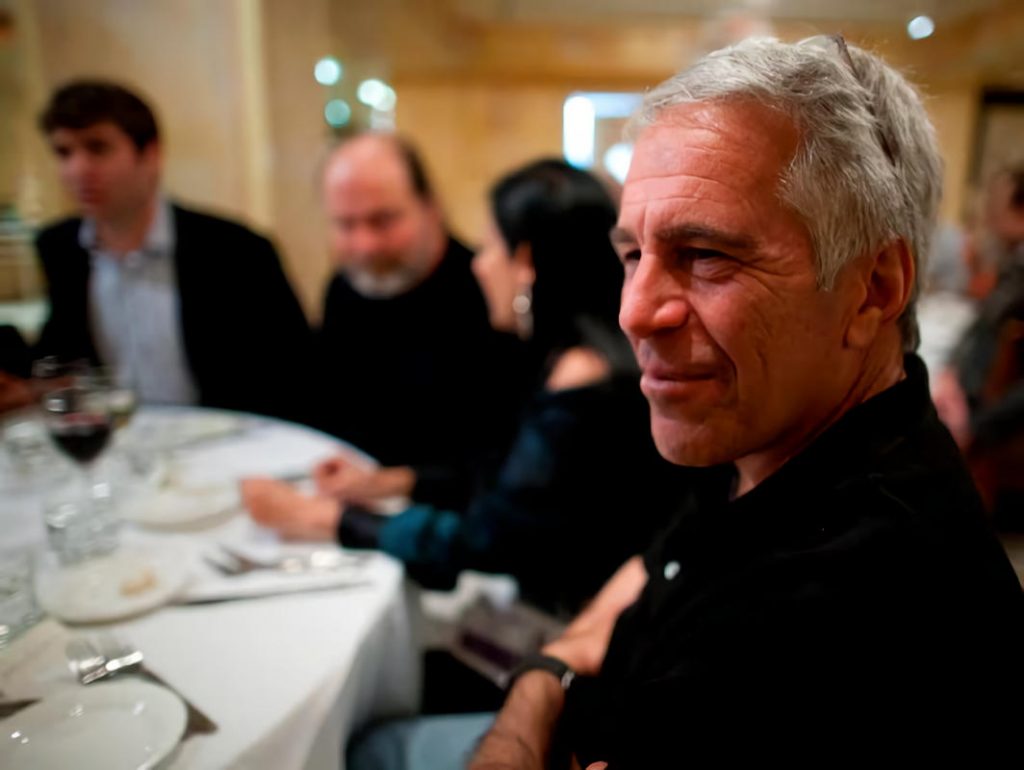
Even before those files are fully released, House investigators have begun rolling out snippets. On December 12, 2025, Congressional Democrats unveiled 19 photos from Epstein’s private estate. These images – part of a larger cache of more than 95,000 photos – include Epstein with former President Bill Clinton, Microsoft co-founder Bill Gates, and filmmaker Woody Allen. (The context of the snapshots is often unclear.) Notably, the disclosures have driven public interest: search trends show that Woody Allen spiked in popularity in Los Angeles after the photo circulated.[01] Media outlets emphasize that appearing in such an image is “not evidence of wrongdoing“. But in today’s climate, even innocent connections can spark intense curiosity and outrage.
Wealth + Visibility = Vulnerability
For ultra-wealthy individuals, Epstein’s files pose a unique risk: visibility. Wealth makes you noticeable; visibility makes you discoverable; discoverability makes you vulnerable.

The forthcoming data release will link names to detailed personal information (addresses, travel logs, donor lists, etc.) in an easily searchable form. Anyone can comb the files for prominent names and then find homes or offices in public property or corporate records. That raises the threat that well-off people could become targets of ideological violence or harassment, even if they had no involvement with Epstein.
- Mistaken Identity – A rich family could share a name (or part of a name) with someone in the files, triggering false accusations.
- Coincidental Associations – Attending a charity event or vacation connected to one of Epstein’s acquaintances (even years ago) could place a name in court records or email chains.
- Open Data Trails – California’s public records (property, tax, corporate filings) can be cross-referenced with any name found in the Epstein materials. A researcher could map a name from a flight manifest directly to a specific house.

As the data becomes searchable, anyone motivated to do harm could extract a homeowner’s address and plan an attack or protest. In essence, wealth itself is a symbol, and symbols can become targets. This risk is entirely separate from any criminal motive like burglary. Instead, the danger is “symbolic violence“: vandalism, stalking, ambush or confrontation at a home, or threatening messages left at an address. In recent months, we’ve already seen protesters outside luxury estates, illustrating how outrage over one wealthy person can easily spill onto others who merely represent the elite.

Spotlight on Woody Allen: An Innocent Example
The Woody Allen photo illustrates how quickly this can happen. Allen appears in multiple Epstein-era images (chatting with Epstein on a film set, seated with others at an event, etc.).[01]

News reports are now highlighting his name alongside controversial figures, purely because of the photograph. Importantly, neither Allen nor any of the men pictured have been accused of illegal activity in these photos. But the perception is that being named in the files can imply guilt.

And if conspiracy-minded individuals or conspi-rators on social media conflate a photograph with wrongdoing, they may decide to act.
This is exactly the scenario we warned about in our earlier analysis:[02] out-of-context data can generate dangerous narratives.
A random bystander might see a headline like “Allen Linked to Epstein” and jump to conclusions.
Ideologues might circulate the image to stoke hatred. In short, being on an Epstein-related photo makes a person discoverable, and once someone is discoverable, their privacy and safety can be compromised.
Michael Braun
Photo © All Rights Reserved
Real-World Threat Scenarios
Wealthy homeowners in Beverly Hills or Bel Air should take this seriously. The following are realistic ways in which an innocent family’s security could be endangered once their information leaks:

- Vigilante Confrontations. A mentally disturbed person misreads the leaked data and shows up at a mansion to “expose” or accuse the owners of association with Epstein. Without criminal intent (just ideology), this visitor could confront or threaten residents.
- Ideological Vandalism or Protest.[02] Organized activists or fringe groups could target a high-value estate for graffiti, protests, or harassment to make a statement against wealth. Even a peaceful demonstration can turn violent.
- Doxxing and Stalking.[03] A homeowner’s name, once found in a file, can be matched to their address via public records. This information can end up on extremist forums or social media, leading to stalking or coordinated harassment campaigns.
- Staff-targeting Schemes. Criminals or conspiracists may try to manipulate or threaten household staff (e.g. nannies, drivers, security guards) to gain entry or pressure the family. These social-engineering attacks exploit the fact that staff are often an Achilles’ heel.
- Direct Security Breaches. Unlike a typical burglary focused on valuables, an intrusion could be a « confrontation burglary » — a break-in intended to find and confront the owners, or to vandalize the home as a statement.

These scenarios are not fanciful. They reflect behaviors we’ve observed in similar contexts (e.g. threats following viral misinfo). When outrage meets accessible data, ordinary security assumptions break down.
Why Traditional Security Isn’t Enough
Standard home defenses (locks, alarms, guards, cameras) assume criminal motives like theft. They are designed to deter burglars, not to stop protesters, internet mobs, or obsessed stalkers. As one security specialist notes, “High-net-worth individual security is not just a luxury – it’s a necessity. The art of securing HNWIs extends far beyond the traditional scope of bodyguards and gated communities“.[04] In other words, even a top-end alarm system and armed patrol cannot address a frenzied mob or a conspiracist driven to knock on the front door.
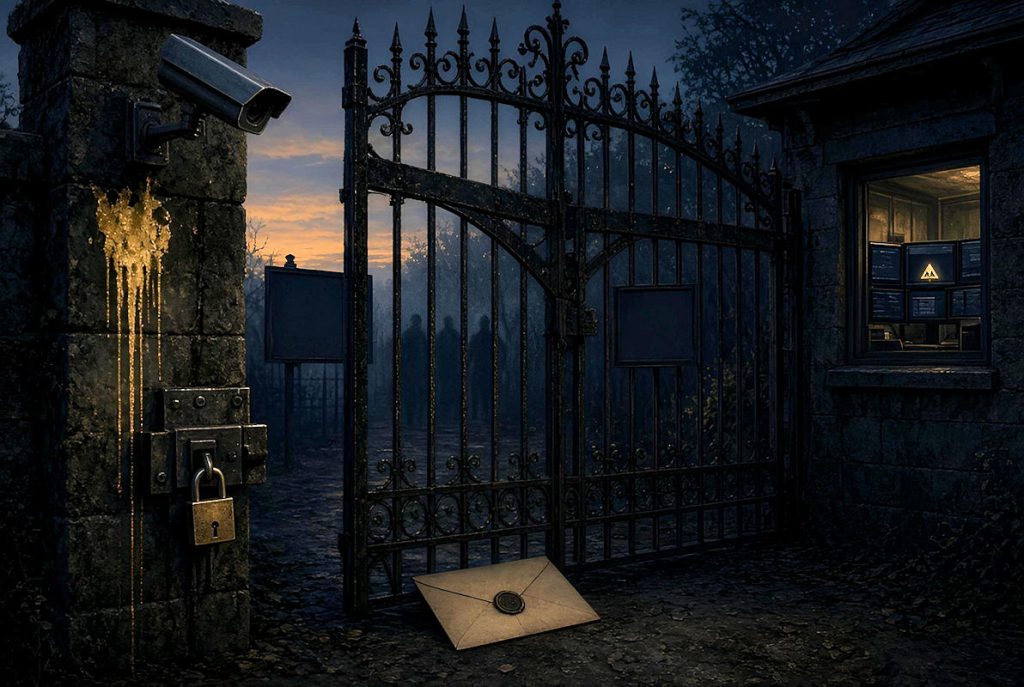
In this new environment, security must be intelligence-driven. It means gathering information and anticipating threats before they occur, rather than merely reacting. In protection circles, this is known as protective intelligence. Essentially it involves “gathering intelligence related to threats, analyzing data and situations about threats, [and] actively risk-managing security threats“.[05] For a Beverly Hills estate, that might include monitoring social media chatter about Epstein’s files, scanning online forums for rumors tied to a name or address, and proactively contacting law enforcement if dangerous talk is spotted.
Protective Measures for UHNW Clients

Wealthy families and their estate managers must act now to tighten privacy and awareness. Key steps include:
- Privacy and Digital Footprint Audit. Perform a thorough audit of what personal information (names, addresses, business ties, travel history, charity affiliations, etc.) is publicly accessible. Use open-source intelligence (OSINT) tools to simulate what a stranger could find. Remove or lock down any unnecessary personal data (old press mentions, social media tags, event photos, etc.) that could trigger searches.
- Address and Asset Anonymization. Where possible, remove direct ties between names and home addresses. Use legal structures (trusts, holding companies) and P.O. Boxes so that a spouse’s name doesn’t immediately show up on a public deed. Employ secure mailing services and limit public profiles.
- Staff Briefings and Protocols. Train every household employee and service provider on confidentiality and approach procedures. Make sure staff know not to engage with unverified individuals claiming to have “news” or demands; instead they should have a clear escalation plan to alert principals or security teams.
- Online and Media Monitoring. Set up alerts for your name and properties. Continuously watch news outlets and social media for any mention of your family in the context of Epstein or related conspiracy theories. Consider hiring a protective intelligence service to track dark-web chatter and signal any credible threats.
- Behavioral Response Planning. Review (and practice) emergency protocols assuming an ideological threat. This includes having an escape or lockdown plan for the family, designated safe rooms, and an established line of communication with local law enforcement and private security. Clearly define who speaks to the media or public if rumors surface.

Implementing these measures will not eliminate all risk, but they greatly increase your preparedness. Emphasizing protective intelligence – monitoring threats and controlling exposure – is crucial.
Conclusion
The Epstein files saga is entering public view, and wealthy communities should expect a new layer of security challenges. You do NOT need to have known Epstein, or appear in any actual wrongdoing, to find yourself in the crosshairs. All it takes is being seen as part of the “elite“. The Woody Allen photo episode is a reminder: a single image can make headlines and put any affluent family in the spotlight.

Families who anticipate these dynamics will be best positioned to stay safe. That means viewing home security through a protective-intelligence lens – combining traditional measures with active risk analysis, privacy management, and crisis planning.
Michael Braun
Notes and Sources
[01] ABC News, report on the newly released photos from the Epstein estate, December 2025. — Read the article ↩
[02] MSB Protection, “When Violence Becomes Ideological: Why Beverly Hills Homeowners Need 24/7 On-Site Protection”. — Read ↩
[03] MSB Protection, “Rising Threats in Beverly Hills: Executive Protection Trends for UHNW Families 2026” (section « Doxxing and Digital Exposure: The Online War on Privacy »). — Read ↩
[04] Pinkerton, “Designing High-Net-Worth Individual Security Programs”. — Read ↩
[05] Iron Shield Protection, “What Is Protective Intelligence? Everything You Need to Know”. — Read ↩
[06] Britannica, “What Are the Epstein Files? A Timeline”, updated 16 September 2026; NBC News, 30 January 2026 (Justice Department release). ↩
[07] Regulation (EU) 2016/679 (GDPR), Articles 17 and 21 — Read; CJEU, November 22, 2022, Joined Cases C-37/20 and C-601/20 (WM and Sovim SA v Luxembourg Business Registers); Bundesmeldegesetz (Federal Registration Act), § 51 — Read; French Penal Code, Article 223-1-1 (Law of August 24, 2021); Strafgesetzbuch (German Criminal Code), § 126a (Law of September 14, 2021) — Read ↩
See also:
- « The Epstein Files: New Security Risks » — (2026-1007)
- « Dossier Epstein : de nouveaux risques de sécurité » — (2026-1007)
- « Akte Epstein: Neue Sicherheitsrisiken » — (2026-1007)
Decoding: And in Europe?
This section is the editorial team’s. It does not engage the author.
Europe is not California, and three differences matter. First, the data: the American industry of data brokers that resell addresses and profiles is far less developed in the European Union, where the GDPR [07] gives individuals a right to erasure (Article 17) and a right to object (Article 21). Exposure there comes more from public registers.
Second, the registers: in 2022 the EU Court of Justice struck down public access to company beneficial-ownership registers, and in Germany a person at risk can ask for a block on information from the residents’ register (Auskunftssperre, § 51 of the Federal Registration Act).
Third, the law against exposure: France punishes the publication of personal data that exposes a person to a direct risk (Article 223-1-1 of the Penal Code, 2021), and Germany punishes the “dangerous publication of personal data” (§ 126a of the Criminal Code, 2021). Whoever publishes a named person’s address in order to expose them is, in both countries, committing an offence in itself.