From the “Diktat” of Versailles to Capitulation
From the assassination in Sarajevo to the ruins of 1945, Franco-German antagonism reaches its paroxysm: two world wars, a peace that humiliated instead of pacifying, and the rise of a criminal ideology that carried the logic of revenge all the way to annihilation. The third installment of this series traces how the “Diktat” of Versailles unwittingly prepared the revenge of 1940 — and how Europe touched bottom before it could, at last, begin to climb back up.
Contents
by Joël-François Dumont — Paris, August 19, 2026
Introduction
The spark of Sarajevo, on 28 June 1914, embraced a continent already locked in place by its rival alliances and its arms race. What the First World War would inflict on a defeated Germany — a treaty perceived as a “Diktat” rather than a peace — would in turn prepare, with almost mechanical precision, the revenge of 1940. The cycle set in motion at Jena and Auerstedt in 1806, and continued at Sedan in 1870, here reached its paroxysm: two world wars in thirty years, and, with the Holocaust, humanity confronted with the abyss to which a logic of revenge, carried to its absolute conclusion, could lead.
1. The First World War and the Treaty of Versailles: A Cycle of Humiliations Perpetuated
The Great War as a Continuation
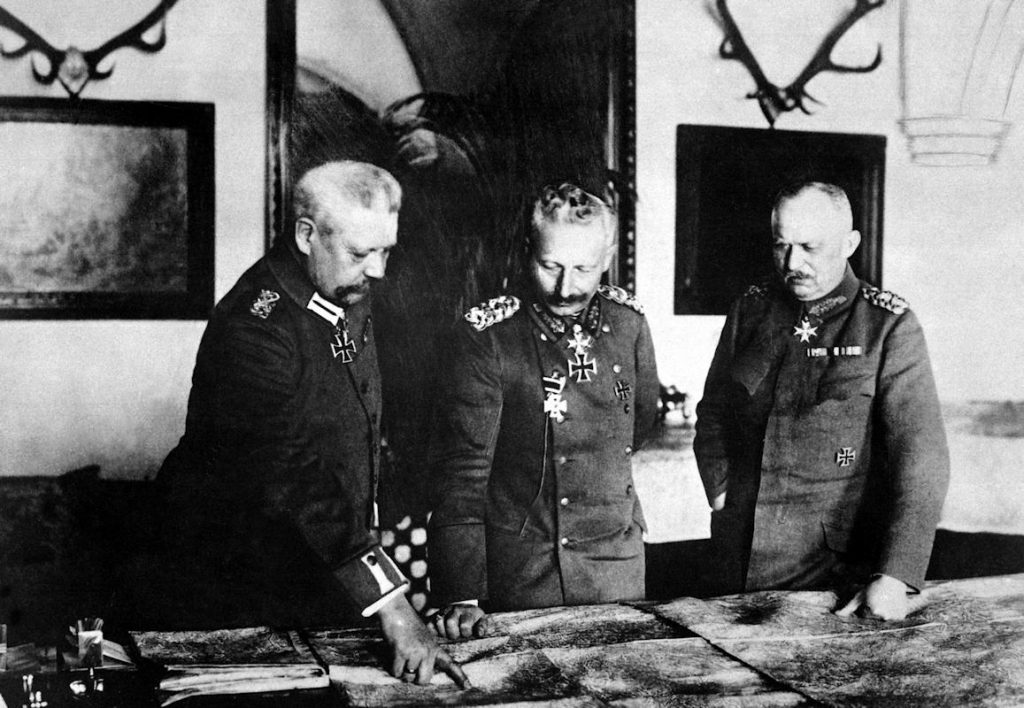
The First World War, unleashed in August 1914, can be read as a continuation and an escalation of the Franco-German conflict of 1870. The question of Alsace-Lorraine remained an open wound for France, feeding a revanchist nationalism. In Germany, Pan-Germanism and imperial ambitions contributed to a climate of confrontation. Successive international crises and the rigidity of the alliance systems — described in the previous installment of this series — made the conflagration nearly inevitable.
The Armistice of 11 November 1918 and the Prelude to the “Diktat”
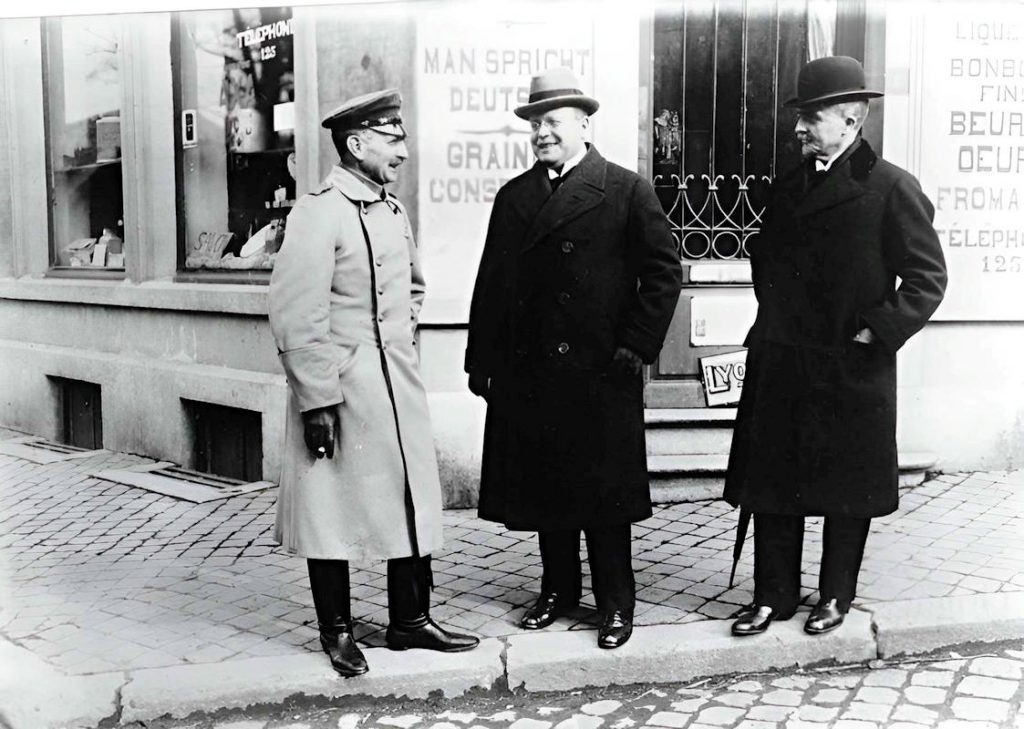
At Berlin, the collapse of the front was accompanied by an equally brutal political collapse. On 9 November 1918, Chancellor Max von Baden announced — without even having received formal confirmation — the abdication of Wilhelm II, before resigning himself shortly afterward and handing over the chancellery to Friedrich Ebert, leader of the Social Democratic majority.
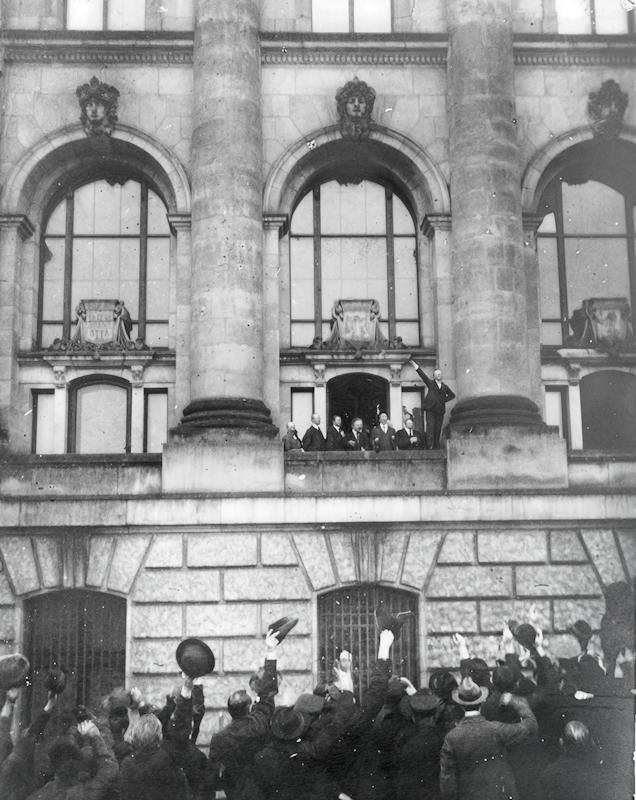
That same day, Philipp Scheidemann proclaimed the German Republic from a balcony of the Reichstag, while Karl Liebknecht, a few hundred meters away, proclaimed a free Socialist Republic: two rival Germanys were born in a single day, on the ruins of the same Empire.
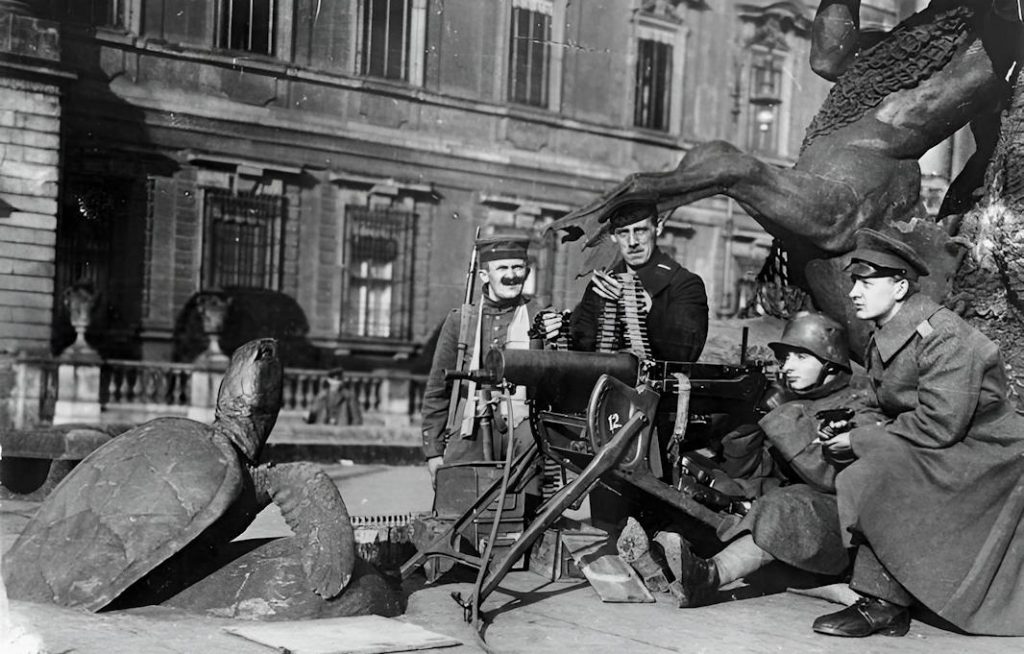
Wilhelm II, disavowed even within his own camp, crossed the Dutch border the very next day and found there an exile that would last until his death in 1941 — never formally abdicating until 28 November.
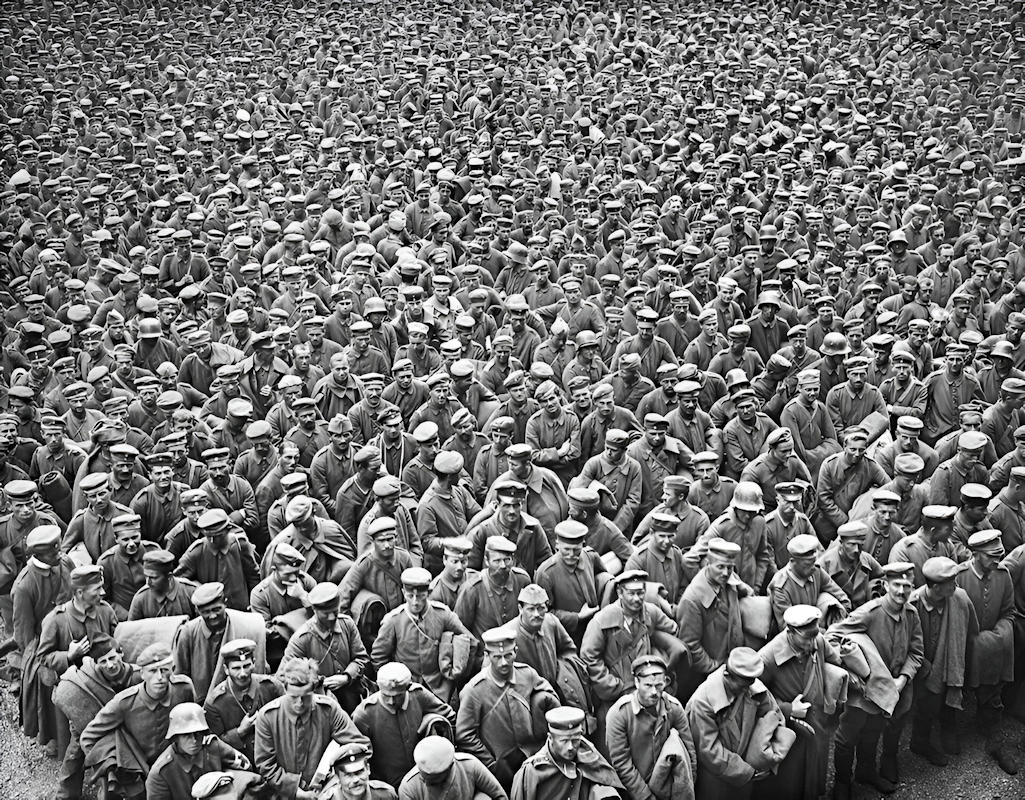
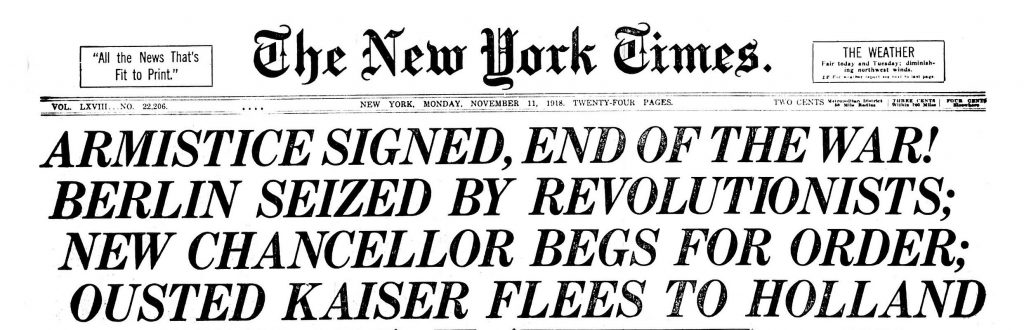
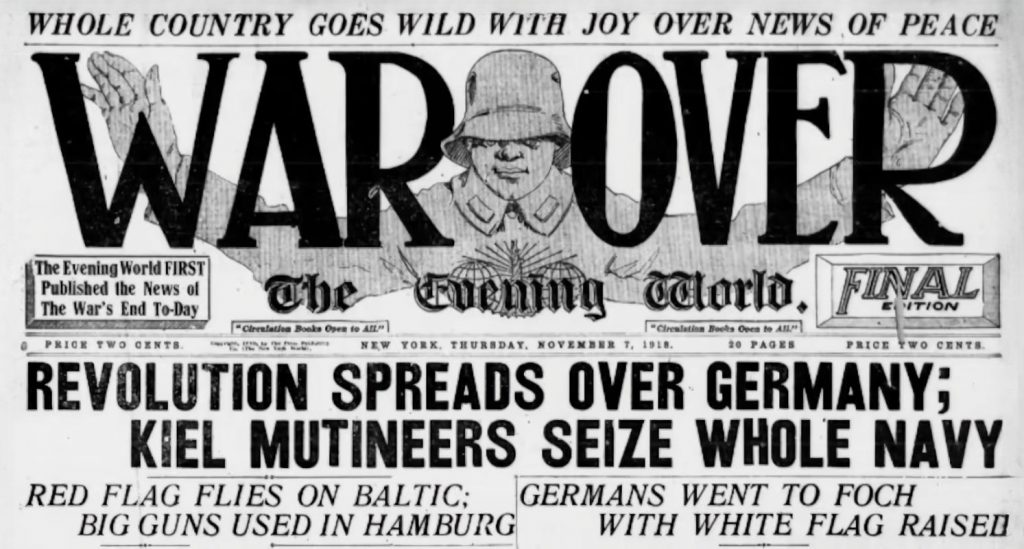
It was amid this chaos that the German delegation, led by Secretary of State Matthias Erzberger — a civilian, for lack of any general willing to publicly own the defeat — signed the armistice at 5:15 a.m. on 11 November, in Marshal Foch’s railway carriage stationed in the forest of Compiègne. Fighting ceased at 11 a.m. But the armistice was not peace: the British naval blockade, which had deprived Germany of food and raw materials since 1914, remained in place for several months after the guns fell silent, worsening an already deadly famine and feeding, among Germans, a sense of endless capitulation rather than an honorable armistice. This sentiment would lie at the heart of the “stab-in-the-back” legend (Dolchstoßlegende), already present in latent form even before the signing of the treaty that would, seven months later, crystallize it.
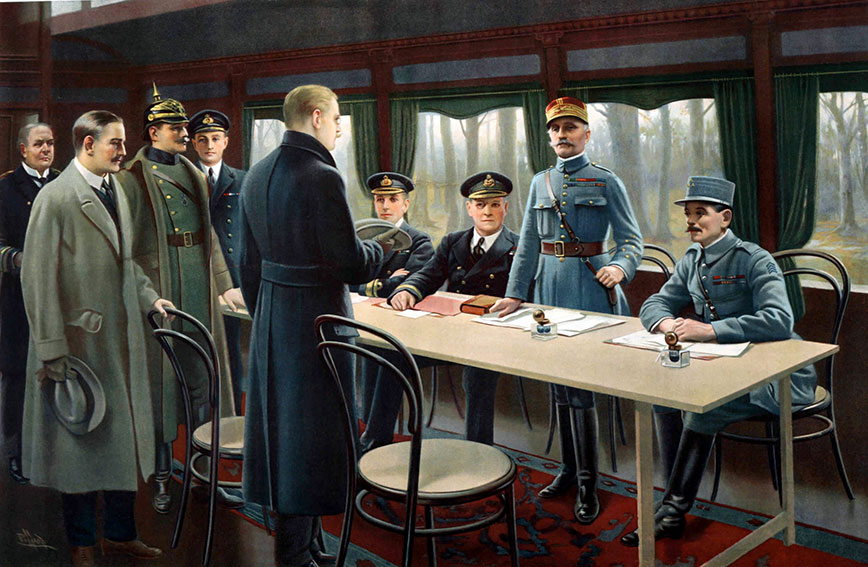
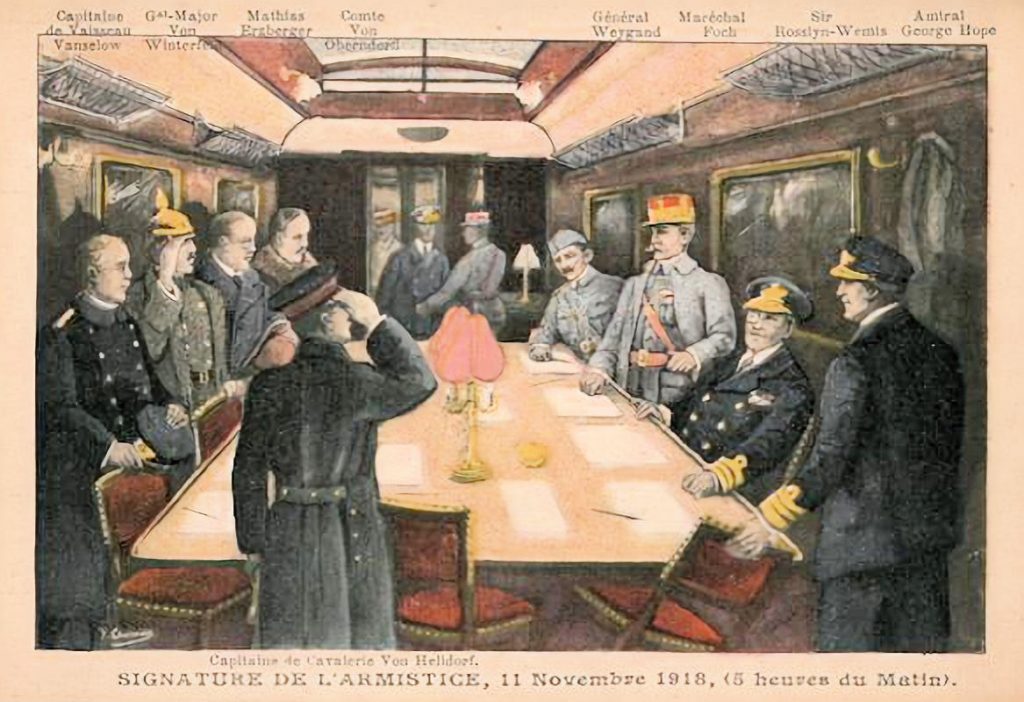
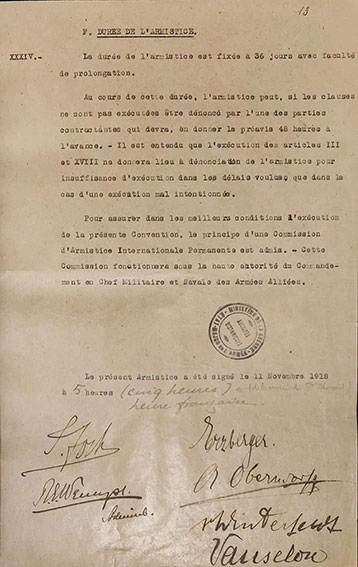
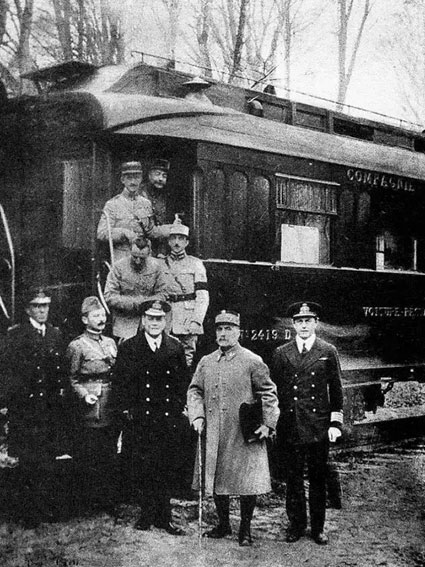
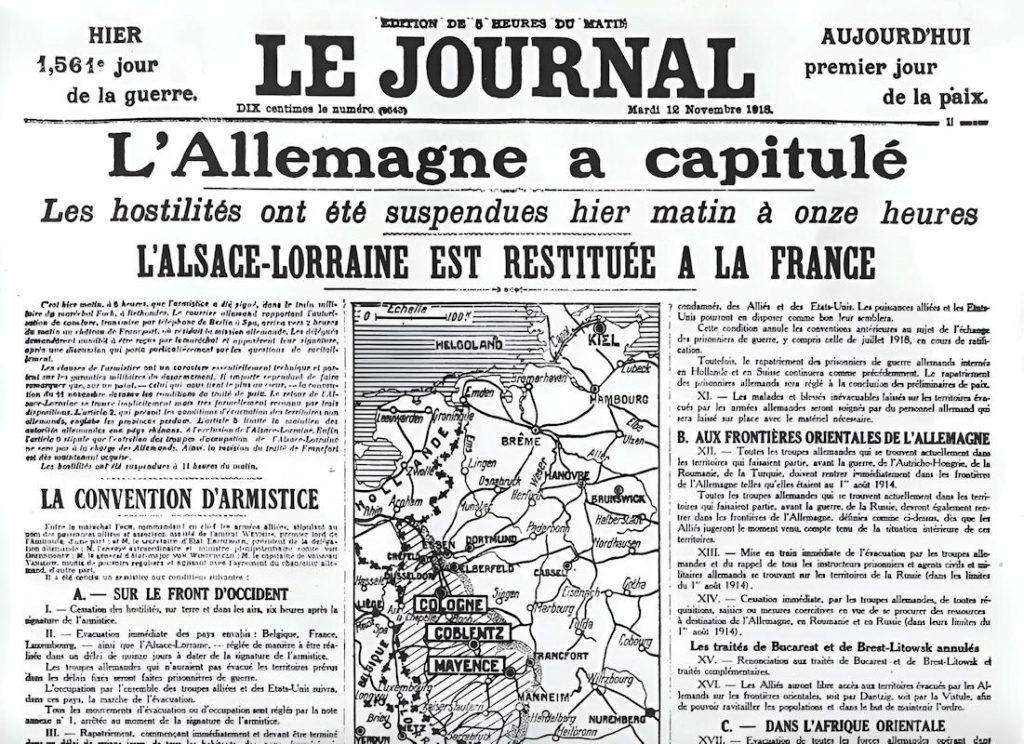
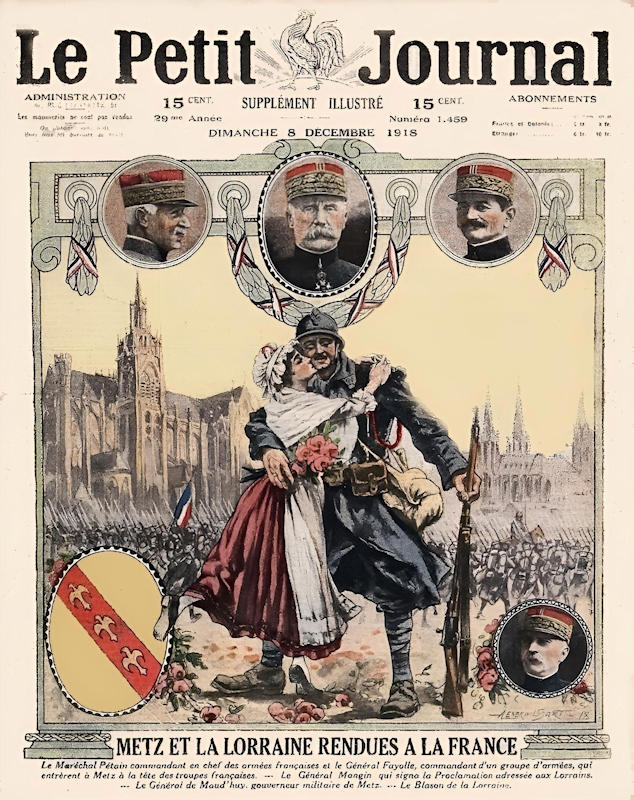
The day after the signing, the French press echoed the moment with a solemnity mixed with relief. Unlike the American press, which learned of the event at a distance and folded it into the broader story of the Berlin chaos, the Paris newspapers had only one piece of news to announce — the end of four and a half years of war.
The Treaty of Versailles (28 June 1919): The German “Diktat”
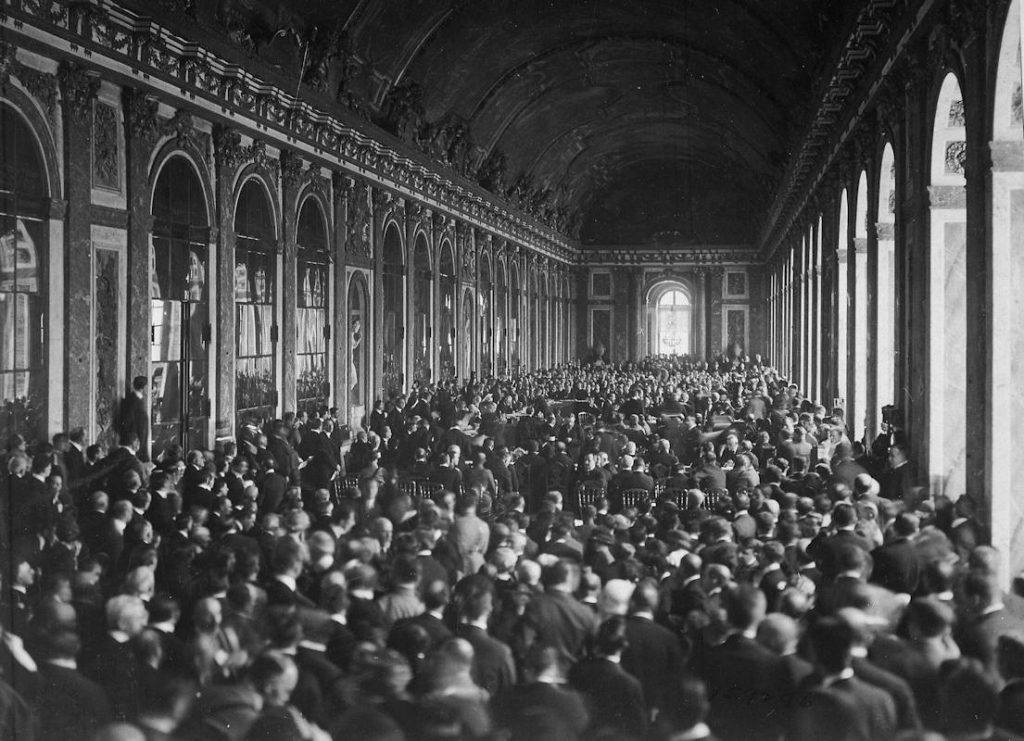
After four years of appallingly murderous war, Germany and its allies were defeated. The Treaty of Versailles, signed on 28 June 1919 — the anniversary of the Sarajevo assassination — was drawn up by the victorious powers, chiefly France, the United Kingdom, and the United States, with no real German participation in the negotiations. For Germany, the treaty was immediately perceived as a “Diktat,” an imposed and punitive peace.
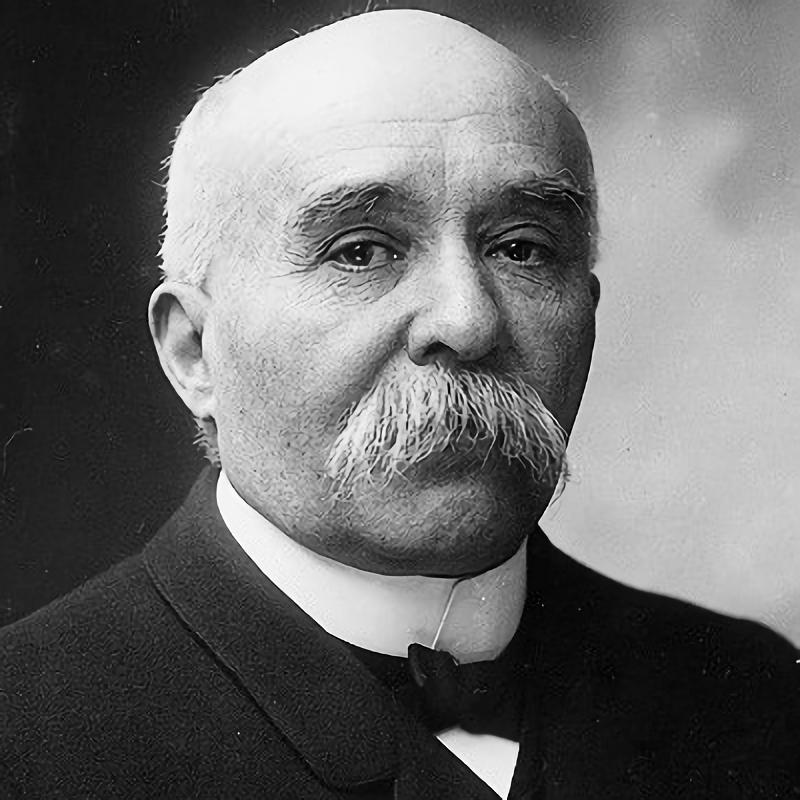
Georges Clemenceau, the French Prime minister, whose country had suffered most from the German invasion, demanded an “unconditional signature” and sought to durably weaken Germany in order to guarantee France’s security.
Georges Clemenceau, Prime Minister — Portrait by Nadar
The treaty’s terms were particularly severe. Territorially, Germany had to return Alsace-Lorraine to France, lost significant territory to Poland, Belgium, and Denmark, saw the Saar basin placed under international administration, and had all its colonies confiscated: in total, around 15% of its European territory and 10% of its population. Militarily, its army was cut to 100,000 men, with no air force, no tanks, no submarines, and the Rhineland was demilitarized.
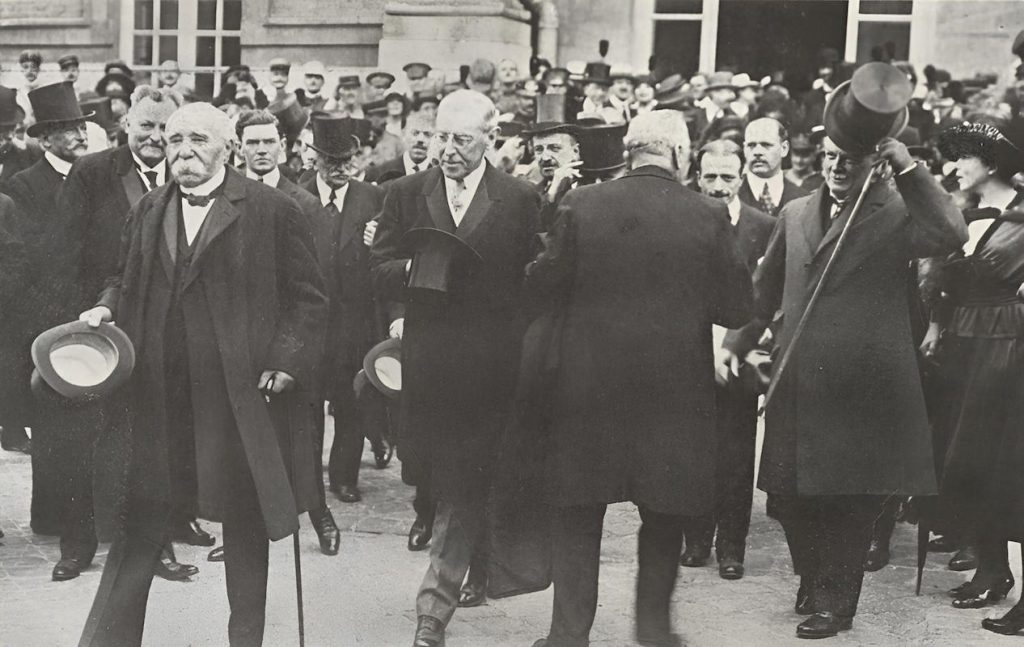
Economically and financially, Article 231 — the famous “war guilt clause” — designated Germany and its allies as solely responsible for the outbreak of the war, the legal basis for colossal reparations, assessed in 1921 at 132 billion gold marks.
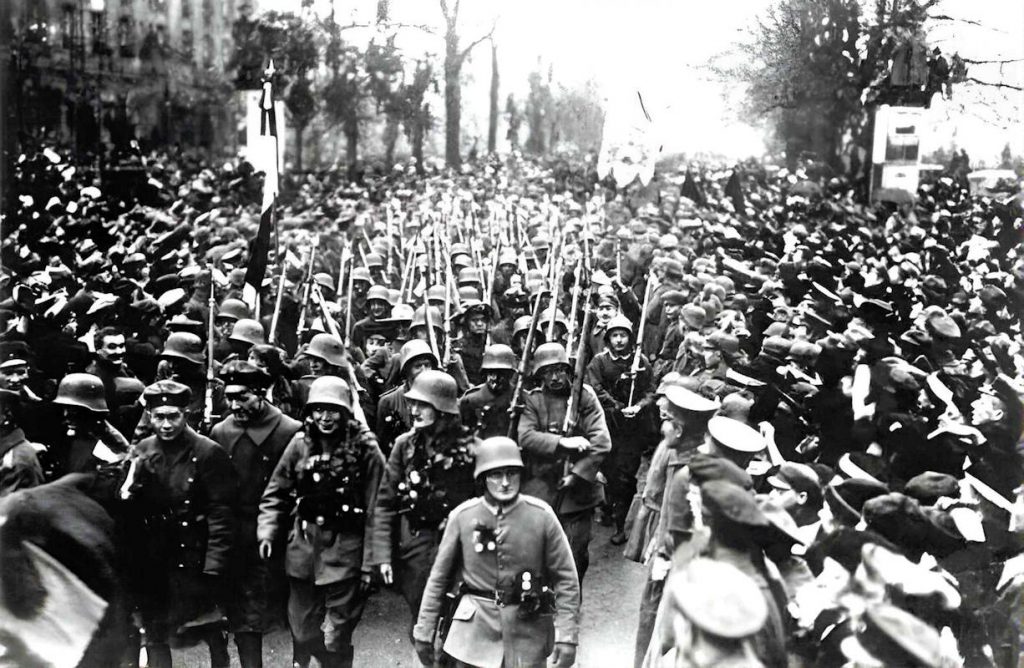
The German perception of the treaty was unanimously negative. Friedrich Ebert, the president of the Weimar Republic, greeted German soldiers returning from the front by declaring that “no enemy has vanquished you,” feeding the myth of the “stab in the back” (Dolchstoßlegende), according to which the German army had not been militarily defeated but betrayed by civilians and revolutionaries at home. This perception of an unjust and humiliating peace, imposed by force, undermined the legitimacy of the young Weimar Republic from the outset.
Socio-Economic Consequences: The Breeding Ground for Crisis
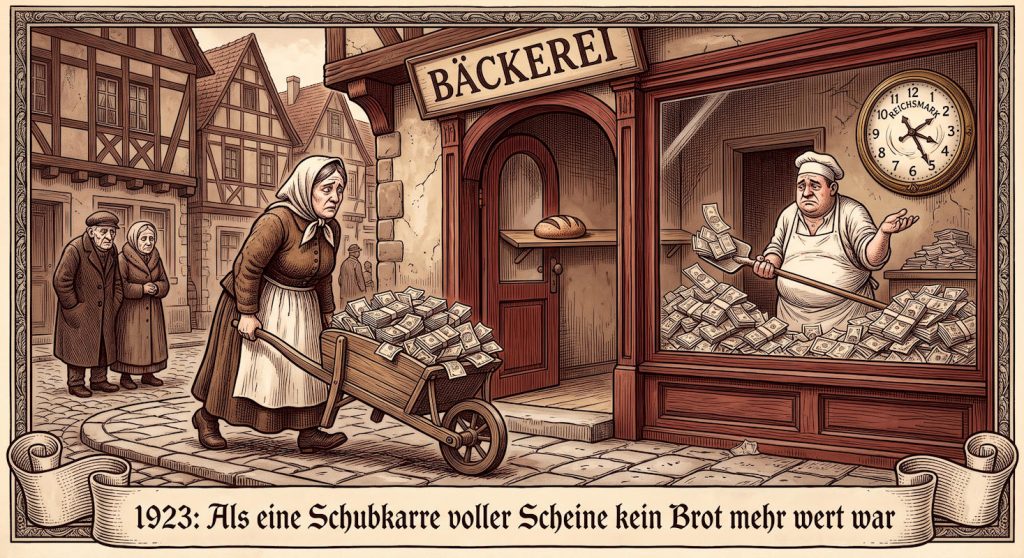
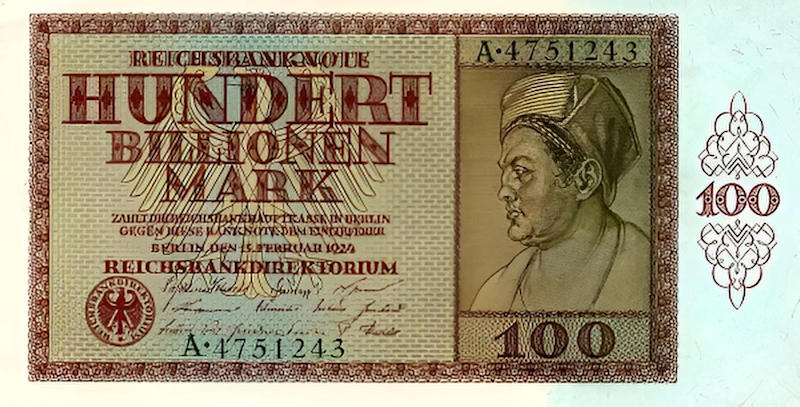
The burden of reparations, combined with territorial and industrial losses, strangled the German economy and contributed to devastating hyperinflation in the early 1920s.
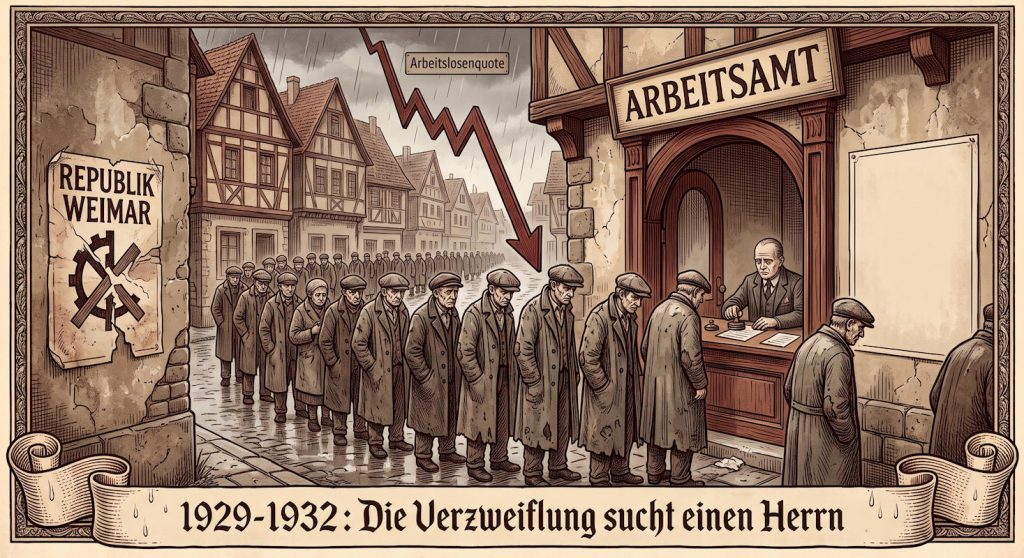
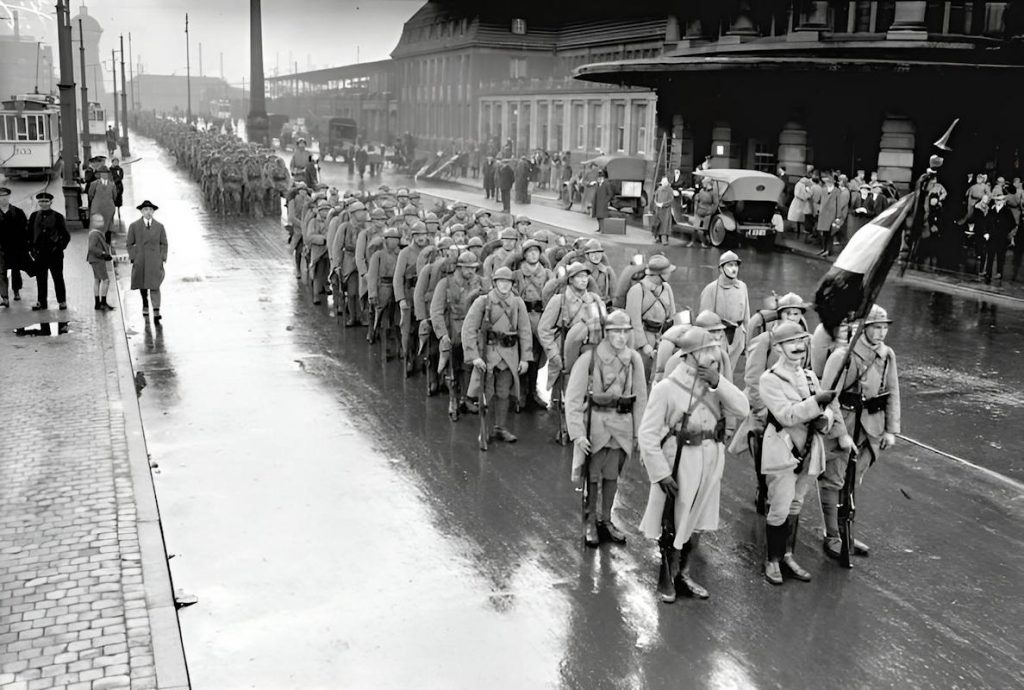
The global economic crisis of 1929 then hit Germany head-on, worsening unemployment and social hardship. This breeding ground of economic difficulty, political instability, and national humiliation proved extremely fertile for nationalist and extremist movements.
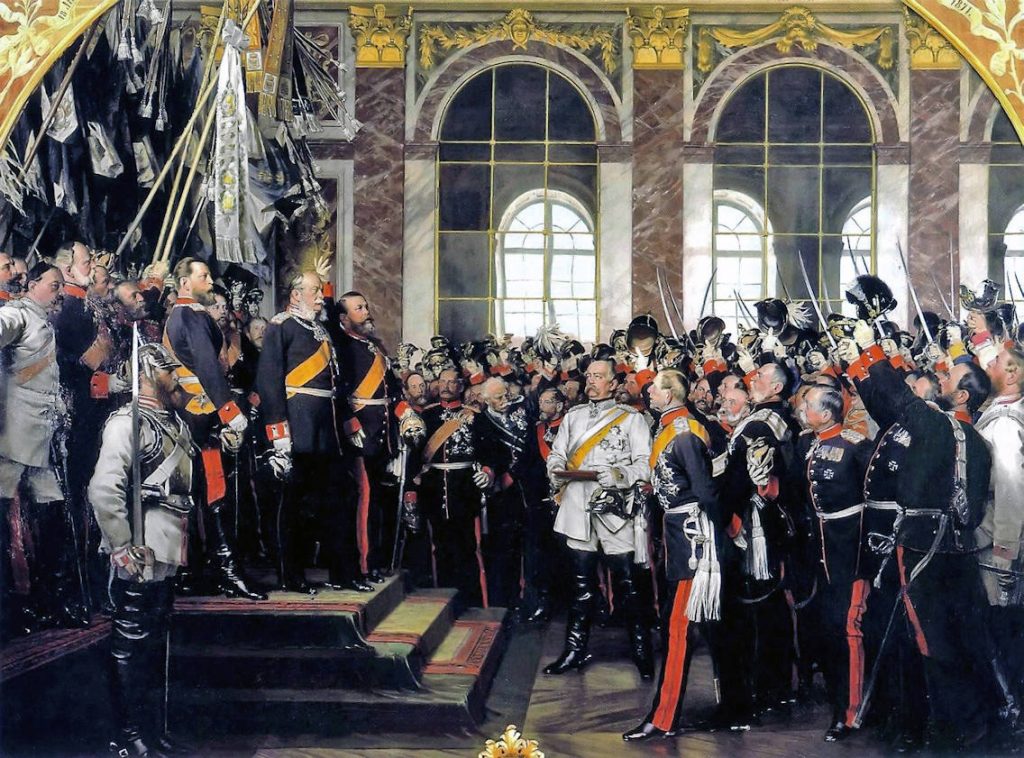
The signing of the treaty in the Hall of Mirrors at Versailles — the very place where the German Empire had been proclaimed in 1871 — was perceived as a deliberate symbolic humiliation, reversing that of 1871 but inflicting a fresh wound on German national pride. In seeking to punish Germany through excessively harsh and humiliating measures, the Treaty of Versailles thus missed its goal of establishing a lasting peace. On the contrary, it created the conditions of its own failure by nourishing a profound desire for revenge, unwittingly paving the way to a new catastrophe.
2. The Interwar Years and the Second World War: The Paroxysm of Conflict
The Crisis of 1929 and Hitler’s Rise
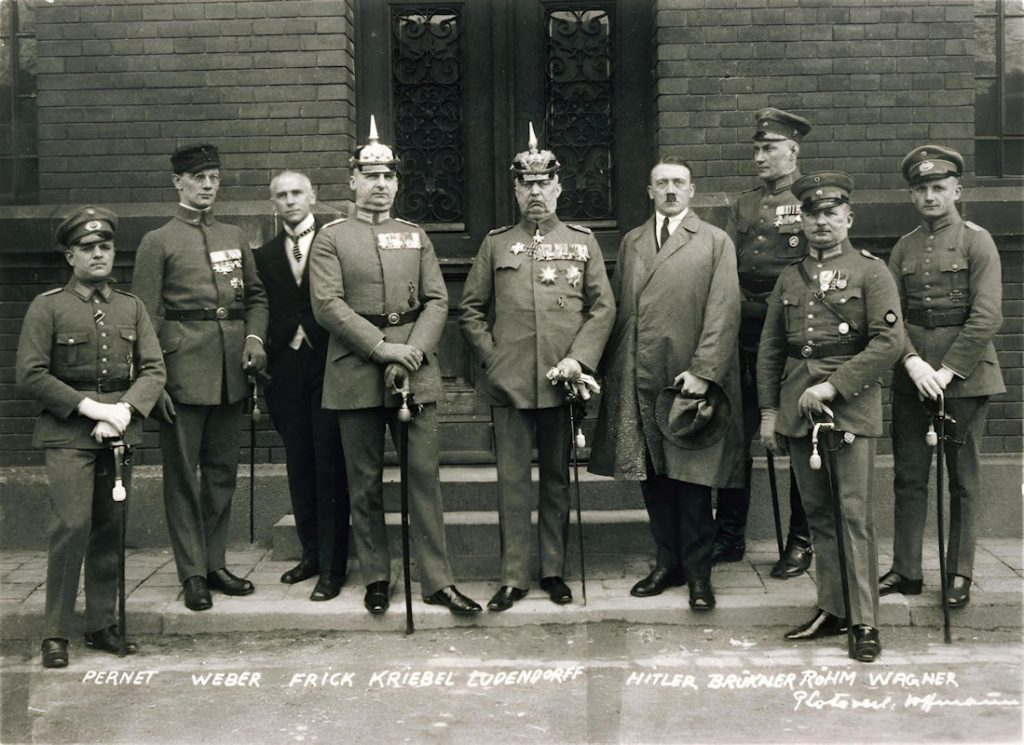
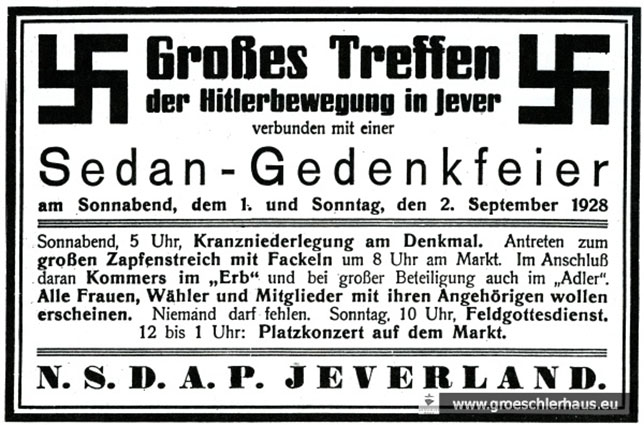
The Weimar Republic, already weakened by attempted putsches and hyperinflation, was hit hard by the Great Depression. Adolf Hitler and his National Socialist Party exploited this despair with formidable efficiency, promising to tear up the “Diktat of Versailles,” restore Germany’s greatness, and give it back its pride.

The NSDAP, which had won only 2% of the vote in 1928, saw its score climb to 18% in 1930, then 38% in 1932. On 30 January 1933, Adolf Hitler was appointed chancellor. Resentment over Versailles was a determining factor in his rise, but not the only one: the economic crisis and the support of certain conservative and industrial elites, who believed they could control him, also played a decisive role.
Revanchist Rhetoric and Remilitarization
Once in power, Hitler set about methodically dismantling the clauses of the Treaty of Versailles. He restored compulsory military service, launched a massive rearmament program, and, in 1936, remilitarized the Rhineland in flagrant violation of the treaty.
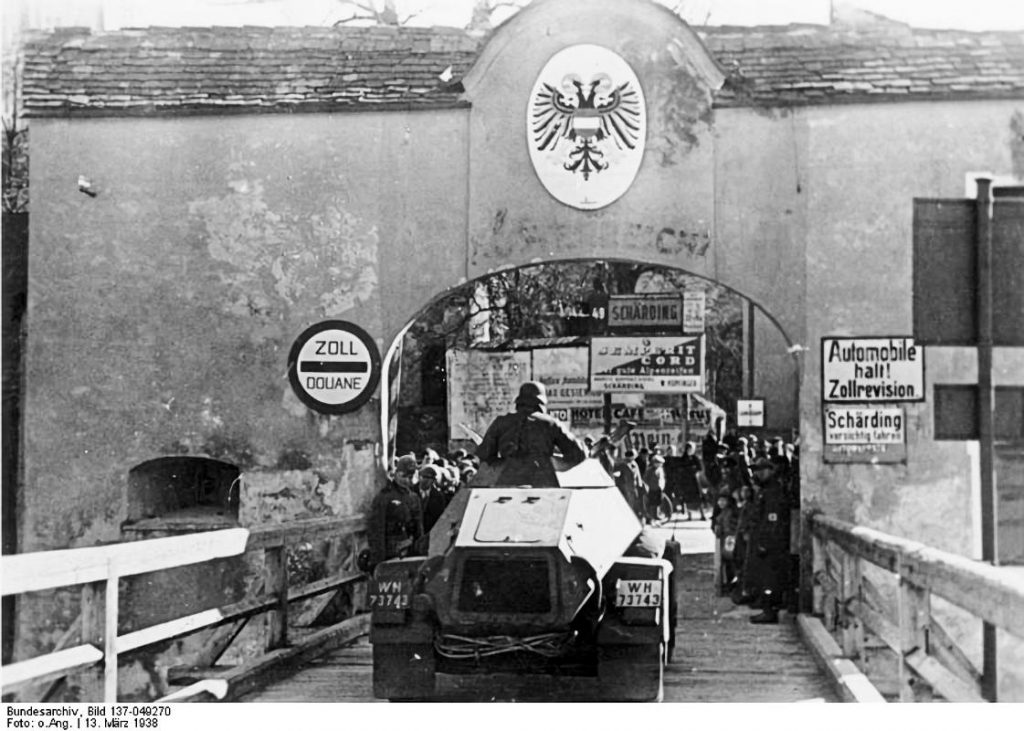
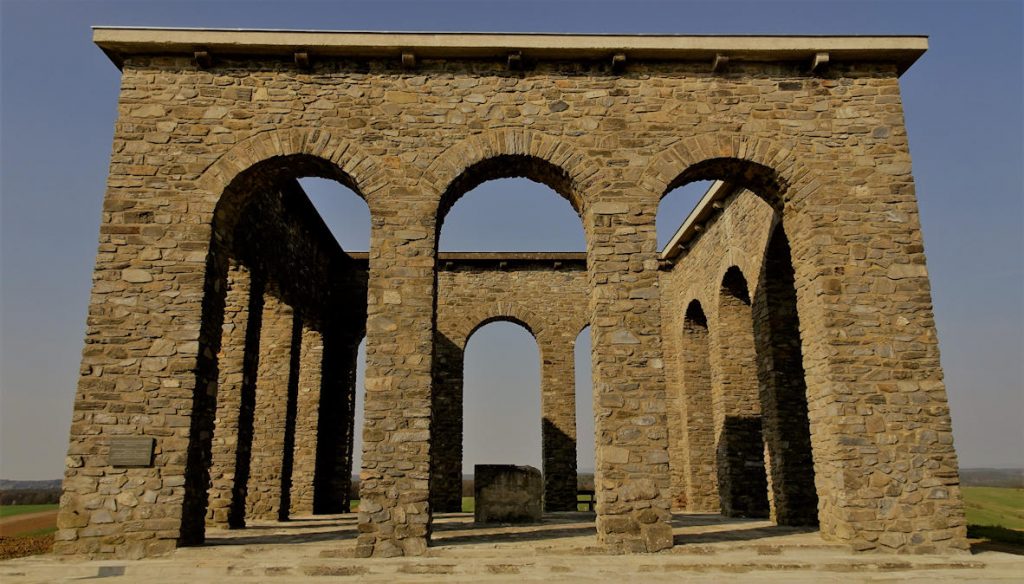
The annexation of Austria in March 1938, then of the Sudetenland in September 1938, followed the same logic, always in the name of restoring national honor — a nationalism that, under Nazi ideology, was perverted into a doctrine of racial supremacy and brutal expansionism.
The Second World War and the Symbolism of Sedan, then Rethondes
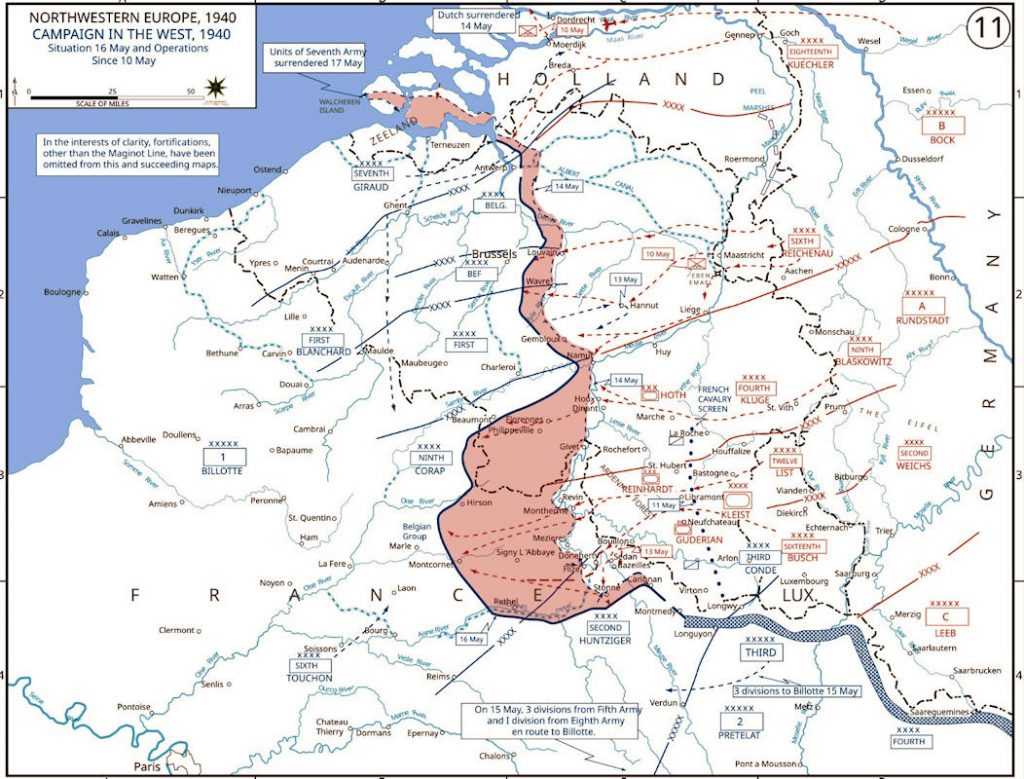
The invasion of Poland on 1 September 1939 triggered the Second World War. In the spring of 1940, the German army launched its offensive in the West, rapidly overwhelming the Netherlands, Belgium, Luxembourg, and then France. The German breakthrough through the Ardennes and the crossing of the Meuse at Sedan in May 1940 carried immense strategic and symbolic weight: this victory, in which French forces were overwhelmed and routed, amounted to a reversed and aggravated replay of the French defeat of 1870 — the very place where, in 1870, Bismarck had seen the revenge for Auerstedt come to pass.
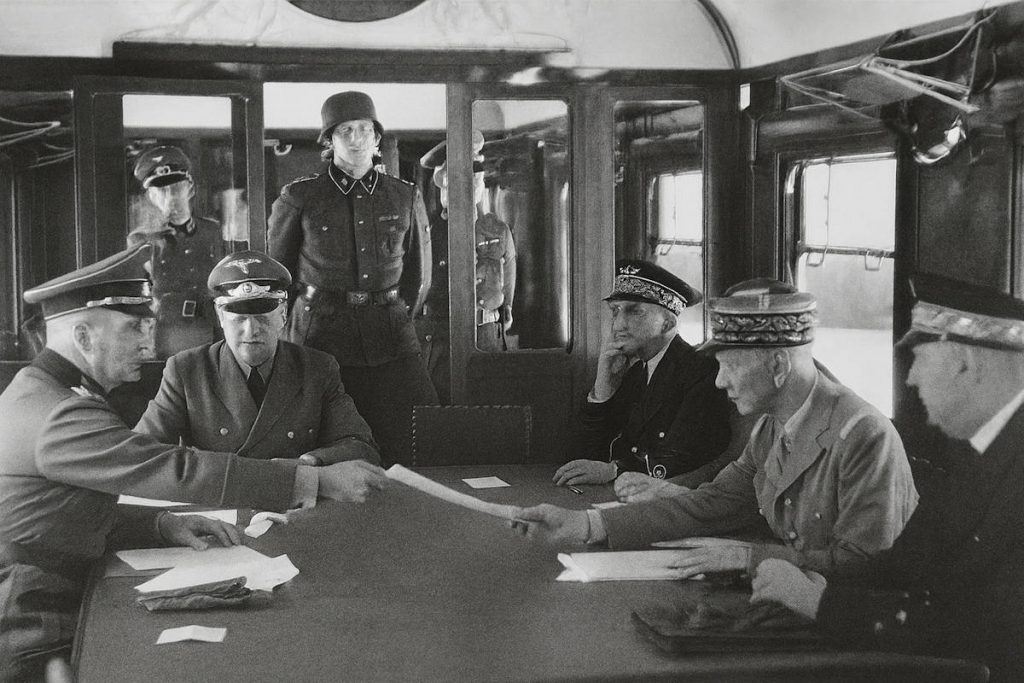
But it was a month later, and at a different site of memory, that Hitler would deliver the strongest symbolic gesture of all: on 22 June 1940, he insisted that the Franco-German armistice be signed in the very same railway carriage, at Rethondes near Compiègne, in which Germany had been forced to sign its own capitulation in 1918.
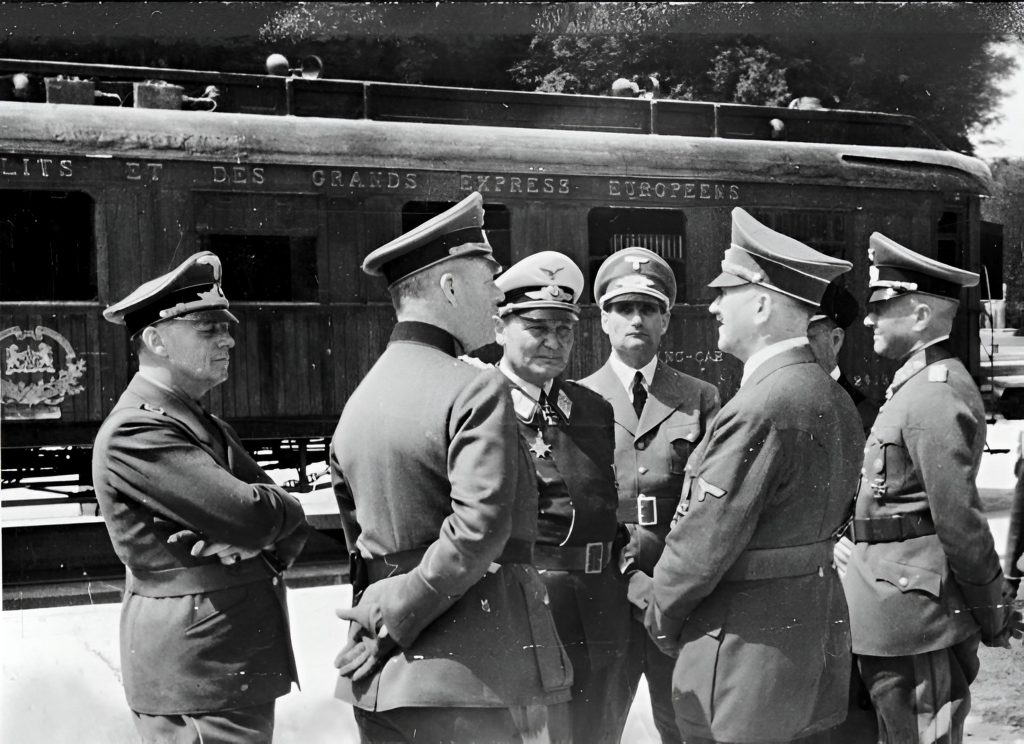
This deliberate staging — forcing a defeated France, twenty-two years later and in the identical setting, to relive the humiliation Germany had suffered — amounted to a conscious manipulation of collective memory for purposes of psychological warfare, intended to crown the victory of 1940 as the culmination of a long cycle of revenge, from Sedan to Versailles and then to Rethondes.
Occupation and Collaboration
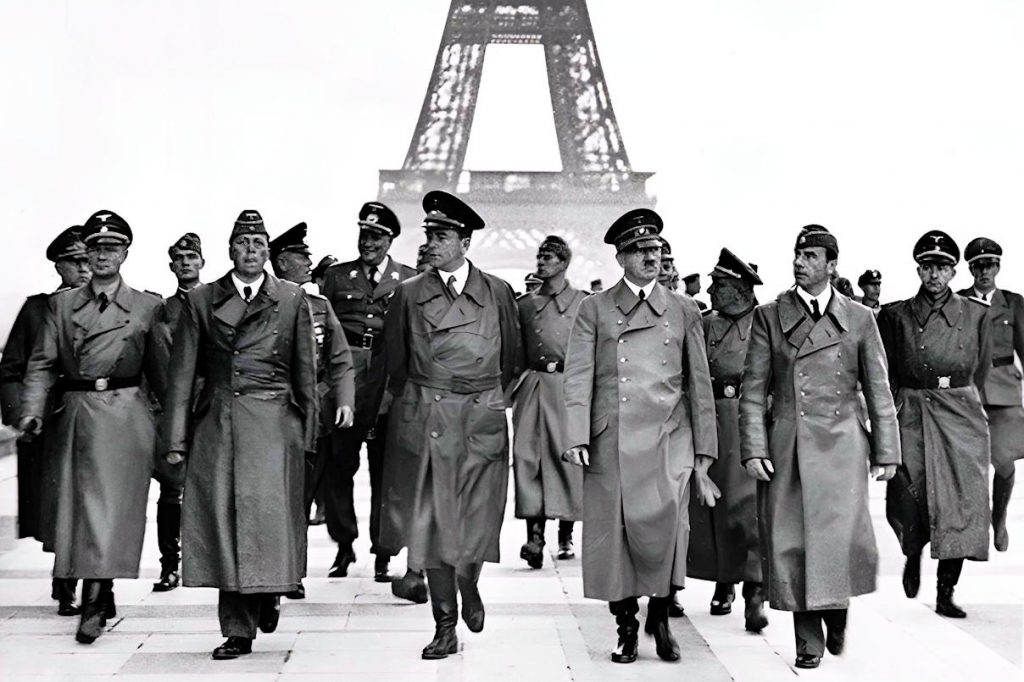
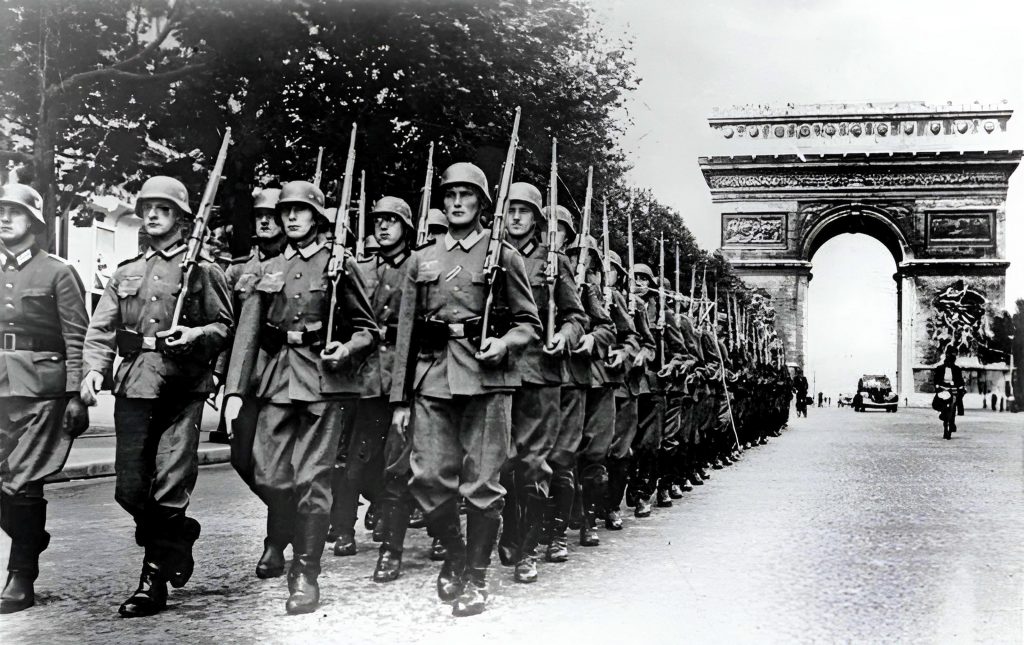
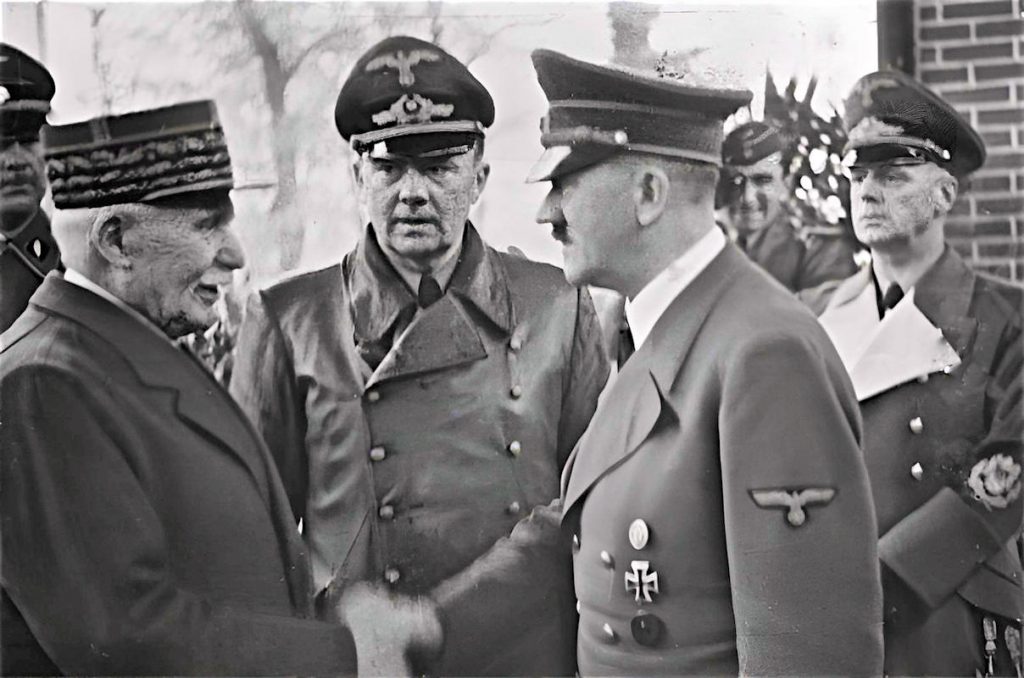
France’s rapid defeat in June 1940 was a national trauma. The country was divided, with a zone occupied by Germany in the north and along the Atlantic coast, and a “free zone” in the south, governed by Marshal Pétain’s Vichy regime, which embarked on a policy of collaboration with the Nazi occupier. This period of occupation, deprivation, repression, and collaboration marked the lowest point of French sovereignty and a particularly dark chapter in Franco-German relations.
For France, the defeat of 1940 and the occupation were a profound humiliation. For Germany, the war ended in total defeat, massive destruction, the revelation of the horror of the Holocaust, and the division of the country.
Two exhausted nations, a continent in ruins, and a cycle of reprisals that, this time, seemed to have reached its absolute limit — the point beyond which nothing was left to avenge, so total had the devastation been on both sides.
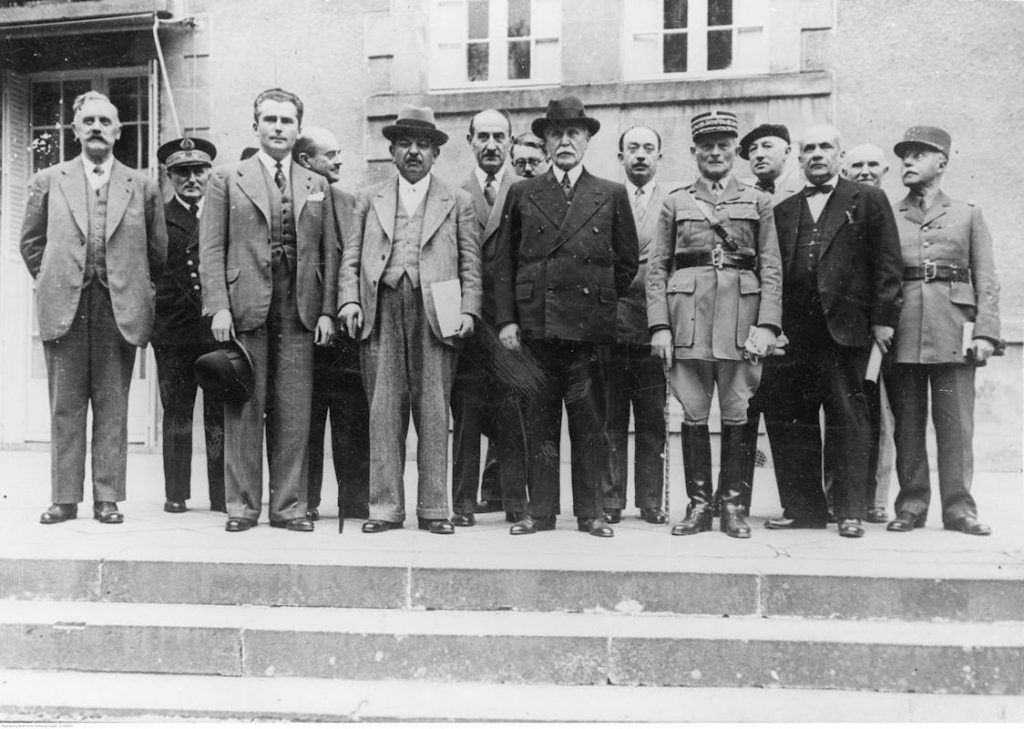
It was on these ruins, in this landscape of moral desolation, that a process of reconciliation would, against all odds, begin.
The fourth installment of this series will follow this improbable reversal: how two statesmen, Charles de Gaulle and Konrad Adenauer, managed to transform seventy years of cyclical hostility into a founding partnership for Europe — and what that reversal can still teach us today.
Joël-François Dumont
See also:
- « France-Germany: The Machinery of Hatred 1805-1871 (1) » — (2026-0814)
- « France-Germany: The March Toward the Abyss 1871-1914 (2) » — (2026-0816)
- « France-Germany: The Paroxysm, 1914–1945 (3) » — (2026-0819)
- « France-Germany: From Ruins to an Emerging Europe, 1945-1959 (4) » — (2026-0820)
- « France-Germany: The Axis and Its Trials 1958-1989 (5) » — (2026-0821)
- « France-Germany: Love Me, Love Me Not 1990-2025 (6) » — (2026-0824)
- « France-Germany: Quo Vadis? 2025-2026 (7) » — (2026-0826)
Analysis: Why 1945 Was Not 1918
This paroxysm deserves a moment’s pause before turning the page toward reconciliation. The mechanism described in the first two installments of this series — humiliation, cultivated resentment, deferred revenge — operated one last time with devastating force in 1940: the deliberate choice of Rethondes, the echo of Bismarck’s words at Sedan, all of it suggests that Germany’s leaders at the time believed, quite consciously, that they were acting in direct continuity with 1870 and 1918. The cycle reproduced itself exactly as it had been designed to — all the way to its logical, appalling conclusion.
But 1945 differs from 1871 or 1918 in one essential respect: this time, there is no victor left in a position to humiliate the other without destroying itself in the process. France in 1945 lacked the means for a punitive peace comparable to Versailles — it emerged from the Occupation itself utterly exhausted. And Germany, confronted with the sheer scale of its own crimes, no longer had the same psychological ground on which to cultivate a new, legitimate sense of national grievance. It may be this double impossibility, more than any sudden surge of virtue, that opened the door — provided statesmen were able to seize it.