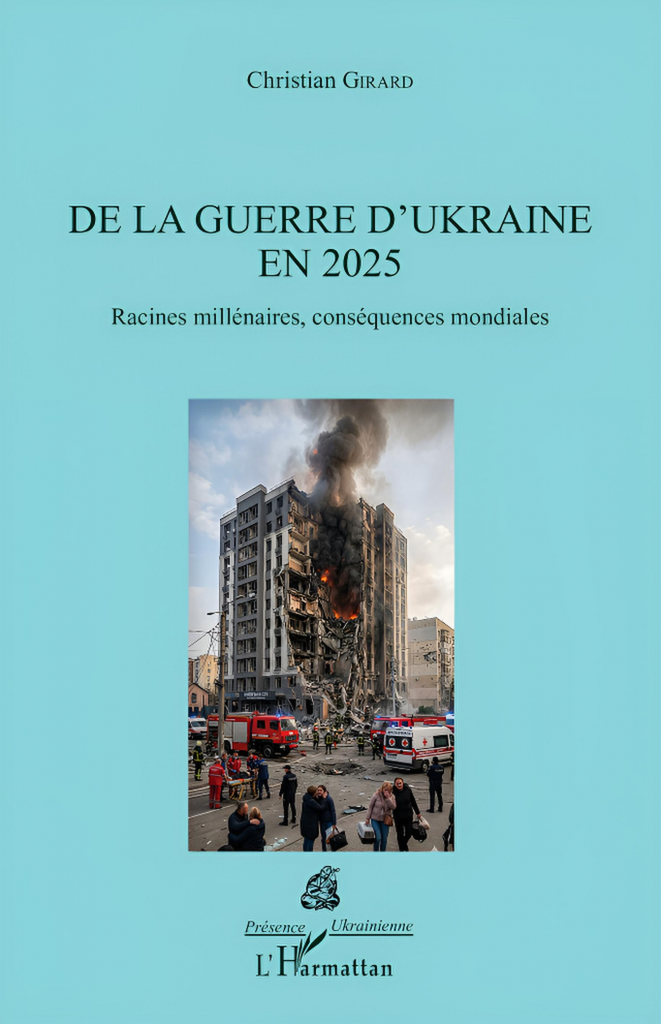
In his hard-hitting first analysis, Admiral Christian Girard delivered an uncompromising assessment of the realities surrounding the Hormuz blockade. This led to three major conclusions: the blatant failure of the American security umbrella prompting a regional geopolitical shift, the imminent collapse of international maritime law under the Montego Bay Convention, and a Europe now pushed to the brink, forced to choose between existing as an autonomous actor or vanishing from the global stage.
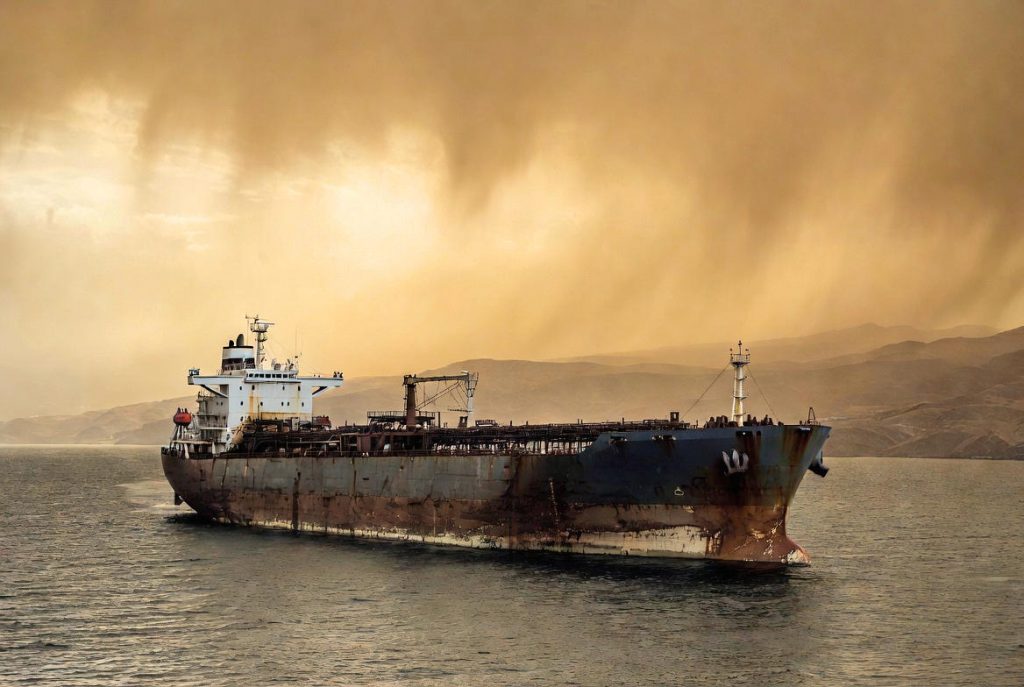
From Crisis Assessment to the Sovereign Challenge
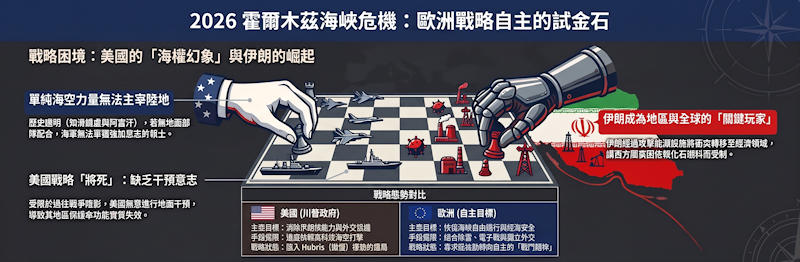
This second volume extends this reflection into the core of military strategy and history. Facing the strategic impasse and hubris of the Trump administration, the Admiral demonstrates that naval power alone cannot impose its will on land without a ground intervention. As the Middle East reconfigures around an unavoidable Iran, Europe must urgently trade its hesitation for a genuine fighting spirit to defend its vital interests.
The Strait of Hormuz and European Strategic Autonomy
Table of Contents
By Vice Admiral Christian Girard (Ret.) — Toulon, May 14, 2026
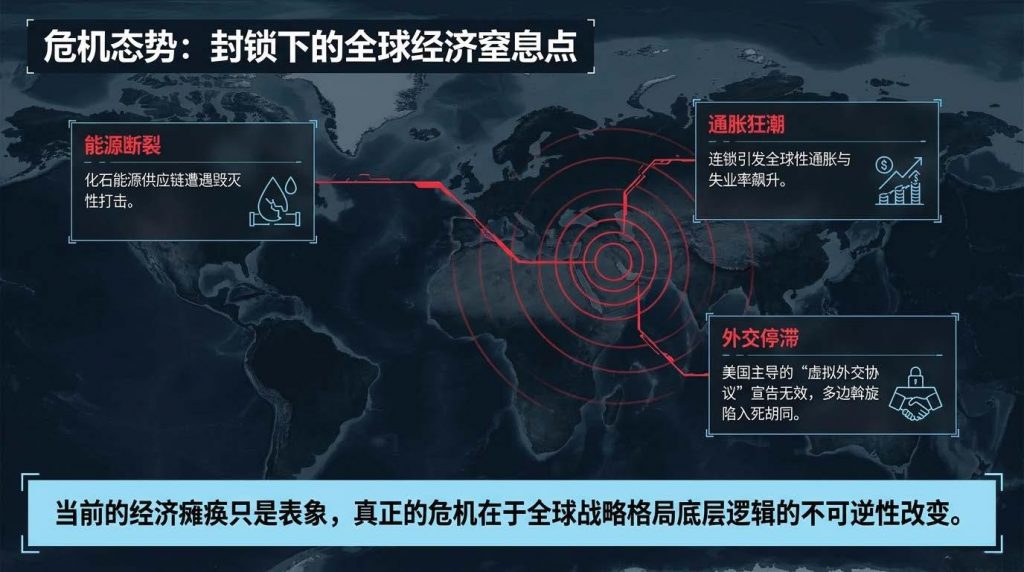
We have begun to feel the effects of the blockage of the Strait of Hormuz in terms of growth, inflation, and unemployment, without yet perceiving the ultimate consequences, which could become catastrophic for the global economy. However, before its global fallout, the situation raises critical military strategy questions. It does not appear that the Trump administration has analyzed them correctly.
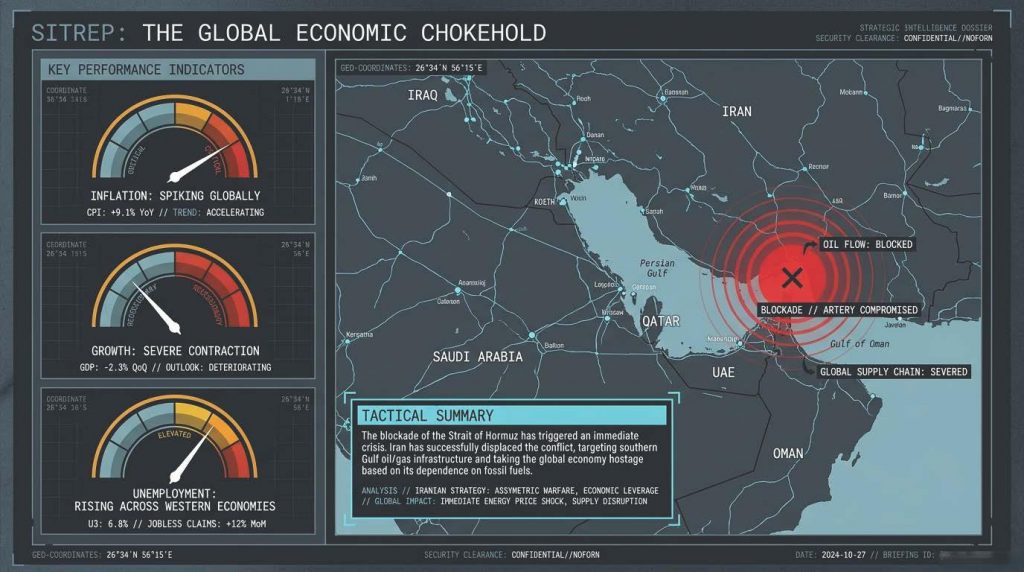
The first question concerns the ability of a naval power to impose its will on land solely through the action of its air and maritime assets. The conclusion is well known in light of numerous historical and contemporary precedents.
Historical Lessons: The Illusion of Sole Naval and Air Power
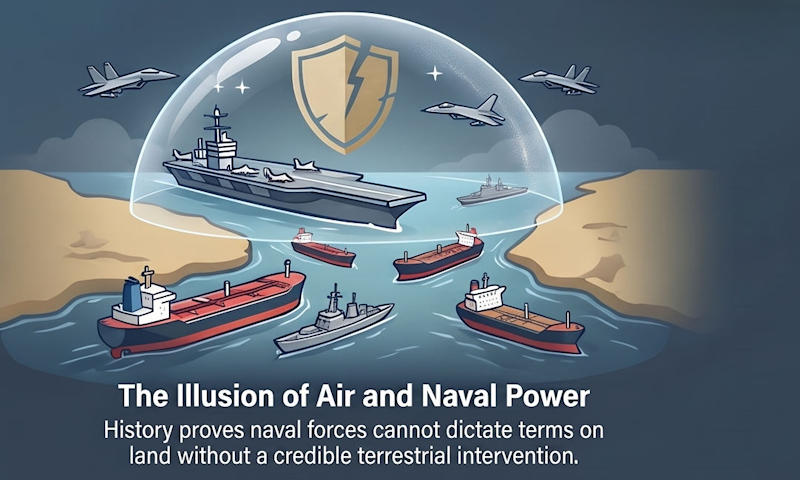
A final victory can only be achieved under the necessary, but certainly insufficient, condition of a ground intervention, with all the risks, losses, and ultimate consequences—difficult to foresee a priori—that it entails.
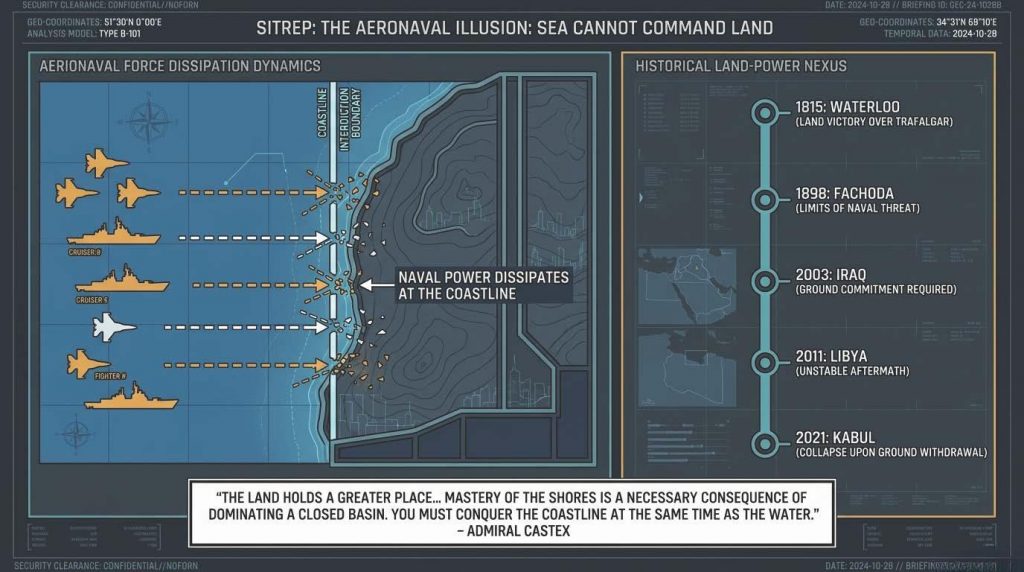
From Waterloo to Kabul: The Sea Alone Does Not Subdue the Land
Examples are plenty. The most recent are the Western interventions in Iraq in 2003, in Libya in 2011, and the one pitifully concluded in 2021 in Afghanistan, the consequences of which are obvious today: ISIS, the destabilization of the Sahel, and the return of the Taliban. It was indeed at Waterloo that England definitively defeated Napoleon, not at Trafalgar. In 1898, following the Fashoda incident, the weakness of the British army certainly contributed to avoiding a direct confrontation with France.
The American Checkmate and the New Status of Hormuz
The second question of military strategy concerns landlocked seas or enclosed maritime spaces for that very same power, a geographical feature found in many parts of the world, such as the Persian Gulf, the Black Sea, the Baltic Sea, the Adriatic, and even the Mediterranean as a whole. These spaces are under constant threat from coastal powers. Their control by a naval power whose bases are initially external to the geographical area concerned is particularly difficult unless it firmly establishes its military superiority within the space itself. This was England’s constant strategic objective in the Mediterranean from the 17th century onward, with its deployments in Gibraltar in 1704, Minorca, Malta, Corsica, Cyprus, Greece, and Egypt.
Let us quote Admiral Castex from his Mélanges stratégiques regarding enclosed seas:
“The land occupies a larger place there than elsewhere… mastery of the shores acquires a very special importance. It becomes a consequence, if not sufficient, at least necessary for the domination of this enclosed basin. One must conquer the shoreline at the same time as the water.”
Trump’s Impasse: When Uncle Sam Refuses Geography
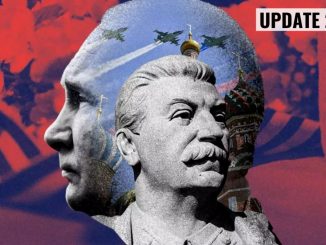
Donald Trump, neglecting or ignoring these considerations, has succumbed to the hubris of military power, like so many other leaders before him, including Vladimir Putin in Ukraine. The American electorate that voted him in, his own promises, and the current general military strategy of the United States make any attempt to force a resolution to the conflict through a ground intervention against Iran virtually impossible. The memories of Vietnam, Iraq, and Afghanistan are still very fresh. Iran’s geographical characteristics, size, population, and political regime rule out any reasonable possibility of conducting one, short of targeted actions of limited scope.
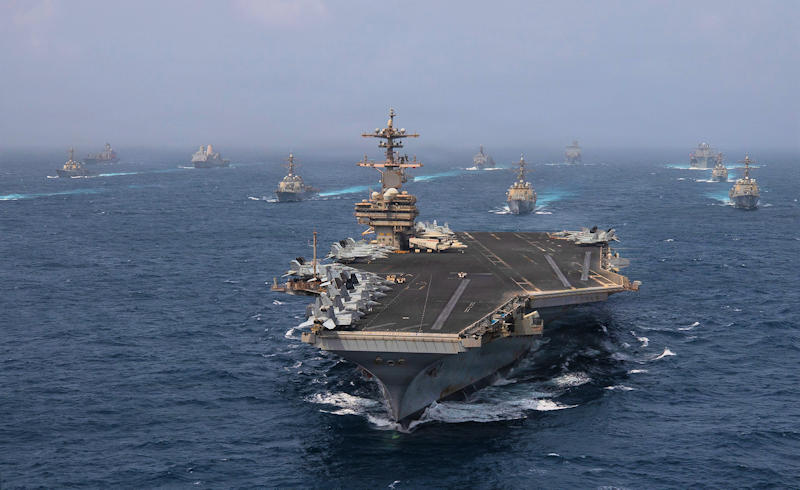
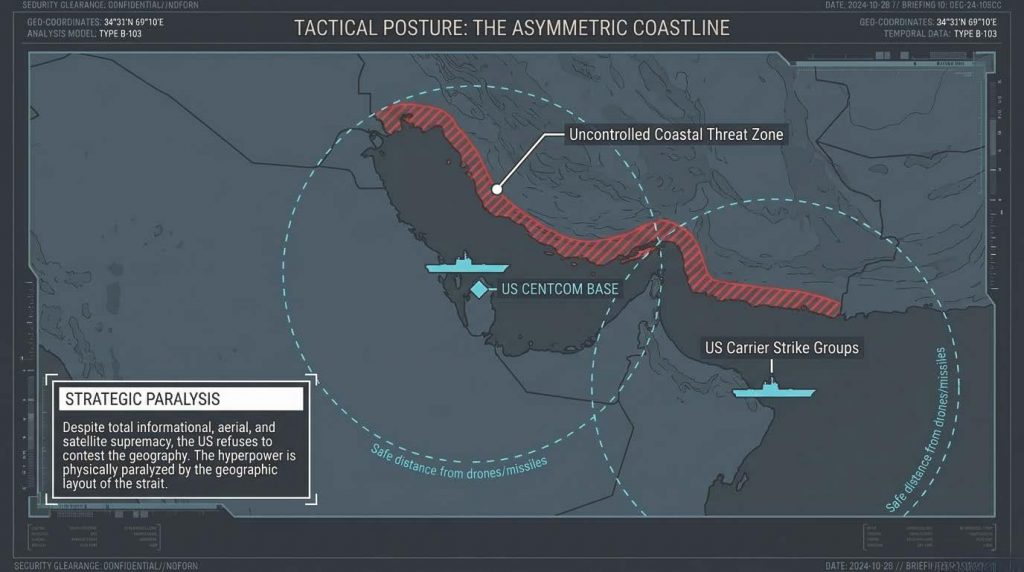
Despite the presence of military bases in the Gulf, including the operational command (CENTCOM) based in Qatar, the entire northern coast escapes American military control for several hundred miles. Moreover, this control does not even seem to be sought, despite the total informational, aerial, and satellite superiority of the hyperpower. Carrier strike groups remain outside the Gulf, well clear of Iranian missiles, drones, and potential mines.
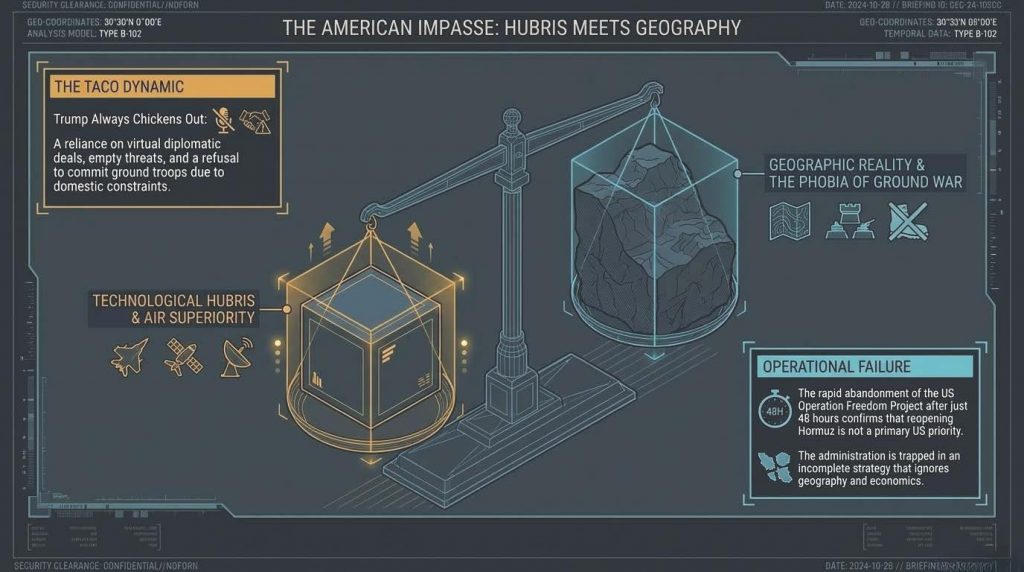
Lacking the will or the appropriate means, but holding onto the illusory hope of nevertheless securing a diplomatic agreement, the American president is reduced to his usual bluster: declarations of a victory already won, announcements of virtual diplomatic deals, or empty threats. The whole display amounts to an admission of failure.
It was previously noted that reopening the Strait of Hormuz did not constitute a top priority for the United States. The abandonment of Operation Freedom Project after 48 hours confirmed this. This new example of “TACO”[01] is explained by the partial conclusion reached earlier: the strategic impasse into which Donald Trump placed himself due to an incorrect analysis of the situation. For he committed an even graver error: restricting his analysis to military parameters alone—as incomplete as they were, as analyzed above—while ignoring geography and economics, thereby failing to integrate all components of a global strategy into his assessment of the situation.
Retaliating on a global strategic level, Iran, a regional power, shifted the confrontation by attacking the oil and gas infrastructures of its southern neighbors in the Gulf and taking the rest of the world by the throat through its economy, which remains fundamentally dependent on fossil fuels.
The American Checkmate and the New Status of Hormuz
Neoconservative political scientist Robert Kagan [02] recently drew the primary conclusions of the checkmate suffered by the Americans, which he considers already certain. He believes that a blockade of Iranian ports will be no more effective than bombings. The American position will emerge heavily weakened from the conflict, both regionally and through a domino effect globally. The commentator and former U.S. government advisor predicts a geopolitical strengthening of Iran and its reviled regime, despite the destruction the country has suffered. Gulf coastal states will be tempted to distance themselves from the United States and move closer to the power that holds the strait and their industrial facilities under the threat of its weapons.
The major international stake of the war, both current and future, is indeed the status of the strait. It will prevail over all others used to justify the war, principally the Iranian nuclear issue. Upon the cessation of hostilities, Kagan thinks it unlikely that the strait will return to a regime of free circulation because, whatever happens, Iran will remain under Israeli threat. For Tehran, controlling maritime traffic in the strait constitutes an ultimate security guarantee against Israel, which, unlike Donald Trump, wants to see the war through to the end.
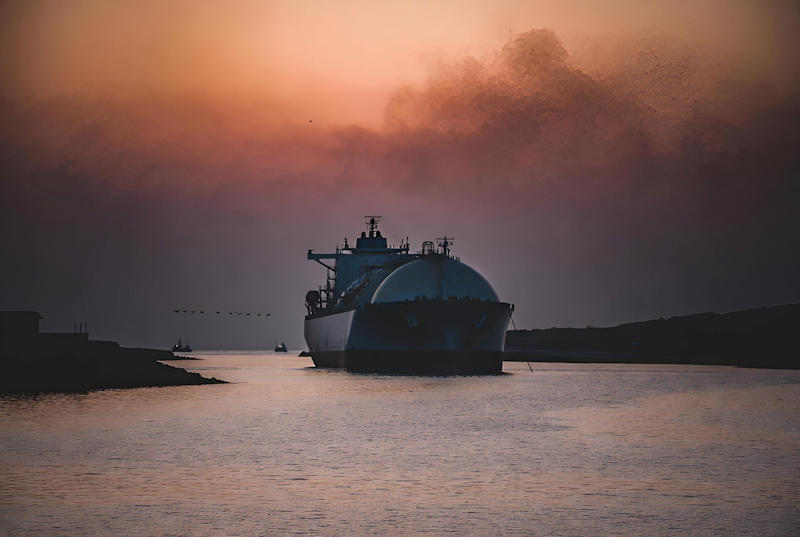
The least bad solution for the United States under these conditions would be to withdraw. But if free circulation is not restored in the strait, in law and in fact, all countries relying on it to transit resources would find themselves permanently dependent on Iran, forced to compromise with it on passage conditions. The latter would see its current position as a “key player” recognized and normalized in the global Great Game. Furthermore, this would create a dangerous precedent for international maritime law, replicable elsewhere in the world.
Is this situation acceptable to the international community, and particularly to Europeans? If preventing it makes reopening an imperative necessity, can it be left solely to the erratic strategic whims of the Americans who provoked it? In what timeframe? Is there any solution other than opening the strait by force and internationalizing its security? Will the United States understand that the strategic urgency of freely reopening the strait takes precedence over recovering enriched uranium and eliminating Iranian nuclear or ballistic capabilities through a hypothetical diplomatic accord? Can Europeans content themselves with refusing to intervene in the resolution of a crisis they did not provoke? Should we save Soldier Trump, who is facing a situation with no favorable outcome?
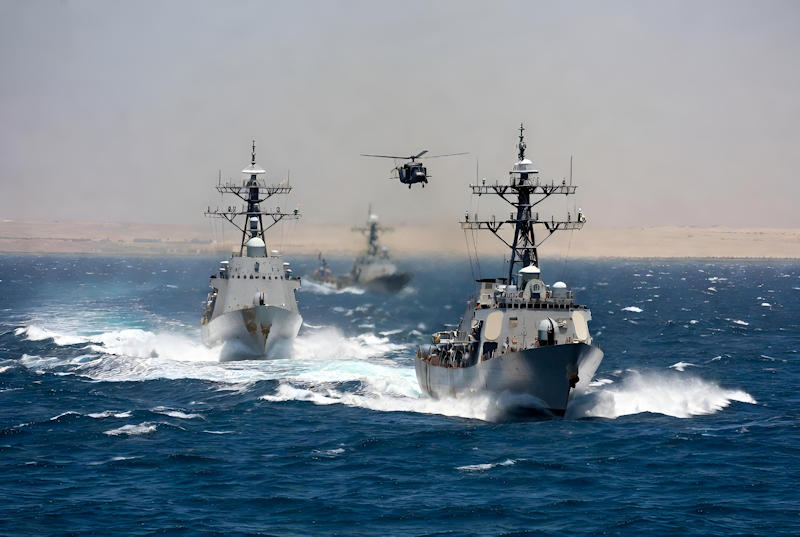
The initial negative reaction of Europeans to Donald Trump’s requests to ensure free circulation in the strait is entirely understandable. However, the nature of the stakes argues for their intervention in the game to restore and maintain it, both in the name of international law and in accordance with their own economic interests. The Iranians perfectly and quickly understood what was at stake by threatening France and the United Kingdom with retaliation in the event of an intervention.
Prior to a technical analysis of the subject, a political decision on their part is necessary. It has previously been hoped that the former European powers would shake off their geopolitical lethargy and undertake an action autonomous from the United States, just as certain EU states did with Operation Aspides in the Red Sea against the Houthis. This could under no circumstances mean aligning with Israeli-American war aims, but rather defending international or European economic interests jeopardized by the closure of the strait, in the name of international law derived from the Montego Bay Convention.
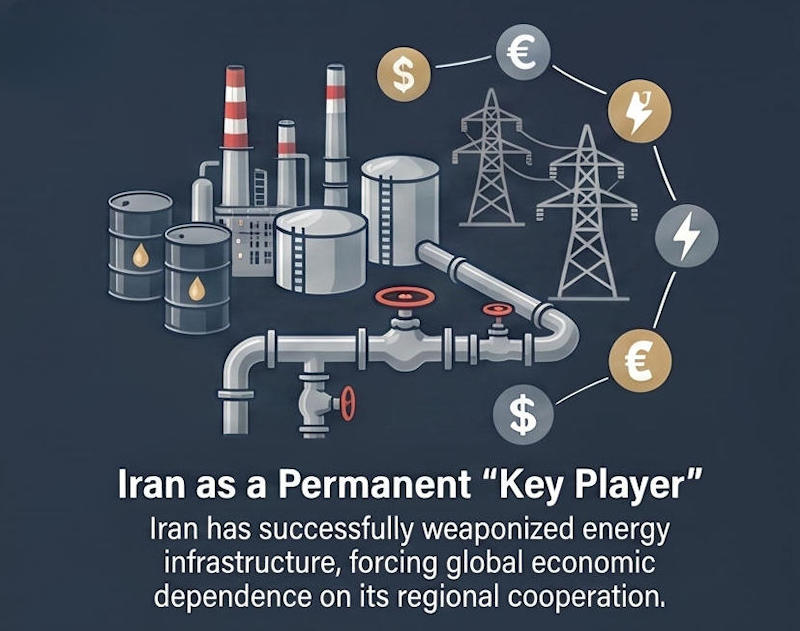
The Global Great Game: Iran as an Unavoidable “Key Player”
The Franco-British proposal to secure the Strait of Hormuz following the international summit of April 17, which would apply once a lasting ceasefire is in place, appears doubly insufficient. If free circulation is restored and a ceasefire is in effect, the mission would become pointless, except in an observer or guarantor capacity. But in the event that Iran maintains its demands regarding navigation in the strait, it would become necessary to enforce the law. This latter scenario appears the most probable. It does not seem to have been retained during the recent international conference, which contented itself with calling for a diplomatic settlement of the issue. The international intervention force, as its mission is currently framed, would therefore have no effect in limiting the already ongoing negative consequences of the global economy’s subjugation to the Iranian blockade. It is therefore necessary to go further and demonstrate international determination to uphold the law, independent of the outcome of the US-Israeli-Iranian conflict. This could indeed look like a rescue operation for the American president. But that would by no means be the reason for the intervention. Refusing to conduct it on the pretext that it might appear as such would run counter to the interests of the states likely to participate. Resentment can under no circumstances be a deciding factor in strategy. States do not have feelings, they only have interests, as De Gaulle famously recalled. The symmetry with the operation to protect maritime traffic in the Bab-el-Mandeb strait should override any objection, provided the operational dimension is correctly evaluated and the necessary assets adapted and scaled.[03]
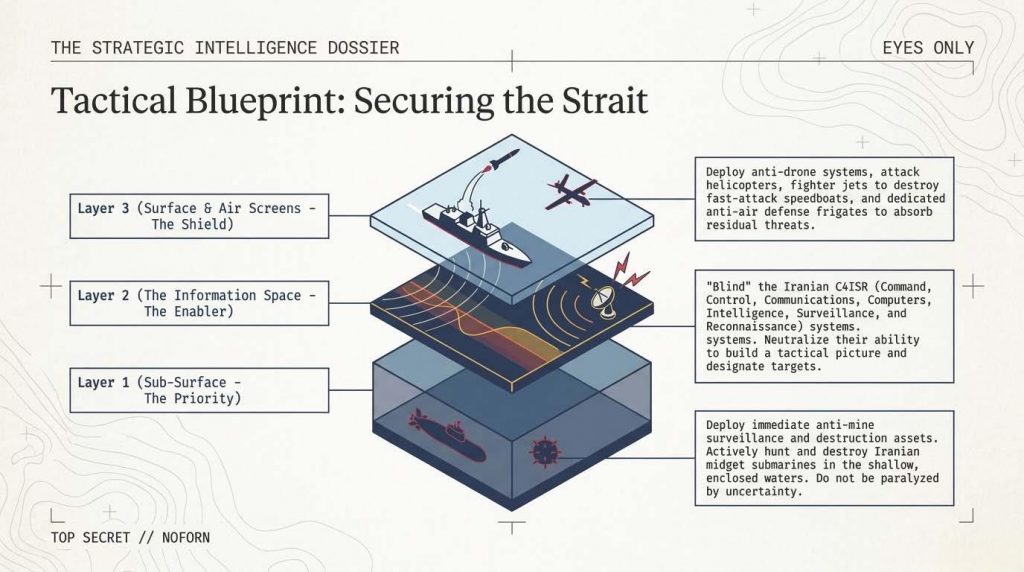
The problem of militarily controlling the maritime space of the strait to free shipping has also been outlined previously in the face of the Iranian threat. Its virtually most dangerous component would be naval mines, although this has not been verified to date.
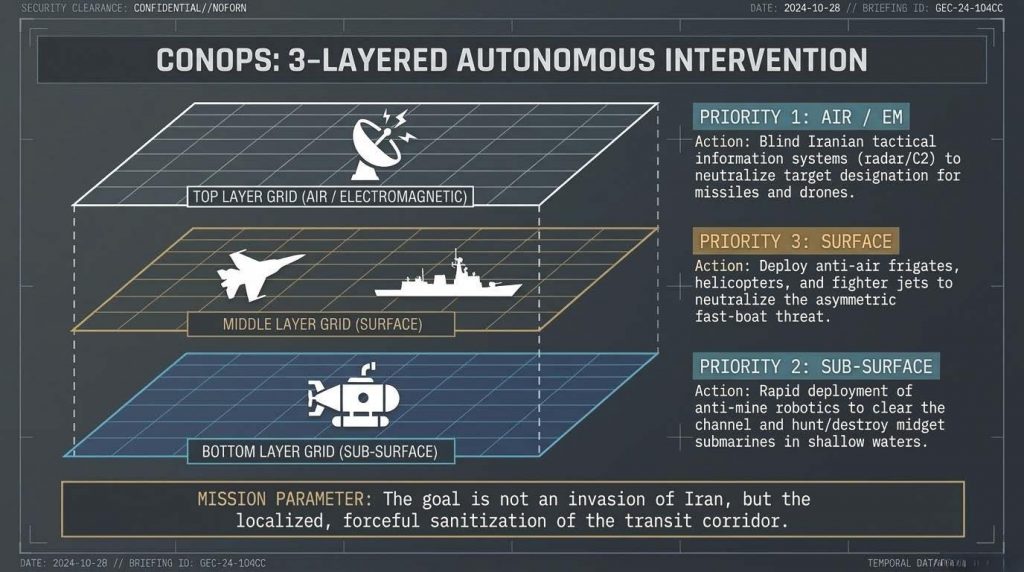
The first action would be to deploy mine countermeasure assets as quickly as possible, first for surveillance and then for intervention. It seems unlikely that the small submarines have not been destroyed by the Americans. But their threat must not be paralyzing in the absence of certainty. If they still exist, they must be ferreted out and naturally destroyed, which in an enclosed space and in shallow water is not technically difficult. The rest of the Iranian threat, now residual, lies above the surface of the sea. It can only be deployed using an information system capable of monitoring the zone and compiling the tactical situation. It must be blinded as a top priority. The threat of missiles, drones, and fast attack crafts would be considerably reduced if they cannot rely on a tactical information system for target designation. Naturally, there must be no fear of ultimately confronting it, and it would therefore be necessary to have the appropriate means. In addition to the aforementioned mine clearance assets, anti-drone capabilities, helicopters or fighter jets to destroy fast attack crafts, and air defense vessels must be planned.
The Hour of Choice: Europe Facing Predatory Empires
But first, a psychological shift must take place, primarily among Europeans: abandoning the pusillanimité that forbids legitimizing military confrontation in any circumstance other than immediate self-defense, and equally asserting themselves with complete freedom of action face to Uncle Sam. The awakening of the “fighting spirit” has become a necessity for the realization of the European Union’s geopolitical awakening, triggered by Russian aggression in Ukraine, to cross the boundaries of the continent. The transformation of the world makes it indispensable. This is an exceptional and urgent opportunity to do so.
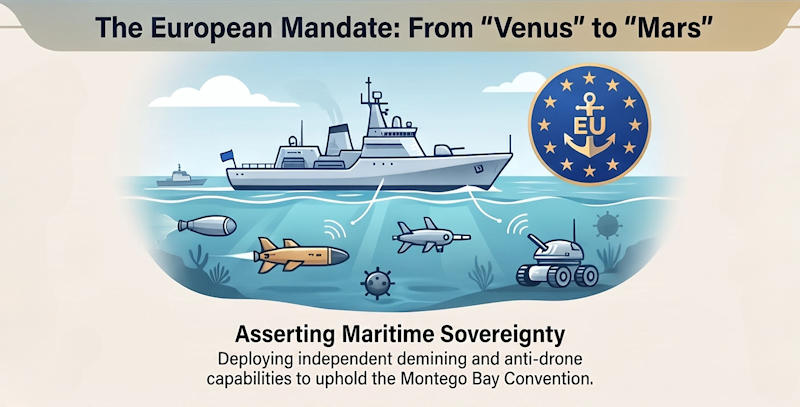
Leaving Venus for Mars: The Crash-Test of the European Fighting Spirit
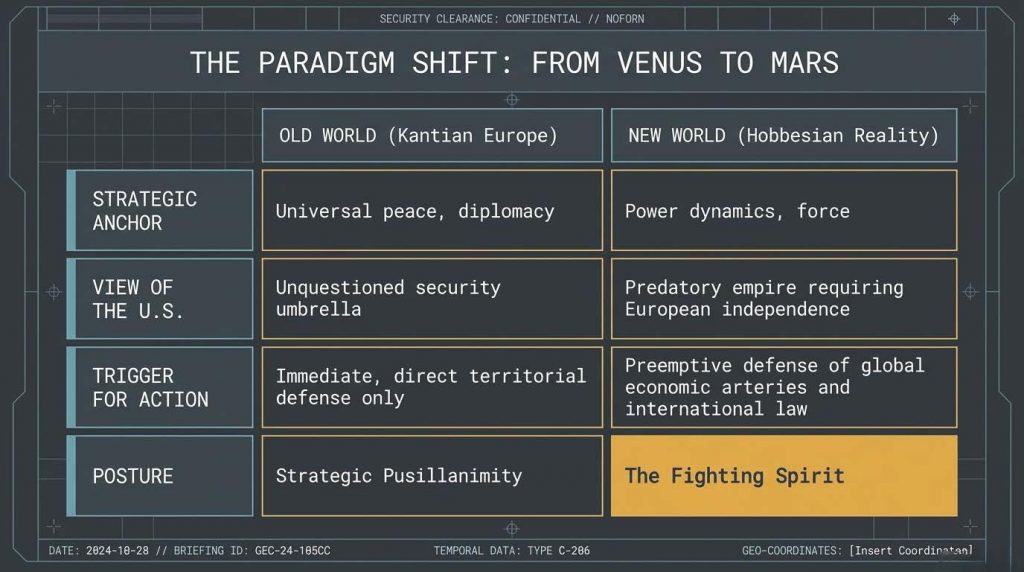
Based on Kagan’s famous thesis, Europeans must leave the world of Venus and Kant to return to that of Mars and Hobbes if they wish to continue to exist as autonomous actors in the 21st century—a century that sees the United States shifting toward the side of predatory empires, dividing up the world and challenging the universal values of democracy and international law. The stake is truly vital for them. This would undoubtedly allow Donald Trump to save face, but it would show him that he is not the only one holding “cards in his hand,” a fact he would certainly take into account. However, it would in no way aim to “save” him, nor to endorse his own dangerous designs.
Christian Girard
[01] TACO: Trump always chicken out; Trump se déballonne toujours.
[02] The Atlantic website: “Checkmate in Iran” – May 10, 2025.
[03] See Also:
- « Le blocus du détroit d’Ormuz (1) » — (2026-0429)
- « The Blockade of the Strait of Hormuz (1) » — (2026-0429)
- « Die Blockade der Straße von Hormus (1) » — (2026-0429)
- « Faut-il sauver le soldat Trump ? (2) — Le détroit d’Ormuz et l’autonomie stratégique européenne » — (2026-0514)
- « Should We Save Soldier Trump? (2) — The Strait of Hormuz and European Strategic Autonomy » — (2026-0514)
- « Muss der Soldat Trump gerettet werden? (2) — Die Straße von Hormus und die strategische Autonomie Europas » — (2026-0514)
- « Le détroit d’Ormuz (3) : L’enjeu stratégique immédiat et prioritaire de la guerre d’Iran » — (2026-0714)
- « The Strait of Hormuz (3): The Immediate and Priority Strategic Stake of the Iranian War » — (2026-0714)
- « Die Straße von Hormus (3): Die unmittelbare und vorrangige strategische Herausforderung im Iran-Krieg — (2026-0714)