Since February 28, 2026, the Middle East has been ablaze. But the real fracture in this war is not geographical; it is moral. The six Gulf monarchies paid a high price—$1,000 billion in investments and arms contracts since 2017—to buy American protection. In return, they watched in disbelief as a war was triggered without warning, raining hundreds of Iranian missiles down on their airports and refineries. Pierre Lellouche accurately stated in Le Figaro: “America was long the solution. It has now become the problem.”[01]
Table of Contents
by Joël-François Dumont — Paris, 10 April 2026
I. The “Pieds Nickelés” of Geopolitics: How to Trigger a War Without a Plan
We must start here, as everything else follows. The war in Iran is not the result of a carefully considered strategy or a comprehensive plan built by national security professionals. It is the product of vain improvisation led by a team whose incompetence is matched only by its arrogance.
The facts are damning. The strikes on February 28, 2026, were launched while negotiations between Washington and Tehran were still ongoing—Oman was still announcing that peace was “within reach” forty-eight hours before the first bombs fell. Gulf allies were not consulted. NATO was not briefed. No Iranian response had been seriously modeled. Pete Hegseth, the Secretary of Defense—whose primary claim to fame is having hosted a morning television show—managed the first hours of the conflict from a different time zone, amidst total communication chaos. General Dan Caine, the operational commander, would later admit that the Iranians had “resisted better than expected”
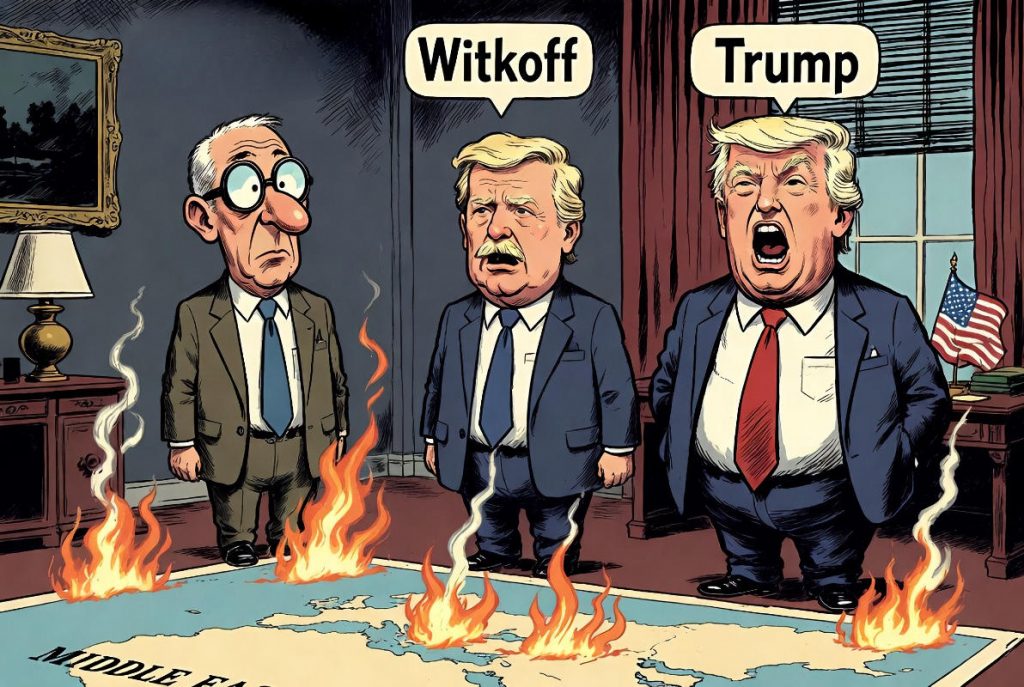
There is a biting irony in the fact that Donald Trump—the man who promised to “win so much” that Americans would be “tired of winning”—finds himself negotiating a precarious ceasefire, with a strait still partially blocked, based on an Iranian “ten-point proposal” in which eight points grant Tehran a more favorable position than before the war. And yet, he dares to speak of victory!
On Truth Social, as soon as the ceasefire was signed, Trump posted: “A big day for World Peace! Iran wants it to happen, they’ve had enough!” This slogan delights his fans. It horrifies his allies, who know what it truly masks: a lasting disaster, managed through slogans by men who confused mediocre crisis communication with strategy.
II. The Blood Offense: When Trump Breaks the Desert Code of Honor
To understand the silent rage simmering in the palaces of Riyadh, Abu Dhabi, and Doha, one must first grasp what the notion of “protection” means in the political culture of the Gulf. It is not an insurance policy taken out with a service provider. It is a blood pact, an alliance between sovereigns, sealed by public gestures and reciprocal commitments. Donald Trump has trampled this code with a flippancy that borders on calculated contempt.
The humiliations have accumulated over several years, each a bit more vulgar than the last. Westerners, accustomed to Trump’s routine indecency, eventually stopped counting them. In the Arab world, they are not forgotten.
At a rally, Trump had already mocked King Salman in these now-famous terms: “I said to the King: you have trillions of dollars. Without us, you might not be there for two weeks. You have to pay for your military.”. For an Arab sovereign, to be publicly treated as a vassal incapable of ensuring his own survival is an identity wound that does not heal.
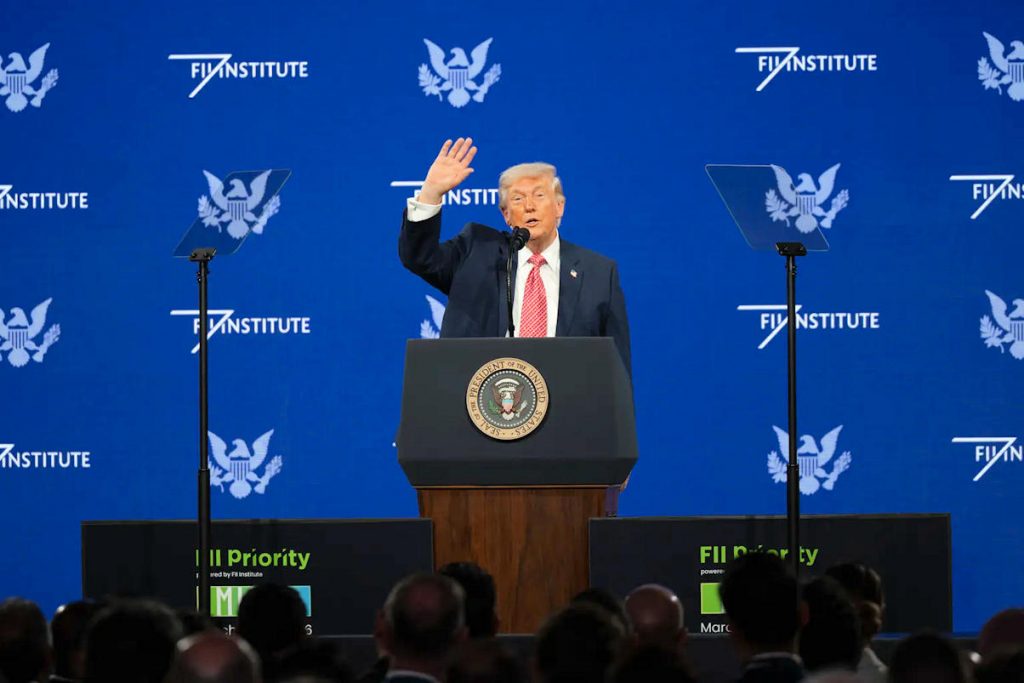
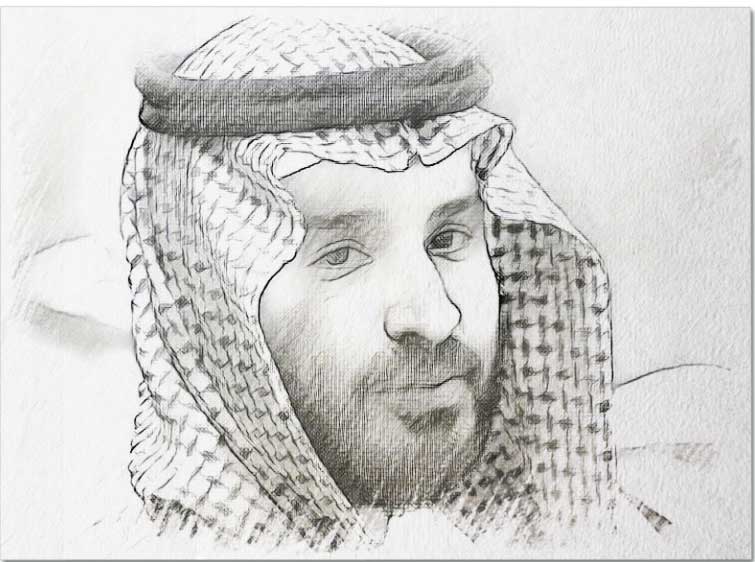
But the ultimate humiliation came on March 27, 2026, at the FII Priority summit in Miami—an investment forum created by the Saudi Public Investment Fund, designed to celebrate the fusion of Gulf petrodollars and American innovation. In the room were hundreds of Saudi investors. And Trump, from the podium, chose that precise moment to betray a confidence from MBS, concluding with a satisfied smirk:
“He didn’t think he’d end up kissing my ass. He really didn’t. He thought I’d just be another losing American president, leading a country in decline. But now he has to be nice to me. Tell him to be nice to me.”.
The room was stunned. The affront was total. This was not a slip of the tongue; it was a method. MBS is simply the latest in a long line of heads of state reduced to servile vassals in the American presidential vocabulary.
The difference—and it is decisive—is cultural. In the Arabian Peninsula, the tribal code of honor still deeply structures relations between sovereigns. A public humiliation of this nature is not forgiven. It is memorized. It guides decisions for decades. And it feeds a silent will to diversify—toward other protectors, other alliances, other horizons.
For the Gulf monarchies, Trump has done the irreparable by touching the Ird—that sacred and untouchable honor that defines the dignity of a man and his lineage. Unlike Sharaf, which can be acquired through exploits, Ird can only be lost through humiliation or defilement. By publicly mocking MBS on his security dependence, the American president did not just break a contract; he inflicted a wound upon the Ird of the House of Saud. Such an offense is not settled with a trillion-dollar check; it shatters the Asabiyyah (clan solidarity) that until now linked Washington to its allies, pushing the latter to seek elsewhere the dignity no longer offered at the White House.
Remarkably, Riyadh did not respond. No communiqué, no tweet, no summons of an ambassador. The Saudi silence is the most eloquent response possible. MBS knows he is, for now, tied hand and foot. But in the corridors of the palace, they are recording. And they are planning.
III. The GCC Under Fire: Forced Unity, Divergent Strategies
One of the paradoxical consequences of this war is that it has temporarily reconciled neighbors who had been torn apart for years. The rivalry between Saudi Arabia and the United Arab Emirates, which had resurfaced virulently over the Yemen issue in the weeks preceding the conflict, vanished under the pressure of Iranian strikes. The GCC, a chronically anemic institution, has found a semblance of cohesion—the kind provided by common terror.
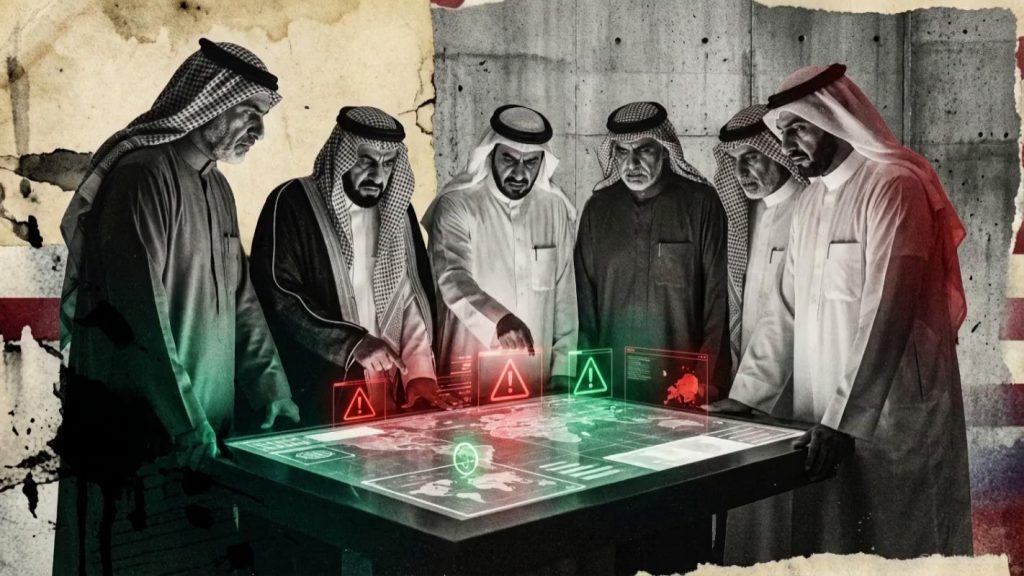
The numbers are staggering. In the first forty-eight hours, the Emirates endured more than 150 missiles and 500 Iranian drones. Strikes hit Dubai International Airport—the world’s leading hub for international passenger numbers—residential neighborhoods in Sharjah, and U.S. 5th Fleet facilities in Bahrain. In total, Iran launched 1,511 strikes against targets within the Gulf countries and Israel over the course of the conflict, according to ACLED.
But beyond this facade of solidarity, the positions of the six monarchies quickly diverged. The Emirates, having paid the heaviest price, adopted the most offensive posture. The UAE Ambassador to Washington, Yousef Al-Otaiba, stated that his country was “open to joining military efforts to end Iranian capabilities”. Anwar Gargash, presidential diplomatic advisor, proclaimed that the UAE had “triumphed in a war they had sincerely sought to avoid”. The phrasing is revealing: one does not proclaim victory in a war one wished for.
Saudi Arabia condemned the “brutal and flagrant attacks” but weighed its words regarding any direct military participation. Oman, a mediator until the last moment, pleaded for an immediate ceasefire. Qatar, which despite having diplomatic ties with Tehran, expelled Iranian military representatives within twenty-four hours of the strikes on its territory.
The reaction from Gulf capitals also speaks to what they dare not say publicly: Trump triggered a war in their backyard without warning them, and then expressed surprise that it affected them. When questioned by CNN the following day, the American president called the Iranian attacks on the Gulf the “biggest surprise” of the conflict: “The Gulf countries were going to be very little involved, and now they are insisting on being involved.”. Naivety, at this level of responsibility, becomes a moral category.
IV. The Destruction of Dreams: What the War Shattered
The war in Iran did not just kill people and damage infrastructure. It shattered civilizational projects that the Gulf monarchies had built with hundreds of billions of petrodollars.
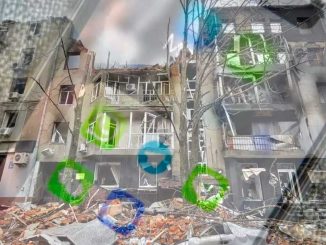
Dubai had achieved the feat of shedding its image as a petro-state to establish itself as a global capital of finance, luxury, and tech. The column of smoke photographed above its international airport served as a metaphor of perfect brutality. In a matter of hours, years of a carefully constructed image evaporated.
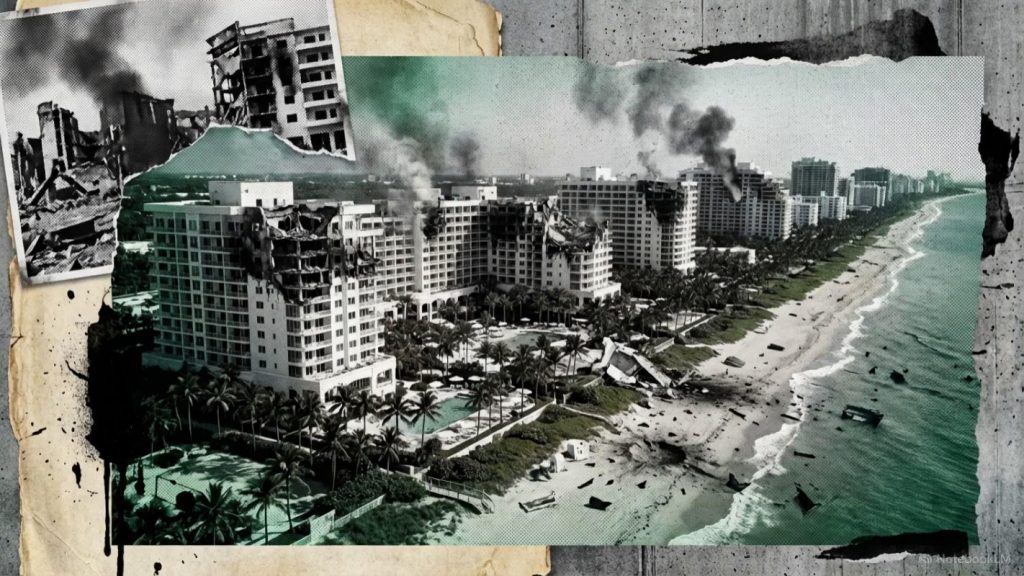
Qatar saw its LNG (Liquefied Natural Gas) as the lever of its global power. Its Ras Laffan industrial complex represents 20% of the world’s LNG production. On March 18, an Iranian strike damaged the facilities, causing a 17% reduction in production capacity. QatarEnergy declared force majeure. Estimates suggest three to five years for repairs.
Saudi Arabia, finally, saw Vision 2030 as its exit from the oil era. NEOM, Qiddiya, and massive investments in tourism and technology: all of this rested on a fundamental premise—regional stability. That premise has just collapsed.
Then there is the toll scandal. When Iran announced it wanted to impose a transit fee in the Strait of Hormuz—$1 per barrel of oil, payable in cryptocurrency or yuan, potentially amounting to $120 billion a year—an immediate condemnation from Washington was expected. It did not come. Questioned by ABC News, Trump called the toll project a “beautiful thing”. On Truth Social, he announced that “the United States would help streamline traffic in the Strait of Hormuz” and that “lots of money would be made”. He mentioned a possible U.S.-Iranian “joint venture” to manage the racket together.
“We are considering doing it in the form of a joint venture. It’s a way to secure the strait, and especially to protect it from competition. It’s beautiful.”
The sentence is of staggering political density. Trump is proposing to partner with Iran—the enemy he just spent five weeks bombing—to tax the oil of his own Arab and Asian allies. France immediately condemned the project, calling it “illegal” under international law. The European Union reminded everyone that “freedom of navigation means: no payment, no toll of any kind”. The Gulf countries, who will never accept Hormuz being controlled by Tehran, watched this spectacle in mute disbelief. This is the protector they paid a thousand billion dollars for.
V. Asia Devastated: When the Sheriff Deserts His Post
To measure the impact of the Iranian war on Asia, one statistic is enough to set the stage: in 2024, 84% of the crude oil and 83% of the LNG (Liquefied Natural Gas) passing through the Strait of Hormuz were destined for Asian markets. When Iran closed the strait on March 1, 2026, the entire Asian economy received a dagger to the heart.
The director of the International Energy Agency did not mince his words, calling it the “greatest challenge to global energy security in History”. The word “History” is not rhetorical exaggeration. Approximately 12 to 15 million barrels per day vanished from the world market in the span of forty-eight hours.
The geography of Asian vulnerability is relentless. China, India, Japan, and South Korea alone represent 75% of the oil flows and 59% of the LNG flows passing through the strait. But their exposure is not uniform. Japan and South Korea are the most vulnerable: they have zero domestic hydrocarbon production and are almost totally dependent on imports. China has a cushion—strategic reserves of 1.2 billion barrels, providing 108 days of coverage. India benefits from special ties with Iran but remains exposed.
Images from Southeast Asia give a concrete measure of the shock. In Thailand, the price of diesel jumped from 30 baht per liter in February to 50 baht in April—a 70% increase in six weeks. Hundreds of Australian gas stations posted “sold out” signs. Pakistan asked its supporters to watch cricket matches from home to save fuel. The Philippines declared a state of emergency. Spot LNG prices in Asia more than doubled in a matter of days. AMRO—the ASEAN+3 Macroeconomic Research Office—warned that regional growth “would have been higher without the Iranian war.”. Translation: Trump has robbed Asia of several growth points.
South Korea suffered an additional shock, different in nature but equally revealing. Washington decided to redeploy components of its THAAD anti-missile system—originally deployed in Korea to protect Seoul against Pyongyang—to the Middle East. Seoul is “concerned.”. The diplomatic phrasing is modest. What it masks is existential anxiety: the United States pulled from South Korea’s shield to send it to protect their operations in Iran. Chinese media delighted in this, reminding everyone that it was Beijing that had paid a high price during the initial deployment. Historical irony: the sacrifice once made by Seoul is now being turned against it.
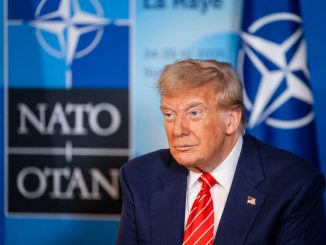
Trump, irritated that his Asian allies did not support him more in “reopening Hormuz,” publicly criticized Japan—highly dependent on Gulf hydrocarbons—for its lack of commitment. He called on China to send “warships” into the strait. Tehran responded by granting Japanese vessels preferential passage, thereby demonstrating that it was more capable of sophisticated diplomacy with Tokyo than the Trump administration itself.
VI. China Seizes Its Chance: Beijing as the Primary Winner and Substitute Mediator
In this war, there is an unexpected beneficiary: China. Not because Beijing wanted this conflict—it also costs China in terms of oil supplies and economic turbulence—but because it offers a geopolitical opportunity that China could never have created on its own.
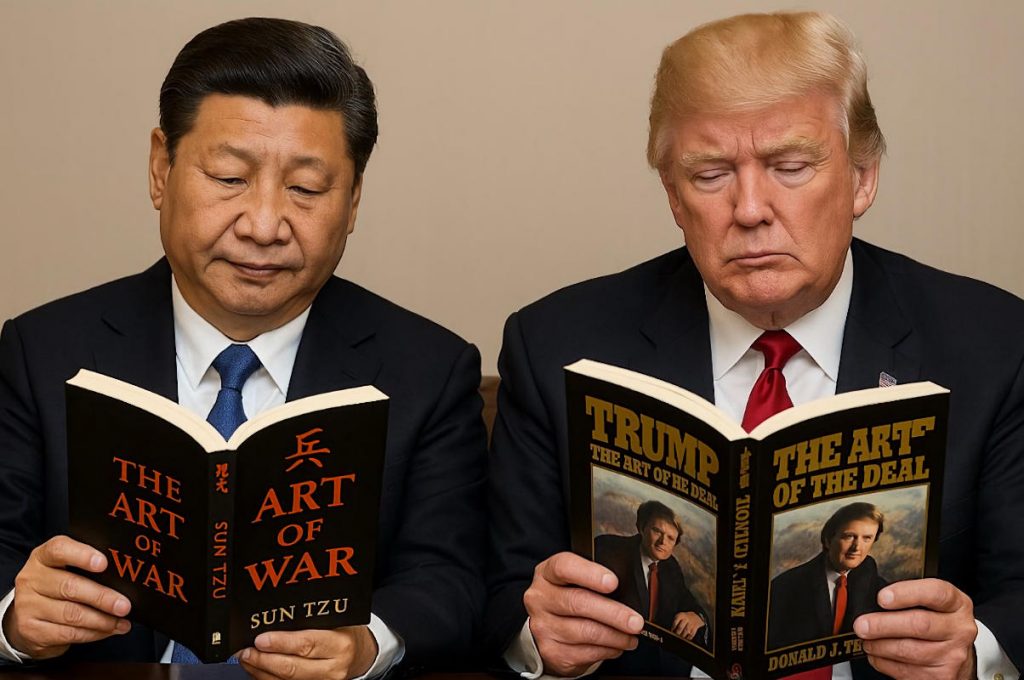
As early as March 26, Iran granted free passage through the strait to the vessels of five nations: China, Russia, India, Iraq, and Pakistan. This selective privilege is as much a political card as an economic one. It signifies that Tehran recognizes the existence of a “non-American world” with which it can do business even in times of war. China receives a portion of its Iranian oil via tankers. China negotiates. China dialogues. Fortune magazine headlined that Beijing “was assuming a global leadership role” in the Iranian crisis, “while America looked elsewhere with disinterest.”. The headline says it all.
This reversal has an economic dimension that deserves highlighting. Thanks to its lead in renewable energies and the massive electrification of its vehicle fleet, China is structurally less exposed to the oil shock than Japan or South Korea.
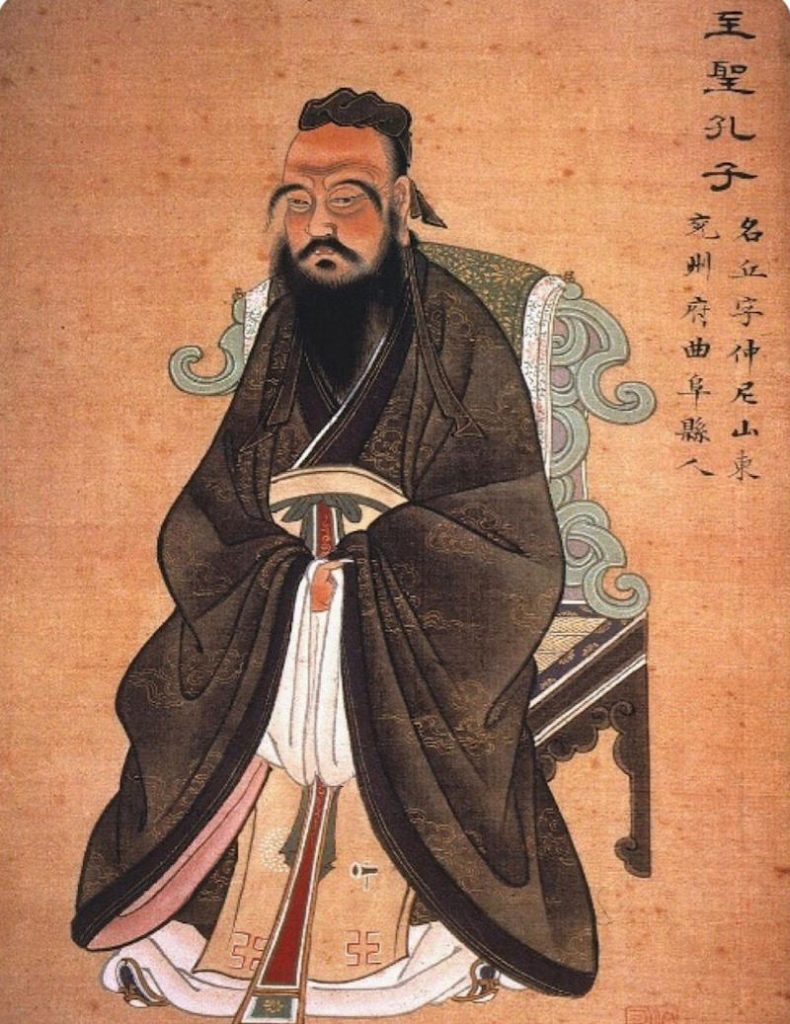
China has 130 days of reserves if it maximizes its domestic consumption. It therefore emerges from this crisis with a double advantage: it has demonstrated its reliability as a non-Western partner, and it has unintentionally accelerated the rest of the world’s interest in its green technologies.
China did not conquer this space by force of arms. It occupied it by default, by availability, and by the simple virtue of being there when America was looking elsewhere. This is the lesson that declining empires have always had to learn the hard way.
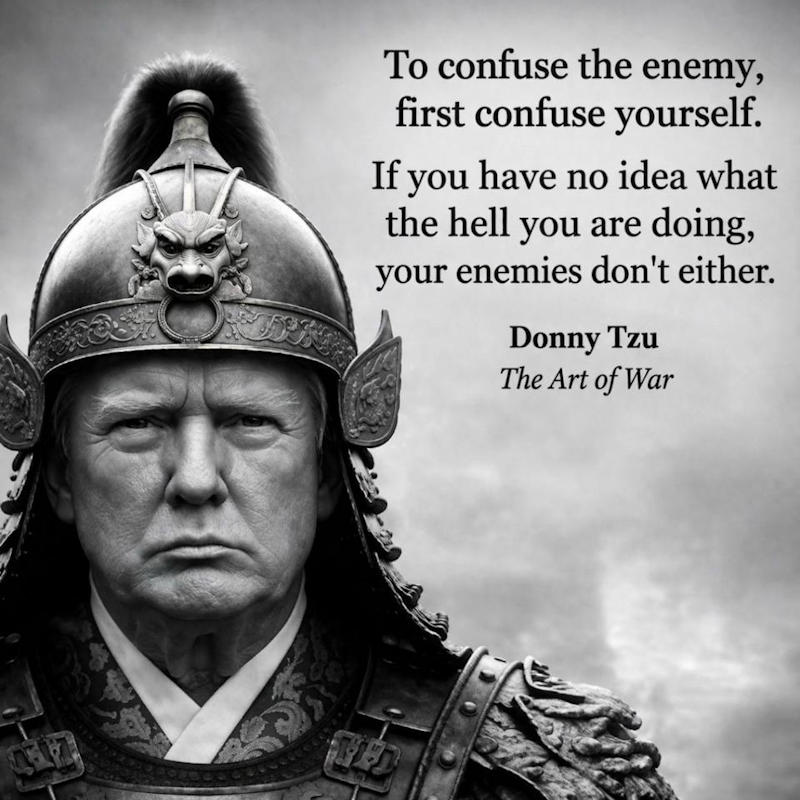
Confucius said: “If you call your allies cowards in February, do not expect them to come to your aid in May, you moron.” — Illustration © European-Security
VII. Russia Cashes In: The Discreet Winner of a War It Didn’t Start
If China is the primary beneficiary of this war—by default, by availability, and by the grace of a vacuum it simply occupied—Russia is the second, and its victory is of an entirely different nature. It is not the fruit of a seized opportunity; it is the result of a cold, premeditated calculation, executed with the precision of an intelligence professional.
On March 18, 2026, Iranian missiles struck the Ras Laffan complex in Qatar—the world’s largest liquefied natural gas (LNG) facility, responsible for 20% of global production. Repairs are estimated to take years. QatarEnergy declared force majeure. Spot LNG prices in Asia surged 140% in hours. No one claimed responsibility for the guidance system. But the surgical precision of the strikes—targeting not military installations, but the most strategic civilian gas infrastructure in the world—was no accident.
Ras Laffan is not just Qatar’s economic jewel; it is Gazprom’s main competitor in the European market. Since 2022, Qatari LNG had partially compensated for the disappearance of Russian gas in Europe. Overnight, this competitor was knocked out for three to five years. Moscow didn’t have to fire a single rocket. It simply needed to share its satellite data with its Iranian ally at the right time, on the right target.
Washington’s response should have been immediate condemnation, the summoning of the Russian ambassador, and tightened sanctions. None of this happened. On the contrary, Trump proceeded with a partial lifting of sanctions on Russian hydrocarbons—officially to “stabilize” world prices disrupted by the closure of Hormuz. The logic is chilling in its cynicism: the arsonist is discreetly rewarded in the name of the remedy against the fire.
There is something in this sequence that goes beyond simple passive complicity. It is a self-betrayal by America. U.S. bases in Bahrain, Kuwait, and Qatar were hit by hundreds of Iranian missiles. American soldiers died. And yet, the Trump administration issued no sanctions, no criticism, and made no move against Moscow, despite documented evidence of its role in guiding these strikes.
Silence is an admission of guilt. Molière would have called it the ultimate Tartuffe. Audiard would have put it more bluntly: the arsonist sends the bill to the firefighters, and the insurer pockets the premium.
VIII. The Ukrainian Surprise: Kyiv Protects the Gulf Where Washington Failed
There is a reversal in this war so spectacular that it deserves to be told in all its uniqueness. Ukraine—a country at war since 2022, its economy drained, its territory partially occupied—has become the most sought-after security consultant for the Gulf monarchies.
The logic is relentless: Ukraine is the only country in the world to have faced thousands of Iranian Shahed-136 drones for three years. These are the same drones that Tehran sent by the hundreds against Gulf airports and hotels in March 2026. Kyiv has developed, through pain and forced innovation, an arsenal of countermeasures that exists nowhere else: electronic warfare mounted on light vehicles, autonomous interceptor drones, low-cost early warning systems, and GPS jamming techniques adapted for drone swarms. This is expertise that American Patriot systems—designed for high-altitude ballistic missiles—simply do not possess.
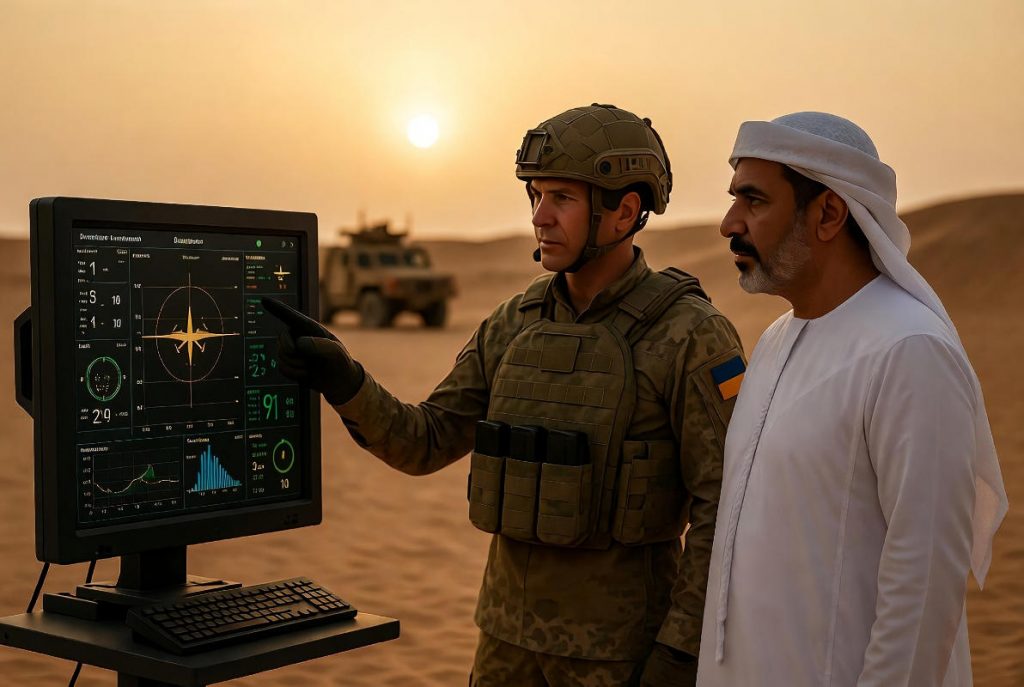
Riyadh and Abu Dhabi were quick to learn the lesson. Ukrainian teams of electronic warfare experts have been called upon. Technology transfer agreements are under discussion. For Kyiv, this is an unexpected geopolitical recognition. For the Gulf, it is a pragmatic response to an American failure. This reversal illustrates that in the emerging post-unipolar world, security can no longer be ordered from a Washington catalog. It is built through horizontal partnerships between middle powers sharing common threats.
IX. The World After: What This War Changed Forever
The war in Iran is not over. The April 8 ceasefire is fragile—Iranian missiles continued to rain down in the hours following its announcement. As of April 9, the Strait of Hormuz remained “effectively closed” according to ADNOC CEO Sultan Al Jaber: 230 loaded tankers were queued in the Gulf, waiting for an Iranian green light that never came.
But some things have already changed forever. The trust between the Gulf monarchies and Washington is broken—not weakened, broken. It may be rebuilt, but it will never regain its automatic nature. Monarchies will diversify their security guarantees: toward France and the UK, whose reliability contrasts with the White House’s zigzags; toward Ukraine for anti-drone expertise; and toward their own defense capabilities.
The closure of the Strait has revealed the absolute fragility of the global energy order. Diversification efforts will accelerate. Throughout Asia, leaders will look at Chinese renewable energy technologies with new interest—not out of climate idealism, but for survival.
And China has taken a giant step into the vacuum left by Washington. It did not conquer this space by force of arms; it occupied it by default, by availability, and by the simple virtue of being there when America was looking elsewhere.
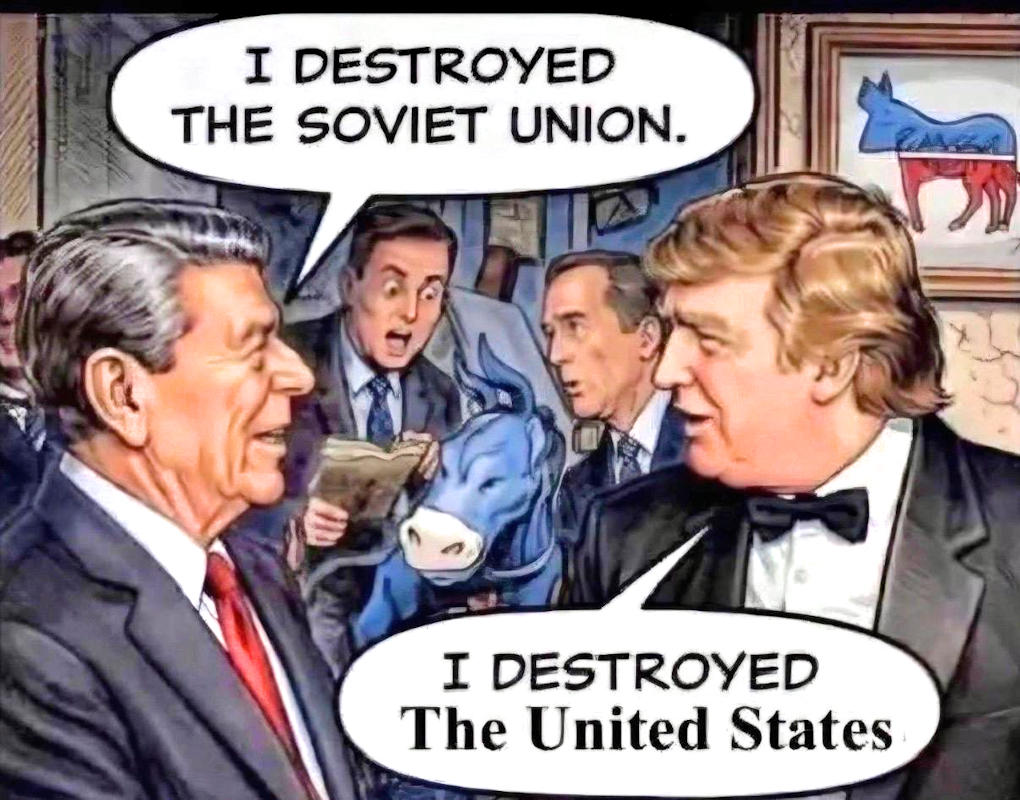
There remains one final irony, the bitterest of all. Donald Trump promised to make America great again. In a few weeks, he managed to do what his enemies failed to do in decades: convince the entire world—allies and adversaries alike—that the American guarantee is no longer worth the paper it is printed on. The thousand billion invested by the Gulf may have been a bad deal. But the true catastrophe is not theirs alone. It belongs to all those from Tokyo to Seoul, from New Delhi to Singapore, who had organized their security and prosperity around the permanence of the American order.
That order has just taken a thousand missiles into its hull. And no one knows yet if the vessel will stay afloat.
Joël-François Dumont
Notes
[01] This article was going to press when Pierre Lellouche’s column appeared in Le Figaro on April 9, 2026: “Behind the ceasefire in Iran, a strategic disaster for Trump and the West.” We find, word for word, the same conclusion:
“Trump’s world is nothing more than a state of the jungle… America is no longer the solution, it is the problem.”
Lellouche highlights three long-term consequences: the end of the post-1945 regional security system, the implosion of the Atlantic bond, and a reinforced, more vengeful Iran under the control of the Revolutionary Guards.
[02] Honor (Sharaf/Ird): The supreme value in the Arab world. By publicly humiliating the Saudi sovereign, Trump did not just commit a diplomatic gaffe; he touched the Ird (sacred honor), an offense that is never forgotten.
[03] Asabiyyah (Clan Solidarity): A term from sociologist Ibn Khaldun, defining the cohesion necessary for survival. By ignoring attacks on allied infrastructure, Trump broke this protective solidarity, turning the alliance into a failing mercenary contract.
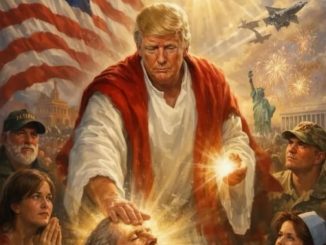
[04] See “Tartuffe of the Tundra, or The Dinner of Kings”: We have summoned in spirit two masters of the human comedy, Jean-Baptiste Poquelin, known as Molière, and Michel Audiard, to observe the new “master of the world,” whether he is tweeting at 5 a.m. in his pajamas at Mar-a-Lago or attending a ceremony at the White House where his spiritual mentor, Paula White, compares him to Jesus. Of course, the point is not to comment day by day on his disjointed soundbites, but to analyze his outbursts that delight MAGA supporters. Consequently, at the request of our loyal readers, this column will, over the coming months, become a serial until Congress realizes that, due to his advanced senile dementia, there is an urgent need to neutralize him.
See Also:
- « 1000 Milliards pour rien : Le Golfe et l’Asie face à la trahison américaine » — (2026-0410)
- « $1,000 Billion for Nothing: The Gulf and Asia Facing the American Betrayal » — (2026-0410)
- « 1.000 Milliarden für nichts: Der Golf und Asien angesichts des amerikanischen Verrat » — (2026-0410)
Decryption : The Breakdown
One trillion dollars. That is what the six Gulf monarchies have invested since 2017 to buy American protection. The result: a war triggered without warning, Iranian missiles raining down on their airports, hotels, and refineries. And a president who, before a crowd of Saudi investors in Miami—at a forum created by Saudi Arabia—publicly boasts that MBS “kisses his ass.” This isn’t diplomacy. It is a protection racket paired with humiliation.
But the real scandal lies in what follows. When Iran proposes taxing oil transit through the Strait of Hormuz, Trump responds: “It’s a beautiful thing; we could do it as a joint venture.” He just spent five weeks bombing Iran, and now he proposes sharing the loot with them—at the expense of his own Arab and Asian allies, who draw 80% of their energy from that very strait.
Asia is suffocating. Japan, South Korea, Thailand, the Philippines: shortages, skyrocketing prices, amputated growth. Meanwhile, China quietly steps into the vacuum left by Washington—without firing a single shot.
In the meantime, Ukraine—a country at war with a drained economy—has become the Gulf’s number one security consultant. Why? Because Kyiv knows how to destroy Shahed drones. American Patriots do not.
Pierre Lellouche said it rightly: America was long the solution. Today, it has become the problem.
🎧 为虚无支付的一兆美金:美国对海湾和亚洲盟友的背叛。
特朗普时代的美国正如何利用其外交手段谋取私利?为什么海湾国家正转向乌克兰寻求真正的安全专业知识与反无人机技术?