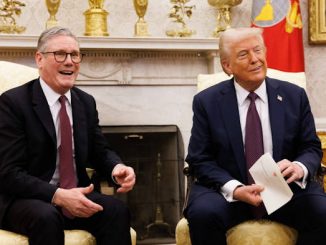
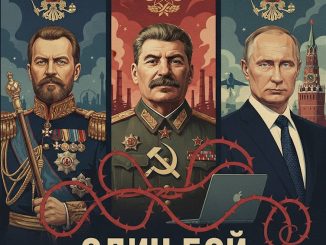
Tsar Nicolas II, Staline, Potine, même combat — Illustration © European-Security
Françoise Thom

Economic Relations, an Underestimated Weapon in the Kremlin’s Hybrid War Against the West. II. Contagion

In this essay, Françoise Thom demonstrates that Russia’s strategy of economic confrontation did not begin with Putin’s rise to power, but unfolded in a new form as early as the 1990s. Far from being aid, Western funds fueled systemic corruption. Billions from the IMF and the World Bank were massively siphoned off by oligarchs. This money was then laundered with the passive complicity of major Western banks.
[…]

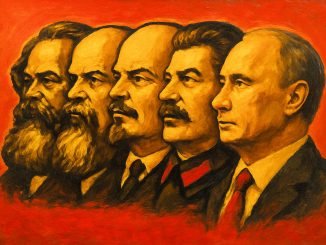
Marx, Engels, Lénine, Staline & Poutine © Euiropean-Securit
Françoise Thom

Economic Relations, an Underestimated Weapon in the Kremlin’s Hybrid War against the West – I. The Leninist Imprint

The appeal of the Russian market, perceived as an El Dorado by Westerners, stems from a historical strategic blindness. For centuries, the West has deluded itself into believing that trade can integrate Russia as a rational and peaceful player in the global economy. However, this vision is fundamentally flawed. For the Kremlin, from the Tsarist era to the present day, trade is not an end in itself, but a pure instrument of power. It is a means of acquiring technology and capital to strengthen its military apparatus and consolidate its regime, while weakening its adversaries.

[…]

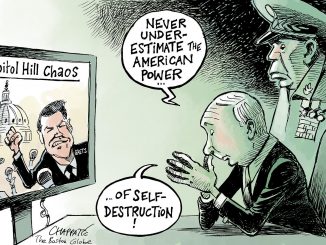
Patrick Chappatte © Cartoon — Poutine USA-Trump
Special Reports

Trump II: Chaos and Pity

Since his reelection, we have relentlessly denounced the war Donald Trump is waging against Europe. In six months, he has shattered 80 years of the Western alliance, the pact that had guaranteed peace on our continent. The world is now crumbling beneath the feet of a fragile president. In six months, Donald Trump has methodically dismantled the legacy of our fathers: this Western alliance that nurtured peace in Europe is now nothing more than an epitaph. His pretext? To eradicate a so-called “deep state.” To what end?

[…]

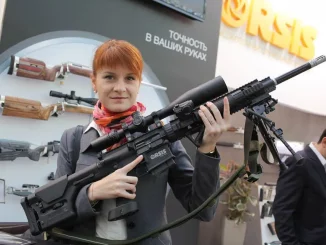
Maria Butina sur sa page Facebook
Intelligence

The Gray War: Dollars, Data, and Donations

Russia is waging an insidious “grey war” in the United States, using money, data, and donations to influence American politics. This strategy relies on a complex network, the “Putinosphere,” which ranges from intelligence services to agents of influence and “useful idiots.”

[…]

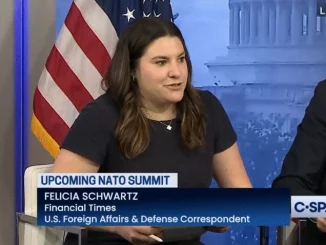
Felicia Swhawrtz animant un débat sur C-Span - Capture d'écran
In Focus

From Real-Politik to Real-Estate Politics

In 2025, peace in Ukraine is no longer a matter for diplomats, but for a real estate tycoon: Steve Witkoff, a friend of Trump, parachuted in as chief negotiator with zero experience. In the face of his blunders, all journalistic criticism is aggressively dismissed as a “foreign influence operation.” This marks the rise of “Real-Estate-Politik,” where war is treated like just another business deal. This playbook, first seen with Jared Kushner in the Middle East, reduces geopolitics to a transaction. Nations become assets, borders become contractual clauses, and human lives are a mere liability. The complexity of history is denied in favor of a bottom-line mentality. Peace is no longer an ideal to strive for, but simply a deal to be closed. And the greatest tragedy is watching the world applaud this deadly oversimplification.

[…]

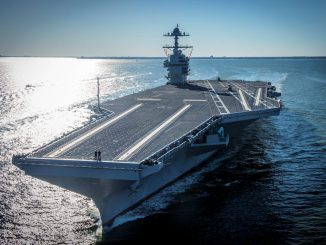
USS Gerald R. Ford (CVN-78) — US Navy Photo
Mer

The USS Gerald R. Ford in the Norwegian Sea

While stylistic differences exist between the Biden and Trump administrations, a fundamental continuity in American foreign policy—centered on military power projection and great power competition—persists. Joël-François Dumont dissects here Donald Trump’s “Peace through Strength” doctrine, highlighting its transactional nature and his personal quest for the Nobel Peace Prize as a validation of his anti-liberal approach to international relations. Both Biden’s or Trmp’s administrations, despite radically different styles, consistently employ military power projection as a core instrument of U.S. foreign policy. The fundamental divergence lies in the objective of this power: Biden seeks to uphold the liberal multilateral order, while Trump aims to dismantle it for transactional, unilateral gains. The USS Gerald R. Ford thus serves as a potent symbol adaptable to two contrasting visions of global engagement, while addressing enduring strategic imperatives, particularly confronting Russia in the Arctic.

[…]