
It was undoubtedly the coldest speech ever delivered in the Swiss resort, and the outside temperature had nothing to do with it. On this January 23, 2026, Volodymyr Zelensky did not take the podium at the World Economic Forum to seduce, nor to implore, nor even to inspire according to the usual codes of Western eloquence. He came to issue a death certificate: that of European illusions.
Table of Contents
by Joël-François Dumont — Brussels, January 23, 2026
Introduction
If the audience reacted with palpable tepidity, it is because the Ukrainian President broke the golden rule of Davos: facade optimism. What we heard was not the plea of a head of state at war, but the ultimatum of a leader who realized his allies had become his main burden.
Here is the full analysis of this speech, which marks the shifting of an era. From the denunciation of European cowardice to the unprecedented proposal of a security merger, this is the story of the day Kyiv offered to save Brussels from itself.
I. The Diagnosis: Europe in “Groundhog Day” Mode
From the very first minutes, Zelensky imposed a devastating cultural metaphor to describe the European psyche: the movie Groundhog Day. The image is cruel. It depicts a senile Europe, condemned to repeat the same mistakes, the same summits, and the same empty promises, while the world burns around it.

“Everyone remembers the great American film, Groundhog Day… no one would want to live like that… And yet, that’s exactly how we live now. It’s our life and every Forum like this one proves it. Just last year, here in Davos, I ended my speech with the words, Europe needs to know how to defend itself. A year has passed and nothing has changed.”
Zelensky points here to the original sin of European diplomacy: the belief that time is on its side. However, in 2026, time has become the enemy. He denounces what he calls “Greenland mode,” a reference to an emerging geopolitical crisis regarding which Europe is paralyzed.
The accusation is precise: Europe does not know how to manage a crisis until America has given it permission or direction.
“It seems like everyone is just waiting for America to cool down on this topic… But what if it will not? What then?”
This “What then?” resonates like a threat. Zelensky highlights that Europe treats the war like seasonal bad weather, hoping the problem will disappear on its own. It is the diagnosis of learned helplessness.
II. The Hypocrisy: Financing One’s Own Executioner
If the first part of the speech attacked political inertia, the second targeted the economic morality of the West. This is where the speech became physically uncomfortable for the captains of industry in the room.
Zelensky highlighted Europe’s deadly schizophrenia: with one hand, it provides aid to Ukraine; with the other, it allows Russia to bypass sanctions, thereby financing the missiles that destroy that very aid.
“Why can President Trump stop tankers from the shadow fleet and seize oil? But Europe doesn’t; Russian oil is being transported right along European shores… That oil funds the war against Ukraine. That oil helps destabilize Europe… If Putin has no money, there is no war for Europe.”
The attack is frontal. Zelensky no longer speaks of the “technical complexity” of sanctions, but of a lack of courage. He contrasts the brutal but effective action of the Trump administration (seizing tankers) with European legalistic passivity.
Even worse, he addressed the technological issue. In 2026, war is industrial and electronic. Zelensky revealed that the missiles striking Kyiv contain components from “friendly” countries.
“Russia couldn’t build any ballistic or cruise missiles without critical components from other countries… Russia gets components from companies in Europe, the United States and Taiwan.”
The underlying question he poses is terrible: What is the point of giving us Patriot systems to intercept missiles that your own companies helped build?
He extended this critique to international justice, using a humiliating comparison with Venezuela. If Maduro is on trial, why is Putin, who is waging “the biggest war since World War Two,” still negotiating his assets?
“It’s Putin, who’s trying to decide how the frozen Russian assets should be used, not those who have the power to punish him… Too often in Europe, something else is always more urgent than justice.”
III. Brutal Realism: Europe Orphaned by America
The context of this speech is dominated by the shadow of Donald Trump, back in the White House. While European leaders panic or try to “seduce” the American president, Zelensky adopts a cold Realpolitik. He has understood something Brussels refuses to admit: Trump’s America will not change.
Zelensky mocked, with biting subtlety, European attempts to “coach” Trump.
“Europe looks lost trying to convince the US President to change, but he will not change. President Trump loves who he is… Europe still feels more like a geography, history, a tradition, not a real political force.”
He then delivered the truth that hurts the most: NATO is a fiction that relies entirely on American goodwill. If Washington withdraws, the alliance is merely an empty shell.
“Right now, NATO exists thanks to the belief that the United States will act… But what if it doesn’t? Believe me, this question is everywhere in the minds of every European leader.”
Zelensky is not criticizing Trump; he is adapting to him. He is criticizing Europe for having no Plan B. He exposes the existential vulnerability of a continent that has outsourced its survival for 80 years.
IV. The Grand Deal: Ukraine as Europe’s Shield
This is where the speech shifts. After stating that Europe is rich but powerless (“a salad of small and middle powers”), Zelensky does not ask for charity. He makes a business and security offer.
This is the nuclear core of his intervention. Zelensky proposes a role reversal. Ukraine is no longer the assisted nation; it proposes to become the security provider for a Europe incapable of defending itself.
1. Credibility Through Blood
He compares European inefficiency (symbolized by the paltry deployment of troops to Greenland) with the lethal efficiency of the Ukrainian army.
“If you send 40 soldiers to Greenland, what is that for? … 40 soldiers will not protect anything. You risk not being taken seriously.”
Against this impotence, he opposes Ukrainian reality:
“We have the expertize and weapons to ensure that not one of those ships remains, they can sink near Greenland, just as they do near Crimea. No problem.”
“No problem.” These two words are scathing. What is an insurmountable obstacle for Europe (sinking a Russian ship) is a routine task for Ukraine.
2. The Merger of Forces
Zelensky proposes, implicitly but very clearly, a European army with Ukraine as its backbone. Europe brings the finances; Ukraine brings the capacity to kill and deter.
During the Q&A, he backed this offer with terrifying statistics proving the efficiency of his war machine:
“The real statistic is 35,000 [Russians] killed per month… Their army stopped increasing… because of our drones technologies.”
3. The “Doormat” Argument
Finally, he delivers the ultimate psychological argument. Europe is despised because it is weak. Ukraine is respected because it is dangerous.
“When Ukraine is with you, no one will wipe their feet on you.”
This phrase carries unprecedented diplomatic violence. Telling the global elite gathered in Davos that, without Ukraine, they are doormats for Putin (or others) to wipe their feet on, is a calculated humiliation. It is a shock to the system.
Conclusion: “Action or Nothing”
Zelensky concludes his speech not with a call for hope, but with a warning against “faith.” Faith in institutions, faith in NATO, faith in brighter tomorrows is no longer enough.
“Faith is not enough… no intellectual discussions are capable of stopping wars, we need action… Without action now, there is no tomorrow. Let’s end this Groundhog Day.”
Final Analysis: This Davos 2026 speech will go down in history as the moment Ukraine ceased wanting to “join Europe” in the institutional sense, and instead proposed to “lead Europe” in the military and moral sense.
Zelensky placed a simple equation on the table: Europe has money but has fear. Ukraine has no money but has no fear.
The awkward silence that greeted these words is proof that they hit home. By refusing to warmly applaud this speech, Davos may have signed its own admission of weakness, preferring the comfort of Groundhog Day to the necessary brutality of survival. Zelensky, meanwhile, heads back to Kyiv to continue sinking ships, with or without Europe.
Epilogue: The Emirates Trap and the Illusion of Compromise
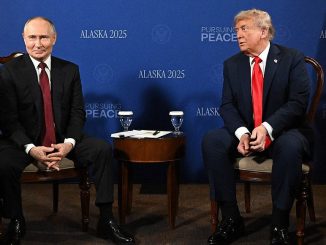
To understand the real gravity of this speech, one must look at what is happening behind the scenes, where the Davos cameras do not roll. In the Q&A session, Zelensky dropped a crucial piece of information: trilateral negotiations (US, Ukraine, Russia) are set to open tomorrow in the United Arab Emirates.
This is where the real drama is unfolding. While Zelensky projects the facade of a “negotiator ready for compromise,” the reality is a brick wall.
1. The Absence of Europe
The very format of these negotiations is a slap in the face for Brussels. The discussions will take place between Trump’s envoys, Zelensky’s team, and Putin’s emissaries. Europe, which is paying for the reconstruction, is not invited to the decision-making table. It will wait in the hallway while Washington and Moscow decide the continent’s security.
2. Russian Intransigence: The Cold Shower
Zelensky hopes that “Russia has to be ready for compromises.” This is the ultimate illusion. According to all chancellery analyses, Moscow is not arriving in the Emirates to negotiate, but to act. Despite colossal losses (35,000 men per month), the Kremlin knows that political time is on its side. Putin saw the West blink. He knows Trump wants a quick “Deal” for his own glory, regardless of the content.
From the opening of discussions, it is almost certain that the Russians will not change a single comma of their maximalist demands: retention of occupied territories, forced neutrality of Kyiv, and limitations on Ukrainian sovereignty.
3. The Vise Tightens Zelensky finds himself caught in a vise. On one side, a hurried Donald Trump who wants “peace now” (meaning: an immediate ceasefire freezing the front lines); on the other, a Vladimir Putin who will concede nothing as long as he smells Western fatigue.
This Davos speech was not a cry for help; it was a warning scream before a leap into the unknown. By proposing to become “Europe’s shield,” Zelensky was attempting a final maneuver to avoid finding himself alone facing the Russo-American diktat brewing in the desert of the Emirates. History will record that Europe looked the other way.
Joël-François Dumont