
Eating Humble Pie: When the Real Estate Tycoon Pins the Spy I have to admit, I got it wrong. I looked at Donald Trump and saw a bull in the diplomatic china shop, a guy who probably thinks the “Iron Curtain” is a window treatment sold at Mar-a-Lago. I wasn’t wrong about his flaws, but I completely missed the genius hidden within those flaws. Who would have bet a single dime that a Queens broker would manage to pin down a KGB colonel with decades of Cold War experience?
Yet here we are: Putin, the master of 4D chess, is lying on the mat, gasping for air, outmaneuvered by a guy who treats geopolitics like a hostile takeover. It turns out that being erratic, loud, and transactionally ruthless is the ultimate superpower against a spy who craves predictability.
We may have lost our moral compass along the way, but let’s be honest: we discovered a hell of a phenomenon in the lion’s den. Trump didn’t outsmart the KGB; he just foreclosed on their building. Sorry Vlad, Nothing Personal…
How Donald Trump’s Useful Chaos Devalued Vladimir Putin
Strategic Synthesis – January 2026
Table of Contents
Introduction: The Mask Falls
For years, the West and the Kremlin shared, for opposing reasons, the same certainty: Donald Trump was a useful idiot. A man of “short-sightedness,” obsessed with immediate gains, transactional, geographically illiterate, and isolationist. For Vladimir Putin, this profile was a blessing. He saw in it the promise of an America retreating, leaving the field open for resurgent empires.
But in early 2026, in the aftermath of the raid on Caracas and the revelation of the behind-the-scenes details of the Ukrainian peace plan, a chilling reality is dawning on Moscow: Putin got the wrong script.[1][2]
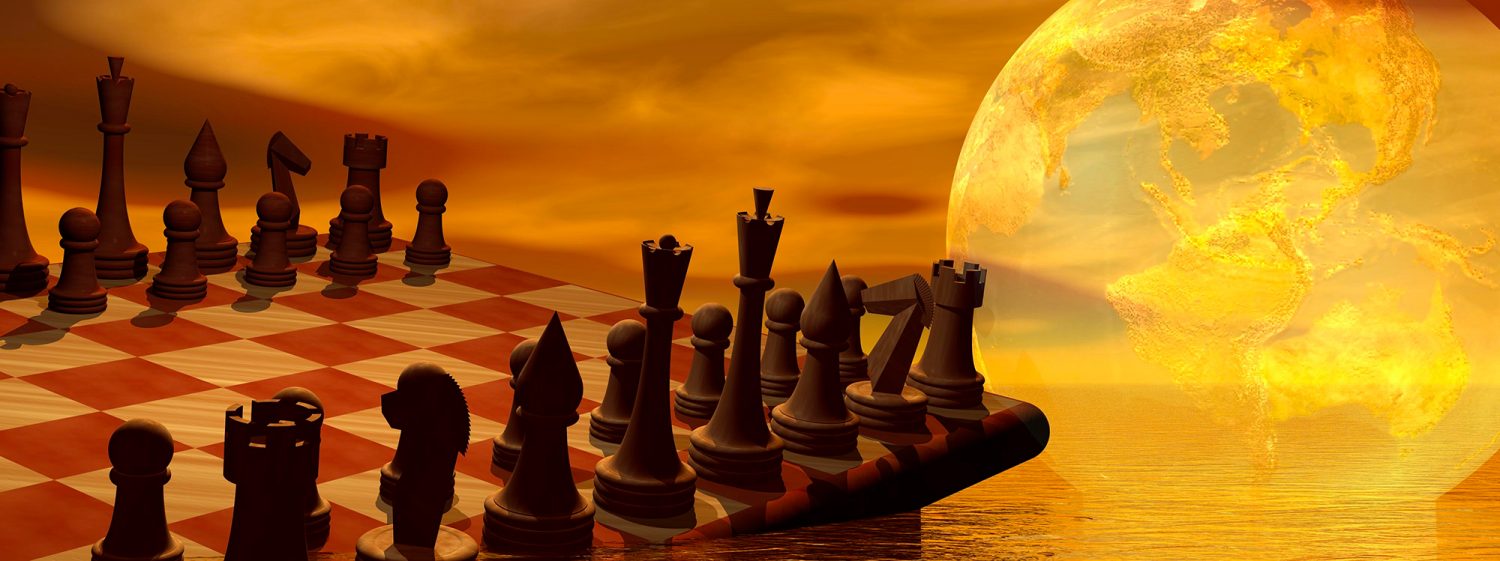
What was taken for incoherence was in reality “Useful Chaos”. Trump did not play chess with Putin; he flipped the table, pulled out a revolver, and bought the casino. This synthesis demonstrates how, through a two-speed administration and transactional brutality, Trump trapped, humiliated, and ultimately devalued the master of the Kremlin.
I. The Two-Speed Administration: The Illusion Factory
The trap began with a masterful staging of incompetence and administrative chaos. To fool Putin, he had to be made to believe that America was paralyzed by its own internal contradictions.
1. The “Certified Fools” as a Smokescreen
At the Pentagon, Trump installed figures like Pete Hegseth, described as an ideologue obsessed with culture wars (“Woke mind virus”) rather than complex military logistics.[1] This “facade” served as an effective lure. By visibly blocking the shipment of 155mm shells and creating artificial shortages, this administration sent a signal of absolute weakness and disengagement.[1]
Putin, reassured by his FSB profilers, believed that America was abandoning Ukraine out of pure isolationist stupidity. He therefore pushed his military advantage, exhausting himself to take the city of Pokrovsk, convinced that total victory was within reach.[1]
2. The War of the “Couplers”: The CIA Scalpel
While the “Bad Cop” (Hegseth) played the useful idiot blocking stocks, the hidden “Good Cop” (John Ratcliffe at the CIA) was waging a war of formidable sophistication in total secrecy. Far from public debates and Congressional gridlock, Trump authorized a campaign of asymmetric economic warfare.[1]
The CIA provided Ukrainian drones with the exact coordinates of “couplers”—critical and irreplaceable connecting parts—within Russian refineries. While Moscow celebrated the capture of a ruined city, the Russian economy was bleeding 75 million dollars a day, drop by drop, in the silence of classified reports.[1] This was the first victory of “Useful Chaos”: Trump let Putin gain (useless) ground to better destroy his (vital) war chest.
II. The “28 Points” Plan: The “Doorknobs” Trap
The final peace negotiation, revealed in late December 2025, highlights the absolute cynicism of the Trump method. Putin thought he was getting a capitulation; he signed a containment.[1]
1. The “Doorknobs” Theory
During the Alaska summit in August 2025, Trump’s attitude stunned his own European allies. Faced with Putin’s territorial demands regarding the remaining third of the Donbas, Trump reacted with the mindset of a New York real estate developer: “We have the deal on the building. We’re not going to kill the sale over the doorknobs.”[1]
For Trump, the Donbas is a “doorknob,” a finishing detail (trim). This apparent indifference, a symptom of his “short-sightedness,” incited Putin to sign, believing he was dealing with a weak negotiator ready to sell off territories.[1]
2. The Poison in the Text
In reality, the “28 Points” plan turns out to be a strategic trap:
- The Pyrrhic Victory: Putin obtains theoretical sovereignty and de facto recognition over the Donbas.[1]
- The Military Reality: In exchange, Ukraine retains a massive army (the cap was raised to 800,000 troops), obtains automatic American security guarantees (“robust military response”), and the zone conquered by the Russians becomes a “demilitarized buffer zone”.[1]
Trump locked Putin into a symbolic victory that provides him with no real security, while keeping Ukraine firmly anchored in the Western camp and heavily armed. Putin won ruins, but he lost strategic Ukraine.
III. The “Donroe” Doctrine: The Shock of January 6, 2026
This is where the trap snaps shut for good. Once the Ukrainian front was “frozen” by the peace plan, Trump pivoted toward his real target with unheard-of violence. The Monroe Doctrine became the Donroe Doctrine: a brutal affirmation of American domination over the Western Hemisphere.[2][3]
1. Operational Humiliation
The raid on Caracas from January 3 to 5, 2026, will go down in history as the moment Russia was militarily “downgraded” in the eyes of the world.[2] The contrast is devastating for the Kremlin:
- Putin 2022: It took the Russian army three years to fail to take Kyiv and get bogged down in 20th-century trench warfare.
- Trump 2026: It took American special forces less than 24 hours to take Caracas, exfiltrate Nicolas Maduro to a federal prison, and secure oil infrastructure.[2]
As the British analysis highlights, “Trump reminded the world that there is a difference in kind between a regional nuclear power (Russia) and the sole global projection superpower.”[2] Putin, who prided himself on being the protector of autocrats via the Wagner Group and his advisors, was exposed as powerless to protect his key ally in Latin America.
2. The Oil Weapon: The Final Stranglehold
Trump did not invade Venezuela out of democratic ideology, but out of accounting calculus. By “liberating” the world’s largest proven oil reserves and handing them over to American majors (Chevron, Exxon), Trump is preparing a massive supply shock.[2]
The goal is clear: to drive the barrel below 40-50 dollars. For Putin, whose war budget and social peace depend on a high barrel price (above $70), this is an economic death sentence.[2] Trump swapped a costly liability (Ukraine) for a profitable asset (Venezuelan oil), leaving Putin to manage the reconstruction costs of the Donbas with collapsed oil revenues.
IV. The Transactional Guillotine: The Autocrats’ Nightmare
What remains of the “partnership” between Trump and Putin? Nothing. This is the most terrifying lesson for dictators worldwide, analyzed in diplomatic circles as the “transactional guillotine”.[3]
1. The End of the “Madman Monopoly”
For twenty years, Putin held a comparative advantage: he was the only actor willing to break international rules, which paralyzed Western democracies. Trump snatched this role from him. From now on, it is Washington that is unpredictable, violent, and without taboos.[3] By kidnapping a foreign head of state under the guise of an anti-drug operation, Trump showed he was “crazier” than Putin.
2. Relegation to “Junior Partner” Status
Psychological analysis of the conflict shows that Trump inflicted the worst wound on Putin: that of indifference. He does not treat him as an enemy—which would validate Putin as an equal rival—but as a regional subcontractor.[3] The implicit message of the Donroe Doctrine is clear: “You, worry about your borders in Eastern Europe. That is your level. I handle the World, Energy, and China.”[3]
3. The Broken Narco-Russian Link
The attack on Maduro also strikes at the dark heart of Russian operation financing. Western intelligence services have long established that drug trafficking (via the “Cartel of the Suns” in Venezuela or the African route controlled by Wagner) served to finance Russian clandestine operations (“black cash”).[4] By decapitating the Maduro regime, Trump not only cuts off a political ally, he cuts a vital financial artery for the GRU and FSB, depriving them of untraceable liquidity.
Conclusion: The Awakening
Those who took Trump for a moron were right on the form, but wrong on the substance. His vulgarity, his geographical ignorance (“the doorknobs”), and his administrative chaos were real. But these very flaws served as weapons.
They lulled Putin’s suspicion to sleep. They allowed for the breaking of international law taboos that the previous administration dared not touch. Donald Trump has not become a “fool”; he has become the ultimate predator of the international system. He has transformed American diplomacy into a global racketeering operation where law no longer exists; only force and profitability matter.
For Vladimir Putin, the awakening is brutal. He thought he had manipulated a transactional clown; he realizes he is locked in a cage with a tiger that just decided it was hungry. In Trump’s new world, there are no more friends, no more enemies, no more law. There are only predators and prey. And on January 6, 2026, Putin understood that he was no longer at the top of the food chain.[2][3]
The “Axis of Losers”
The Retirement Home for Dictators “Let’s look at the scoreboard: first Syria imploded, then Iran was unplugged, and now Venezuela has been foreclosed. The dominoes aren’t just falling; they’re fleeing. One can almost picture the cozy scene in Moscow: the routed Mullahs and Chemical Assad, huddled in a drafty dacha, playing cards while waiting for Vladimir to serve the tea. Putin isn’t running an empire anymore; he’s managing a halfway house for unemployed tyrants. It is a first-class funeral for the Kremlin’s ambitions. Once the dirt is shovelled over the Bear, Trump can pivot to the real menu: ‘Rocket Man’ as an appetizer, and Chairman Xi as the main course. But beware: the Dragon is a much bigger fish than the Bear, and he doesn’t bite at shiny doorknobs.”
Sources
[01] New York Times, “The Train Left the U.S. Army Depot…: The Secret History of the Peace Deal“, December 30, 2025.
[02] The Guardian, “The Caracas Raid: How Trump’s 24-Hour War Exposed Putin’s Weakness“, January 6, 2026.
[03] Policy Magazine / Foreign Policy, “The Transactional Guillotine: The End of the Madman Monopoly“, January 6, 2026.
[04] See investigative reports on Russian intelligence infiltration into drug trafficking (2018 Embassy Affair in Argentina, Wagner Reports in Africa and Cartel of the Suns).
See also:
- « Vlad, t’as le bonjour de Donald » — — (2026-0106)
- « Vlad, Donald Sends His Regards : The “Moron” Trap » — (2026-0106)
- « Wlad, Donald lässt schön grüßen » — (2026-0106)
Decryption: Tea Time on the Volcano
As Jérôme Denariez brilliantly points out, we are witnessing a fascinating convergence of brutalities. On one side, the Tsar rewriting History with a quill to justify his tanks; on the other, the Tycoon turning the Monroe doctrine into “Donroe,” treating the Southern Hemisphere not as a neighbourhood, but as a foreclosure managed by a sheriff on steroids. Shocking? Perhaps, but ruthlessly effective.
What Denariez highlights with necessary cruelty is that international law has become, for Washington as for Moscow, the equivalent of a lace doily beneath a battleaxe: purely decorative. Putin wants the land (the continent), Trump wants the flows (the sea), but both speak the same grammar: one where the economy is no longer the consequence of peace, but the spoils of war.
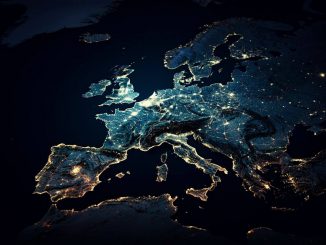
And us Europeans? We are, to use the paper’s image, “on the balcony.” We continue to indignantly cite the building regulations while our neighbours are moving the furniture with dynamite. The new perspective opening up is one of glacial solitude: if we persist in believing that legal politeness is enough to stop predators, we will end up not as actors of History, but as mere sports commentators of a match where we are the ball. It may be time to put down the teacup and learn, finally, to speak the language of power without stuttering.