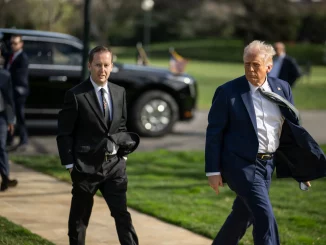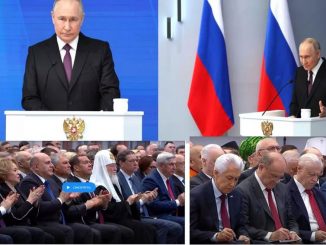
The official announcement of the cancellation of the Future Combat Air System (FCAS), sealed on June 8, 2026, by Emmanuel Macron and Friedrich Merz, represents far more than a mere diplomatic crisis between Paris and Berlin. It signs the systemic failure of an industrial cooperation model born of another era.
Table of Contents
Setting the stage
As we recently analyzed in our autopsy of this “industrial dinosaur,” this 100-billion-euro mega-program collapsed under the weight of its own contradictions. Designed around bureaucratic planning cycles frozen over thirty years, the project proved unable to adapt to the revolution of algorithmic warfare. While the conflict in Ukraine dictates near-weekly technological and software mutations on the front lines, the Franco-German co-production model remained trapped in its arbitration committees and industrial turf wars.
On the eve of the Franco-German Defense Summit on July 17, as the MGCS main battle tank program also shows signs of exhaustion, the question is no longer just whether the bilateral engine of Europe can still build together, but whether it has understood that the era of rigid military planning is gone for good.
From FCAS to MGCS: The Story of a Couple That No Longer Knows How to Build Together
Ten years ago, claiming that major Franco-German defense contracts would never see the light of day was dismissed as misplaced pessimism, or even as an anti-European provocation.
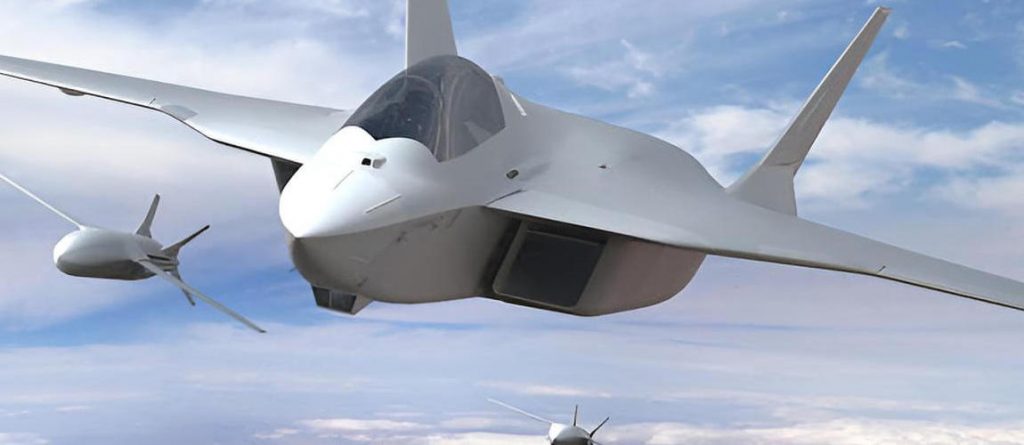
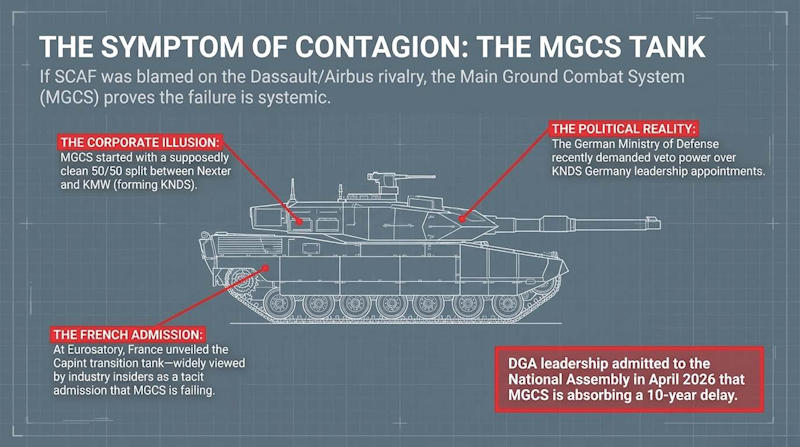
On June 8, 2026, Emmanuel Macron and Friedrich Merz jointly put an end to the Future Combat Air System (FCAS). The sixth-generation fighter jet program, launched nine years earlier in 2017, was terminated without a single prototype ever taking flight.[01] Five days later, the second pillar of this cooperative architecture, the Main Ground Combat System (MGCS) next-generation tank, began to wobble in turn. The German Federal Ministry of Defense demanded a veto right over the appointment of certain executives within the German branch of KNDS.[02] The diagnosis is now indisputable: FCAS itself is not the problem; the very model of Franco-German armaments cooperation is.
A Cemetery of Programs, Not an Isolated Accident
The first piece of evidence that should settle the debate is repetition. FCAS, MGCS, Eurodrone, MAWS, Tiger helicopter modernization: none of these major joint programs have delivered within their announced timelines. Most have failed to produce either a demonstrator or a serial production contract after more than a decade of development.[03]
This is therefore not a fighter aviation issue, nor a simple clash of egos between two industrial titans. It is a structural pathology running through every capability segment—air, land, and sea. If the lessons of experience were to be learned, this should deter Paris from ever embarking on this type of project with Berlin again without radically reshaping its architecture.
Cause No. 1 — Governance Without an Arbiter
The most thoroughly documented structural flaw of FCAS has been the refusal, from the very beginning, to designate a single prime contractor endowed with real authority. Dassault Aviation always championed the “best athlete” model, assigning the prime contractorship of the fighter jet to the most competent party, and claimed up to 80% of the workload on the Next-Generation Fighter (NGF) pillar. Its CEO, Éric Trappier, warned as early as March 2026 that the program was doomed if Airbus did not accept French leadership.[01]
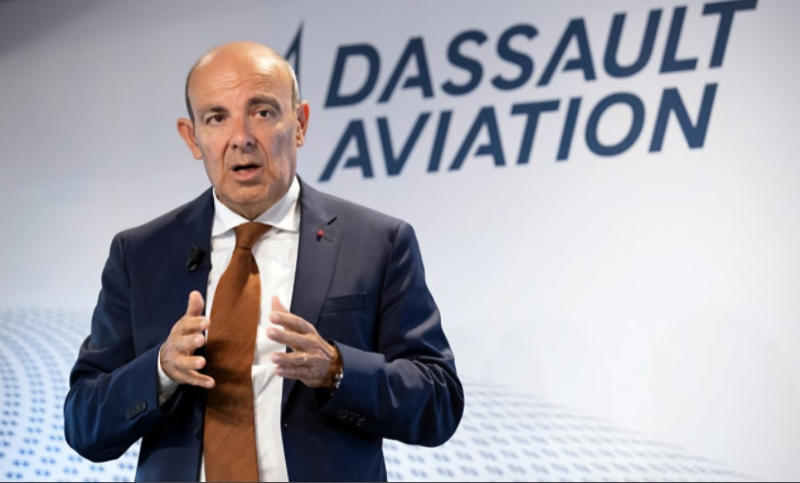
Airbus Defence and Space, on the other hand, categorically refused to be sidelined to a mere subcontractor role, while France added technological sovereignty requirements that were difficult to accept within a tri-national framework.[04] An Ifri researcher summarized the dynamic: the setup required two historically rival manufacturers to collaborate on the most sensitive phase of the program, representing 60% to 80% of the entire project on its own, with neither agreeing to yield the lead.[05] This governance flaw was no mere technical detail; it surfaced as early as 2019, freezing structural decisions for seven years until the public collapse of a final political mediation on April 18, 2026.[06]
Cause No. 2 — Irreconcilable Military Doctrines
Behind the industrial battle lies a doctrinal disagreement that diplomacy has never genuinely addressed. France wanted a lighter aircraft, capable of carrier-based operations and integrated into its nuclear deterrent. Germany and Spain favored a heavier platform, free of naval or nuclear constraints.[07] This divergence cannot be negotiated at the margins: an aircraft designed to carry the French nuclear weapon and catapulted from an aircraft carrier has neither the same architecture nor the same specifications as a land-based interceptor destined for European airspace. This is the original sin of any multinational armaments program that attempts to retrospectively align operational requirements that were never harmonized beforehand.
Cause No. 3 — Intellectual Property: The Real Red Line
The third front, often underestimated by observers, is the control of technological data. Dassault has consistently refused to grant full access to its architectural data, while its partners demanded full technical means to realistically commit to the program.[07]

The exact same scenario is currently playing out on the MGCS tank program. KNDS Board Chairman Tom Enders publicly accused Berlin of imposing veto rights on the group’s intellectual property, going so far as to ask if France was “being treated like China.”[08]
This is not an anecdote unique to FCAS; it is a structural reflex on both sides of the Rhine, where each partner fears transferring strategic know-how that it can never retrieve.
Tom Enders, former CEO of Airbus, Chairman of the Board of KNDS
— Photo Heinrich-Böll-Stiftung © Stephan Röhl
Cause No. 4 — The Shift in the Budgetary Balance of Power
The most underestimated factor is undoubtedly the most recent: Germany’s massive rearmament is completely changing the game. Most Franco-German cooperation programs were designed at a time of modest increases in military budgets—a reality that is now gone. The sharp rise in the German defense budget marks the beginning of an inversion in the balance of power, with Berlin now commanding financial resources vastly superior to those of Paris.[09]
A partner that becomes budgetarily dominant no longer has the same reasons to accept a French industrial leadership that it tolerated when France carried more weight.
The balance of power shifted during the execution of the program itself—a scenario that the initial governance framework was not designed to handle.
An Older Dispute: The Shadow of Nuclear Power
This distrust does not date back to FCAS. In the French collective memory, it has been fueled by a decade of energy frictions whose memory remains vivid: the nuclear phase-out decided by Angela Merkel after Fukushima, German opposition to including nuclear power in the European green taxonomy in late 2021,[12] or the ARENH regime which long forced EDF to sell part of its production at a capped price to comply with market rules championed by Berlin.
Many in France wanted to believe that Friedrich Merz’s arrival at the Chancellery would mark a clean break with this legacy. The new Chancellor did indeed call the nuclear exit a “strategic mistake,”[13] and an unprecedented Franco-German nuclear dialogue opened on deterrence—a topic Berlin had refused to address for decades. Yet, this thaw remains largely rhetorical and diplomatic. On the industrial and capability front, where real power balances are negotiated, FCAS and then MGCS show that the same reflexes of mistrust and control have continued to operate under Merz just as they did under his predecessors. The change in tone has not translated into a change in method—perhaps the bitterest lesson of this episode for those who expected a genuine breakthrough.
The Most Telling Symptom: The MGCS
While FCAS could be dismissed by some as an isolated case linked to the animosity between two manufacturers, the simultaneous crisis of the MGCS tank rules out such a simplistic reading.
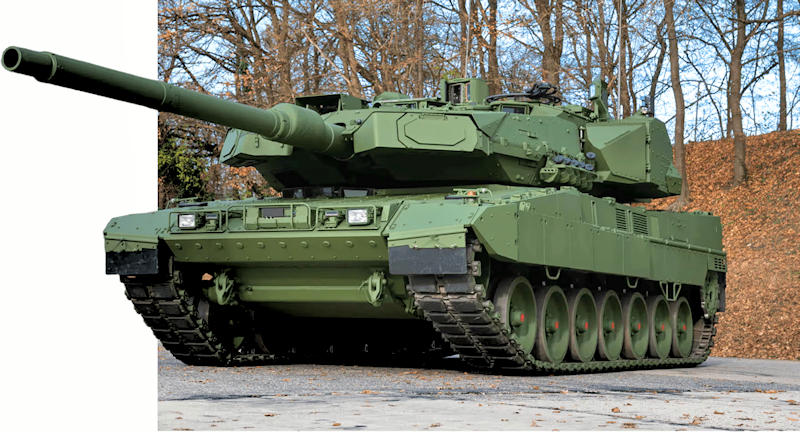
Unlike FCAS, the MGCS had started on healthier industrial foundations, with a clear workshare division between Nexter and KMW within KNDS.[09] Yet it too is stalled, to the point that a leading European industrialist judged that France’s presentation of a national transition tank was “a way of admitting the failure of MGCS,” estimating that it would soon require the same political courage to bury the tank as it did to bury the aircraft.[10] A former French official from the French Defense Procurement Agency (DGA) had indeed admitted before the National Assembly as early as April 2026 that the program was “falling behind by about ten years.”
The cause is therefore neither Dassault, nor Airbus, nor any specific leader: it is the very format of intergovernmental cooperation based on parity, without a supranational arbiter and without prior doctrinal convergence.
What This Changes, Concretely
The consequences are already taking shape. On the German side, options are narrowing down to the British-Italian-Japanese GCAP program, an expanded order of American F-35s, or a national path supported by Rheinmetall, whose KF-51 Panther demonstrator has already attracted Budapest while KNDS was bogged down in intergovernmental arbitrations.[08]
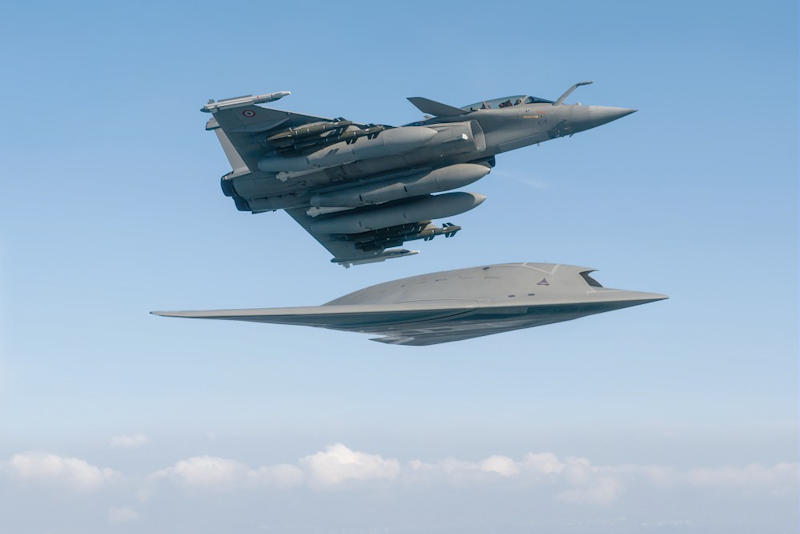
On the French side, Dassault is banking on Rafale exports—a contract for 114 aircraft is hoped for with India—and on a national trajectory for its future programs.[11] A specialized defense journalist summarized the mindset that will durably mark a generation of French decision-makers: after the cumulative failure of the Tiger, MAWS, FCAS, and likely MGCS, not to mention the Eurodrone, no major program conducted with Germany will have survived, cementing the idea that engaging in this type of project is almost a guarantee of failure.[03]
Can the July 17 Summit Change the Game?
On July 17, the 26th Franco-German Council of Ministers will take place, alongside the Franco-German Defense and Security Council, co-chaired by Emmanuel Macron and Friedrich Merz in Brühl and Nörvenich for the military segment.[14] The hardest point of the MGCS dispute was actually unlocked beforehand: on June 22, 2026, Paris and Berlin announced an agreement to become equal shareholders in KNDS, with Germany increasing its stake to 40% of the capital.[15]
The summit is therefore likely to stage and consolidate a compromise already negotiated behind the scenes, rather than resolve an open crisis—especially since Emmanuel Macron publicly pleaded, just the day before, to pursue European industrial defense projects rather than yield to national reflexes after the failure of FCAS.
Should we look at this as a breakthrough in methodology? That is highly doubtful. A specialist in Franco-German relations described the Macron-Merz partnership as a “hobbling tandem” rather than a driving force. France enters the summit weakened by a public debt close to 113% of GDP, compared to around 60% for Germany, and by an internal budgetary crisis that weakens its negotiating position.[16] The most likely scenario is therefore one of carefully polished communication—reaffirming the commitment to MGCS, highlighting the June KNDS agreement as proof of a rebound, and speeches on European resilience and competitiveness—without addressing any of the structural causes identified above: neither the growing budgetary imbalance in favor of Berlin, nor the MGCS schedule, which continues to slip toward the 2040s. The appearance of the Franco-German couple might be polished for a photo opportunity in Brühl. The underlying issues, however, remain unresolved.
Conclusion: A Myth, Not a Method
This is not to deny the strategic interest, on paper, of pooling European defense efforts against China, Russia, or American uncertainty. It is simply to observe that the Franco-German model as it has been practiced for a decade—strict parity, dual-headed governance, lack of an arbiter, non-harmonized doctrines, and jealous protection of intellectual property—mechanically produces failure, regardless of the military capability area. FCAS is not an anomaly: it is the most costly and highly publicized confirmation of a diagnosis that could have been made long before 2026 by anyone willing to look the precedents in the face.
The real question now is not whether a new major Franco-German contract will ever see the light of day, but whether anyone in Paris or Berlin will have the courage to admit that the method itself must be abandoned—not just the next plane or the next tank.
Joël-François Dumont
See also:
- « SCAF : la mort annoncée d’un mythe franco-allemand » — (2026-0714)
- « FCAS: The Foretold death of a Franco-German Myth » — (2026-0714)
- « FCAS: Der angekündigte Tod eines deutsch-französischen Mythos » — (2026-0714)
Sources
[01] France Épargne, FCAS Abandoned: The European Fighter Jet Buried
[02] L’Essentiel de l’Éco, The Franco-German Tank Project on the Brink of the Abyss
[03] Opex360 / Zone Militaire, FCAS: Berlin and Paris Agree to Terminate Joint 6th-Generation Fighter Jet Project
[04] Vol-Avion-Chasse.com, FCAS on the Brink of Collapse: France Facing Its Limits
[06] Meta-Defense.fr, With the NGF Permanently Blocked, Airbus DS Proposes Turning FCAS into a Program of Programs
[07] Meta-Defense.fr, FCAS: Deadlines Pass but the Program Lingers and Still Fails to Advance
[08] Enderi.fr, KNDS at Eurosatory: Berlin Imposes Its Vetoes, Paris Deploys Its Plans B
[09] dokdoc.eu, FCAS and MGCS, Same Destiny?
[][10] Epoch Times, The Franco-German MGCS Tank Stalls: “Do We Really Want to Treat France Like China?” Denounces German KNDS Boss
[11] France Épargne, FCAS: Airbus Ready for a Two-Aircraft Solution Face to Face with the Dassault Deadlock
[12] Fondation Jean-Jaurès, European Taxonomy and Nuclear Energy: A Slap in the Face for Germany?
[13] Sfen, When the German Chancellor Admits That Phasing Out Nuclear Energy Was a Strategic Mistake
[14] Bundesregierung.de, 26th Franco-German Council of Ministers and Franco-German Defense and Security Council
[15] Le JDD, Future Tank Project: France and Germany Reach an Agreement
[16] Public Sénat, Franco-German Council of Ministers: Merz-Macron, “A Hobbling Tandem”
Deciphering the End: From “Boutique” Fleets to Mass Economy: The Great Pivot of Algorithmic Warfare
At its core, the outcome of this crisis is a healthy reality check for industrial “old Europe.” By collapsing under its own administrative weight, FCAS paves the way for a pragmatic redefinition of future defense procurement. As demonstrated by the responsiveness of the Ukrainian Defense Tech ecosystem—a true Darwinian machine capable of deploying AI innovations in less than three weeks—military superiority no longer belongs to the costly “boutique” fleets of sample equipment programmed for the next half-century. The future belongs to agile ecosystems, variable-geometry technological coalitions, and the economy of mass. For Paris, salvation will not come from stubborn persistence in bilateral white elephants with a German partner that is now budgetarily dominant and focused on exports or NATO. The time has come to capitalize on flexible national pathways—such as the Rafale’s F5 standard coupled with combat drones—and to swiftly integrate new military AI champions into our value chains. If Europe wants to carry weight in tomorrow’s conflicts, it must urgently unlearn its old bureaucratic reflexes and bet on algorithmic agility.