
It is an open secret that has now taken an official turn: the Future Combat Air System (FCAS), the flagship Franco-German-Spanish mega-program meant to embody Europe’s strategic autonomy by 2040, has been definitively abandoned. Caught between industrial ego wars over the leadership of flight control systems and irreconcilable strategic visions between Paris and Berlin, the project ultimately collapsed under its own bureaucratic weight.
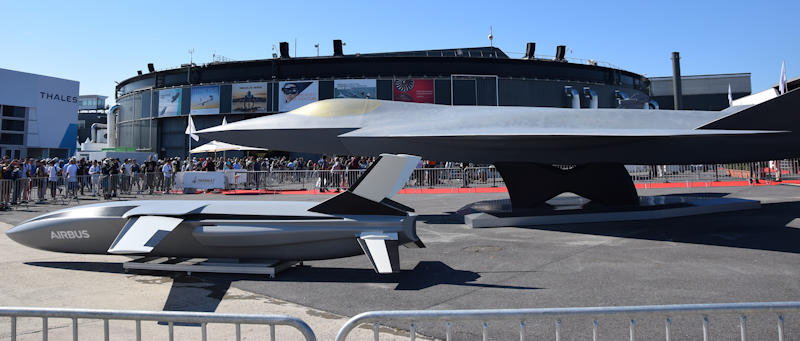
Table of Contents
By Joël-François Dumont — Paris, 3 July, 2026
Yet, beyond the political earthquake and Germany’s inevitable retreat toward off-the-shelf American solutions (F-35) or the Anglo-Saxon alliance (GCAP), this failure delivers a much profound lesson on the mutation of modern warfare. FCAS was not merely killed by politics; it was rendered obsolete by time.
The Eurodrone Syndrome: Designing for the Last Century
FCAS suffered from the same systemic ailment as the Eurodrone—a program launched in 2014 and subsequently abandoned by France after twelve years of committees and billions of euros spent , resulting in a system that was too slow, too expensive, and unsuited to battlefield realities. Our historical industrial champions (BAE, Rheinmetall, Thales, Airbus) continue to think in development cycles spanning several decades.
Can we reasonably design a combat system in 2017 for the year 2045 or 2050, at a time when technological innovation, artificial intelligence, and electronic warfare evolve on a monthly basis? The answer is no. The very concept of an ultra-heavy, centralized, and hyper-expensive “system of systems” is being swept away by the reality of contemporary theaters of operation.
The Darwinian Machine Versus Bureaucratic Committees
While continental Europe lost itself in contractual squabbles over whether Dassault or Airbus would design the flight control software, other actors were demonstrating that a modern defense industrial base is forged through agility and existential urgency.
The example of Ukraine serves as a brutal reality check for “old Europe”. In just a few years of existential war, Kyiv has built a defense tech base estimated at $50 billion. There, you will find no validation committees spanning five years: through agile structures like Bravel, the time between an order from frontline units and the delivery of next-generation drones has dropped to just 16 days. When a new Russian jammer appears, the software response is coded in a few days; a new variant of a long-range strike drone is rolled out in a few weeks.
It is a true “Darwinian machine” that no peacetime system can replicate. It has allowed startups like Swarmer (AI for drone swarms) to make a stunning debut on the Nasdaq in March 2026, reaching a $700 million capitalization in just two days.
The Economy of Mass Versus the Cult of the Sample
The other fatal flaw of FCAS was its predictable cost, which would have mathematically restricted European fleets to a few dozen “sample” aircraft—precious and irreplaceable. However, modern conflict marks the grand return of attrition warfare and mass.
A modern FPV drone costs a few hundred dollars ; a Magura maritime drone (designed by the Ukrainian unicorn UForce, which brought the Russian Black Sea fleet to its knees) costs only a fraction of a traditional Western anti-ship missile. It is this economy of mass, lost by Western militaries in favor of hyper-complex and untouchable technologies, that must be reconquered today.
What Future for France?
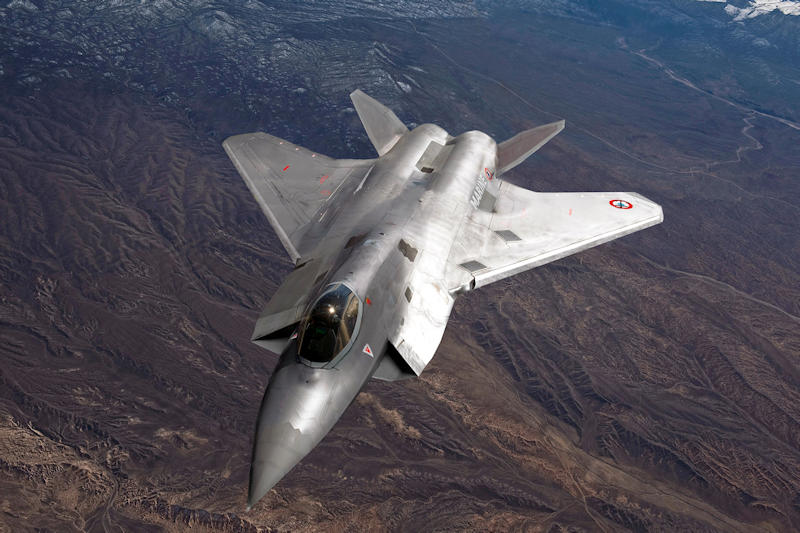
For Paris, the end of FCAS rings the hour of courageous choices. Rather than trying to rebuild yet another multilateral white elephant, France must capitalize on its own strengths: extending the Rafale to the F5 and F6 standards and urgently pairing it with loyal wingman combat drones (such as the successor to the Neuron).
Above all, France and Europe must execute a major strategic pivot. As André Loesekrug-Pietri (Chairman of JEDI) recently emphasized,[01] if we want to regain the speed of Silicon Valley combined with a war-hardened industry, we must turn toward the agile ecosystems deploying to our East. If a Ukrainian drone or AI software outclasses a European system at a third of the price, we must buy it and integrate these startups into our value chains.
The warning issued by the new actors of Military Tech is straightforward: “If you are not on the field of agility, you are no longer in the defense market.” It remains to be seen whether old Europe will find the will to disrupt its own habits, or if it will allow itself to be definitively left behind.
Joël-François Dumont
[01] See « Defence: Ukraine will produce the next European champions » by André Loesekrug-Pietri, President of the Joint European Disruptive Initiative, in Les Échos, 1 July 2026.
See also :
- « The Abandonment of FCAS: Autopsy of an Industrial Dinosaur in the Age of Algorithmic Warfare » — (2026-0703)
- « Das Scheitern von FCAS: Autopsie eines industriellen Dinosauriers im Zeitalter der algorithmischen Kriegsführung » — (2026-0703)¨
- « L’abandon du SCAF : Autopsie d’un dinosaure industriel face à la guerre algorithmique » — (2026-0703)¨
- « Retour sur le projet d’avion de combat franco-allemand » — (2026-0622)
- « Revisiting the Franco-German Fighter Jet Project » — (2026-0622)
- „Rückblick auf das deutsch-französische Kampfflugzeugprojekt“ — (2026-0622)
- « Avis de tempête dans le ciel européen » — (2026-0613)
- « Storm Warning in the European Sky » — (2026-0613)
- « Sturmwarnung am europäischen Himmel » — (2026-0613)