Paris and Berlin Abandon Joint Combat Aircraft Project
The abandonment of the Future Combat Air System — known by its French acronym SCAF — announced this week by France and Germany after years of tensions, represents far more than the failure of an industrial program. It exposes the deep contradictions now shaping the construction of an autonomous European defense capability, at the very moment when the continent is seeking to free itself from its strategic dependence on the United States.
At the heart of this wreck lies a question that has never found a consensual answer: is Europe capable of producing, through a common effort, the instruments of its military sovereignty, or does it remain a juxtaposition of competing national interests?
Table of Contents
by Roger Barake — Levant Time — Beyrouth, lune 13, 2026.
A Project Born of a Historic Ambition
Officially launched in 2017 by France and Germany, and later joined by Spain, the SCAF was intended to become the cornerstone of European defense.
The objective went far beyond the design of a simple fighter jet. The program aimed to create a “system of systems” combining a new-generation fighter, accompanying drones, advanced sensors, electronic warfare capabilities and a digital architecture allowing the battlefield to be permanently networked.
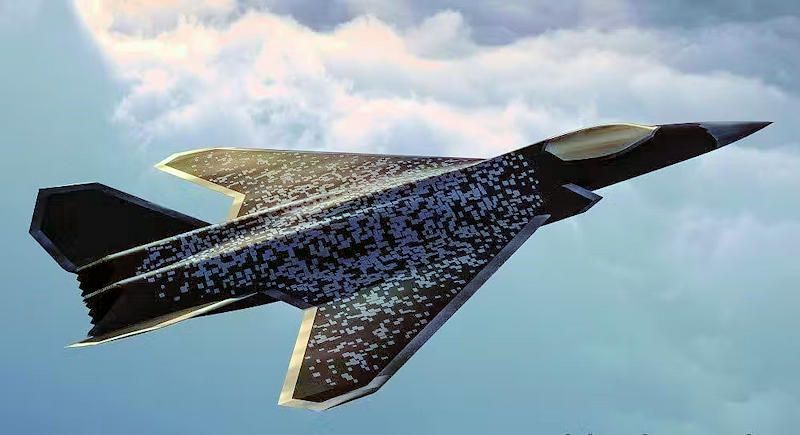
In the minds of its promoters, the SCAF was meant to symbolize the emergence of European strategic autonomy in an increasingly unstable world.
Nearly a decade later, the assessment is harsh. Despite billions of euros committed to preliminary studies, the partners never managed to overcome their fundamental differences.
The French in the Dock
The failure of the program immediately reignited criticism of Dassault Aviation and its chairman and CEO, Éric Trappier.
In some German and European political circles, the head of the French aircraft manufacturer is portrayed as one of the main figures responsible for the deadlock. His critics accuse him of defending an overly national vision of the program, incompatible with the logic of European cooperation.
According to this interpretation, Dassault sought to retain exclusive control over the critical technologies of the future combat aircraft, refusing to genuinely share leadership with its German and Spanish partners.
This criticism is all the sharper because the French group held a special position in the negotiations.
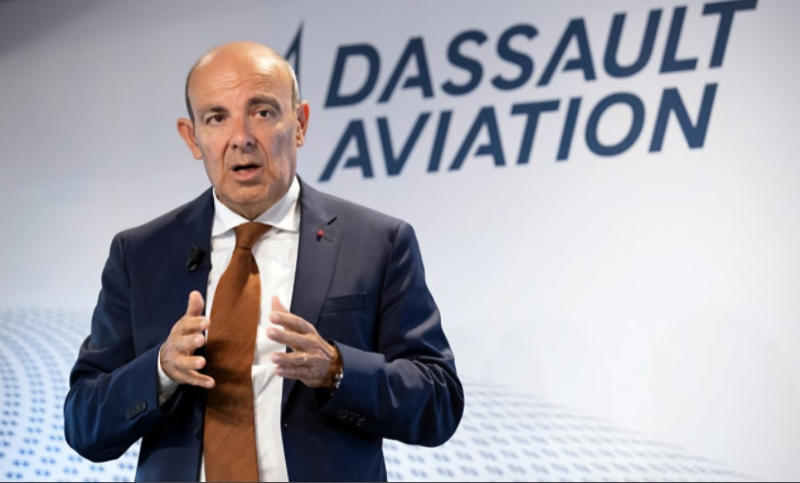
Unlike its partners, Dassault could point to recent and comprehensive experience in designing a modern combat aircraft: the Rafale.
For many German actors, this expertise was used as an argument to impose an unbalanced relationship within the program.
Dassault, however, rejects this interpretation. For several years, it has repeated that the problem is not European but industrial. According to the company, a fighter jet cannot be designed through constant compromises among several companies and several states.
Its reasoning is simple: responsibility cannot be separated from authority. If a manufacturer is tasked with developing the main aircraft, it must also have the corresponding decision-making power.
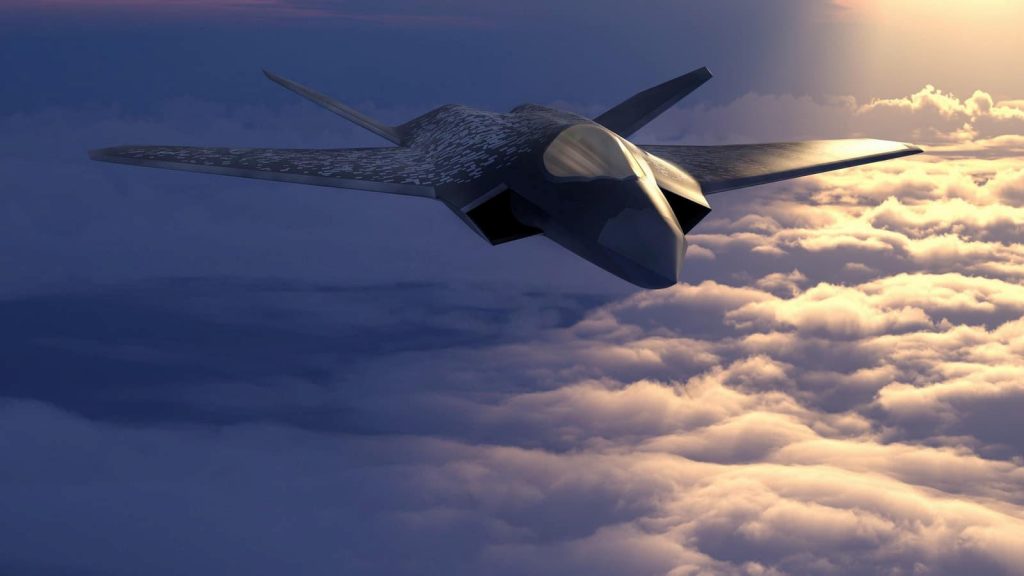
From this perspective, the SCAF did not fail because of a lack of European spirit, but because of a governance structure unable to arbitrate between the partners’ contradictory requirements.
Its supporters stress that the recent history of Europe’s defense industry is full of programs slowed down by political compromises, artificial workshare arrangements and national rivalries.
They also point out that the Rafale, designed under French leadership, is now regarded as one of the continent’s main industrial and export successes.
Two Irreconcilable Visions of Europe
The debate over the SCAF in fact goes beyond Éric Trappier’s personality alone. Since the beginning of the program, two conceptions of European defense have been in conflict.
The first, often associated with Berlin and the European institutions, favors the sharing of expertise, industrial integration and the pooling of technologies.
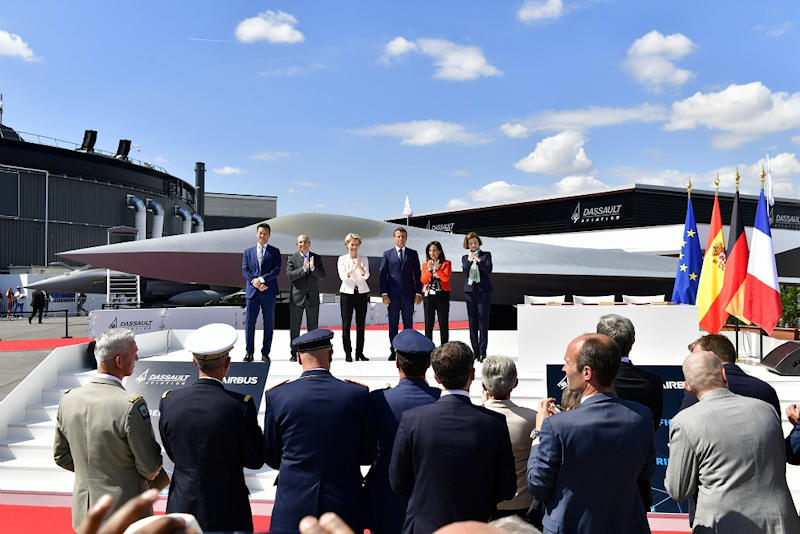
The second, more strongly defended in Paris, holds that cooperation must not lead to the dilution of strategic know-how or the loss of national sovereignty.
This divergence is clearly reflected in operational requirements.
France requires an aircraft capable of operating from aircraft carriers and taking part in the airborne component of its nuclear deterrent.
Germany shares none of these constraints. As for Spain, it primarily seeks to preserve its place in the European aerospace industry, a presence confirmed by its participation in Airbus.
From the outset, the project therefore carried ambitions that were sometimes incompatible.
The Italian and British Choice of GCAP
The United Kingdom and Italy have already taken another path. They made a different bet.
Contrary to some common assumptions, Rome did not reject European cooperation. It simply favored another model of partnership.
Together with the United Kingdom, Italy is now taking part in the Global Combat Air Programme, or GCAP, which Japan has also joined.
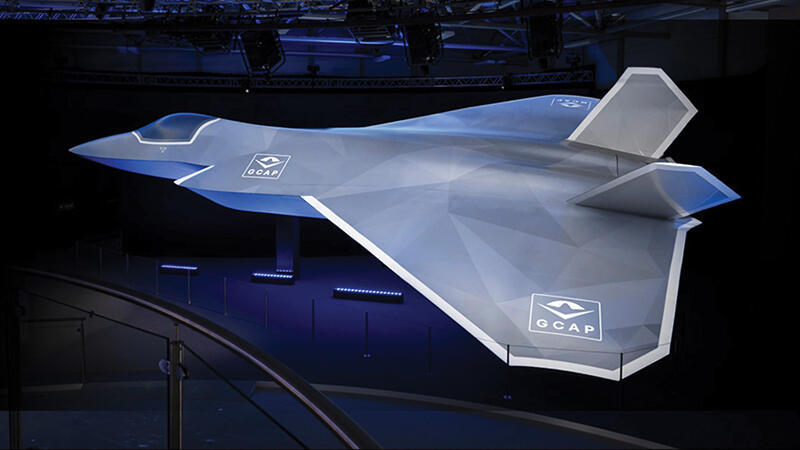
More pragmatic, the British and the Italians joined forces with the Japanese to produce their “NGF,” or “New Generation Fighter.”
This choice rests on several factors.
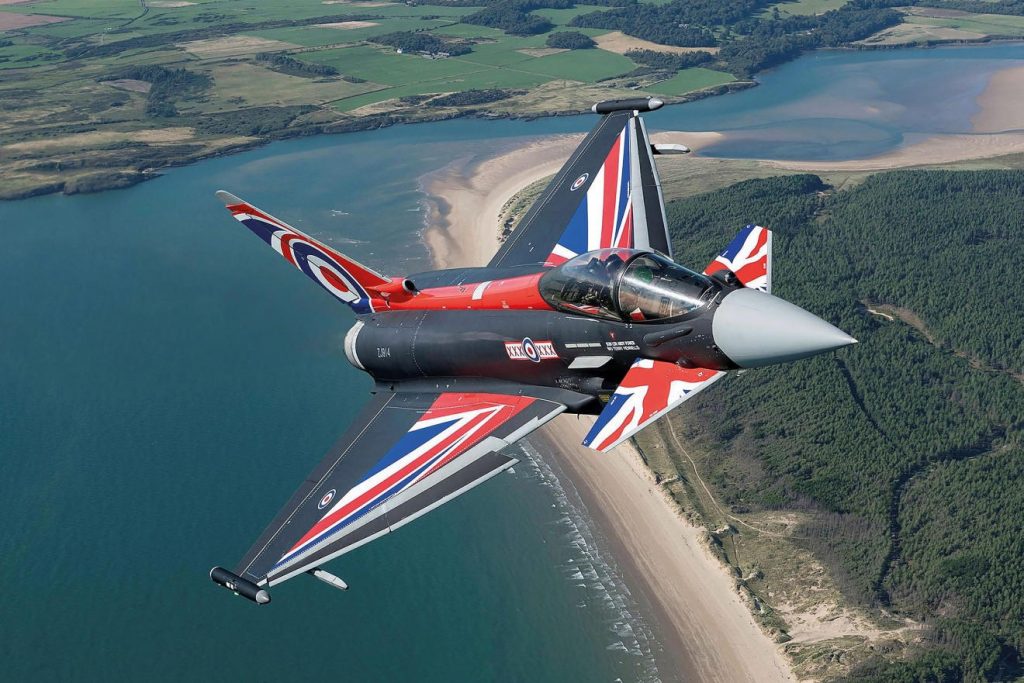
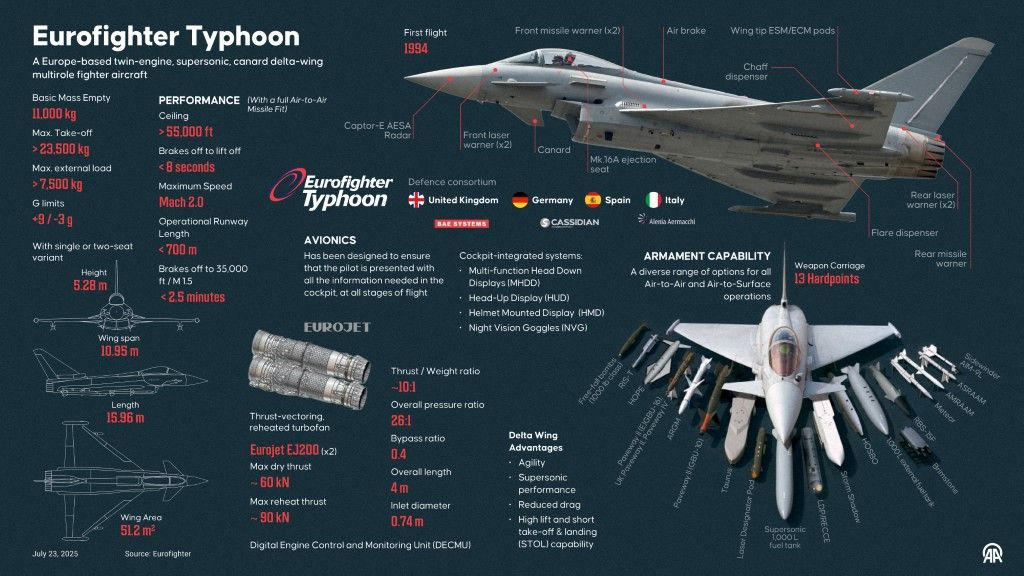
First, the historical ties between the British and Italian defense industries have been particularly strong since the Eurofighter era, the joint fighter produced with Germany that enjoyed a certain degree of export success.
It should not be forgotten that Italy, through Leonardo, is linked to the British giant British Aerospace, or BAE, in the production of weapons systems and aircraft construction. Leonardo also inherits a long-standing collaboration between Agusta and Westland, two British firms specializing in helicopters.
Then, Rome feared it would occupy only a marginal position in a program dominated by France and Germany.
Finally, Japan’s arrival profoundly changed the economic equation. It brought additional funding, advanced technological expertise and access to a major market.
In the eyes of many Italian officials, GCAP offered more industrial influence and greater commercial prospects than the SCAF.
Europe Facing the Trump Paradox
The failure of the SCAF comes in a particularly sensitive context. For several years, and even more so since Donald Trump’s return to the White House, European leaders have insisted on the need to strengthen their strategic autonomy.
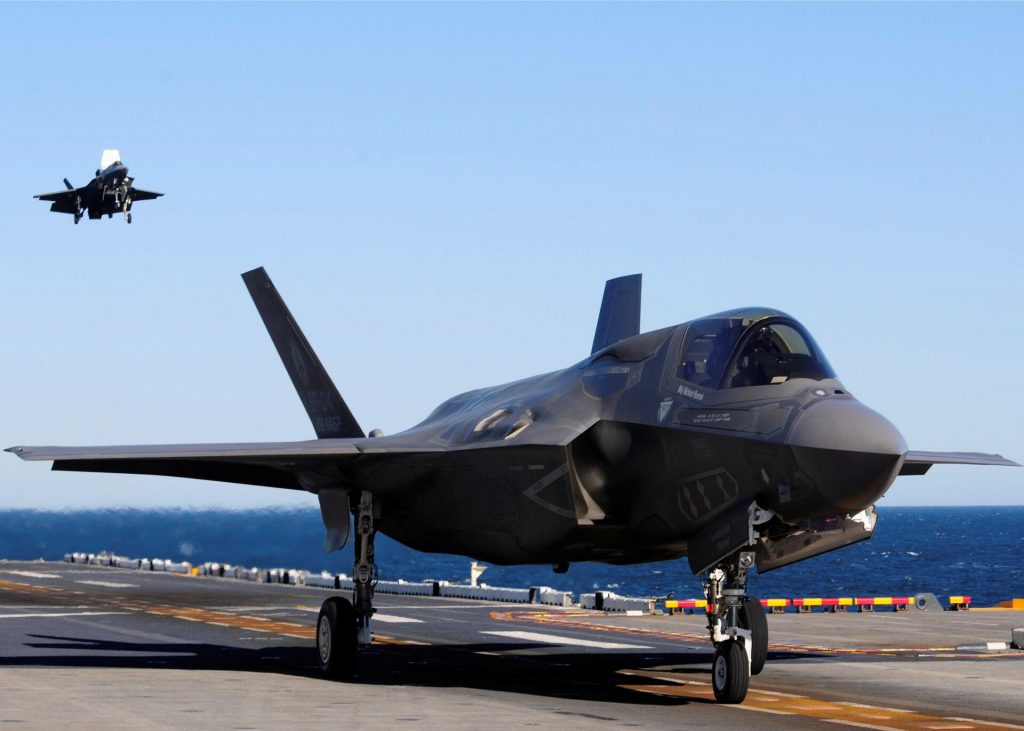
Uncertainty surrounding the American commitment to NATO has pushed many governments to increase military spending and to call for a more integrated European industry.
Yet the abandonment of Europe’s main aerospace program produces exactly the opposite effect.
Instead of converging toward a common platform, Europeans now find themselves divided between several competing projects.
Industrial fragmentation risks leading to duplicated investments, scattered resources and, paradoxically, prolonged dependence on American systems such as the F-35, already chosen by several European countries, including Germany, the United Kingdom, Poland, Belgium, Norway and the Netherlands.
The Problem May Not Be Dassault
It is tempting to look for a single culprit behind the failure of the program. Yet a broader analysis leads to a different conclusion.
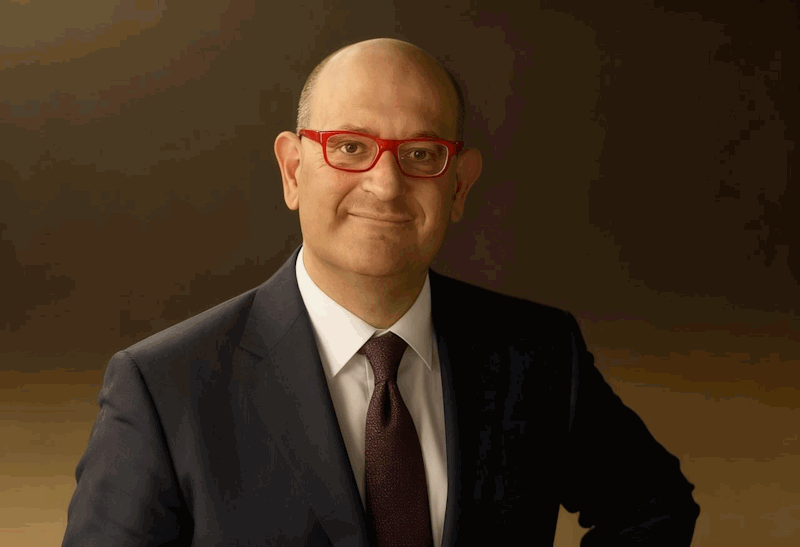
The SCAF reveals above all the structural limits of European cooperation in defense.
Unlike the United States, Europe has neither a federal government capable of imposing arbitration, nor a single military doctrine, nor a main customer comparable to the Pentagon.
Each European state retains its own strategic priorities, industrial interests and budgetary constraints.
Roger Barake
Photo All Rights Reserved
In this context, the disagreements between Dassault, Airbus, Paris and Berlin appear less as an anomaly than as the symptom of a deeper problem.
Nor should it be ignored that Europe has already traveled a long road toward technological autonomy. Earlier bilateral cooperation projects proved to be commercial and technological successes: the Franco-British Concorde, Jaguar and Lynx and Gazelle helicopters, as well as the Franco-German Alpha Jet trainer aircraft, used by the Patrouille de France. The examples are numerous.
But the real commercial and industrial success remains Airbus, the European consortium that not only broke the near-monopoly of the United States in civil aviation — excluding the USSR, of course — but also surpassed today’s only current civil competitor, the American company Boeing.
Airbus could never have come into being without a common European political decision. The project remains a milestone in European integration, on the same level as the Maastricht Treaty or the creation of the euro.
Alas, history will remember that alongside these successful partnerships, others never moved beyond preliminary negotiations.
A Lesson for the Future
History may remember that the SCAF did not fail because it lacked funding or technology. It failed because its promoters never managed to answer a fundamental question: who was actually supposed to lead the program, and in whose interest?
The industrial players defended their expertise. Governments protected their national interests. Political leaders invoked Europe while pursuing sometimes contradictory objectives.
Taken separately, each of these behaviors may appear rational.
Collectively, they led to the abandonment of the very project that was supposed to strengthen the continent’s strategic integration and power.
At a time when Europeans are questioning their security in an increasingly unstable international environment, the failure of the SCAF is a severe warning. It is a reminder that common defense cannot rest solely on political declarations. It also requires a shared willingness to give up part of one’s national prerogatives in favor of a collective objective.
More than the Ukrainian conflict and the Russian threat, more than the economic crisis and the scarcity of funds, more than the unfounded Euroscepticism of a few radical leaders, it may ultimately have been this willingness that was missing.
The Consequences for the Middle East
The failure of the SCAF is not only a setback for Europe’s defense industry. It could also have significant repercussions in the Middle East, a region that remains one of the world’s main markets for fighter aircraft.
For two decades, the Gulf states and several Levantine countries have played an essential role in the commercial success of the European aerospace industry. Rafale sales to Egypt, Qatar and the United Arab Emirates helped ensure the long-term viability of the French sector. For its part, the Eurofighter notably equips Saudi Arabia and Kuwait.
The SCAF was supposed to allow Europe to preserve this presence over the long term by offering, by the 2040-2050 horizon, a platform capable of competing with future American and Asian systems. Its abandonment now opens a period of uncertainty.
On the one hand, France may be tempted to continue developing the Rafale family alone, or to develop a national successor. Such an option would preserve its strategic autonomy but would mechanically reduce the economies of scale that a common European program would have provided.
On the other hand, the GCAP, led by the United Kingdom, Italy and Japan, could establish itself as Europe’s main next-generation competitor. The Gulf monarchies, historically close to London and already users of the Eurofighter, will closely follow the development of this program.
This fragmentation, however, could weaken Europe’s overall position vis-à-vis the United States.
The F-35 currently enjoys a considerable advantage: it is produced in large numbers, backed by the world’s leading military power and integrated into a vast operational ecosystem shared by many Western allies. The more Europeans divide themselves between several competing programs, the harder it becomes to rival that critical mass.
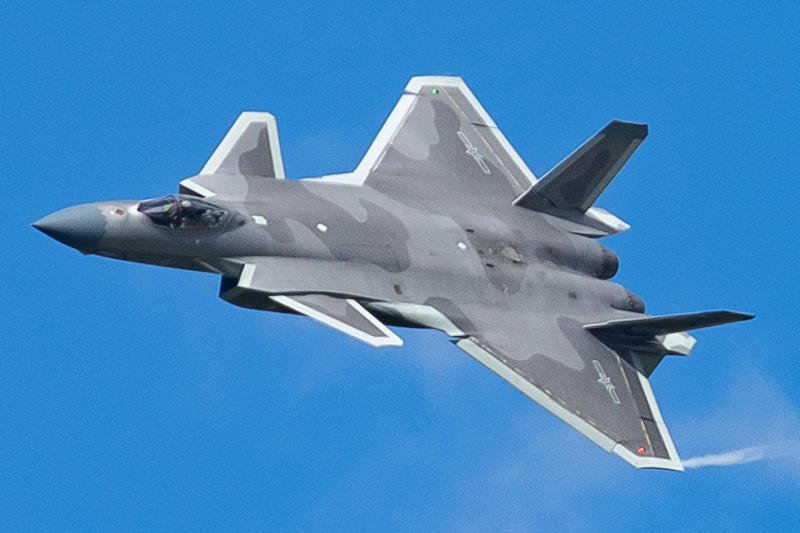
For Middle Eastern countries, this situation could result in greater diversification of suppliers. Some will continue to favor American systems, others will place their bets on European platforms, while a few actors may be tempted, in the longer term, to explore emerging alternatives from Asia, as China and South Korea have begun acquiring new stealth technologies and the alloys used in engine design.
Beyond commercial considerations, the disappearance of the SCAF raises a broader question: what place does Europe intend to occupy in the Middle East’s security architecture over the coming decades?
The export of a fighter aircraft is never merely an industrial transaction. It creates lasting partnerships, logistical dependencies, cooperation in training, maintenance and intelligence, and sometimes even strategic alignment.
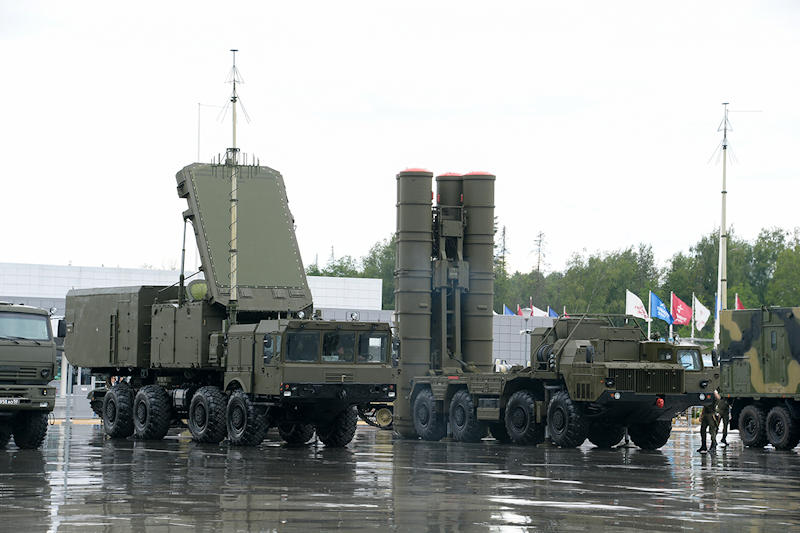
Decisions regarding sources of arms procurement are an eminently strategic exercise. The American F-35, for example, was first exported to Israel, the United States’ main ally, while Turkey was excluded from the project — and therefore from the supply of components — and deprived of its $1.4 billion prepayment, because Mr. Erdogan chose to acquire the Russian S-400 anti-aircraft missile system.
By giving up its main joint aerospace project, Europe therefore risks losing more than an industrial program. It could lose part of its ability to exert political influence in a region where competition among great powers continues to intensify.
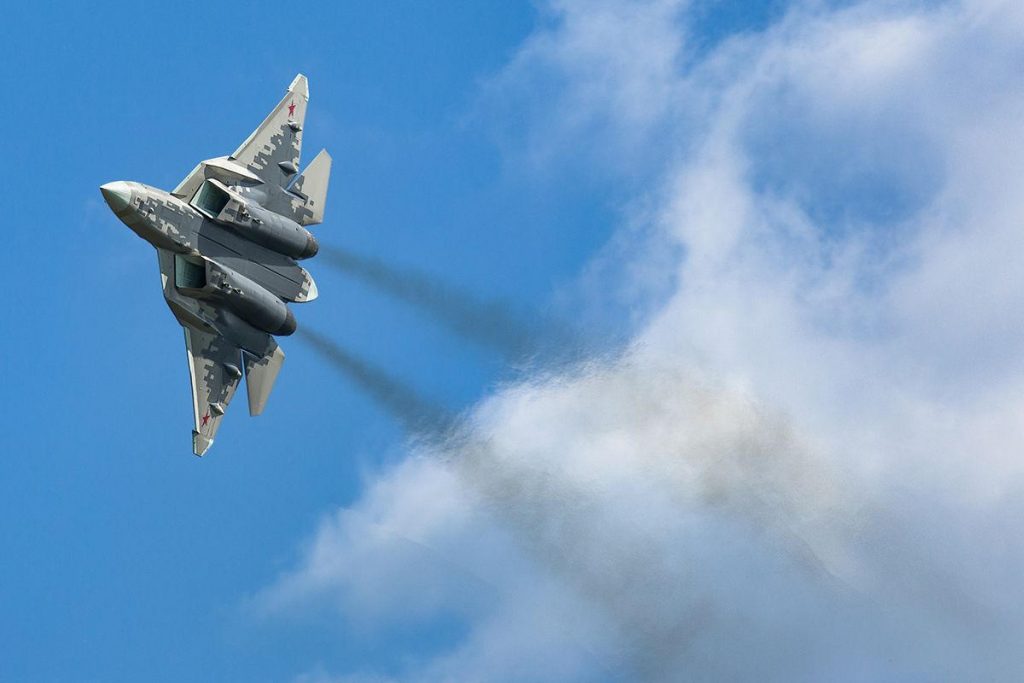
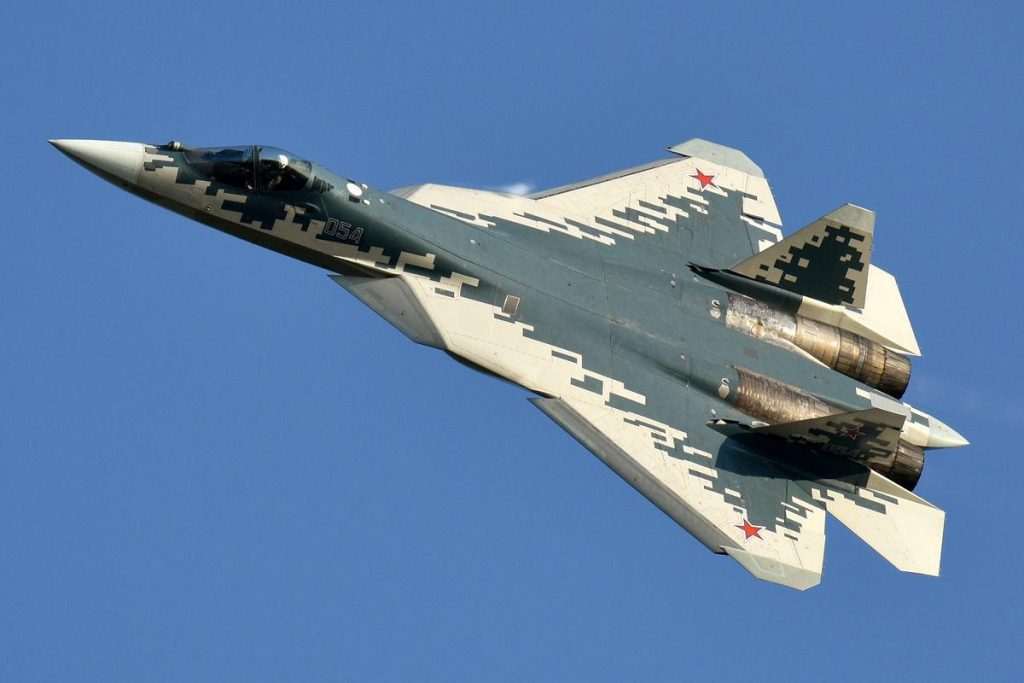
The main handicap for the Russians and the Chinese remains their technological deficit. It is especially visible in electronics and engines. In this photo, the black smoke emitted by the engines of this Su-57 betrays a design dating back to the 1960s.
Roger Barake
See also:
- « The Abandonment of FCAS: Autopsy of an Industrial Dinosaur in the Age of Algorithmic Warfare » — (2026-0703)
- « Das Scheitern von FCAS: Autopsie eines industriellen Dinosauriers im Zeitalter der algorithmischen Kriegsführung » — (2026-0703)¨
- « L’abandon du SCAF : Autopsie d’un dinosaure industriel face à la guerre algorithmique » — (2026-0703)¨
- « Retour sur le projet d’avion de combat franco-allemand » — (2026-0622)
- « Revisiting the Franco-German Fighter Jet Project » — (2026-0622)
- „Rückblick auf das deutsch-französische Kampfflugzeugprojekt“ — (2026-0622)
- « Avis de tempête dans le ciel européen » — (2026-0613)
- « Storm Warning in the European Sky » — (2026-0613)
- « Sturmwarnung am europäischen Himmel » — (2026-0613)