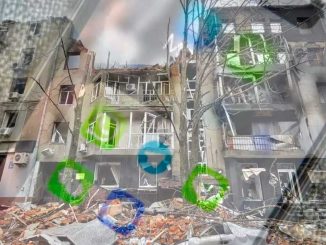
Between the Treaty of Frankfurt and the summer of 1914, France and Germany did not go to war with one another. Yet these forty-three years of armed peace were precisely the period in which the mechanism that would tip the whole of Europe into catastrophe was methodically forged. In this second installment of the series, we trace how a desire for revenge, a cult of power, and an alliance system that grew uncontrollable together turned a local assassination into a world war.
Revanchism, Pan-Germanism, and the Alliance System, 1871–1914
Key Points
- A peace that wasn’t one: between 1871 and 1914, France thought of little but avenging Alsace-Lorraine, without daring to say so out loud — Gambetta summed up this ambivalence as early as 1871.
- Germany changes doctrine: Wilhelm II’s dismissal of Bismarck in 1890 replaced caution with Weltpolitik — an openly declared global and naval ambition.
- Two blocs, one trap: the Triple Alliance against the Triple Entente — a system designed to deter, which would end up turning a local crisis into a continental war.
- Two dress rehearsals: the Moroccan crises of 1905 and 1911 already brought Europe to the edge of the abyss, without any lesson being drawn from either.
- The awaited spark: by the summer of 1914, general staffs had drawn up plans so rigid that political decision-making had almost no room left to maneuver.
Content
by Joël-François Dumont — Paris, August 16, 2026.
Introduction
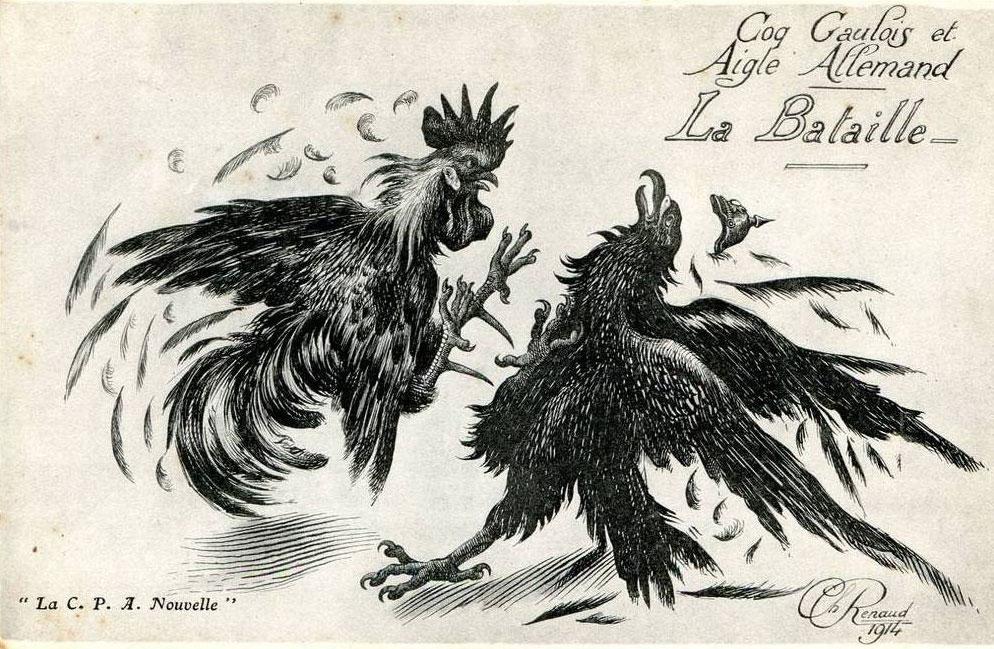
The Treaty of Frankfurt had put an end to the fighting, but not to the hostility. In both France and Germany, the decades that followed 1871 saw two logics take shape on either side of the Rhine that seemed to converge inexorably toward confrontation: on one side, a France that never resigned itself to the loss of Alsace-Lorraine; on the other, a unified Germany that, strengthened by its victory, now intended to weigh on world affairs in proportion to its industrial and military power. Between the two, an increasingly rigid system of alliances would turn any local spark into a continental fire.
![Statue de Strasbourg, place de la Concorde, campagne de souscription à l'Emprunt de la Libération et trophées de guerre allemands, canons, 17 octobre 1918] (Agence Rol) — Source : Gallica BNF](https://european-security.com/wp-content/uploads/2026/08/Statue-de-Strasbourg-1024x692.jpg "- Statue de Strasbourg")
1. The Cult of Revenge in France
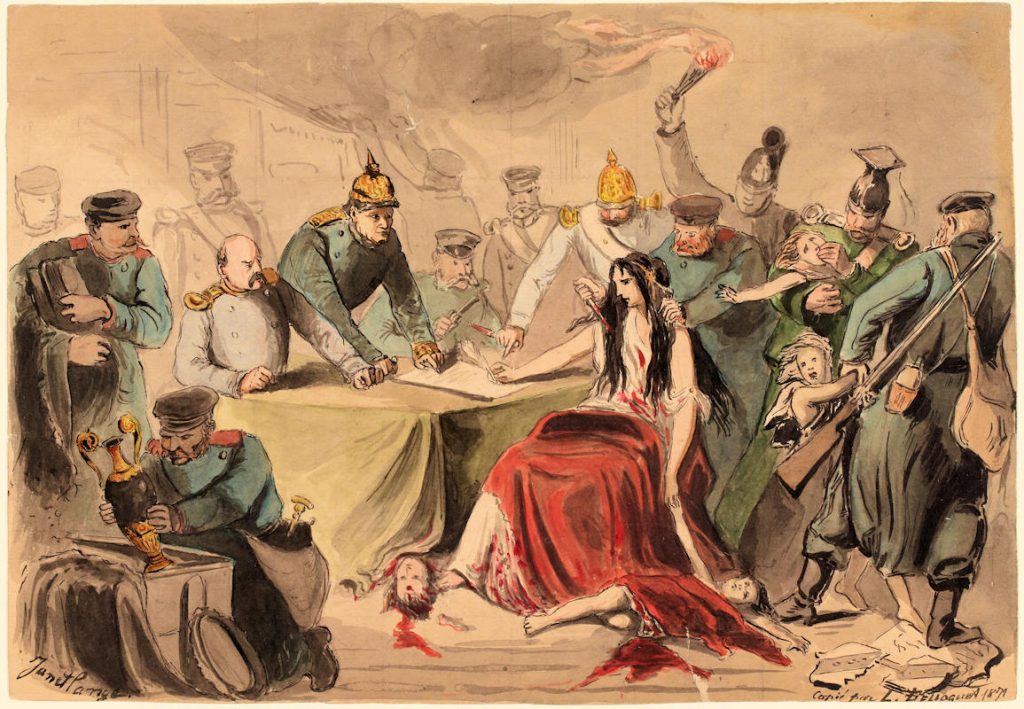
Contrary to a common misconception, the France of the Third Republic did not live in a permanent, unanimous obsession with revenge — historians have long since nuanced that narrative. But the sense of loss itself never faded. The famous watchword — “Think of it always, speak of it never” — sums up the French ambivalence rather well: revanche was rarely brandished as an immediate war aim, but it was a wound that never closed, kept alive in school textbooks, in the war memorials of 1870, and in a popular imagery in which the map of France, amputated of its two provinces, became an omnipresent motif.
The formula is traditionally attributed to a speech Gambetta gave at Saint-Quentin in November 1871; some historians, including his biographer Pierre Barral, note however that the exact words spoken that day were different (“let us never speak of the foreign lands, but let it be understood that we always think of them”), and that the shorter formula later popularized may in fact come from a close associate of Gambetta, Arthur Ranc, rather than from Gambetta himself.
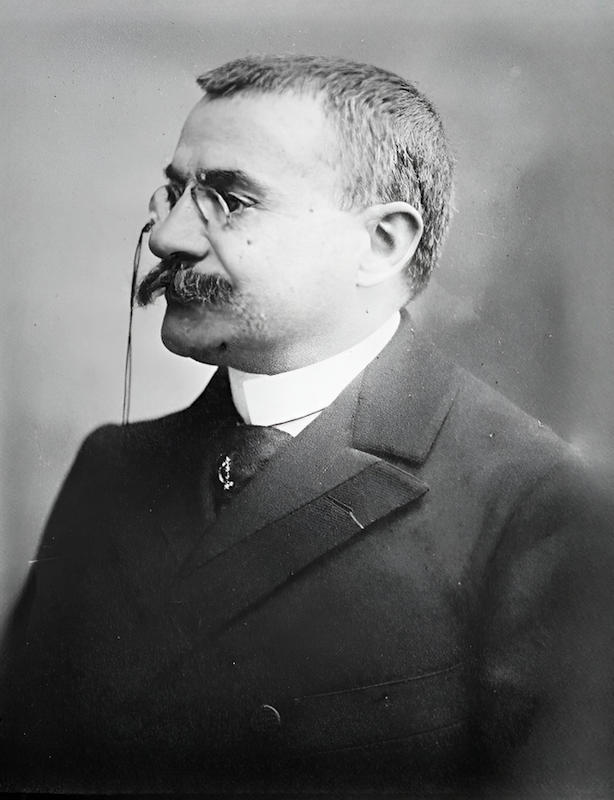
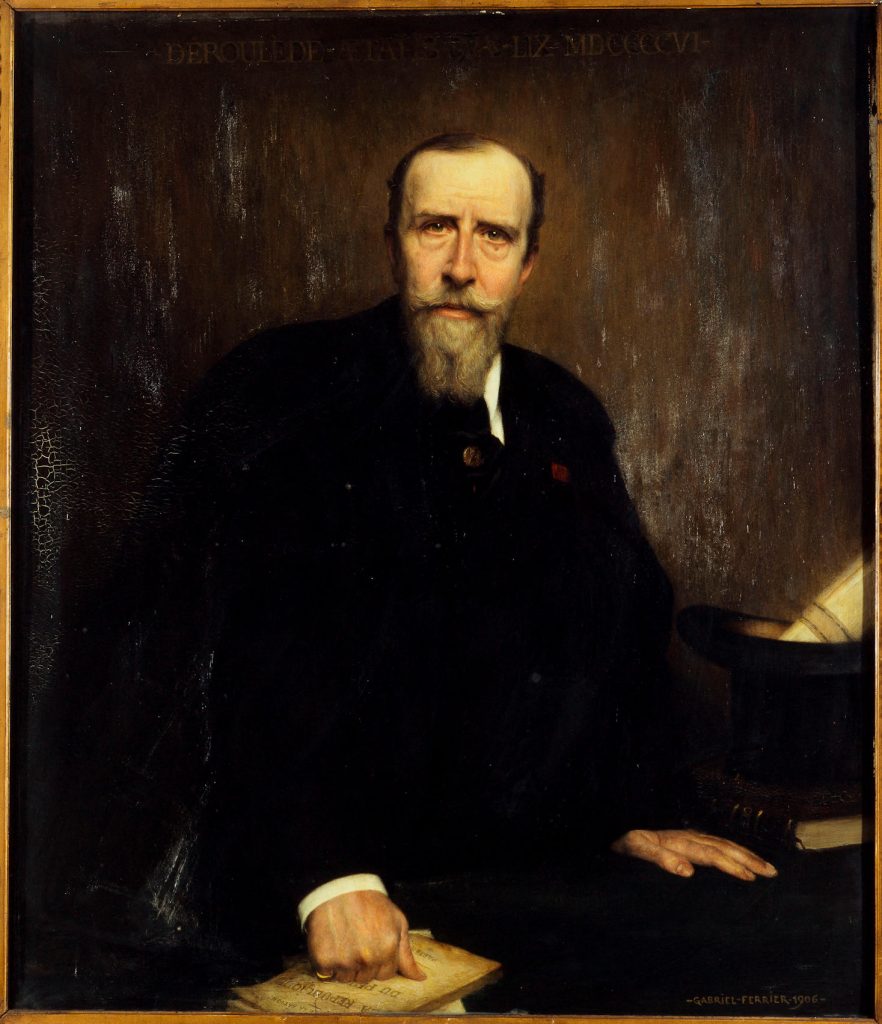
Two faces of the same France, two ways of carrying the same refusal to forget. On the right, Déroulède embodies popular revanchism — the leagues, the monuments, the school textbooks — kept alive in the streets and in people’s hearts more than in the chancelleries. On the left, Delcassé, foreign minister for seven years, turned it into a matter of state policy: it was he who, in 1904, wrested the Entente Cordiale from the United Kingdom, breaking the diplomatic isolation in which Bismarck had kept France since 1871. One man set public opinion ablaze; the other patiently built the alliances that would one day make action possible.
The Ligue des Patriotes, founded in 1882 by Paul Déroulède, was the most organized and vociferous expression of this sentiment. Déroulède, a nationalist poet and politician, turned it into a mass organization devoted to keeping alive the memory of 1870–1871 and to the moral preparation for a military revenge. Although the movement had its ups and downs — Déroulède himself drifted for a time into Boulangist adventurism and then into a visceral anti-parliamentarianism — it played a lasting part in embedding in French public opinion the idea that the Peace of Frankfurt was merely a truce.
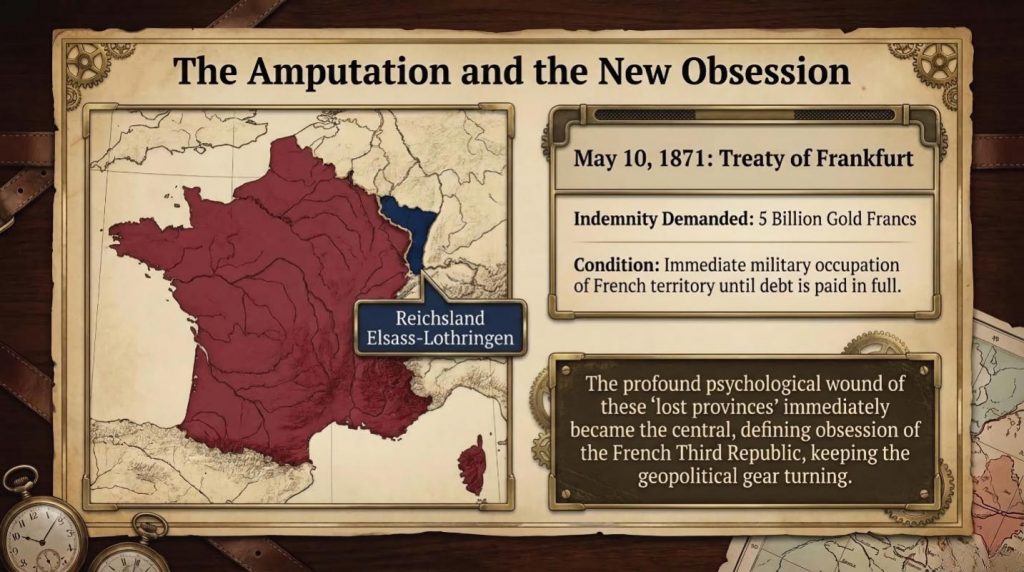
This climate found its translation in French policy itself: the methodical rebuilding of the army, the 1889 law on military service, and above all the dogged search for alliances capable of loosening the diplomatic isolation in which Bismarck had managed to keep France after 1871.
2. Pan-Germanism and German Weltpolitik
On the other side of the Rhine, the unification of 1871 had not extinguished the appetite for power — quite the opposite, it had unleashed it.
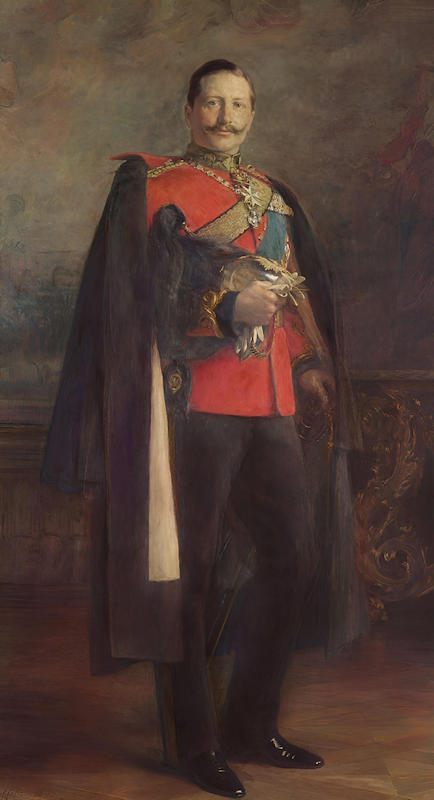
Under Bismarck, Germany had nonetheless shown caution on the international stage, preferring to consolidate its gains rather than expand them, and weaving a skillful network of alliances designed to keep France diplomatically isolated. The dismissal of Bismarck by the young Kaiser Wilhelm II in 1890 marked a clean break.
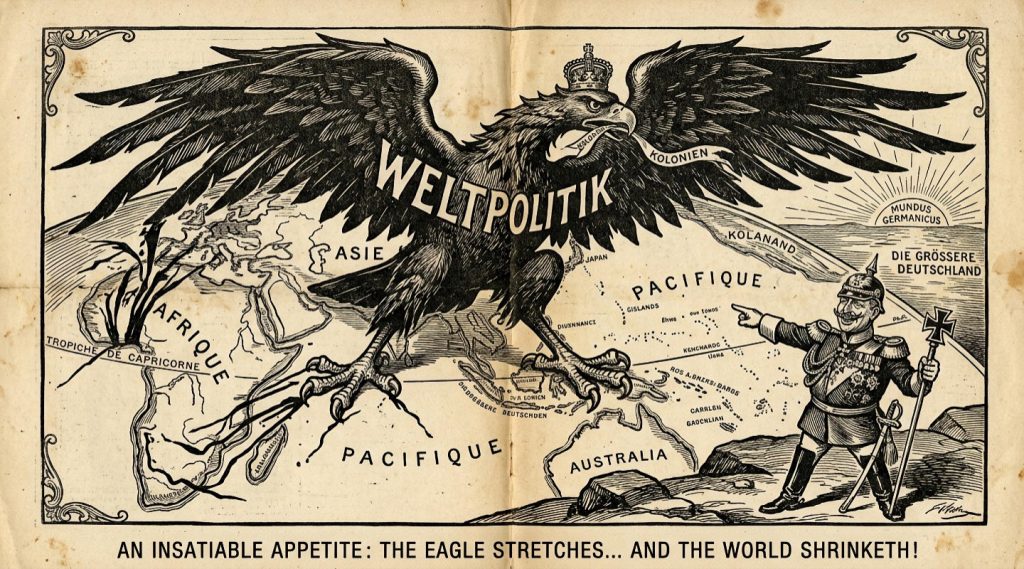
Wilhelm II and his advisers inaugurated what they called Weltpolitik — “world policy” — an openly declared ambition to turn Germany, now that its industrial power rivaled Britain’s, into a first-rank colonial and naval empire.
Wilhelm II, Emperor of Germany, is 31 years old in 1895 — five years after dismissing the old chancellor Otto von Bismarck, bringing three decades of diplomatic prudence to an end. It was out of this rupture that Weltpolitik was born — the ambition of a Germany as a world power — the starting point of the march toward the abyss.
Portrait of Kaiser Wilhelm II by Arthur Stockdale Cope
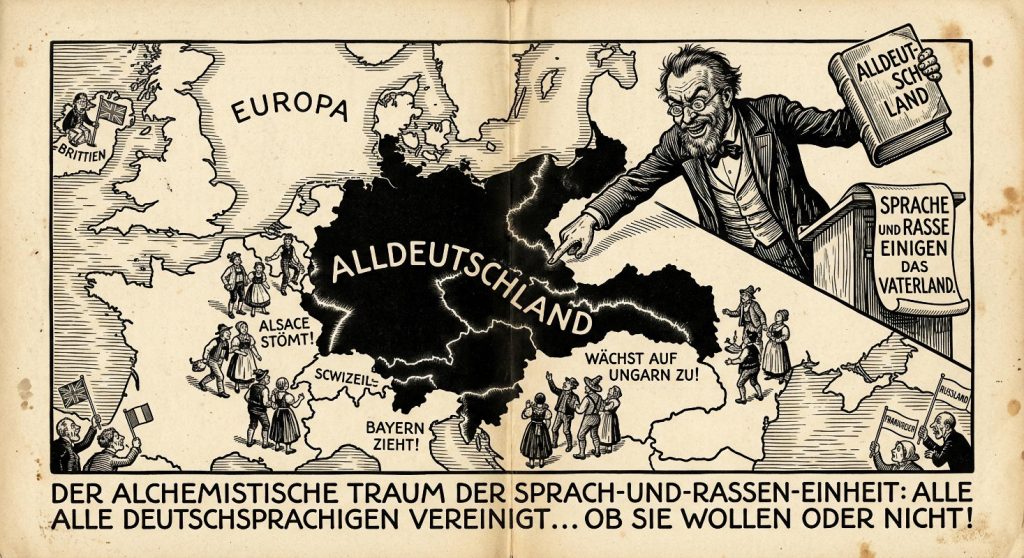
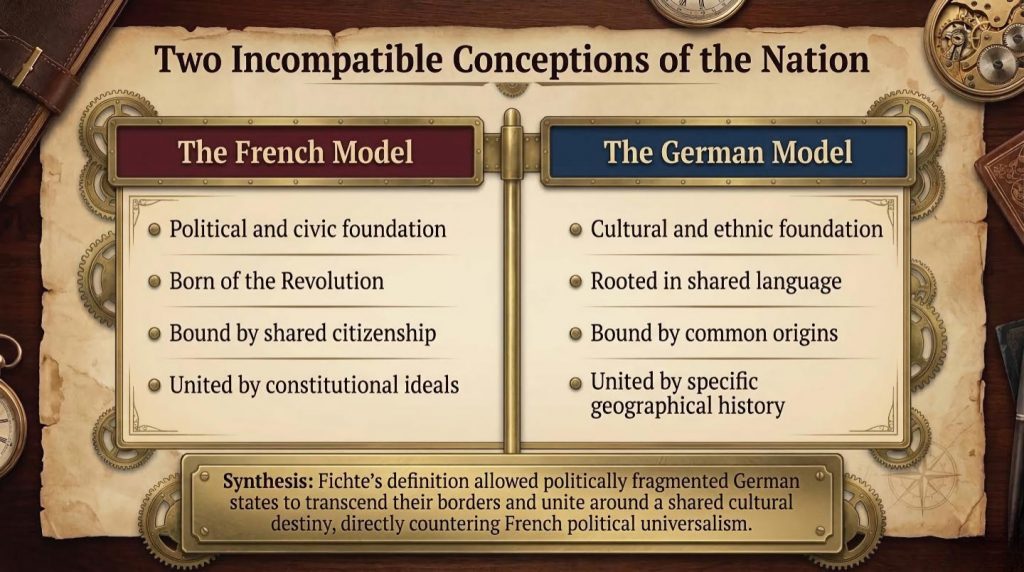
This ambition drew on an older ideological current, Pan-Germanism, which advocated the unity of all peoples of German language and culture and asserted a German civilizing mission in Europe and the world.
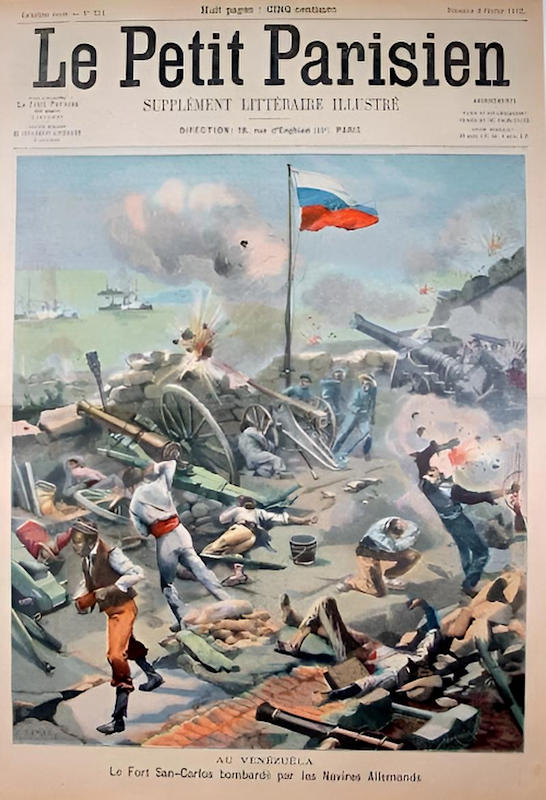
Bombing San Carlos de la Barra fortress
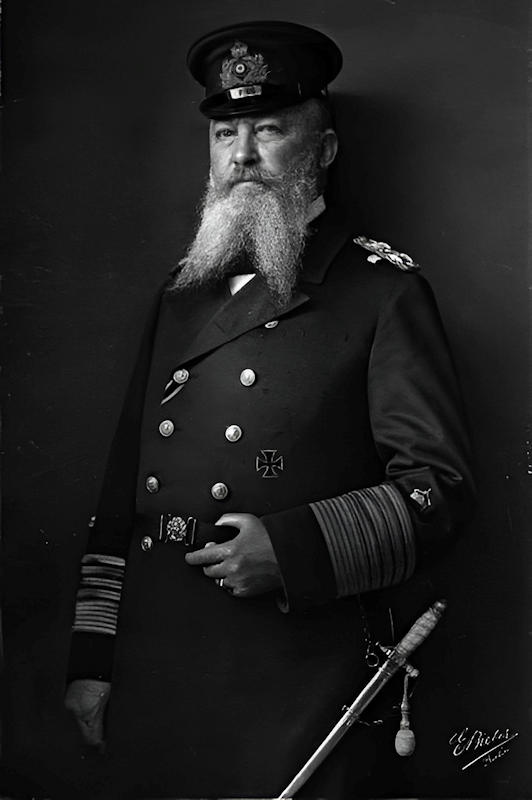
From theory to practice: these two images tell the same story of Weltpolitik, just a few years apart. On the left, the imperial fleet demonstrates by force, as far as the Caribbean, that Germany now intends to project power beyond Europe. On the right, the man who made this ambition possible: Alfred von Tirpitz, whose successive naval laws (Flottenpolitik), beginning in 1898, gave Wilhelm II the material means for his world policy through an ocean-going fleet. An ambition that never remained mere rhetoric.
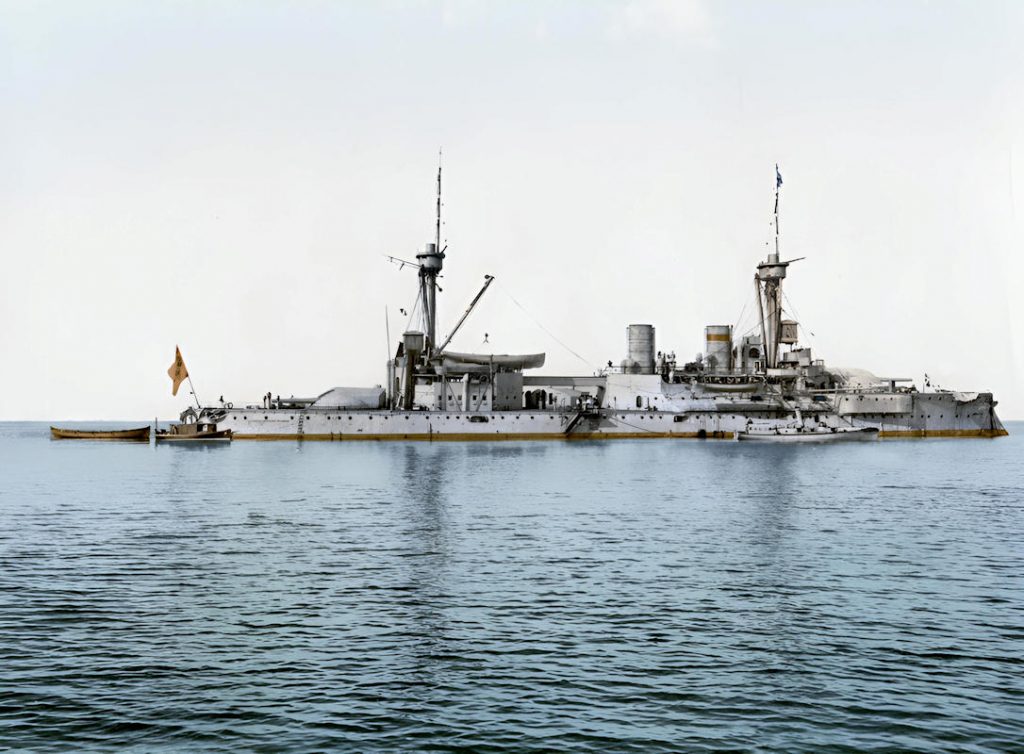
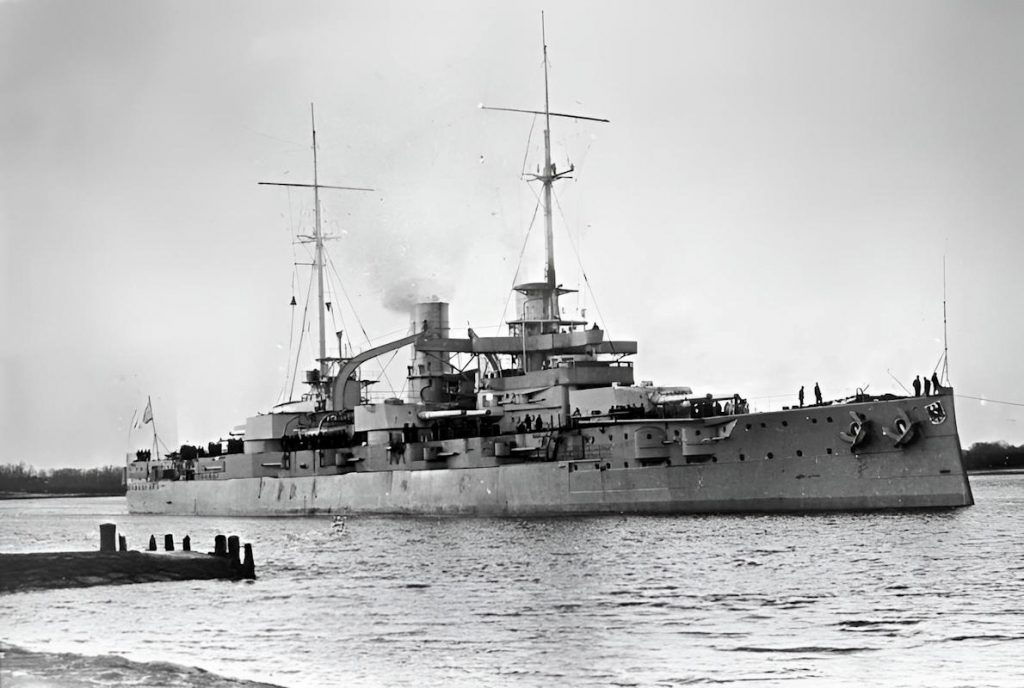
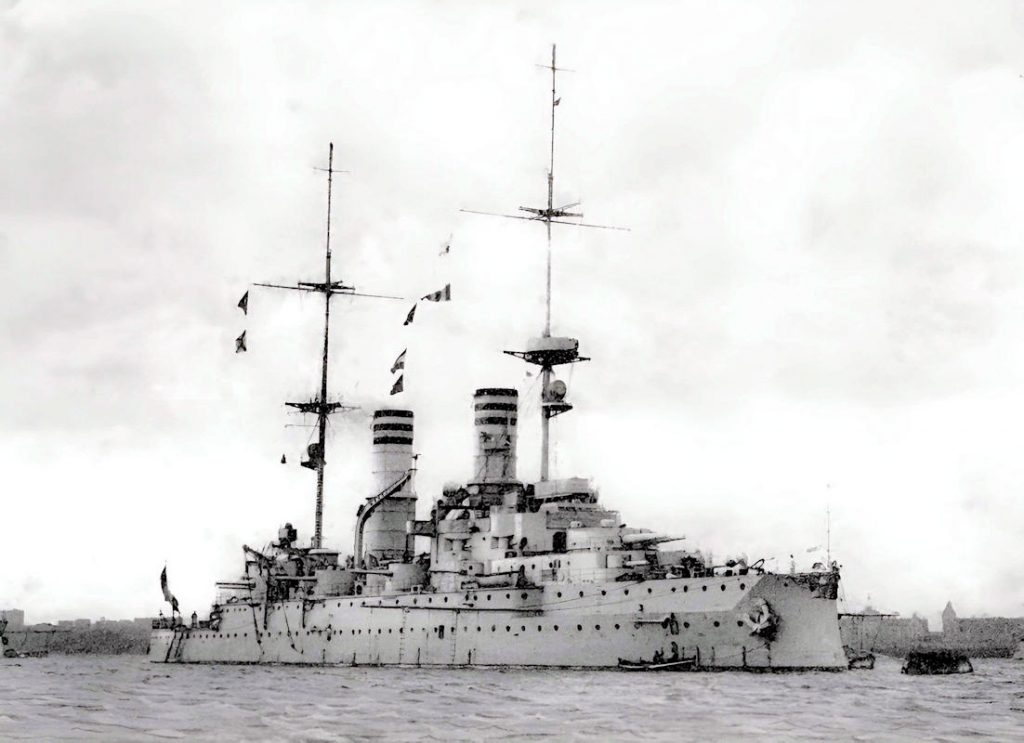
This battleship race, far from remaining a strictly German-British affair, helped draw London and Paris closer together: the old Franco-British colonial rivalry gradually gave way to a shared unease over rising German power.
3. Locking Europe In: The Alliance System
It was in this climate that, piece by piece, the alliance system took shape that would, in 1914, turn a regional assassination into a continental war.
Bismarck himself had set the process in motion as early as 1879 with the Dual Alliance between Germany and Austria-Hungary, completed in 1882 by Italy’s entry into what became the Triple Alliance. Bismarck’s objective was defensive: to isolate France and avoid any two-front war. But after his departure, this cautious architecture gave way to a more rigid, less controlled logic.
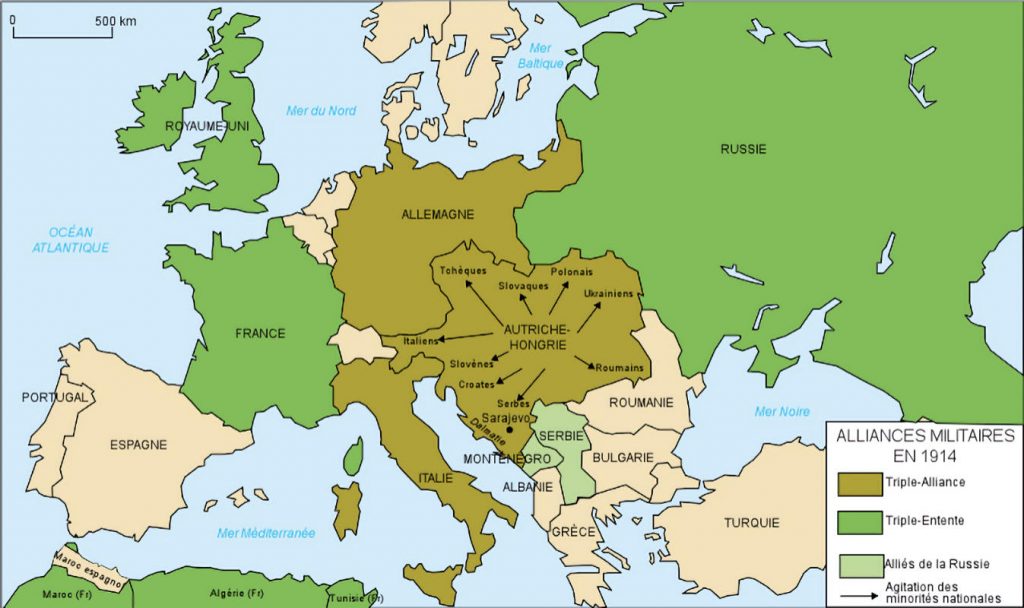
Facing the Triple Alliance, France broke out of its diplomatic isolation by sealing a military alliance with Imperial Russia in 1892 — an ideologically improbable rapprochement between a republic and an autocratic empire, but one dictated by the shared strategic necessity of containing German power. Then, in 1904, France and the United Kingdom signed the Entente Cordiale, settling their colonial disputes; in 1907, an Anglo-Russian agreement completed the edifice, giving birth to the Triple Entente.
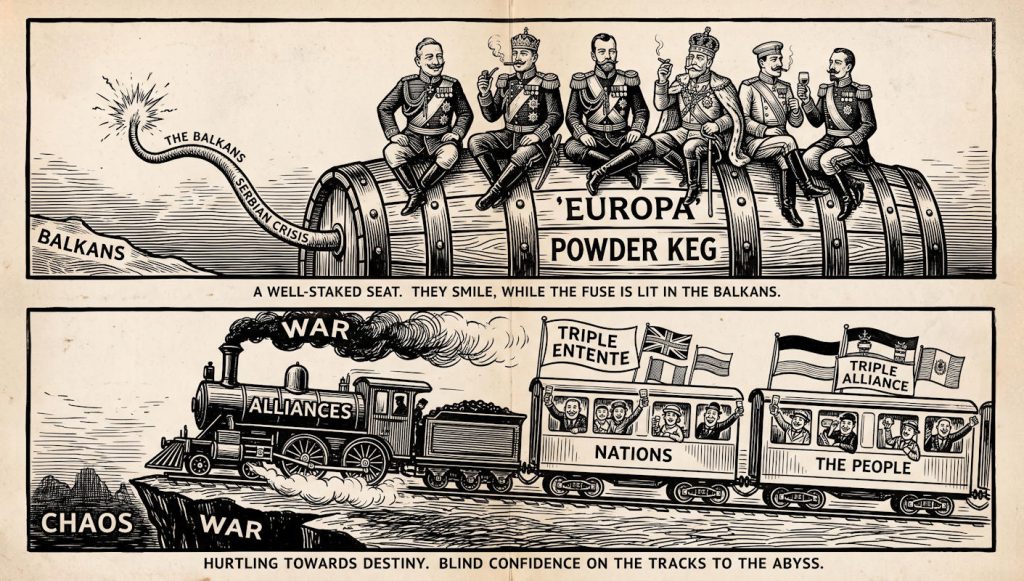
Europe thus found itself cut into two rigid military blocs, each bound by commitments of automatic assistance. This system, originally conceived by its architects as an instrument of deterrence and balance, would prove to be its exact opposite: a mechanism in which a crisis affecting a single actor would, through a domino effect no one could any longer stop, drag in the entire continent.
4. The Moroccan Crises: Dress Rehearsals for a European War
On two occasions before 1914, this alliance mechanism nearly broke down much earlier than it eventually did, over crises that, on the surface, had nothing to do with Alsace-Lorraine: the Moroccan question.
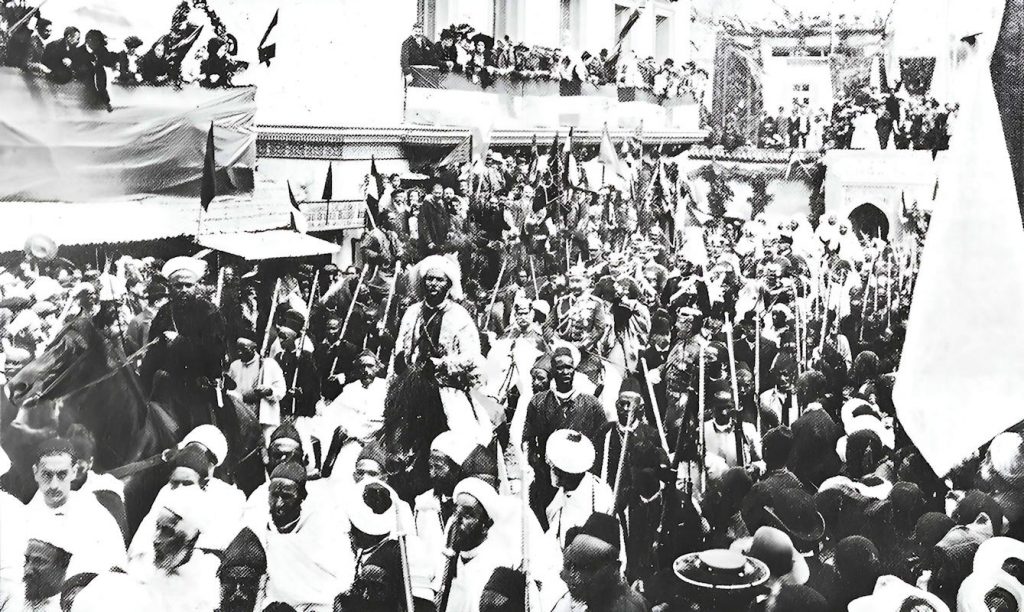
In March 1905, Kaiser Wilhelm II traveled to Tangier and delivered a speech in support of Moroccan independence — a calculated move meant to test, and if possible crack, the fledgling Entente Cordiale between France and Britain, by challenging French designs on Morocco.
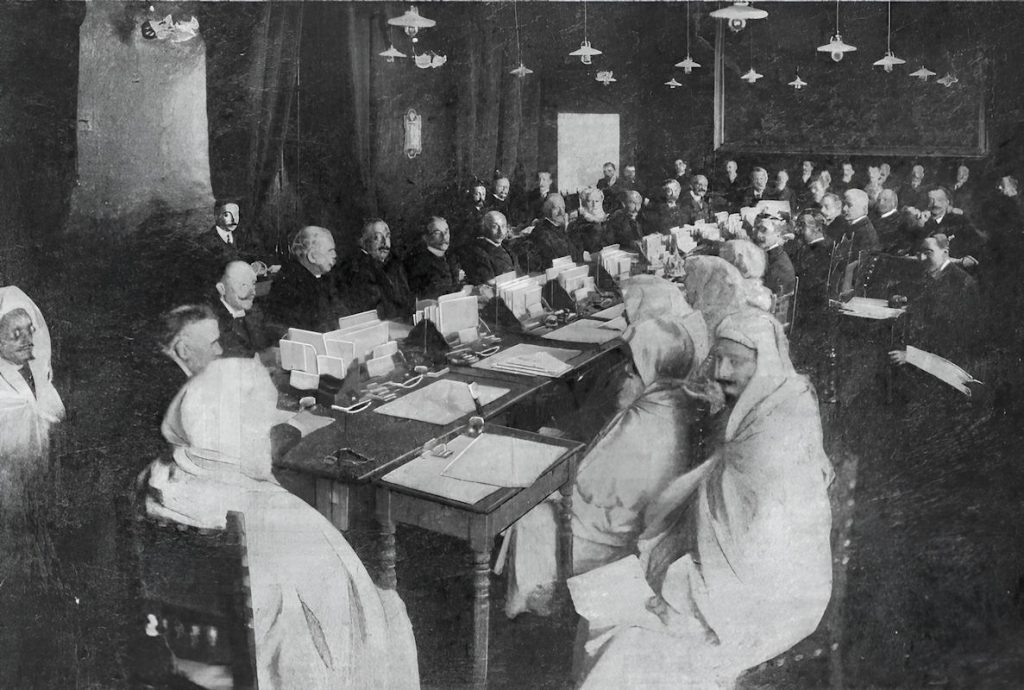
The crisis nearly degenerated into open war; it was finally resolved at the Algeciras Conference in 1906, which did recognize certain particular French interests in Morocco, but which above all revealed, to Berlin’s surprise, the solidity of the Franco-British Entente — a bitter diplomatic failure for Germany, which emerged from it more isolated than before.
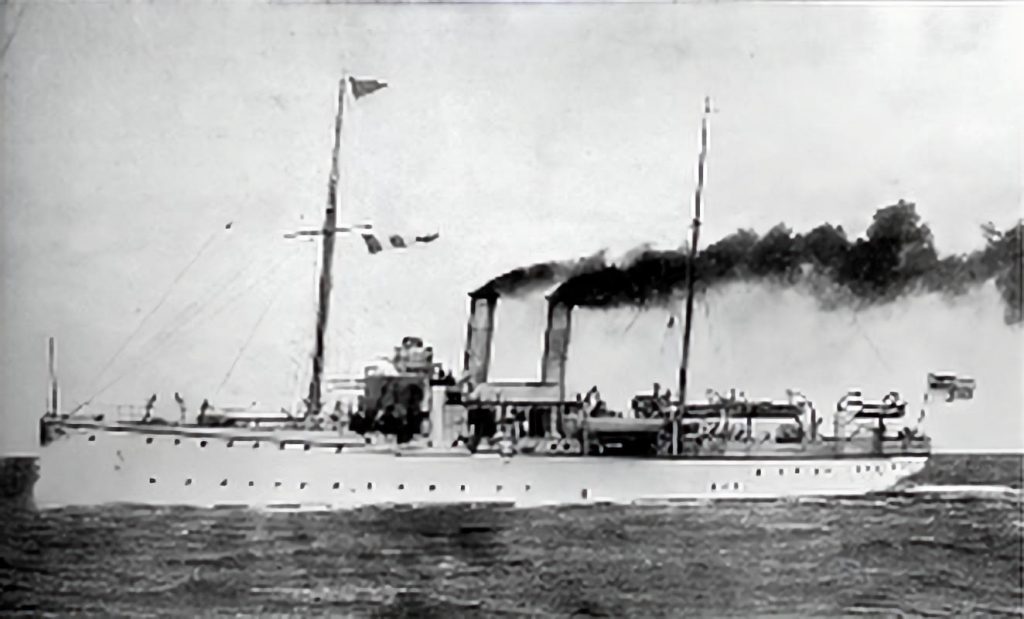
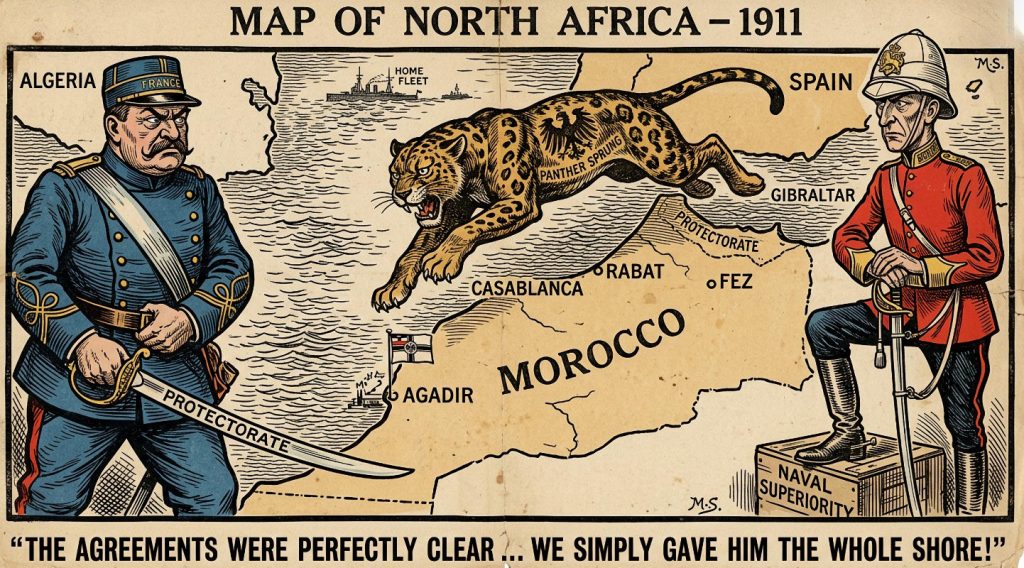
A second crisis broke out in 1911: Germany’s dispatch of a gunboat, the Panther, to the Moroccan port of Agadir, officially to protect German interests threatened by local unrest, but in reality to extract colonial compensation from France in exchange for recognizing its protectorate over Morocco. The Agadir crisis brought Europe to the brink of war for several weeks — the British government itself seriously considered military engagement alongside France — before it was resolved by an agreement giving Germany territorial compensation in the Congo, in exchange for a Morocco definitively placed under French protectorate.
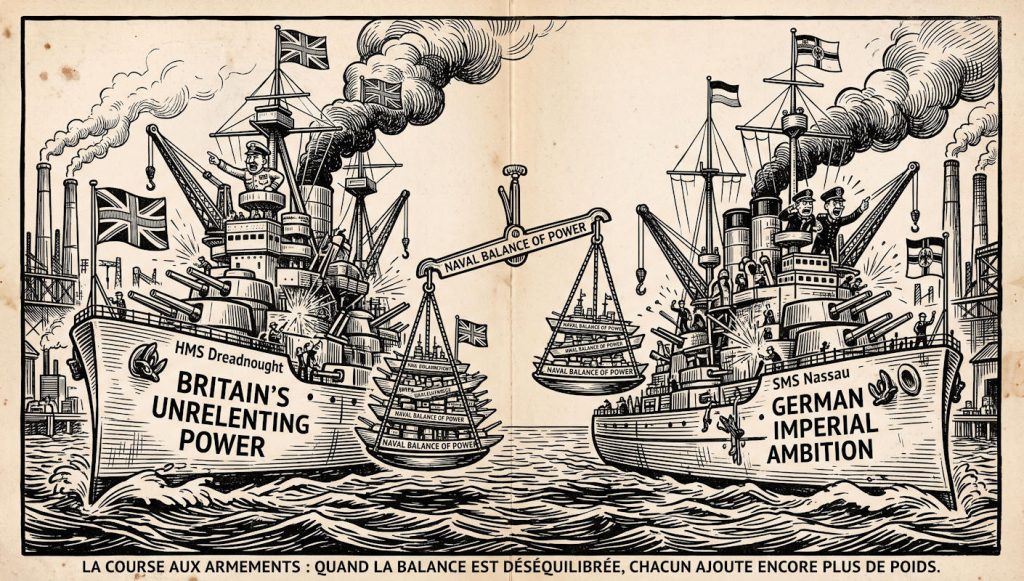
Neither of the two Moroccan crises led to war. But they played a decisive role: they accustomed public opinion and general staffs to regarding general confrontation as a real and imminent possibility; they finally convinced London that Germany represented a common threat; and in each country they fed an escalating arms race — naval between Berlin and London, land-based between Paris and Berlin — that would not stop until 1914.
5. The Final Mechanism
On the eve of the summer of 1914, Europe thus found itself in a singularly unstable configuration: two rigidly opposed military blocs; general staffs that had drawn up mobilization plans so detailed and interdependent (the German Schlieffen Plan in particular) that, once set in motion, they left political decision-making ever less room to maneuver; public opinion in both France and Germany largely won over to the idea that conflict was probable, if not desirable; and leaders who, in Vienna, Berlin, Paris, and Saint Petersburg alike, had come to accept continental war as one scenario among others, rather than as the absolute unthinkable it should have remained.
All that was missing was the spark. It came from Sarajevo, on 28 June 1914.
The third installment of this series will pick up the thread at this precise moment, to follow France and Germany into the most horrifying war they would ever wage against one another — and into the peace which, at Versailles, would unknowingly prepare the next one.
Joël-François Dumont
See also:
- « France-Germany: The Machinery of Hatred 1805-1871 (1) » — (2026-0814)
- « France-Germany: The March Toward the Abyss 1871-1914 (2) » — (2026-0816)
Analysis: The Peace That Prepared the War
There is something vertiginous about rereading these forty-three years from 1871 to 1914: on paper, they are the longest uninterrupted years of peace Western Europe had known in generations. Not a single war between European great powers throughout this entire period. And yet it was precisely this peace that manufactured, piece by piece, the deadliest war the continent had ever known.
The paradox is worth pausing over. Every piece of this system — the Franco-Russian alliance, the Entente Cordiale, the Triple Alliance, the dreadnought race — was designed by its architects as an instrument of deterrence, of caution, of balance. No one, in 1892 or in 1907, signed these agreements thinking they were preparing a world war; on the contrary, everyone believed they were guarding against one. This is where the most uncomfortable lesson of this period lies: rational mechanisms, each conceived in isolation to avert the worst, can assemble into a machine that makes the worst inevitable — without any of their architects having wanted it, or even foreseen it.
The two Moroccan crises should have served as a warning. Twice, in 1905 and in 1911, Europe came close to general war for reasons that, on the surface, had nothing to do with Alsace-Lorraine or the revenge of 1870 — and twice, the crisis subsided without anyone seriously questioning the soundness of the system that had allowed things to come so close to the abyss. The symptoms were treated; the disease was never cured.
This may be where the most direct link to the first installment of this series is forged. The humiliation of 1806, transformed by Prussia into a national project, took sixty-four years to bear fruit at Sedan. The alliance system of 1871–1914, by contrast, needed no fresh humiliation to be set in motion: once the blocs had hardened and the mobilization plans were locked in place, a regional assassination was enough. The mechanism was no longer merely psychological — it had become mechanical.