Before getting to the heart of the matter, a distinction must be made — one that is both intellectually honest and politically necessary. Israel’s engagement against Iran does not follow the same logic as that of the United States, and it would be as inaccurate as it is convenient to conflate the two. Israel has lived for decades under the explicit threat of a regime that has enshrined its destruction as state doctrine. This is not rhetorical flourish: it is a reality made daily and concrete by tens of thousands of Hezbollah missiles to the north, Iranian drones over its territory, and the financing of Hamas in Gaza.
Preamble: Israel — A Different Story
Israel’s operation against Iranian nuclear sites in June 2025 did not emerge from nowhere. It was the product of years of preparation — intelligence work, sabotage, deep strikes against Iranian ballistic capabilities, and the methodical dismantling of proxy command chains. Israel also operates under a clear, consistent doctrine dating back to Begin: no hostile power in the region may acquire nuclear weapons. That line was held in Iraq in 1981, in Syria in 2007, and in Iran in 2025. One may debate the international legality of such preemptive strikes — the debate is legitimate. But one cannot deny that they form part of a coherent strategy, driven by a genuine existential threat, and prepared with the rigor that national survival demands.
What follows is not about Israel. What follows is about the man who decided, alone, without legal mandate, without serious preparation, and without regard for his allies, to drag the world’s greatest military power into this war — and who is now preparing to leave the consequences to everyone else.
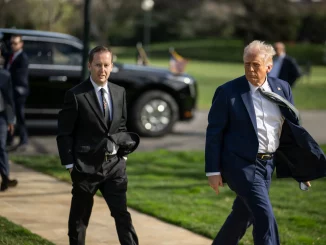
Sometimes it takes a little distance to grasp the full extent of a disaster. Three weeks after the outbreak of war in Iran, that distance has not softened anything—it has only amplified everything. What Donald Trump has done in the Middle East since February 28, 2026, is not a misjudgment, nor a strategic gamble that went wrong. It is the predictable, well-documented outcome of a man who has always prioritized instinct over rigorous thought—and who now has the world’s greatest military power at his disposal to act on his impulses.
Table of Contents
par Joël-François Dumont — Paris, le 2 avril 2026
I. A President Who Started a War the Constitution Forbade Him
Let us start with the starkest fact — the one the international press tends to drown in euphemism: Donald Trump launched a war in violation of the United States Constitution. Article I, Section 8 is unambiguous — only Congress may declare war. Trump knows this. His lawyers know this. Their answer was to rename the operation: not a “war” but “major combat operations,” code-named “Epic Fury.” A semantic sleight of hand that constitutional law professors at Berkeley, Harvard, and Yale have unanimously identified as legally hollow.
The initial justification — an “imminent threat” from Iran — collapsed within hours of the first strikes. Joe Kent, Director of the National Counterterrorism Center, resigned rather than endorse it, publicly declaring that “Iran posed no imminent threat to our nation.” The IAEA confirmed, as of March 2, 2026, that it had found no evidence of a structured Iranian nuclear weapons program. The letter sent to Congress forty-eight hours after the strikes — legally required — no longer mentioned an imminent threat, but invoked “national interests” and “eliminating Iran as a global threat.” The pretext had changed before the ink was dry.
When Congress attempted to reassert its authority — the bipartisan Khanna-Massie resolution in the House, the Kaine-Paul resolution in the Senate — it was defeated in both chambers, by seven votes in the House, by six in the Senate. Not because lawmakers were convinced of the war’s legitimacy: Republican members emerging from classified briefings told reporters they had seen no evidence of imminence. But because the machinery of partisan loyalty is stronger, among 2026 Republicans, than constitutional obligation. You do not vote against the chief, even when he goes to war without asking.
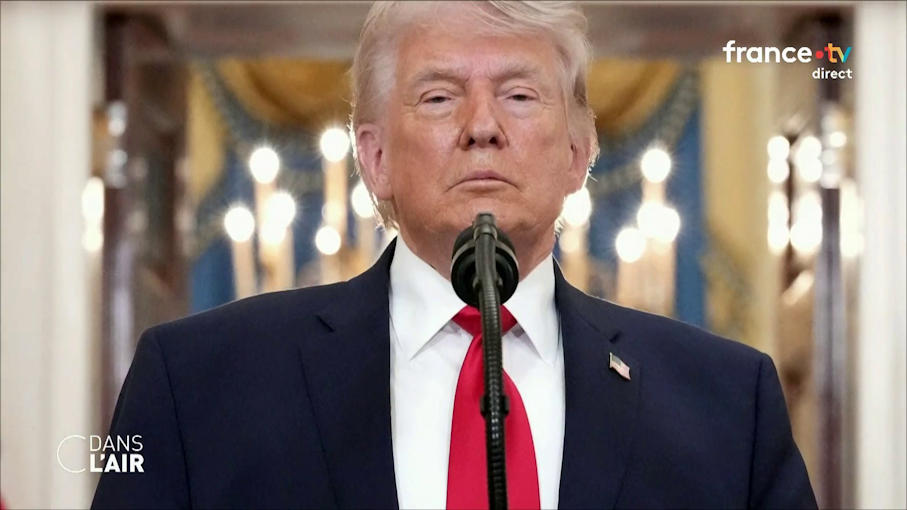
Trump, for his part, relished it. “I am the first sitting president to take a front-row seat at a Supreme Court hearing,” he boasted on April 1, 2026 — the same day he addressed the nation in prime time about a war he had launched alone, without Congress, without allies, without a plan. There is no more precise term than “authoritarian presidentialism” for a system in which one man decides to go to war because no one can physically stop him.
II. The Strategy of Emptiness: Strike Hard, Think Later
What is staggering, beyond the illegality, is the poverty of strategic preparation. In June 2025, Operation Midnight Hammer [01] had already struck three Iranian nuclear sites with 125 aircraft, seven B-2 bombers, and 75 precision munitions — including 14 GBU-57 bunker-buster bombs among the most powerful in the conventional American arsenal.

The operation lasted 25 minutes. Result: sites “severely damaged” according to one official report, “obliterated” according to another. The gap between those two assessments tells you everything you need to know about the analytical rigor of this administration.
On February 28, 2026, the objective shifted radically — and revealingly. The goal was no longer to degrade military capabilities: it was to decapitate the regime. Khamenei and several members of his inner circle were killed in Tehran in a joint American-Israeli strike. The implicit wager — that the death of the supreme leader would trigger the regime’s instant collapse — was that of a man who mistakes Iranian politics for a reality show in which eliminating the lead contestant ends the game. Within forty-eight hours, Mojtaba Khamenei had been named successor, the Revolutionary Guards had pledged loyalty, and Iran was launching strikes across nine countries simultaneously.
Thirty-two days into operations, Trump had still not defined the war’s objectives. His April 1 address simultaneously demanded unconditional surrender, called for a popular uprising, and offered amnesty to Iranian officers willing to switch sides — three contradictory axes, with no hierarchy between them. A serious leader picks one. Trump waves all three because he has not decided which he is actually pursuing — or because the decision interests him less than the theatrical effect. The Center for Strategic and International Studies estimated the first 100 hours of Operation Epic Fury at $3.7 billion, almost entirely unbudgeted. The war is costing America roughly $37 million an hour. To go where, exactly? Trump has not answered.
III. The Allies: Betrayed, Bombed, Then Handed the Tab
Here we must pause on what may be Trump’s most consistent trait in foreign policy: the capacity to treat allies worse than adversaries. The Gulf monarchies had refused to open their bases and airspace for American strikes on Iran — a prudence born of living within range of Tehran’s missiles. In retaliation for the American-Israeli operations, Iran launched, for the first time since the Tanker War of the late 1980s, simultaneous strikes against all six Gulf Cooperation Council states: Bahrain, Kuwait, Oman, Qatar, Saudi Arabia, and the UAE. Energy infrastructure, civilian airports, residential districts. These countries paid the price of a war they had refused to endorse.

Trump’s response on April 1 completed the picture. To the countries most dependent on oil transit through the Strait of Hormuz — through which flow roughly 27% of global oil trade and 22% of global natural gas — he advised them to “build up some courage” and go “take” the Strait themselves, adding that “the hard part is done, so it should be easy.” This is the logic of the neighborhood racketeer: I create the chaos, I leave, and you deal with the rubble. Except that the rubble includes Brent crude surpassing $100 a barrel and an energy crisis whose first victims will be middle-class Europeans and Asians — not the shareholders of American oil companies, whose stocks have, in fact, surged.
As for Europe, it discovered once again that it had not been consulted, not informed, not involved — and would nonetheless be expected to manage the fallout. British bases in Bahrain, Qatar, and Cyprus were struck by Iranian missiles. The United Kingdom, which had taken no part in any offensive strike, deployed fighter jets in a defensive role over four countries simultaneously. France and Germany condemned the Iranian retaliation while refusing any participation in a war they deemed illegal. They are right on the substance. But their condemnation does not rebuild destroyed infrastructure or bring back civilian casualties.
IV. The Dead Nobody Counts
There is a moral accounting that Trump takes scrupulous care to avoid. Before the February 28 strikes, the Iranian people were enduring the most severe crisis since the 1979 revolution. Protests of unprecedented scale — an estimated 5 million people in the streets — had erupted from December 28, 2025, driven by the collapse of the currency and unbearable day-to-day inflation. The regime responded with a total internet blackout on January 8, 2026, and live fire against protesters and bystanders — Human Rights Watch documented shots to the head and torso, the signature of an intent to kill, not to disperse.
The death toll from that crackdown ranges from 3,117 according to the Iranian government, to 6,126 according to NGOs, to as many as 32,000 according to non-governmental Iranian medical sources. These Iranians were marching for their freedom. Trump had invoked them in January 2026 to threaten military intervention if the regime “killed peaceful protesters.” Weeks later, he launched his bombs — not to protect them, but for geopolitical objectives that had little remaining connection to their fate. They moved from rhetorical argument to collateral damage without anyone in Washington apparently noticing the transition.
American-Israeli strikes since February 28 have targeted military bases and government installations — but also, according to converging reports, schools, hospitals, and Iranian cultural heritage sites. The IAEA, whose inspectors were withdrawn from Iran as early as June 2025, is still unable to verify the condition of facilities containing fissile materials. We are bombing, in other words, without knowing exactly what we are releasing, or where it goes. That is the level of rigor Trump applies to the most lethal firepower in human history.
V. The Portrait of a Man Without Brake or Compass
One may debate Trump’s intentions — was he seeking regime change, nuclear destruction, a distraction from domestic troubles, or simply the sensation of being a “wartime president”? The answer is probably all of the above, in no particular order, with no doctrine to hold them together. What is more interesting — and more alarming — is the behavioral pattern this crisis confirms with clinical precision.
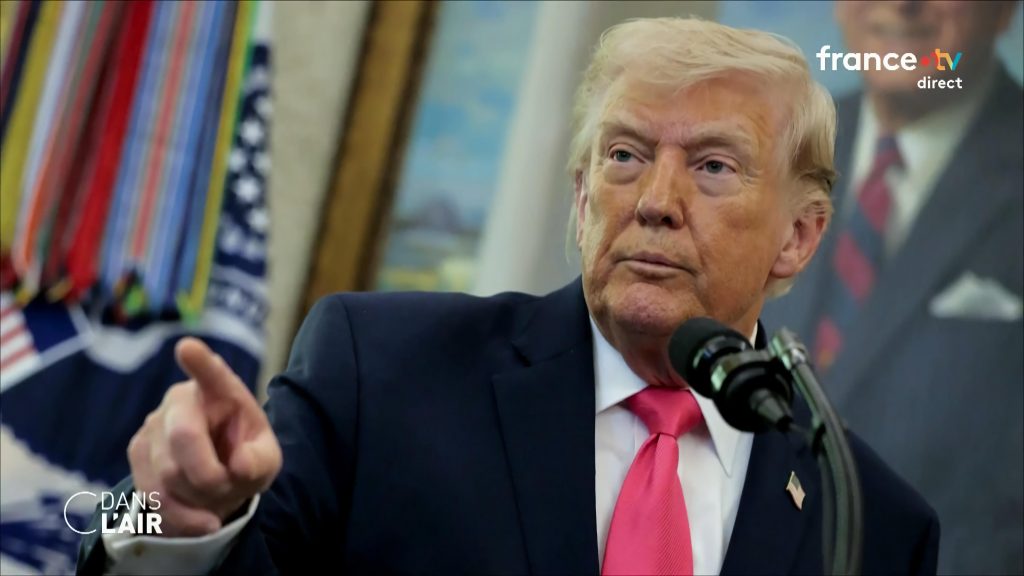
Trump does not plan: he improvises and calls it instinct. He does not consult: he decides and calls it strength. He does not honor commitments: he reverses positions and calls it flexibility. He does not own consequences: he assigns blame — to Biden, to Iran, to “cowardly” allies, to the media — and calls it candor.
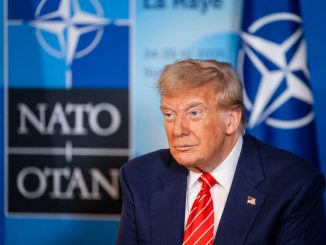
This cycle has repeated itself over Ukraine, over Greenland, over Canada, over the Gulf states he insulted after courting, over NATO which he threatened to abandon after demanding its members pay 10% above list price for American weapons — a surcharge he boasted about publicly, seemingly unaware that this is not a negotiating talent but a confession of predation.
The best analysts and officers the Pentagon had were purged at the start of the second term, replaced by loyalists whose primary qualification was personal devotion to the man. The counterterrorism director resigns rather than endorse a state lie. The administration continues without him. This is how a regime functions when truth is an adjustable variable: you do not hide it, you replace it with the version that suits you, and you fire those who resist.
In his April 1 address, Trump described himself as the president who had made America “the hottest country anywhere in the world.” Financial markets swung violently with his every pronouncement. The American economy was in turmoil. Americans were paying more at the pump than they had in years — something Trump dismissed as a “short-term increase” with the nonchalance of someone who has not filled his own tank in decades. A poll taken before the June 2025 strikes found that 53% of Trump’s own voters opposed U.S. military involvement against Iran. He went to Iran twice. Without asking.
Conclusion: Europe Must Choose Its Side — Or Forfeit the Right to Have One
The Iran war is a reductio ad absurdum of what international politics becomes when the world’s most powerful country is led by a man who mistakes power for impunity. Trump did not make a mistake: he applied to the geopolitical stage the same model he has always practiced in business — strike fast, bill the others, leave before the debts come due. It earned him four bankruptcies and a presidency. It is going to cost others something considerably harder to restructure.
Europe has two options. The first is to continue reacting case by case — condemning here, supporting there, hoping the next American election solves the problem. This is the policy of the firefighter who waits for the house to burn down before calling for backup. The second is to understand, finally and definitively, that the era of American strategic dependence is over — not because the United States has become an enemy, but because it has become an unpredictable partner, which in geopolitics is often more dangerous.
NATO infrastructure on European soil — Ramstein, the missile defense system in Romania, the dozens of bases that make Europe the foundation of American power projection — represents real leverage. Europeans tend to forget this because they have never had to use it. It may be time to learn to hold that lever without flinching. Reciprocity is not a threat: it is the minimum condition of an adult partnership. This truth can be expressed without shouting — but it must be expressed. Because the one thing Trump consistently understands is the balance of power. And right now, he believes — correctly — that he faces none from Europe.
A Turkish proverb holds that when a clown moves into a palace, it is the palace that becomes a circus. The circus is global now. The question is how long the audience will keep paying for admission.
Joël-François Dumont
[01] « Midnight Hammer »: For Whom the Bell Tolls ? » — (2025-06-22)
See also:
- « Trump in Iran: The Arsonist Who Sends the Neighbors the Bill » — (2026-0402)
- « Trump im Iran: Der Brandstifter, der die Nachbarn die Rechnung zahlen laesst » — (2026-0402)
- « Trump en Iran : le pyromane qui envoie la facture aux voisins » — (2026-0402)