Amid the rubble of 1945, no one would have bet a pfennig on Franco-German reconciliation. And yet, in less than five years, a bilingual former Lorrainer and a handful of visionaries would lay the first stone of an edifice that neither Briand nor Stresemann, a generation earlier, had managed to build. The fourth installment of this series traces how Europe was born from its own ruins — not without a first, stinging failure.
Key Points
- A forgotten precedent: as early as 1926, Aristide Briand and Gustav Stresemann had attempted to establish permanent dialogue between the two countries within the League of Nations — a sincere attempt, broken outright by the 1929 crisis and the deaths of both men before the catastrophe they had sought to avert.
- May 9, 1950: the Schuman Declaration proposes pooling coal and steel — making Franco-German war “not merely unthinkable, but materially impossible.”
- 1951: the ECSC, the first mutual and voluntary surrender of sovereignty in European history.
- August 30, 1954: “the crime of August 30” — France itself torpedoes its own project for a European army, the EDC.
- 1945-1957: the Saar, the last Franco-German territorial dispute, settled not by force but by a referendum and a treaty.
- September 1958: de Gaulle and Adenauer meet for the first time at Colombey — the prelude to everything that follows.
Contents
by Joël-François Dumont — Paris, 20 August 2026
Introduction
The mechanism described in the first three installments of this series — humiliation, cultivated resentment, deferred revenge — had operated one last time in 1940 with devastating force. But 1945 was not 1918: this time, no victor was any longer in a position to humiliate the other without destroying itself in the process. It is out of this double impossibility, material and moral, that European construction was born, against all odds.
1. An Erased Precedent: Briand, Stresemann, and the League of Nations
The carnage of 1914-1918 had already stirred, among victors and vanquished alike, a determination for “never again” translated into institutions. The League of Nations, created in 1920 at the urging of American President Wilson, was meant to serve as the instrument of this permanent dialogue between nations.
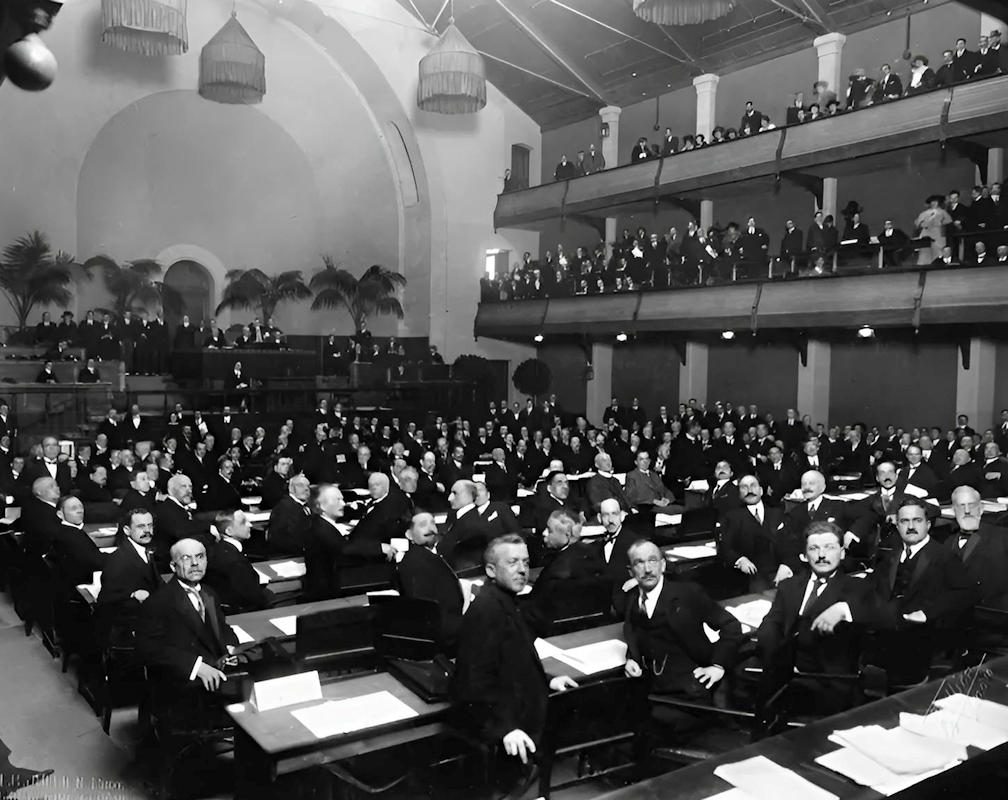
Signed on December 1, 1925, after several weeks of negotiations in the small Swiss town that gave them their name, the Locarno Accords mutually guaranteed the western borders of Germany, France, and Belgium — the first time since 1871 that Berlin voluntarily recognized, rather than under the constraint of an imposed treaty, the territorial integrity of its western neighbors.
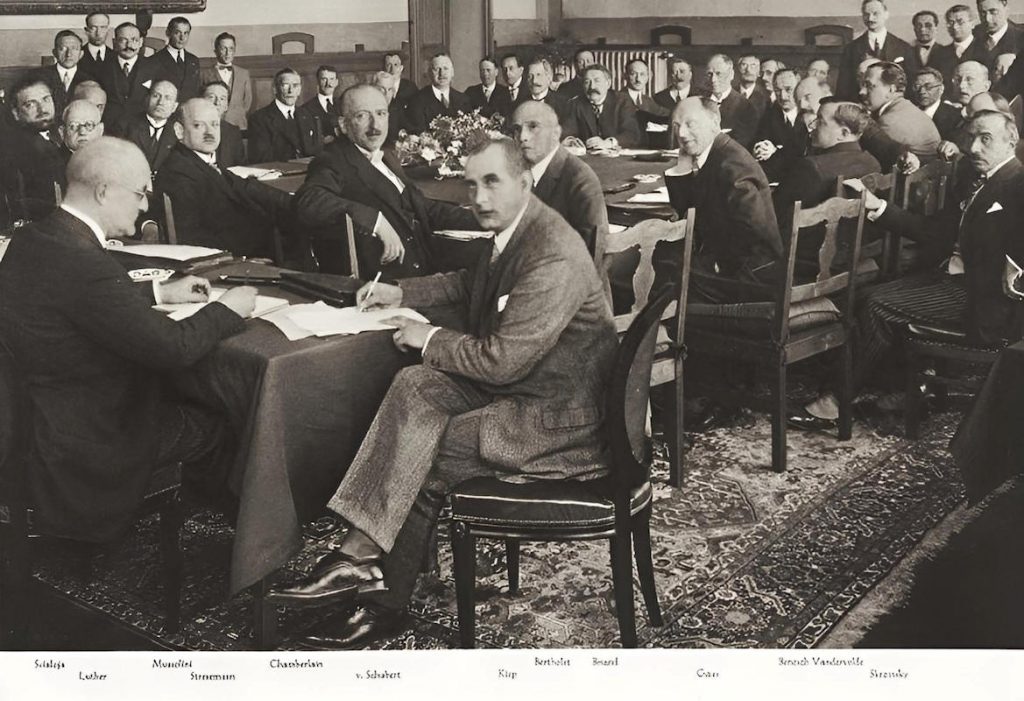
The “spirit of Locarno,” hailed throughout Europe as the dawn of a new era, earned its three principal architects exceptional international recognition: the Nobel Peace Prize, awarded to the Briton Austen Chamberlain as early as 1925, then jointly to Briand and Stresemann the following year.
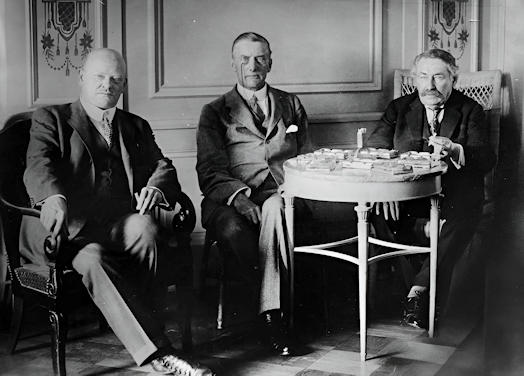
Germany, excluded from the League of Nations at its founding, would not be admitted until 1926 — precisely thanks to these accords negotiated the previous year by French Foreign Minister Aristide Briand and his German counterpart Gustav Stresemann. Their collaboration embodied a first attempt — sincere, and for a few years effective — to break out of the revenge cycle that the two preceding installments of this series have traced.
But this architecture of dialogue would collapse with the 1929 crisis and Hitler’s rise to power, the League of Nations proving powerless in the face of the aggressions of the 1930s — from Manchuria to Ethiopia, then to the remilitarization of the Rhineland itself.
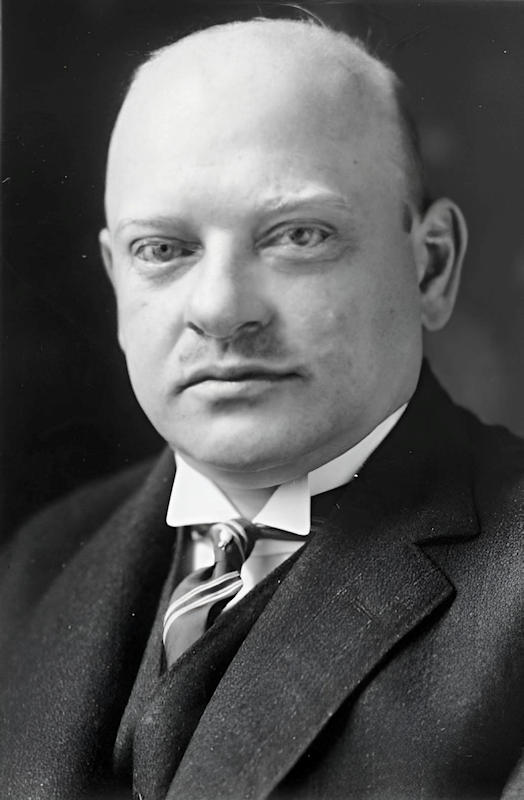
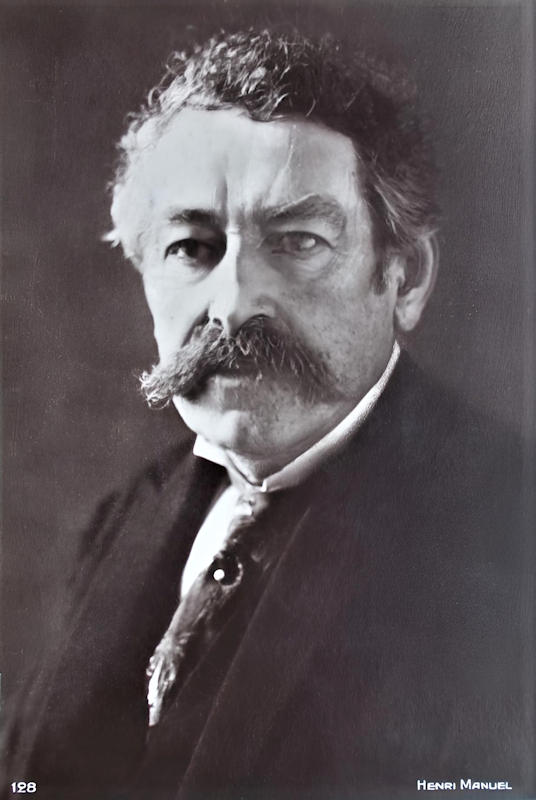
It would take the total annihilation of 1945, and the founding of the United Nations that same year, for a new attempt to institutionalize peace to emerge — this time with a success that Briand and Stresemann, each dead before the catastrophe they had tried to avert (Stresemann in 1929, Briand in 1932), would not live to see.
2. 1945: A Continent in Ruins, a Divided Germany
Germany emerged from the conflict bled dry. Its cities were destroyed, its territory occupied by the four Allied powers (the United States, the United Kingdom, France, and the Soviet Union), soon split into two separate states: the Federal Republic in the West, the Democratic Republic in the East. Awareness of the crimes of the Nazi regime, particularly the Holocaust, placed Germany under a considerable moral and historical burden.
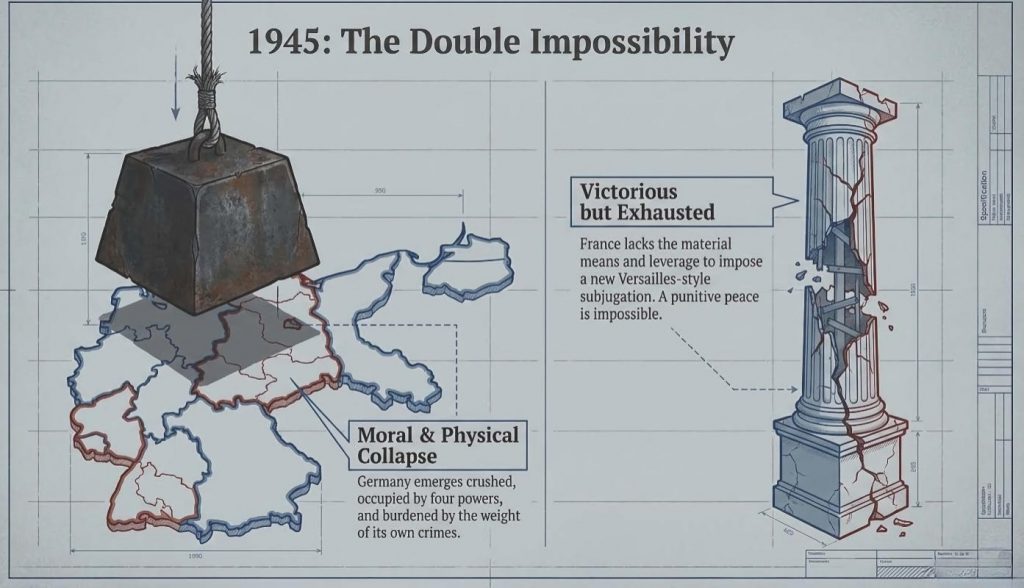
France, though victorious, also emerged bruised and weakened — without the material means to impose a new Versailles, even had it wished to. It is this double impossibility — Germany crushed under the weight of its own crimes, France without the resources for a punitive peace — that opened, against all apparent logic, the way to an outcome other than revenge.
3. Robert Schuman and the Declaration of May 9, 1950
Robert Schuman was not a man of the French establishment in the strict sense.
Born in Luxembourg in 1886 to a Lorraine-born father who had become German through the annexation of 1871, he grew up a subject of the German Empire, studied at German universities, before becoming French again in 1919 with the return of Alsace-Lorraine to France. Bilingual, steeped in both cultures, he literally embodied, in his own biography, the border region and the dispute this series has traced since 1806.
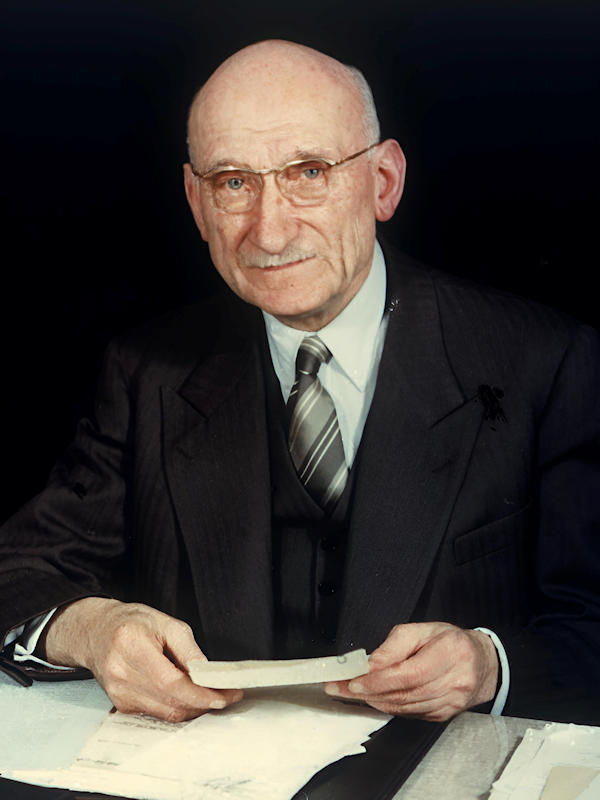
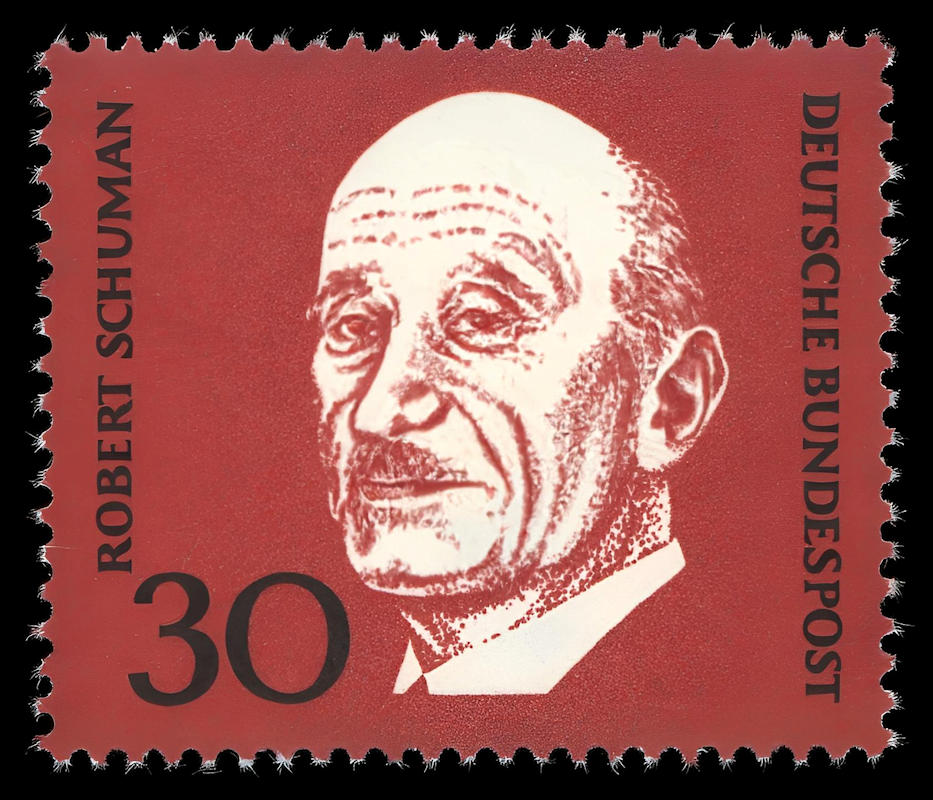
On May 9, 1950, as French Foreign Minister, he presented, with the decisive assistance of Jean Monnet, a plan of radical simplicity: to pool the entire Franco-German production of coal and steel — the two raw materials of any war industry — under a common High Authority, open to other European countries. The wording of the declaration remains one of the most quoted formulas of European construction: this pooling would make war between France and Germany “not merely unthinkable, but materially impossible.”
Robert Schuman in 1958 — Photo © European Union
The idea was as simple as it was revolutionary: instead of disarming Germany by coercion, as Versailles had tried and failed to do, the choice was made to interlock the economic interests of the two countries so tightly that a return to war would become absurd. It is the exact inverse of the punitive logic of 1919.
4. The ECSC (1951): The First Surrender of Sovereignty
The Schuman Plan took concrete form the very next year: the Treaty of Paris, signed on April 18, 1951, created the European Coal and Steel Community (ECSC), bringing together France, the Federal Republic of Germany, Italy, and the three Benelux countries. For the first time in European history, sovereign states voluntarily agreed to transfer part of their economic sovereignty to a supranational institution.
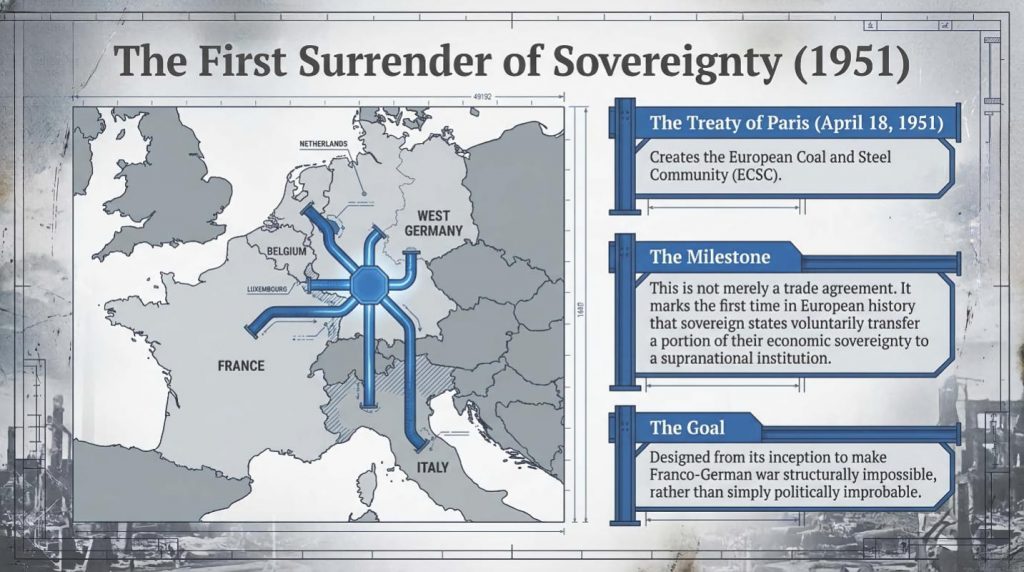
This was a political act of considerable significance, far beyond its apparent technical purpose. The ECSC was not merely a commercial agreement: it was the first stone of an institutional edifice designed, from the outset, to make Franco-German war structurally impossible rather than merely improbable.
5. The Failure of the EDC (1950-1954): When France Undermines Itself
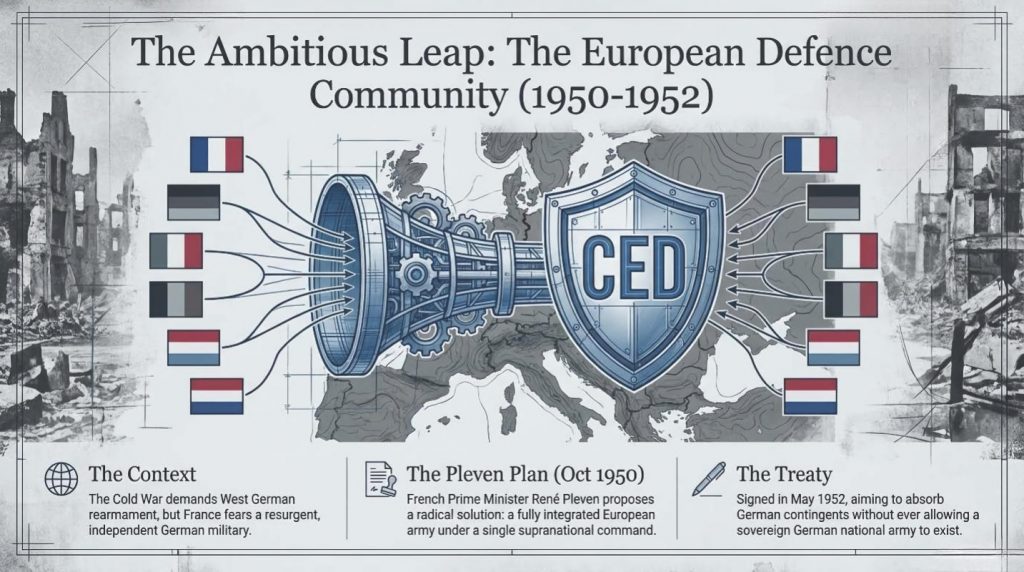
The momentum of 1950-1951 pushed further still: as early as October 1950, René Pleven, President of the French Council of Ministers, proposed the creation of an integrated European army, the European Defence Community (EDC), which would include West German contingents under supranational command — an idea meant to answer the rearmament of West Germany, deemed necessary by the Allies in the Cold War context, without reconstituting a fully sovereign German army.
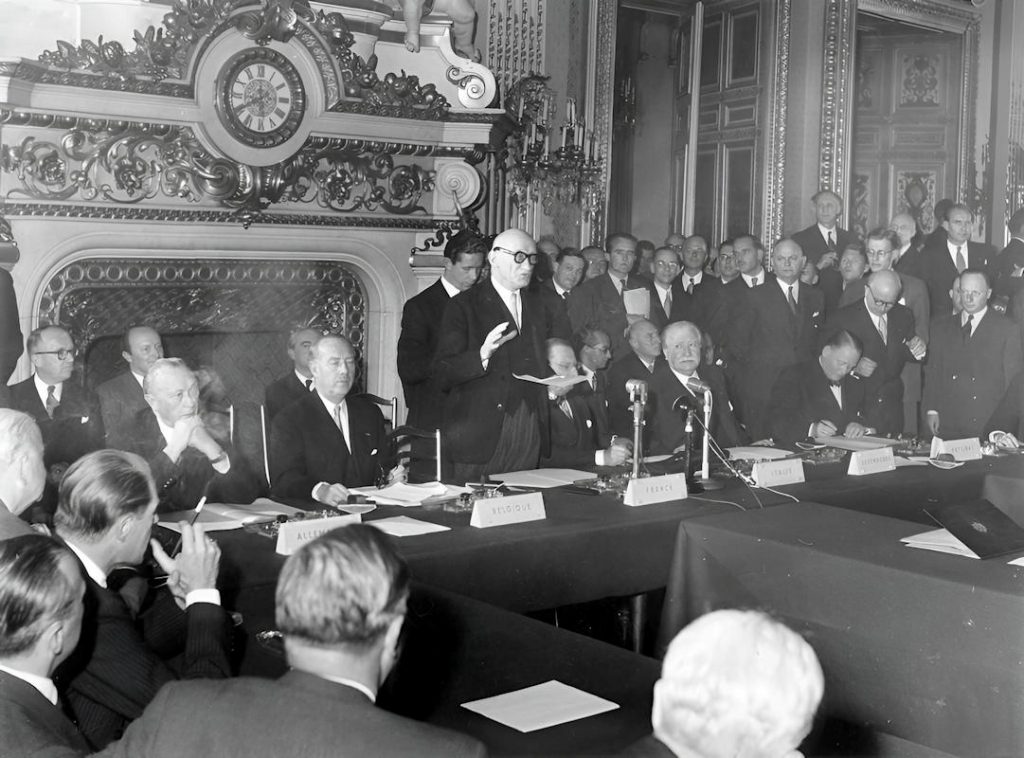
The treaty was signed as early as May 1952. But the French political climate turned against its own project. Debate opened in the National Assembly on August 28, 1954. On August 30, through a procedural maneuver — the vote on a “prior question” brought by General Aumeran and former Assembly President Édouard Herriot — the deputies rejected ratification by 319 votes to 264, without even debating the substance of the treaty. The five other signatory countries had already ratified, or were about to.
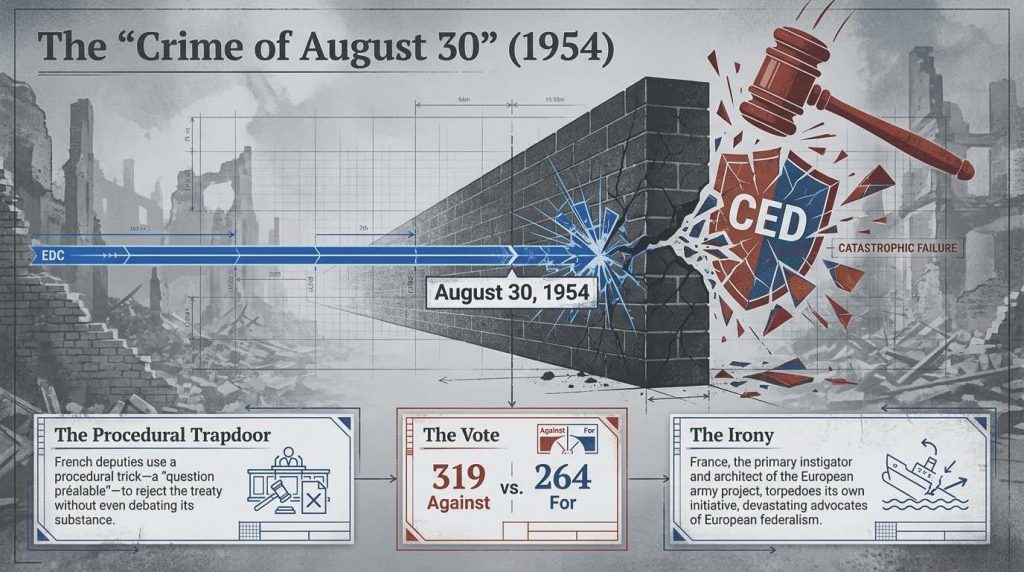
The episode went down in history as “the crime of August 30” for disappointed supporters of European federalism. France, the project’s instigator, torpedoed its own initiative. The Western European Union (WEU), created on October 23, 1954, was but a pale substitute, devoid of any real military integration.
Unlike the EDC, which had sought to merge German contingents into a single European army without ever restoring them to national existence, the WEU opened the way to a far more conventional solution: a genuinely sovereign German army, the future Bundeswehr, admitted as early as 1955 into NATO itself.
This failure serves as a useful reminder: the path to reconciliation was neither linear nor inevitable. It ran, in its very first decade, into massive rejection from within the very country that had taken the initiative.
6. The Saar: The last territorial dispute (1945-1957)
Between 1945 and 1957, one final point of friction remained, directly inherited from the cycle this series has traced since 1806: the Saar. Placed under French protectorate from 1947 to 1956, this industrial and coal-mining region was the subject of a Europeanization project championed by Paris — a solution that, on paper, would have removed this disputed territory from both France and Germany, in favor of a common European status.
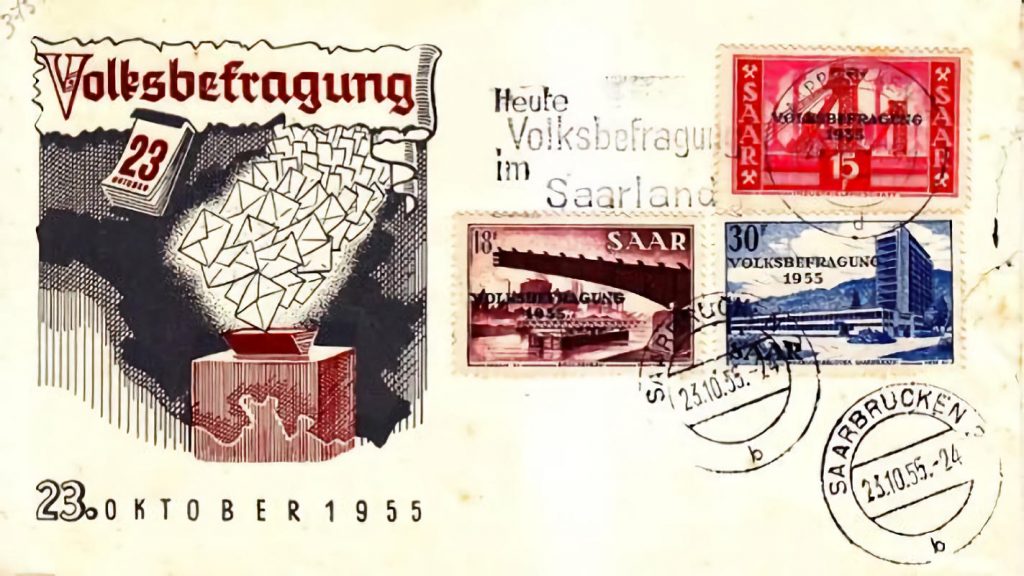
On October 23, 1955, the people of the Saar were called to vote in a referendum on this status. The result was unequivocal: 423,344 votes against, 201,973 in favor — a rejection of more than 67% of the European project, driven by political parties favoring straightforward reattachment to the Federal Republic of Germany. The failure of the EDC the year before had already cooled supranational momentum; this referendum drew the direct consequences.
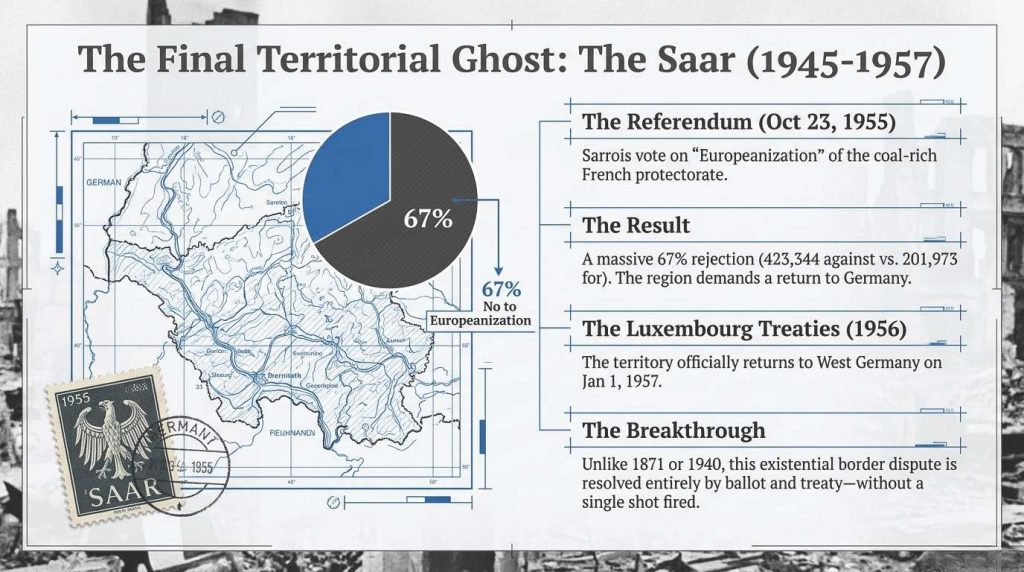
The Luxembourg Accords, signed on October 27, 1956, organized the outright return of the Saar to the Federal Republic, effective January 1, 1957. This was a settlement that broke sharply with the precedent of 1871: this time, a Franco-German territorial dispute was resolved by a referendum and a treaty, without a single shot being fired. The contrast with the successive annexations of Alsace-Lorraine, in 1871 and then in 1940, is total.
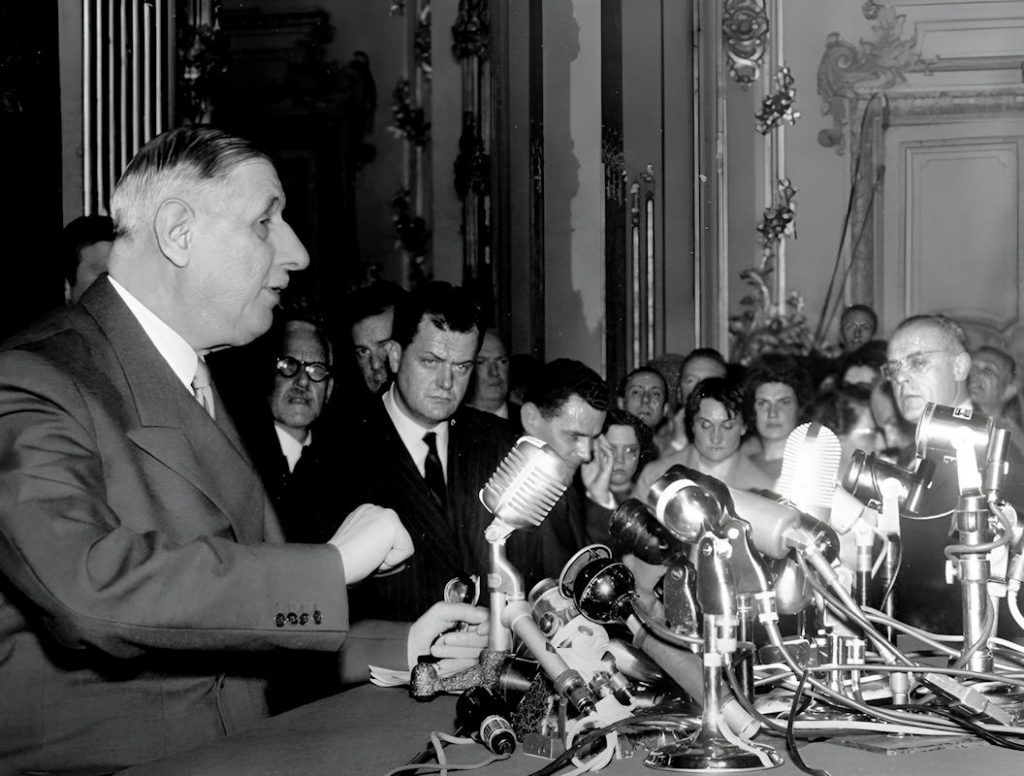
It was in this climate of methodical appeasement — the Schuman Plan, the ECSC, the Saar question settled — that General de Gaulle, back in power in June 1958, devoted his first year above all to rebuilding French institutions: a new Constitution, elections, then his own election, followed by his inauguration as President of the Republic on January 8, 1959. Only once this internal refounding was complete could he turn fully to French foreign policy, with relations with Bonn as the priority — meeting Chancellor Adenauer for the first time as early as September 1958, in the midst of institutional transition, before truly engaging the bilateral relationship starting in 1959.
The fifth installment of this series will follow this founding encounter, and the path that would lead, five years later, to the signing of the Élysée Treaty.
Joël-François Dumont
See also:
- « France-Germany: The Machinery of Hatred 1805-1871 (1) » — (2026-0814)
- « France-Germany: The March Toward the Abyss 1871-1914 (2) » — (2026-0816)
- « France-Germany: The Paroxysm, 1914–1945 (3) » — (2026-0819)
- « France-Germany: From Ruins to an Emerging Europe, 1945-1959 (4) » — (2026-0820)
Analysis: Why Peace Held, This Time
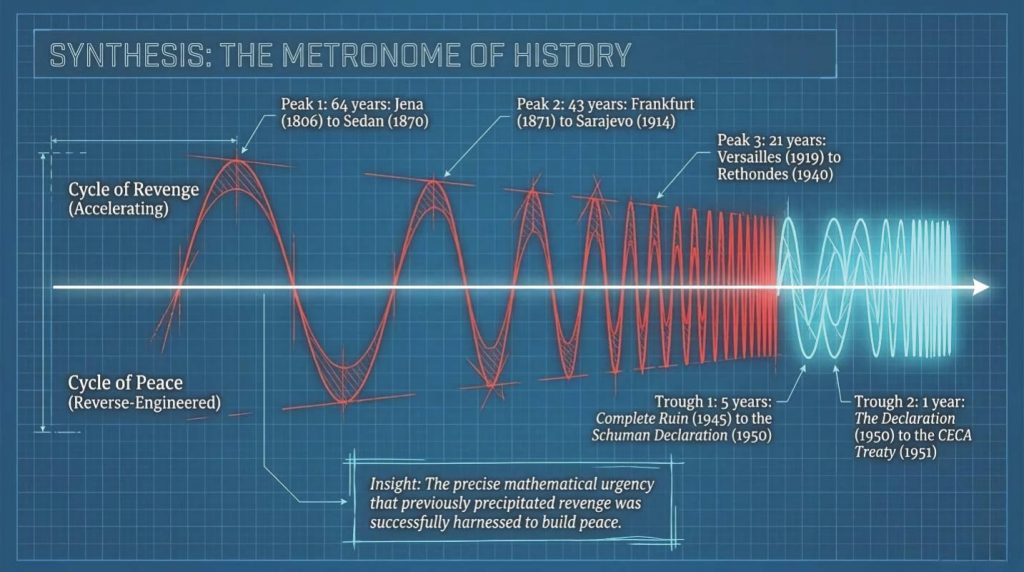
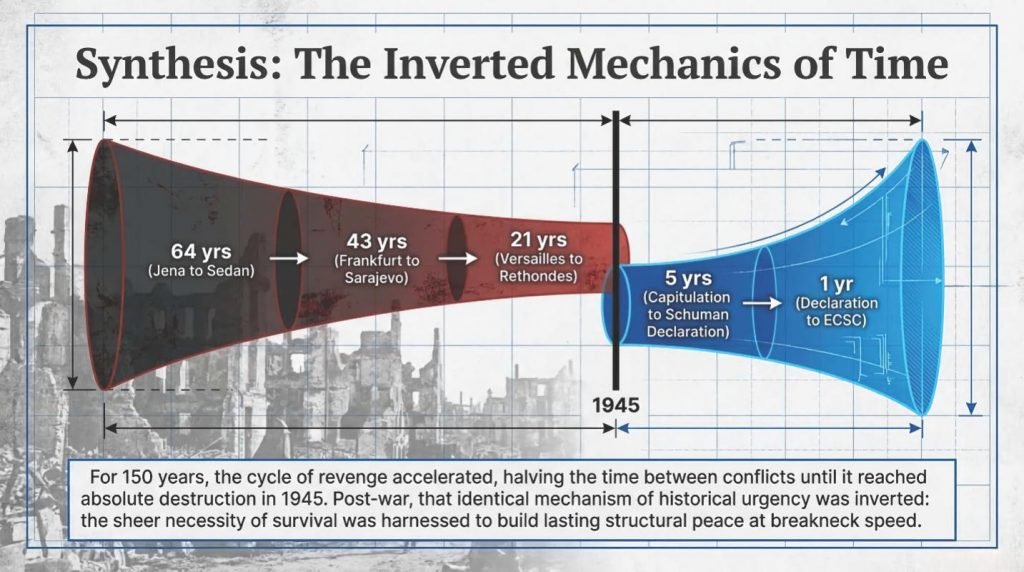
The attentive reader of this series will have noticed a recurring pattern, accelerating since the first installment: sixty-four years between Jena and Sedan, forty-three years between Frankfurt and Sarajevo, twenty-one years between Versailles and Rethondes. Each cycle of revenge took half as long to mature as the one before it — until catastrophe reached, in 1945, its absolute limit.
What is striking about the decade 1945-1955 is that the same accelerating mechanism — modernity, urgency, necessity — continued to operate, but in reverse: barely five years separate the capitulation from the Schuman Declaration; one year separates that declaration from the ECSC. The same need for speed that had served for a century and a half to hasten revenge now served to build peace. Yet the decade was no smooth, untroubled course: the stinging failure of the EDC in 1954 is a reminder that no reconciliation is ever guaranteed in advance, and that European federalism very nearly died a second time, barely four years after its birth.