A little over a month before the November 3 midterms, Donald Trump’s approval rating has hit its lowest point since he took office — worse, at this stage of the calendar, than George W. Bush’s before the 2006 Republican rout. War in Iran, inflation, diesel prices, a Russian affair surrounding his son’s wedding, taxpayer-funded self-glorification clips: the fronts are multiplying, and even within his own camp, caution has replaced loyalty.
The Essentials
- The polling average in late September 2026 gives Trump between 33% and 39% approval, for a net deficit of roughly -25 to -28 points.[01][02]
- At the same point before the 2018 midterms, his deficit was only -13 points — the situation is nearly twice as bad as it was heading into the blue wave that cost his party 41 seats.[02]
- The generic ballot gives Democrats a 7-8 point lead, comparable to 2018.[02][03]
- Two economic causes and a war converge: inflation reminiscent of the Biden years, a war against Iran seen as far from a clean victory, and now soaring diesel prices, with Brent crude hitting $108 on September 28.[04][09]
- More than a dozen Republican candidates have scrubbed references to Trump from their campaign materials; according to a CNN analysis, fewer than 1% of Republican TV ads still mention him by name.[04]
- The word lame duck is now circulating in Washington — unheard of at this stage of a term.
- Senator John Curtis (Utah) has asked the Senate Judiciary Committee to subpoena Donald Trump Jr., after revelations that a Russian oligarch close to Putin, Umar Kremlev, helped fund part of his wedding celebration; two other Republican senators, Thom Tillis and John Cornyn, have publicly backed the request.[10][11][12]
- The Epstein file remains legally open: the House voted to hold billionaire Leon Black in contempt of Congress on September 16, but a vote on a new transparency bill won’t happen until after the midterms.[13]
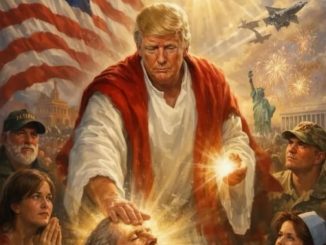
- The latest straw: three self-glorifying propaganda clips, funded by taxpayer money — including one using JMSN’s song “Love Me” without permission — have cost at least $1.7 million, partly drawn from the Customs and Border Protection budget. Even his own camp is distancing itself: Senator Thom Tillis compares the practice to that of Viktor Orbán.[14][15]
Contents
by Joël-François Dumont — Paris, 30 September 2026.
An Unprecedented Collapse for a Second Term
The picture is stark: Trump began his second term in January 2025 with one of the lowest approval ratings ever recorded for an incoming president (47%) — second only to his own first term.[01] Since then, the slide has barely paused, down to today’s average of around 36-37%. The Cook Political Report goes so far as to call the Republican brand, in vulnerable districts, “toxic and now radioactive.”[04] The New York Times‘ daily average on September 24 put approval at 37%, disapproval at 60%.[02] Reuters/Ipsos, the same week, found just 32% approval.[05]
The Crack Within His Own Camp
Perhaps the clearest signal: his name is disappearing from his own party’s ads, and candidates — including Florida gubernatorial hopeful Byron Donalds — are scrubbing MAGA references from their campaign sites.[04] Even states won by 13 points in 2024, like Iowa and Texas, are now called “fragile” by Republican officials themselves, under pressure from tariffs hitting wheat prices and rising immigration tensions.[04]
The Russian Wedding Affair
On September 22, ProPublica revealed that Umar Kremlev, a Russian oligarch close to the Kremlin, had helped fund part of Donald Trump Jr.’s wedding celebration in the Bahamas — a private island rental, fireworks, several hundred thousand dollars. Utah Senator John Curtis immediately wrote to the chairman and ranking member of the Senate Judiciary Committee demanding a subpoena for Trump Jr. himself: “To me, it just stinks,” he said publicly.[10] Notably, two other Republicans soon joined him: Thom Tillis, who is not seeking reelection, called it “colossally bad judgment,” and John Cornyn — defeated in his primary after Trump backed his opponent — said: “I’m with Senator Curtis.”[11][12] The president, for his part, says his son repaid the Russian oligarch.
Diesel: A New Domestic Front — Already an EU Worry
Facing a surge in pump prices, Trump has since September 22 floated a ban on US diesel exports — risking further disruption to a global market already strained by the Iran war. On September 27, he confirmed he was “very seriously” considering it, while admitting the move could raise gasoline prices for American drivers themselves.[06] According to Politico, the administration is actually preparing a 90-day restriction rather than an outright ban.[09] The next day, Brent crude jumped to $108, after Trump rejected an Iranian proposal on the Strait of Hormuz.[07] By September 29, the EU’s energy commissioner had already written to all 27 member states recommending they cut gas and electricity consumption “for as long as necessary” — a sign the worry has already crossed the Atlantic.[08]
The Last Straw: Self-Glorification Clips
None of this was necessary — and that’s what stands out. Three videos, funded with public money, in which Trump casts himself as the country’s savior: one using, without even seeking permission, a love song by artist JMSN to sing his own praises (“Love Me” plays on loop over images of him, as he vows to “defeat communism, Marxism and socialism in America”); another showing him at Mount Rushmore, his voice declaring: “Never before has any nation celebrated so magnificent a triumph as this one.”
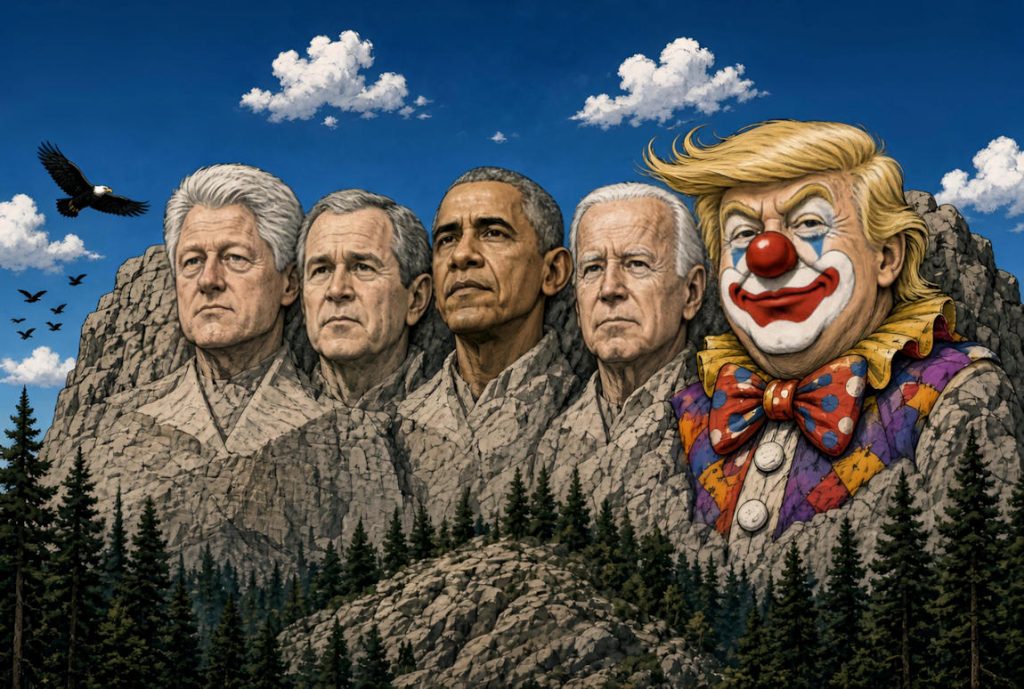
JMSN, furious at being appropriated this way, stated on X that he would have “never authorized” the use of his music for political purposes, and his lawyers sent a cease-and-desist letter to the White House. Even more embarrassing for the administration: part of the funding reportedly came from the Customs and Border Protection budget — money meant for security, diverted to presidential self-promotion.
And this is where the last straw becomes meaningful: it is no longer just Democratic opposition voicing outrage, it’s his own camp. Senator Thom Tillis — already critical, the day before, of Trump Jr.’s Russian wedding — this time compares the use of public money to that of Viktor Orbán, Hungary’s strongman. Coming from a Republican, the comparison is no accident.
A president who has never needed to convince more, five weeks from an election that looks perilous, choosing this precise moment to fund, at taxpayer expense, self-glorifying propaganda videos set to a stolen song: it’s hard to imagine a better illustration of what our Decoding section explores below — he brought much of this on himself.
Joël-François Dumont
Notes
[01] Opinion polling on the second Trump presidency, polling aggregate, data as of September 24, 2026. ↩
[02] FiftyPlusOne, “Democrats hit midterm high as Trump approval reaches new low,” September 23, 2026. ↩
[03] uspollingdata.com, “Trump Approval Rating September 2026: New Term Low After Shutdown Fight,” late September 2026. ↩
[04] Les Échos, Wednesday, September 30, 2026, p. 7, Solveig Godeluck and Bastien Bouchaud, New York bureau. ↩
[05] Reuters/Ipsos, poll of September 17-20, 2026. ↩
[06] Bloomberg, “Trump Says He’s ‘Very Seriously’ Looking at Diesel Export Ban,” September 27, 2026. ↩
[07] Srpske Novine (wire services), “Brent Oil Jumps to $108 as Trump Weighs Diesel Export Ban,” September 28, 2026. ↩
[08] The Washington Post, “European fears of energy crunch over Trump’s proposed ban on diesel exports,” September 29, 2026. ↩
[09] CNBC, “Trump ‘very seriously’ considering diesel export ban as global supply crunch worsens,” September 28, 2026. ↩
[10] The Washington Post / CNN / PBS News, September 22-23, 2026. ↩
[11] MSNBC (Maddowblog), “GOP support grows for subpoenaing Donald Trump Jr.,” late September 2026. ↩
[12] The Hill, “Sen. Thom Tillis calls Donald Trump Jr.’s Russian wedding gift ‘stupid,’” late September 2026. ↩
[13] Britannica, “What Are the Epstein Files? A Timeline,” updated September 16, 2026; Deseret News, September 21, 2026. ↩
[14] CNN Business, “Trump’s ads have cost taxpayers at least $2.5 million, with funding from Customs and Border Protection,” September 29, 2026. ↩
[15] CBS News / Time, “Trump’s Taxpayer-Funded Ads Draw Bipartisan Criticism,” September 28, 2026. ↩
Decoding — A Country That Doesn’t Love Losers
Never sell the bear’s skin before you’ve killed it: with five weeks to go before the midterms, anything can still turn around, and Donald Trump has already survived situations once declared fatal. But one thing needs saying plainly: right now, he’s cornered.
It isn’t so much the sum of the individual dossiers that weighs him down — Iran, inflation, diesel, his son’s wedding, an Epstein story that won’t die, and now these self-glorifying clips — it’s what they produce together, in a country that forgives its presidents a great deal, except for one thing: looking like a loser. America loves winners, tolerates cheats, sometimes puts up with liars. It does not forgive losing. And that is precisely the image now taking shape, week by week, in the polls, in his own party’s ads that omit his name, in candidates scrubbing their campaign sites clean of him.
There’s a word in Washington for what awaits a president in this position: lame duck — a head of state already on the way out, unable to run again, whose authority erodes as his own camp starts looking past him. Les Échos uses the term without hesitation to describe what could await Trump the moment the November polls close.[04] What’s most striking is that the word is being used barely a year into his term — unheard of at this stage of a second mandate.
What’s just as striking is that Trump did much of this to himself. No one forced him to float a diesel export ban three weeks before the vote, admitting in the same breath that it would raise pump prices for American drivers. No one forced him to let a war in Iran drag on without the clean victory he had promised, nor to let his son accept the hospitality of a Putin-linked oligarch at the very moment his administration claims to be standing firm against Moscow. No one, above all, forced him to fund, with taxpayer money and a stolen song, videos glorifying himself at Mount Rushmore. Each decision, taken alone, seemed manageable. Added together, five weeks from an election, they sketch the one portrait no campaign strategist wants for their candidate: a man overtaken by events rather than mastering them — and who, at times, seems almost to be provoking them himself.
One question remains, and it matters for what comes next: does a president who feels the wind turning change course, or double down? Trump’s recent history suggests the latter. Which is what makes the coming five weeks particularly unstable — for him, for his party, and for everyone, not least in Europe, watching anxiously to see which way the wind — diesel and electoral mood alike — will blow.