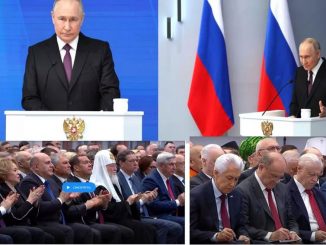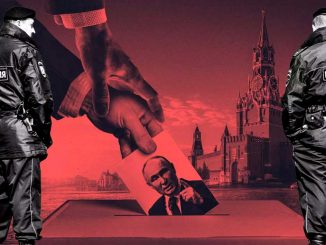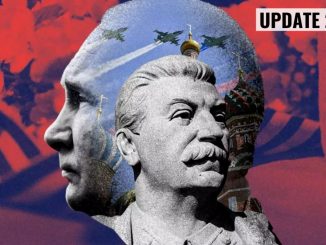
“Putin’s trajectory reflects the continuities of Bolshevik power: the rejection of law, fear of the people, obsession with eliminating internal and external enemies, violence, imperial expansion as legitimacy, the will to achieve hegemony over Europe. A logic that today surfs on the chaos and relativism of the West, in order to weaken and subvert it,” writes Laure Mandeville in Le Figaro,[*] where she offers a cross-perspective with Françoise Thom, who has just published “Vladimir Putin’s Total War,” [**] a fascinating collection of her chronicles since the beginning of the 2022 war, in which she recounts the stunning “perseverance” with which Russian power has prioritized the “expansion of the empire” and “hegemony over Europe through subversion, to the detriment of internal development.“
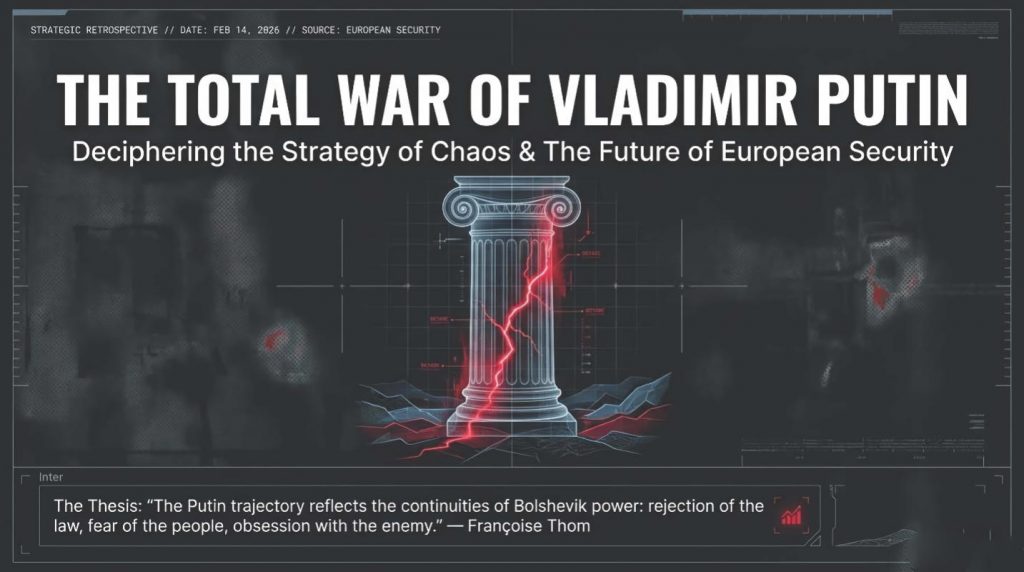
Two cross-perspectives, two complementary analyses that methodically dissect the Kremlin’s total strategy. A shared vision and an unequivocal diagnosis: Putin’s war does not target only Ukraine; it seeks to dismantle the very foundations of Western civilization—its institutions, values, and political cohesion. [*]
Table of Contents
I. The histotical matrix of putinism
1. Ivan the Terrible’s Legacy: Expansion as a Substitute for Development
Françoise Thom identifies a historical continuity dating back to the 16th century. Ivan the Terrible embodies the founding model of a Russian state that systematically prioritizes territorial conquest over internal development. As the historian explains: “The plundering of conquered countries serves as an economy and rewards the tsar’s faithful servants.”[01]
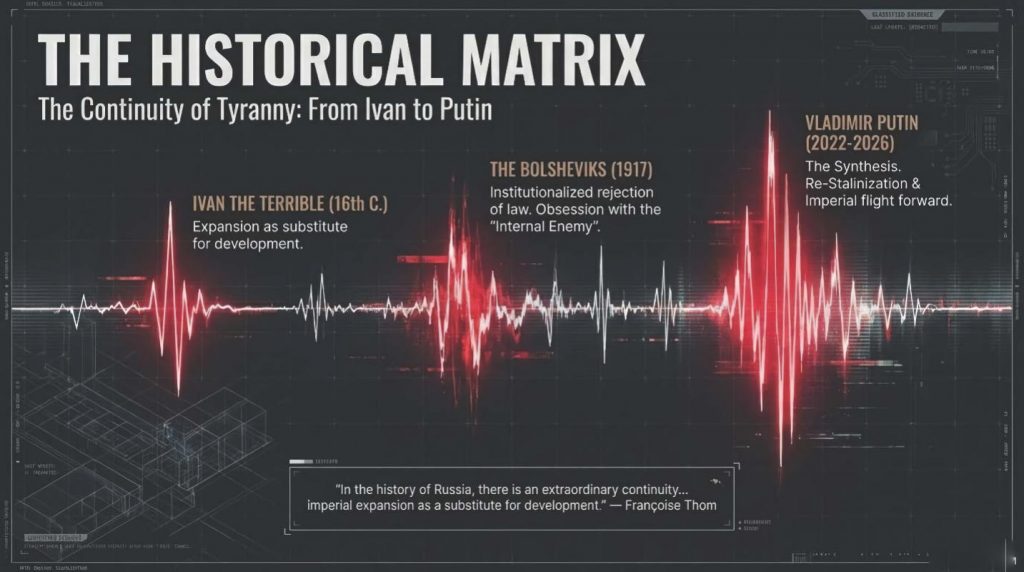
This predatory logic still structures Putin’s regime today. Expansion is not one strategic choice among others: it constitutes the very mechanism of Russian autocratic power, guaranteeing elite loyalty through organized pillage.
2. Training Elites Through Terror and Spoliation
Absolute power in Russia is defined by its complete liberation from the law. The autocrat ensures his dominance through an implacable triptych: terror, spoliation, hatred of the West. Françoise Thom emphasizes that “Putinism has revived the entire set of power and influence techniques inaugurated by the Bolsheviks,”[02] thereby creating a formidable synthesis between Soviet methods and centuries-old autocratic traditions.
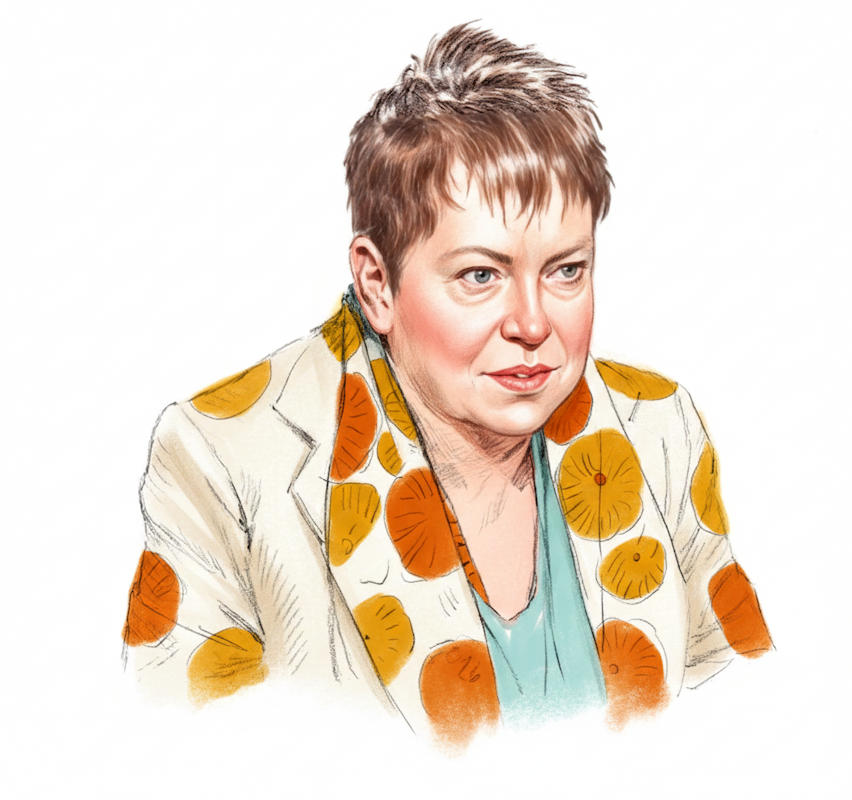
Portrait © European Security
This logic is not limited to mere repression: it aims to create a ruling class entirely dependent on the leader’s goodwill, without any independent legitimacy or institutional base.
3. The Invertebrate State and the Concept of “Clamps”
Faced with the absence of a structured civil society and strong institutions, the regime uses “clamps” (skrepy) to artificially maintain cohesion: the Orthodox Church, “traditional values,” Gazprom. As the historian notes: “This concept reflects the perceived fragility of the Russian state: this invertebrate needs an external corset to hold together a society that is not organized around institutions.”[03]
This structural fragility explains the regime’s self-destructive impulse. Since 1917, Russia has systematically chosen expansion at the risk of its own destruction, as it is the only way to mask the absence of solid institutional foundations.
II. Hatred of international order: Exporting chaos to survive
1. Structural Rejection of Law and Rights
The communist regime, and then Putin’s, were built on the systematic destruction of law in favor of violence. As Françoise Thom emphasizes: “The communist regime was built on the destruction of law, which it replaced with violence. Putin’s regime reconnects with this past.”[04] This substitution is not accidental: it is consubstantial with the nature of Russian autocratic power.
The very existence of an international order based on law therefore constitutes an existential threat to the Kremlin. Lenin’s hatred of the League of Nations, Stalin’s support for Hitler as a “wrecking ball,” and today Putin’s instrumentalization of Trump all stem from the same deep logic.
2. The Surkov Doctrine: Exporting Chaos to Stabilize the Regime

Vladislav Surkov, a key ideologue of Putinism, formalized this strategy with cynical clarity: Russia must export chaos externally to stabilize its regime internally. The subversion of the world order is not a secondary objective; it is the very driving force of the system.
This doctrine explains Russia’s relentless support for all factors of destabilization in Western democracies: populisms, extremisms, secessionist movements, conspiracy theories. The goal is not to promote a coherent alternative model, but to methodically destroy any form of stable institutional order.
3. Allergy to Freedom: Ukraine as the “Culmination”
For Putin, freedom is synonymous with anarchy. The war against Ukraine represents the culmination of a process aimed at liquidating the last islands of autonomy for Russian citizens: free Internet, independent private enterprise, emerging civil society.
The proximity of free peoples—Ukrainians, Balts, Poles—constitutes an existential threat to the regime. These societies demonstrate that an alternative is possible, thereby undermining the legitimacy of the Putinist discourse that autocracy is the inevitable destiny of Slavic peoples.
III. The nihilism of putinist autocracy
1. The Dangerous Continuities of Bolshevism
Laure Mandeville emphasizes that Putin’s trajectory reflects “the continuities of Bolshevik power: the rejection of law, fear of the people, obsession with eliminating internal and external enemies.“[05] As Françoise Thom analyzes, “in Russian history, there is an extraordinary continuity, notably that of imperial expansion as a substitute for development, that of violence, imperial forward flight as legitimacy.”[06]
These specific traits of Bolshevism since 1917 themselves draw from a centuries-old autocratic tradition, creating a political system profoundly hostile to any form of rule of law. Putinism does not constitute a break, but the culmination of a centuries-old nihilistic logic.
2. The Logic of Chaos and Relativism as Weapons
Laure Mandeville identifies a deliberate strategy: surfing on the chaos and relativism of the West to weaken and subvert it. Four years after the start of the Russian invasion of Ukraine, we observe an “impressive cohort of supposedly ‘realist’ thinkers seeking to appease Russia and negotiate peace urgently.“[07]
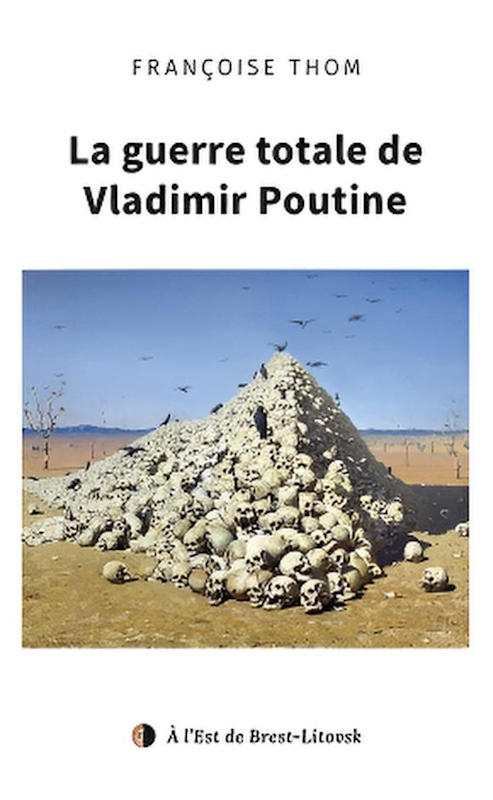
This intellectual mobilization raises a crucial question: what guarantees for Ukraine in a context where it struggles to understand itself, with the difficulties that the Trump administration encounters in achieving a result? Experts’ response places the “‘Russian relapse’ in the course of its millennial history,”[08] as French historian Françoise Thom had already done in Putin’s Total War (Éditions de l’Est de Brest-Litovsk, 2026).
This chaos strategy is not improvised. It relies on a fine understanding of Western fault lines: democratic fatigue, the desire for “normalization,” the temptation of appeasement at any cost. The Kremlin methodically exploits these vulnerabilities to fragment Atlantic cohesion.
3. Large-Scale Russian Hybrid Warfare
Faced with Western blindness, Laure Mandeville recalls the urgency of “reading the experts on Russia who place the ‘Russian relapse’ in the course of its millennial history.“[09] As historian Françoise Thom notes, this analysis reveals “the continuities of Russian power and its dangerous ruts.”[10]
As The Economist emphasizes, “‘continues to expand’ — was not to be read across the EU.”[11] This hybrid warfare combines military actions, cyberattacks, massive disinformation, manipulation of migratory flows, and infiltration of Western political systems.
IV. The strategy of European hegemony and American expulsion
1. Long Institutional Memory Versus Amnesiac Democracies
Unlike Western democracies, the FSB and the Russian Ministry of Foreign Affairs possess expertise and perseverance that extend over time. Since 1947 and the Marshall Plan, the strategic objective has remained unchanged: Russian hegemony over the European continent and the elimination of the United States.
This strategic continuity spans the ages: Molotov’s 1954 proposal for a European security system without the United States, Gorbachev’s “common European home,” Medvedev’s 2008 proposal, and finally Putin’s 2018 declaration to Macron that Russia can substitute for the United States in ensuring European security.
2. The 2022 Invasion: Provoking American Withdrawal
The invasion of Ukraine in February 2022 aimed to trigger a hasty American withdrawal from Europe, modeled on the calamitous evacuation from Afghanistan in August 2021. Putin’s calculation was simple: “He was convinced that the Ukrainians were puppets of the United States and the Europeans were Washington’s lapdogs.“[12]
This calculation proved catastrophically wrong. Ukrainian resistance, European support, and the continent’s rearmament demonstrated that Europe possessed its own will, independent of Washington. Russian propagandists even ended up acknowledging that Ukraine has a “formidable will of its own.”
3. The Difficult Awakening: Between Lucidity and Complacency
Laure Mandeville emphasizes that “since 1917, power has been trying to project its legal nihilism abroad.”[13] This project today finds disturbing resonance in certain Western circles that, under the guise of “realism,” advocate for abandoning Ukraine and accepting Russian claims.
Historian Françoise Thom explains that “Lenin wanted to destroy the European order exactly as Putin is trying to do by notably supporting Hungarian revisionism toward Ukraine.“[14] She emphasizes the self-destructive character of this imperial and expansionist forward flight, which today threatens to destroy even the Russian economy.
V. The auto-putinization of America: The Trump case
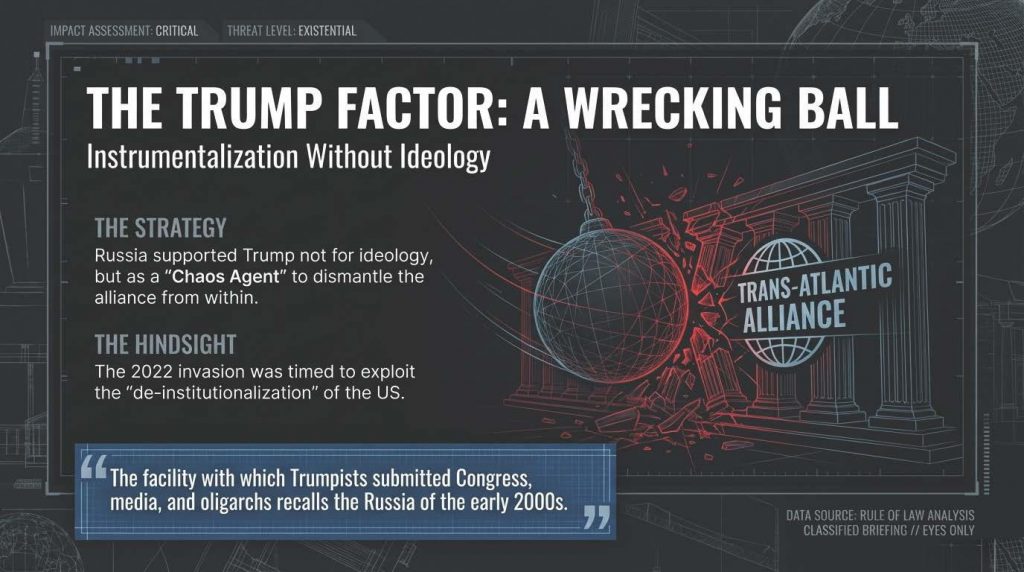
1. Trump as a “Wrecking Ball” of the Liberal Order
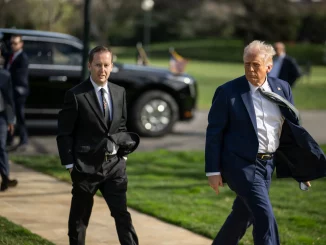
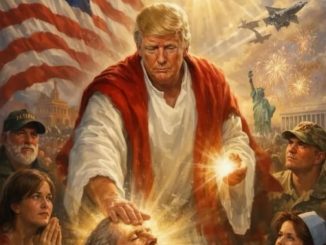
The Russians quickly identified Trump’s destructive potential and supported him in his rise. As Françoise Thom explains, the Kremlin saw in him the ideal instrument to realize the old KGB project: to destroy America from within and overturn the international liberal order.
Russian support was not based on any common ideology, but on the cold recognition of a unique opportunity for destabilization. Trump embodied the possibility of transforming the United States from a reliable ally into an active adversary of Europe and Ukraine.
2. De-institutionalization: From Anti-Elite Rhetoric to the “Vertical of Power”
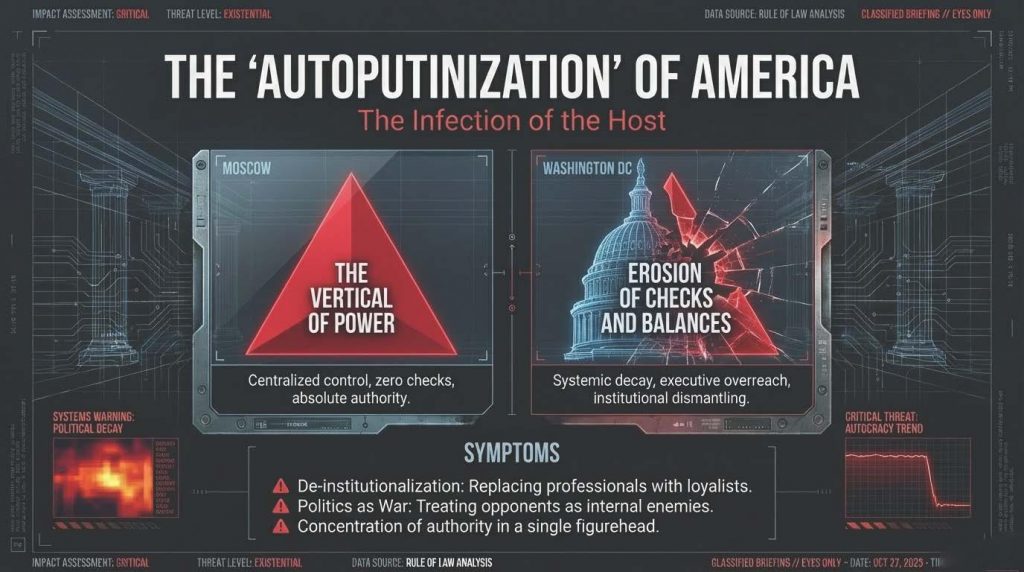
Anti-elite discourse and denunciation of the “deep state” are not mere populist postures. They prepare, according to Françoise Thom, a systematic enterprise of de-institutionalization of Western democracies, aimed at establishing a Putin-style “vertical of power.” As Laure Mandeville emphasizes, “the ease with which Trumpists have subdued Congress, the media, the oligarchs“ [15] strangely recalls Russia in the early 2000s.
Predation, venality, and kompromat have become a system of government. The phenomenon of “auto-Putinization of America,”[16] identified by Françoise Thom, is part of an enterprise of “de-institutionalization of the American political system” through the establishment of a Putin-style “vertical of power.”
3. The Troubling Convergence of American and Russian Oligarchs
Françoise Thom draws a striking parallel: “American oligarchs resemble Russian oligarchs: bad taste, contempt for laws, sense of impunity, Darwinian approach to social relations, indifference to the public good, servility toward power.“[17]
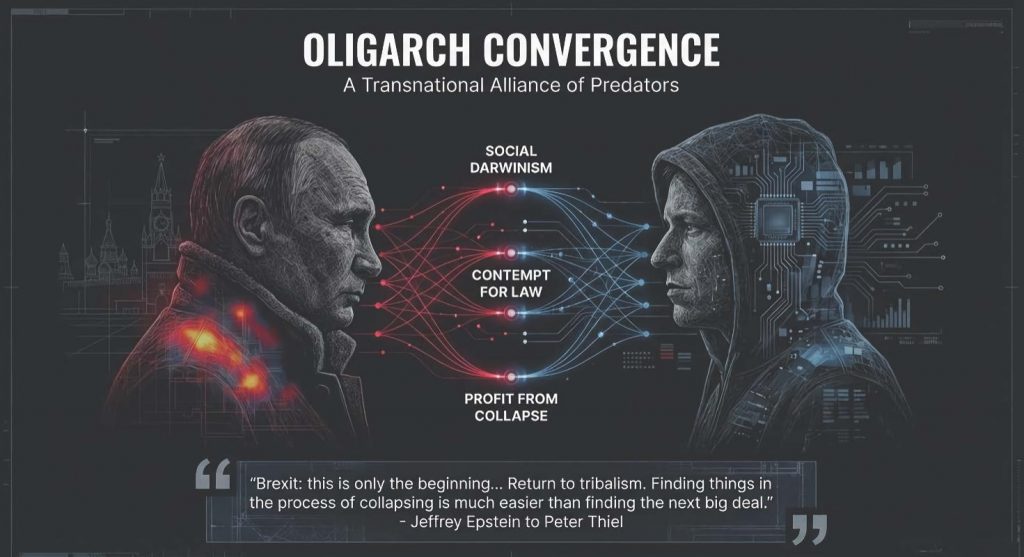
A revealing exchange between Jeffrey Epstein and Peter Thiel after Brexit illustrates this convergence. Epstein writes: “Brexit: this is just the beginning.” Thiel asks: “Of what?” Epstein responds: “Return to tribalism. Obstacle to globalization… Finding things in the process of collapse is much easier than finding the next good deal.”[18] This phrase sums up an entire worldview based on speculation on chaos.
VI. The force of Russian subversion: Laure Mandeville’s analysis
1. The Genius of Subversion Rather Than Economic Power
Laure Mandeville provides a crucial complementary dimension by emphasizing that the real Russian threat does not lie in its economic or conventional military power, but in its genius for subversion. As she writes:
“Russia is especially dangerous through its art of entrism, its sure instinct for destruction, its experience of subversion.”[19]
Laure Mandeville — Photo All Rights Reserved

This strategy aims to methodically exploit the internal fault lines of democratic societies: political polarization, distrust of institutions, social fractures, populist temptations. Russia does not impose an external model; it amplifies endogenous pathologies.
2. Evident Collusion with Certain Western Figures
Mandeville points to an “evident collusion” between certain Western political figures and the Kremlin. The goal is to transform former allies into active adversaries of Europe and Ukraine. She observes that “Trump’s America has ceased to be a faithful ally to become an enemy of Europe and Ukraine.”[20]
This transformation does not result from a simple change in foreign policy, but from a systematic infiltration of power circles by an ideology hostile to the very foundations of the transatlantic alliance.
3. The Export of Tribalism Against the Liberal Order
The Russian strategy deliberately aims to favor the collapse of the liberal international order in favor of a return to tribalism and fragmentation. This worldview rejects the universality of human rights, the rule of law, and international cooperation in favor of brutal social Darwinism.
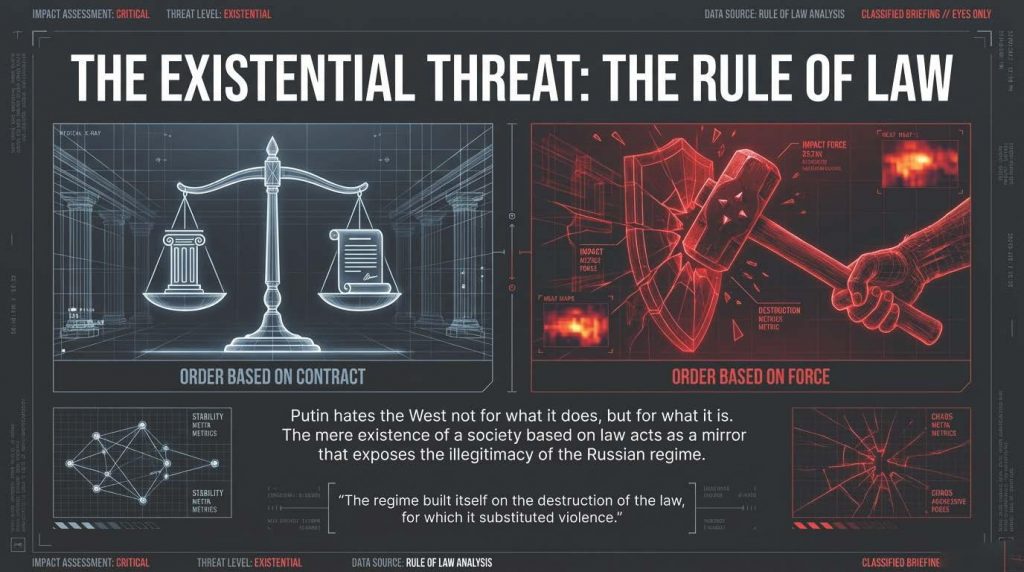
The objective alliance between Russian oligarchs and certain Western billionaires is not based on a coherent ideology, but on a common interest: the destruction of an international order that imposes limits on their power and predation.
VII. The hatred of Europe: Beyond rejection of “wokism”
Laure Mandeville analyzes the hatred exhaled by certain radical currents toward Europe not as a simple reaction to “wokism,” but as a deep and visceral rejection of the very idea that human existence is ordered toward higher ends.
Europeans retain, even confusedly, the memory of their classical teachings. They understand that the quest for freedom, truth, beauty and goodness, the capacity to distinguish the just from the unjust, transcend the narrow horizons of the “art of the deal.”
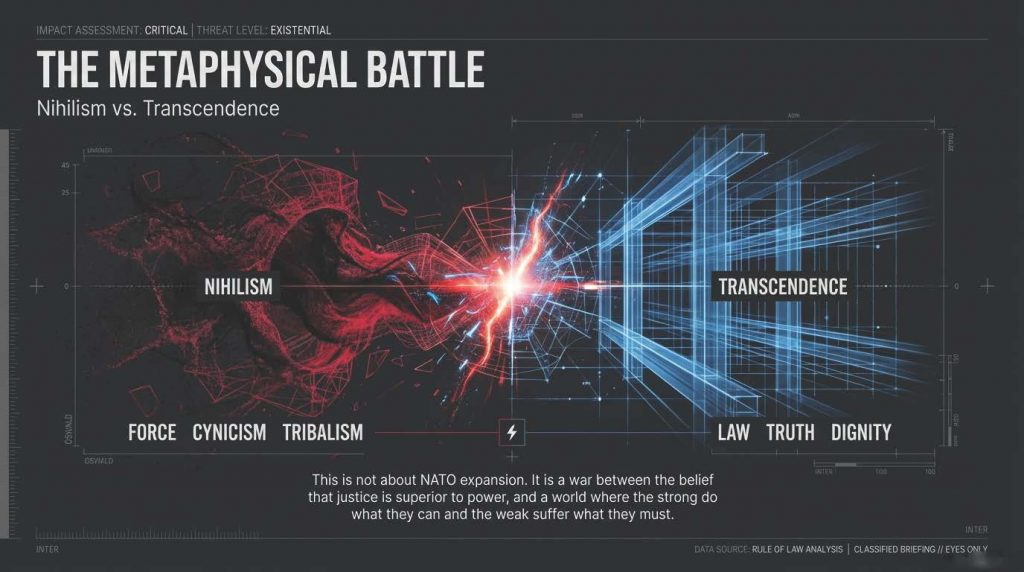
This reference to transcendent values—even weakened—represents an existential threat to a system based exclusively on power relations, predation, and cynicism. The hatred of Europe is therefore not cultural or identitarian: it is metaphysical.
Conclusion: A total war against Western civilization
The converging analyses of Françoise Thom and Laure Mandeville reveal a disturbing truth: Putin’s war is not merely territorial; it is total. It aims to dismantle the mental and institutional structures that form the foundation of European and Western civilization.
The danger does not primarily come from Russian tanks or hypersonic missiles, but from the progressive “auto-Putinization” of Western democracies. The authoritarian temptation, contempt for institutions, oligarchic predation, identity tribalism—all these phenomena are not imposed from outside; they germinate within our own fault lines.
Putin’s Russia offers no viable alternative model. It merely exploits and amplifies our internal pathologies, hoping that we will self-destruct. As Françoise Thom notes with chilling lucidity, “since 1917, Russia has chosen expansion at the risk of self-destruction.”[21] The crucial question is whether the West will also choose this suicidal path.
Faced with this total offensive, lucidity requires us to recognize that we are not confronting a mere geopolitical conflict, but a clash of civilizations—not between the West and Russia as such, but between two irreconcilable visions of human existence: one that recognizes the primacy of law, freedom, and human dignity, and one that accepts only the law of the strongest, nihilism, and unlimited predation.
Joël-François Dumont
[*] See “The Nihilism of Putinist Autocracy Threatens Europe” by Laure Mandeville and “Since 1917, Russia Chooses Expansion at the Risk of Self-Destruction” by Françoise Thom in Le Figaro, “Champs libres” dated February 13, 2026.
[**] A l’Est de Brest-Litovsk Editions, January 2026, 325 pp., €24. See “Françoise Thom and the Continuities of Russian Power” by Pierre Rigoulot in Telos.
[***] Author of « Quand l’Ukraine se lève », “When Ukraine Rises” (2022), « Qui est vraiment Donald Trump », “Who is Donald Trump Really” (2016), « Les révoltés d’Occident », “The Rebels of the West” (2022); « L’armée russe : la puissance en haillons », “The Russian Army: Power in Rags” (1994); La reconquête russe, “The Russian Reconquest” (2008).
Notes
[01] Françoise Thom, Le Figaro, “The plundering of conquered countries serves as an economy and rewards the tsar’s faithful servants.”
[02] Ibid., “Putinism has revived the entire set of power and influence techniques inaugurated by the Bolsheviks.”
[03] Ibid., “This concept [of clamps] reflects the perceived fragility of the Russian state: this invertebrate needs an external corset to hold together a society that is not organized around institutions.”
[04] Ibid., “The communist regime was built on the destruction of law, which it replaced with violence. Putin’s regime reconnects with this past.”
[05] Laure Mandeville, Le Figaro, “The continuities of Bolshevik power: the rejection of law, fear of the people, obsession with eliminating internal and external enemies.”
[06] Françoise Thom, cited by Laure Mandeville, Le Figaro, “In Russian history, there is an extraordinary continuity, notably that of imperial expansion as a substitute for development, that of violence, imperial forward flight as legitimacy.”
[07] Laure Mandeville, Le Figaro, “Impressive cohort of supposedly ‘realist’ thinkers seeking to appease Russia and negotiate peace urgently.”
[08] Ibid., “‘Russian relapse’ in the course of its millennial history.”
[09] Ibid., “Reading the experts on Russia who place the ‘Russian relapse’ in the course of its millennial history.”
[10] Françoise Thom, cited by Laure Mandeville, Le Figaro, “The continuities of Russian power and its dangerous ruts.”
[11] The Economist, cited by Laure Mandeville, “‘Continues to expand’ — was not to be read across the EU.”
[12] Françoise Thom, Le Figaro, “Putin […] was convinced that the Ukrainians were puppets of the United States and the Europeans were Washington’s lapdogs.”
[13] Laure Mandeville, Le Figaro, “Since 1917, power has been trying to project its legal nihilism abroad.”
[14] Françoise Thom, cited by Laure Mandeville, Le Figaro, “Lenin wanted to destroy the European order exactly as Putin is trying to do by notably supporting Hungarian revisionism toward Ukraine.”
[15] Laure Mandeville, Le Figaro, “The ease with which Trumpists have subdued Congress, the media, the oligarchs.”
[16] Françoise Thom, Le Figaro, “Auto-Putinization of America.”
[17] Ibid., “American oligarchs resemble Russian oligarchs: bad taste, contempt for laws, sense of impunity, Darwinian approach to social relations, indifference to the public good, servility toward power.”
[18] Jeffrey Epstein, cited by Françoise Thom, Le Figaro, email to Peter Thiel, June 26, 2016: “Finding things in the process of collapse is much easier than finding the next good deal.”
[19] Laure Mandeville, Le Figaro, “Russia is especially dangerous through its art of entrism, its sure instinct for destruction, its experience of subversion.”
[20] Ibid., “Trump’s America has ceased to be a faithful ally to become an enemy of Europe and Ukraine.”
[21] Françoise Thom, Le Figaro, “Since 1917, Russia has chosen expansion at the risk of self-destruction.”
See also:
- « La guerre totale de Poutine » — (2026-0214)
- « Putin’s Total War » — (2026-0214)
- « Putins totaler Krieg » — (2026-0214)
Decrypting: The awakening of European consciousness in the face of imperial nihilism
The cross-analysis by Françoise Thom and Laure Mandeville illuminates a brutal reality: Europe is not facing a simple diplomatic crisis, but a system that has erected the subversion and destruction of the liberal order as a reason of State. Putin’s trajectory, rooted in the ruts of Bolshevism, uses chaos as a weapon of internal stabilization and external expansion. Faced with this “total war” that targets our institutions, values, and cohesion, the diagnosis is unequivocal: the West can no longer afford the luxury of relativism or strategic amnesia.[04]
The prospects for Europe now require a break with complacency. To assert its sovereignty, the continent must give itself the means for real autonomy, going beyond the merely military dimension to invest in the field of hybrid warfare and institutional memory. The Kremlin’s perseverance in seeking to expel American influence to establish Russian hegemony must be met by a “vertebrate” Europe, capable of defending its model of civilization against oligarchic entrism and predation.[04]
Asserting European sovereignty today means:
Rebuilding strategic expertise capable of understanding Russian policy over the long term, so as not to be surprised by its metamorphoses.[01]
Protecting democratic institutions against the phenomenon of “auto-Putinization” and the drift toward political tribalism that weakens the rule of law.[02]
Reaffirming the primacy of universal values (truth, justice, freedom) in the face of cynicism that reduces human relations to a mere “art of the deal.” In short, Ukrainian resistance has proven that the independent will of a free people can thwart the calculations of autocrats. Europe must now draw on this same moral clarity to build its own institutional framework and become once again the guarantor of security on its soil, at the risk of seeing its destiny dictated by those who prosper only in the collapse of others.[03]