
What if the ghosts of the past came to judge our present? Imagine Leonardo da Vinci, Jules Verne, and Nostradamus reunited for a single night atop a 21st-century skyscraper. Gazing out at our hyper-connected world, these three visionary giants deliver an unsparing assessment. From the cold magic of Artificial Intelligence—which they liken to the end of effort—to swarms of drones buzzing like wasps, and the absurdity of museums turned into fortresses against soup: the shock is brutal. In this sparkling dialogue, celestial mechanics collide with the solitude of screens. This is not merely an improbable meeting; it is the trial of our modernity: have we gained comfort only to sacrifice our souls? A dazzling text that holds up a broken mirror to us, hovering between wonder and dread.
Location: A suspended terrace atop a skyscraper of glass and steel, overlooking an infinite megalopolis (Paris, Tokyo, or New York) at the blue hour. The wind is absent, cut by invisible force fields. Below, the river of automobile lights flows endlessly.
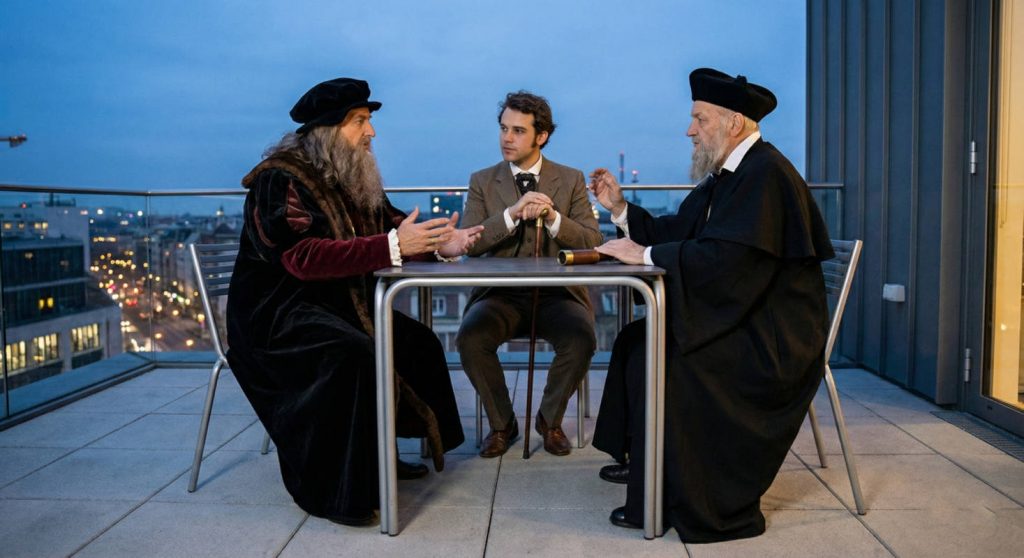
The protagonists:
- Leonardo da Vinci (LDV): His beard whitened but his eyes unbearably lively. He wears a dark velvet robe stained with imaginary paint. He is Curiosity.
- Jules Verne (JV): In a 19th-century frock coat, a brass spyglass in hand. He has the short breath of a disappointed enthusiast. He is Imagination.
- Nostradamus (MN): Standing back in the shadows, observing the invisible fluxes traversing the city rather than the city itself. He is Tragic Conscience.
Table of Contents
Dialogue entre trois esprits universels — 05 December 2025 © European-Security
I. The Mechanics of the Sky and The Absence of Soul
Jules Verne: (Lowering his spyglass, astounded) “Look, Messires! Look at this audacity! They have conquered gravity with an arrogance that even my Albatross would never have dared dream. Thousands of metal vessels traverse the stratosphere at every moment. I predicted travel, the lunar projectile, the electric submarine… but I did not foresee this… banality. They fly at thirty thousand feet eating insipid food, without even glancing out the porthole to admire the curvature of the Earth. The miracle has become routine.”
Leonardo da Vinci: (Caressing the smooth surface of the glass railing) “Routine, my dear Jules, is the coffin of wonder. I spent my life studying the flight of kites, dissecting the bat’s wing to understand lift. These machines… these ‘airplanes’ as they say… are masterpieces of engineering, certainly. The mathematics within them are pure. But where is the art? Where is the imitation of nature? They have brutalized the air with engines that spit fire; they have not espoused it. It is a victory of force over grace. And look at this city… It shines, but it does not breathe. It is an anatomy of silicon and steel, without warm blood.”
Nostradamus (In a grave voice, stepping out of the shadows) “You see the mechanics, Leonardo. You see the adventure, Jules. I see the web. The net. The great weaving of the invisible spider. I wrote: ‘The voice heard by pipe and without wire / Will pass seas and mountains, the closed world.’ They have achieved this. They hold the world in the palm of their hand, in these little black mirrors. But they do not see the future in them. They see their own reflection, narcissistic and frighte-ned. They have connected minds but separated hearts.”
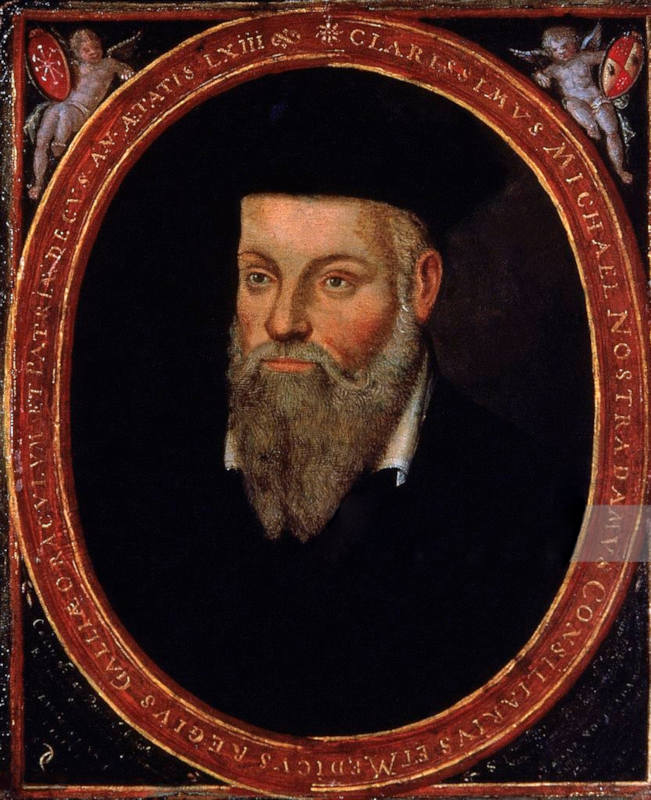
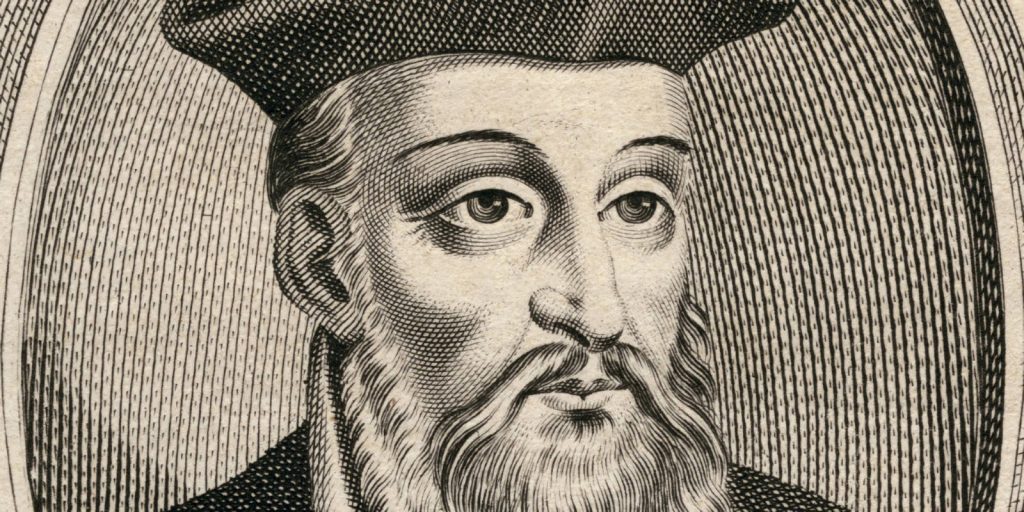
Nostradamus (Michel de Nostredame) painted by his son César de Nostredame
II. The Duel of Minds: AI or The End of Effort
Leonardo has picked up a “smartphone” left on a bench. He manages to activate it. He watches an Artificial Intelligence generate a poem and an image in a fraction of a second. Jules Verne looks over his shoulder, horrified.
Jules Verne: (Averting his gaze as if the screen were burning him) “It is sorcery, Leonardo, and of the worst kind! Did you see? You asked this thing to write a sonnet, and it vomited it out instantly. Without crossing out a word. Without hesitation. Without that delicious torture of searching for a rhyme for hours by candlelight. Where is the merit? Where is the soul?“
Leonardo da Vinci: (Eyes shining, fascinated by the flow of text) “You confuse suffering with art, my friend. Look at this speed! In the past, to calculate the curvature of a dome or the flow of a canal, I spent nights blackening parchments, my eyes burned by fatigue. If I had possessed this tool… Dio mio! I could have dedicated that lost time to painting three more Mona Lisas! This ‘Intelligence’ is not a rival, Jules, it is a lever. Archimedes asked for a fulcrum to move the world; this is the fulcrum to move the mind!“
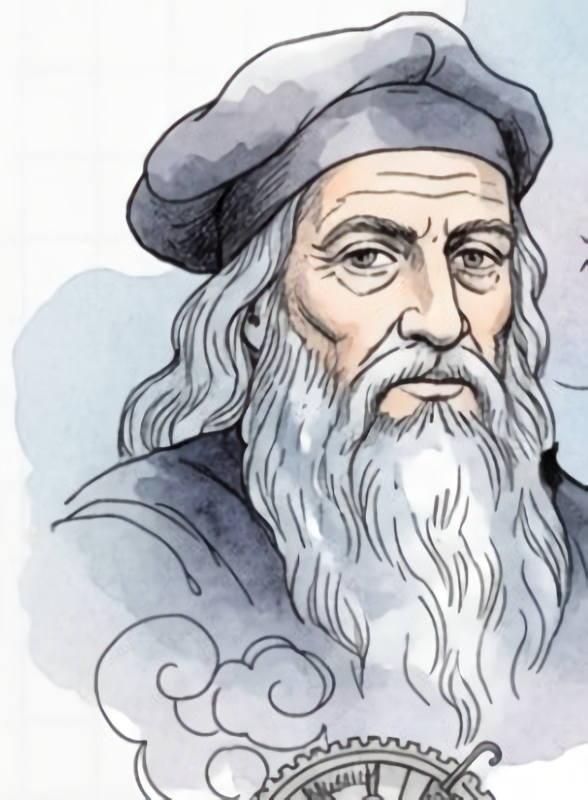
Illustration © European-Security
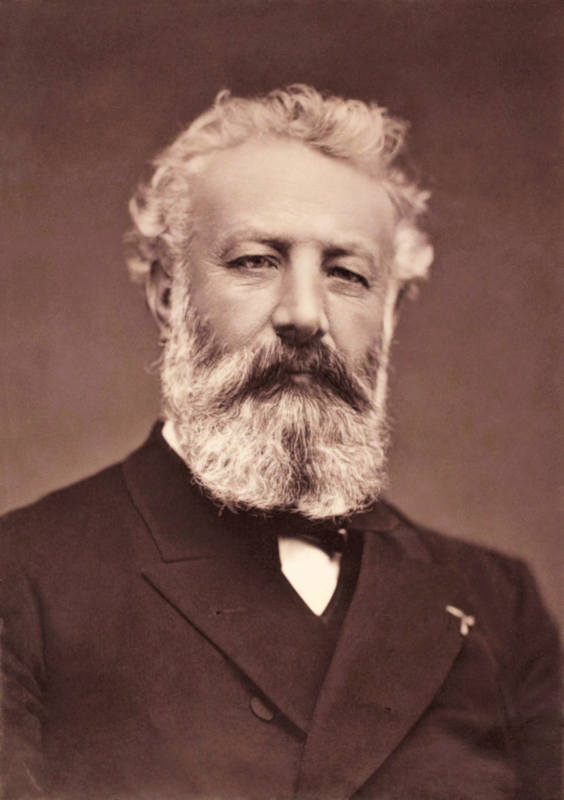
Jules Verne: (Standing up abruptly, pacing the floor) “No! It is a crutch! And if you give a crutch to an able-bodied man, his legs eventually atrophy. You speak of saving time, but to do what with it? Look at them! They do not paint more. They let the machine think in their place. It is the end of effort. If the machine writes the book, if it navigates the ship, if it solves the equation… what is left for Man? To become a passive spectator of his own existence? Ease is a drug, Leonardo, and they are all intoxicated.”
Leonardo da Vinci: “Ease liberates, Jules! Why should man plow the earth with his fingernails when he has invented the plow? This AI is the plow of thought. It turns the soil of knowledge, it digs the furrows of logic. It rids us of the burden of memory and tedious calculation. It allows the human spirit to soar toward pure creation, unburdened by the gravity of details!“
Jules Verne: (Pointing an accusing finger at the screen) “But creation is born from the resistance of matter! It is because marble is hard that the statue is beautiful! It is because the sea is dangerous that the captain is heroic! Your ‘mental plow’ makes the ground so soft that nothing solid can be built upon it anymore. This AI will create a humanity of gelatin. They will have answers to everything, but they will no longer know how to ask the questions. It is the suicide of talent through laziness.”
Leonardo da Vinci: “I fear, my dear Jules, that you are too romantic to accept that magic can be industrial.”
Jules Verne: “And I fear, dear Master, that you are too much of an engineer to see that industry can kill magic. A world without mystery and without effort is a gilded prison.”
III. The Specter in The Machine: The Swarm of Wasps
The sky has darkened. In the distance, a swarm of luminous points moves in tight formation over the business district, performing a choreography of frightening mathematical precision. They are drones.
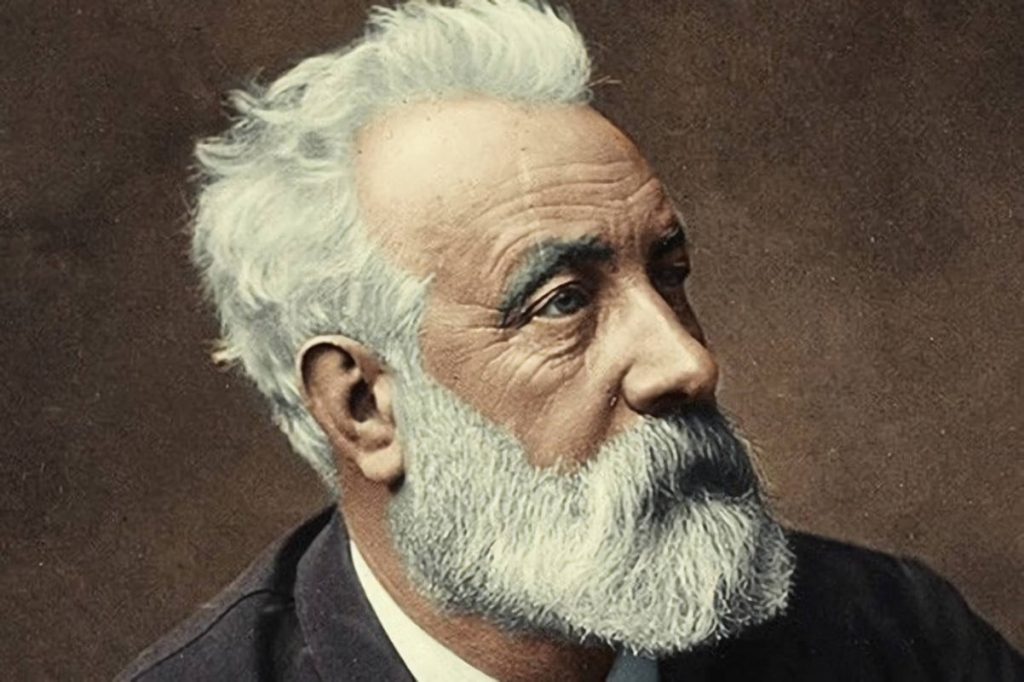
Jules Verne: (Stepping back, face pale) “Look at that… I spoke to you of my flying machines, majestic and solitary. But this? This is not aviation; it is nightmarish entomology! Look at how they move. It looks like a swarm of wasps. Thousands of metal wasps, without a queen, without a visible hive, but guided by a single, cold will. They buzz in silence. If they decided to sting, Messires, who could stop them? There is no pilot on board to talk to, no Captain Nemo to reason with. Just an electric command.”
Leonardo da Vinci: (Grave face) “This is where the danger of the Intelligence we spoke of becomes physical. I designed tanks, yes… but my creations were clocks. Here, they have separated war from flesh. The machine knows no pity, for it knows no pain. If man no longer feels the blood he spills on his hands because he kills via a screen, he will never stop spilling it.”
Nostradamus (Agitated, pointing a trembling finger at the lights) “I see the locusts of the Abyss of which the Scriptures speak. ‘The simulacrum of gold and silver shall speak / And man to his image shall submit.‘ They have opened Pandora’s box, not with a key, but with a keyboard. And Hope, this time, may not have time to escape.”
IV. The Loneliness of the Crowd: The Belly of The Leviathan
The setting changes. They are in a crowded subway station. Deafening noise, heat, smell of ozone.
Jules Verne: “What is this Gehenna? They are running. They do not walk, they rush. If they invented machines that do the work for them, shouldn’t they have more time? It looks as if they are being chased by a pack of invisible wolves.”
Nostradamus “The wolves are inside. It is Time they are fleeing. They have chopped eternity into nanoseconds. They run toward their tomb believing they run toward their office.”
Leonardo da Vinci: (Observing passengers with heads bowed over their phones) “It is an anatomy of submission. The neck bent, shoulders hunched, gaze locked. They are here, physically, inches from one another, their thighs almost touching, yet they are on different continents. If they looked up, they would see they are brothers in misery, but they prefer the illusion of the screen. It is a crowd of hermits.”
V. The Beggar and The Child
They return to the surface. Before a luxury storefront, a beggar sits, ignored by all.
Jules Verne: (Indignant, striking the ground with his cane) “This is intolerable! With their technology, their energy, their logistics… they cannot feed their own citizens? What is the use of conquering Mars if one does not know how to care for one’s neighbor? It is a complete moral bankruptcy! This civilization is varnished in gold, but rotten on the inside.”
Leonardo da Vinci: “They are not cruel, Jules… they are blind. They have erected a wall of mental glass. If they looked this man in the eye, they would see their own fragility. So they look away. But wait… Look.”
A child stops, escaping his mother, and places a coin in the beggar’s cup with a smile.
Leonardo da Vinci: “The spark is still there. The child still sees. Our task is not to condemn this world, but to remind the child that he must never become blind like his father.”
VI. The Violated Sanctuary: The Pyramid and The Soup
They cross the courtyard of the Louvre. The Pyramid shines. Security gates bar the entrance.
Jules Verne: “A glass pyramid! What audacity! But why does this entrance look like a customs post?“
Nostradamus “They scan souls and bags. They look for iron, fire… and liquids.”
Leonardo da Vinci: “Liquids? Do they fear my colors might be flammable?“
JULES VERNE: (Chuckling) “No, dear Master. Imagine that they search visitors to find… soup. It seems that to ‘save the climate,’ some deem it appropriate to throw pea soup at your masterpieces.”
Leonardo da Vinci: (Bursting into laughter) “Mashed peas on my Mona Lisa? Do they think my Lisa lacks flavor? That she is too bland after five centuries? Is that it, their ‘security’? Armed guards to protect painting against vegetables? What a farcical era!“
They enter and find the Mona Lisa behind her armored glass, besieged by tourists turning their backs to her to take pictures of themselves.
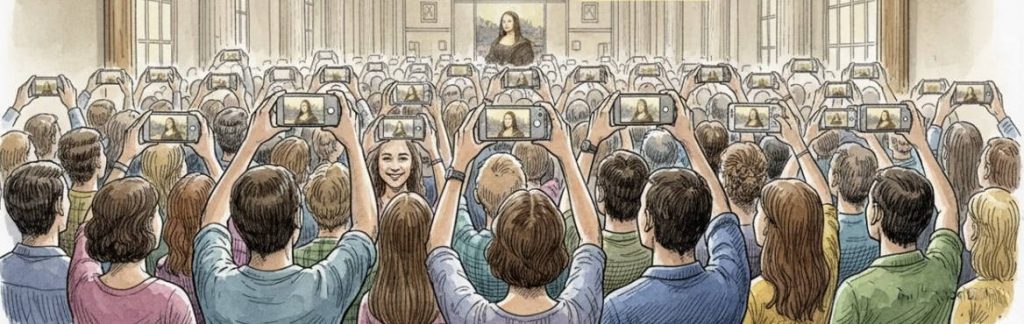
Nostradamus “It is the rite of the ‘Selfie.’ Narcissus drowning in the image. They do not look at her; they look at themselves being there. Your Lisa is nothing more than a backdrop. She smiles, but I believe today, she is mocking them.”
Jules Verne: “She is protected from bullets and tomato soup, but she is not protected from human stupidity. That is the only force against which even your armored glass is useless, Leonardo.”
VII. The Dawn: The testament of Shadows
The eastern sky begins to wash out. An orange line cuts the concrete horizon. Our three companions stand on a bridge, becoming translucent.
Nostradamus: “The Sun, that great watchmaker, reclaims his rights. Hear my final prophecy. It is simple: If man does not look up, he will end up crawling. The future is not written. It is soft clay. They can still mold an angel’s face if they turn off their screens to turn on their minds.”
Jules Verne: (Tears in his eyes) “I leave them Imagination. Let them cease consuming prefabricated dreams! Adventure is not in the virtual headset; it is around the corner, in the gaze of another. Do not leave the Nautilus without a captain!”
Leonardo da Vinci: (Smiling, pierced by the sun) “I leave them Curiosity. Not that of scrolling images, but the true one. Saper Vedere. Knowing how to see. Let them become students of Nature again, and not her tormentors. Perfection is not in the pixel; it is in the imperfect grain of life.”
Nostradamus: “And I leave them Silence. The greatest rebellion in this world of noise.”
The sun rises. They disappear. A jogger passes without seeing them, headphones in his ears, running toward a new day of humanity.
Decryption: The Diagnosis of the Shadows (Outro)
Beyond the uchronian fable, this exchange highlights the silent fracture of our era. Our three illustrious visitors do not condemn progress, but its corruption. They identify with surgical acuity the malady of the century: technological hypertrophy facing spiritual atrophy.
- Leonardo warns us: the tool meant to liberate the mind (AI) risks numbing it through ease, turning the artist into a mere operator.
- Verne denounces the paradox of mobility: we have abolished geographic distances only to deepen human distances, creating a crowd of connected loners.
- Nostradamus points out systemic fragility: our power rests on invisible and vulnerable flows, making us colossus with feet of digital clay.
This text is a call to resistance. It is not about refusing the future, but refusing passivity. To avoid becoming “slaves to our prostheses,” we must reclaim the three treasures bequeathed by these masters: Curiosity (against the algorithm), Imagination (against the virtual), and Silence (against the noise). The future remains a blank page, provided we take back the pen we handed to the machine.
© European-Security
In the series: Voices of Twilight
- Léonard de Vinci, Jules Verne et Nostradamus : « Les voix du crépuscule : Le tribunal des siècles » — (2025-1205).
- Leonardo da Vinci, Jules Verne and Nostradamus: « The Voices of Twilight: The Tribunal of Centuries » — (2025-1205).
- Leonardo da Vinci, Jules Verne and Nostradamus: « Stimmen der Dämmerung: Das Tribunal der Jahrhunderte » — (2025-1205).
- Charles de Gaulle : « Le Crépuscule des Nations : Mémoires d’un désastre annoncé (1) » — (2025-1202).
- Charles de Gaulle : « The Twilight of Vassals: No to the Brokers’ Yalta! (1) » — (2025-1202).
- Charles de Gaulle : « Die Dämmerung der Vasallen: Nein zum Jalta der Krämer! (1) » — (2025-1202).
- François de Vries (Jules Michelet) : La contagion des ténèbres : Exégèse d’une pathologie impériale (2) » — (2025-1130).
- François de Vries (Jules Michelet) : « The Contagion of Darkness: Exegesis of an Imperial Pathology (2) » — (2025-1130).
- François de Vries (Jules Michelet) : « Die Ansteckung der Finsternis: Exegese einer imperialen Pathologie (2) » — (2025-1130).
- Jules Michelet : « La danse des morts : Chronique de la grande nuit (1) Ou le sabbat des tyrans contre la résurrection des peuples » — (2025-1130).
- Jules Michelet : « The Dance of the Dead: Chronicle of the Great Night (1) Or The Sabbath of Tyrants Against the Resurrection of Peoples » — (2025-1130).
- Jules Michelet : « Der Totentanz: Chronik der großen Nacht (1) Oder der Hexensabbat der Tyrannen gegen die Auferstehung der Völker » — (2025-1130).
- François-René de Chateaubriand : « Vu de l’autre rive : le naufrage de l’Occident » — (2025-1128).
- François-René de Chateaubriand: « From the Other Shore: Contemplation on the Shipwreck of the West » — (2025-1128).
- François-René de Chateaubriand « Vom anderen Ufer: Betrachtung über den Untergang des Abendlandes » — (2025-1128).
Decryption: The Diagnosis of the Shadows (Outro)
Beyond the uchronian fable, this exchange highlights the silent fracture of our era. Our three illustrious visitors do not condemn progress, but its corruption. They identify with surgical acuity the malady of the century: technological hypertrophy facing spiritual atrophy.
- Leonardo warns us: the tool meant to liberate the mind (AI) risks numbing it through ease, turning the artist into a mere operator.
- Verne denounces the paradox of mobility: we have abolished geographic distances only to deepen human distances, creating a crowd of connected loners.
- Nostradamus points out systemic fragility: our power rests on invisible and vulnerable flows, making us colossus with feet of digital clay.
This text is a call to resistance. It is not about refusing the future, but refusing passivity. To avoid becoming “slaves to our prostheses,” we must reclaim the three treasures bequeathed by these masters: Curiosity (against the algorithm), Imagination (against the virtual), and Silence (against the noise). The future remains a blank page, provided we take back the pen we handed to the machine.