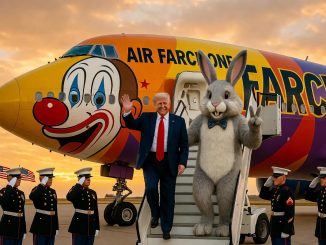
In this chilling prospective analysis set in early 2026, Françoise Thom dissects the Kremlin’s survival strategy facing the new geopolitical reality imposed by the return of Donald Trump. While the American president sparks a major crisis by seeking to annex Greenland, Putin is playing a perverse double game. On one hand, he supports Trump’s imperial ambitions to validate the principle that “might makes right” and, through a mirror effect, legitimize his own conquests in Ukraine. On the other, his propagandists are executing a 180-degree turn: yesterday’s fierce critics of Western rules are now posing as hypocritical defenders of international law to seduce a stunned Europe and pry it away from the American orbit.
However, hiding behind this diplomatic offensive is a desperate Russia whose economy is collapsing and which is selling off its resources to China to bankroll its war. The historian demonstrates that Putin is locked in a race against the clock: he must crush Ukraine quickly to then vassalize European elites by exploiting their rejection of Trump. The conclusion is unequivocal: faced with this trap, Europe must choose neither the plague nor the cholera, but stand united against the “two gangsters” by continuing to support Kyiv. — Ed. Note
Why are Putin and his propagandists, who used to denounce US imperialism, approving of Trump’s desire to annex Greenland? Historian Françoise Thom sees two reasons for this: on the one hand, it somehow legitimizes the annexation of Crimea and Putin’s claims on Ukraine; on the other hand, it is important for the Kremlin to support Trump in order to encourage him to force Ukraine to surrender. And when Trump has accomplished this task, Putin will turn to seduce the Europeans by surfing the anti-Trump wave. We must “stand up to the two gangsters”.
Table of Contents
by Françoise Thom in DeskRussia [01] — Paris, February 2, 2026
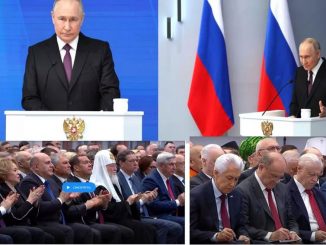
We hardly believe our ears: in his first public address in 2026, speaking to ambassadors, Vladimir Putin lamented that “dozens of states are now facing chaos, anarchy, and violations of their rights, without sufficient means to defend themselves” and recommended “urgently demanding compliance with international law by all members of the international community.” To gauge the change in tone of the Kremlin leader, let’s compare these statements with Putin’s speech in Valdai on October 5, 2023: “Modern international law, built on the basis of the United Nations Charter, is outdated and must be destroyed, and something new must be created.” Putin was outraged at the very idea that he should have to abide by rules: “What kind of ‘order’ based on certain ‘rules’? What are ‘rules’, who invented them? It’s not at all clear. It’s sheer nonsense. (…) It’s always the same demonstration of colonial thinking. (…) And as for those who advocate them, perhaps it is time for them to get rid of their arrogance toward the world community, which understands its tasks and interests perfectly well.”At the time, global chaos was seen as a godsend for Russia. Thus, Hamas’ offensive against Israel was celebrated with enthusiasm by Kremlin propagandists.As propagandist Mardan put it: “This mess is beneficial for Russia, because the globalist toad will be diverted from Ukraine and will busy itself trying to extinguish the eternal conflagration in the Middle East.”More recently, we can quote a reaction from MP Alexei Zhuravlev to Maduro’s kidnapping: “When you think that international law is still being studied in universities, you just laugh! […] The strong have all the rights. And we are right to do the same.” Or Solovyov’s: “We don’t care about international law and the international order. (…) Why not launch special military operations in our sphere of influence?”
This shift in Putin’s position gives pause for thought. After Zelensky’s visit to Mar-a-Lago on December 28, the Russian president felt emboldened. Trump had called him before Zelensky’s arrival, and the two men agreed to reject the Ukrainian-European proposal for a ceasefire. Official propaganda reveled in the humiliation of the Ukrainian president: no one met him on the tarmac. “All of Zelensky’s plans turned into a fiasco after this meeting. He might as well not have made the trip,” Solovyov sneered. Trump understood that Russia was going to win on the battlefield. Solovyov gloated: “There was no longer any question of confiscating our assets.” “It was a dazzling knockout, worthy of the greatest chess champions. (…) Zelensky was devastated.”
Putin in a position of weakness
“Such slowness [in punishing the guilty] prevents us from having faith in Providence. The wicked, who are punished not immediately after each crime, but only later, end up viewing it as misfortune rather than punishment. It is of no use to them, and they are more irritated by the harm that befalls them than repentant for what they have done.” Plutarch, The Delay of The Divine Justice
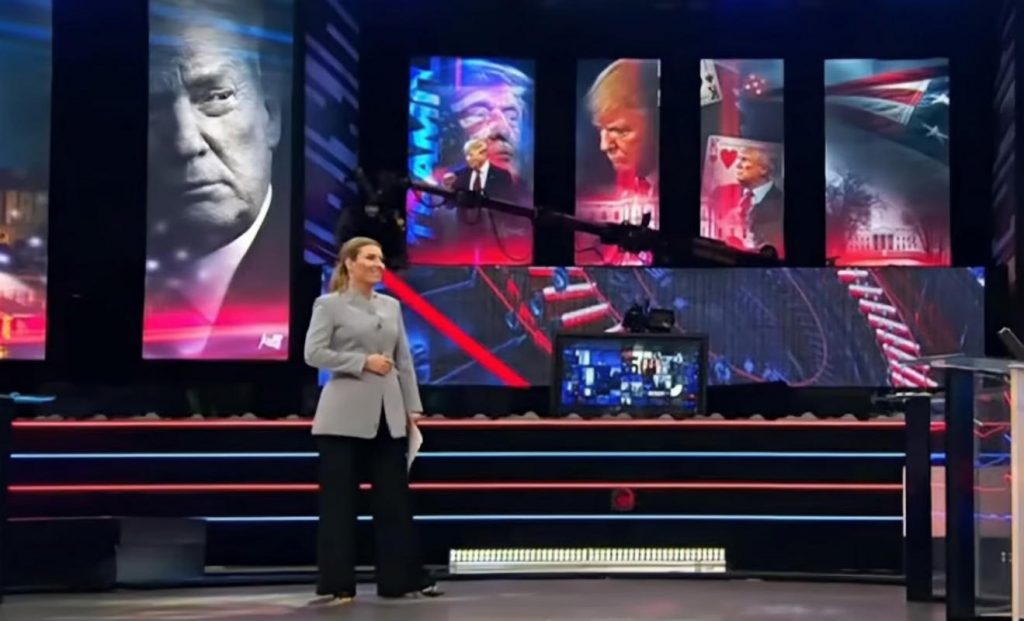
In December 2025, propaganda was in dire need of promoting Vladimir Vladimirovich’s qualities as a ‘brilliant geopolitician’. Domestically, the economic situation was deteriorating so rapidly that even Moscow was affected. Restaurants and shops were closing down one after another, even in upscale neighborhoods. In early January, inflation skyrocketed. The regions were crippled by debt. Oligarch Oleg Deripaska, known for his servility toward the Kremlin, let slip a post, quickly deleted: “We are foolishly turning everything we painstakingly accumulated in 2022-23 into shit. We are witnessing a primitive experiment that will end in the bankruptcy of thousands of companies and businesses that could have contributed to the prosperity of our God-chosen country.” Putin’s ‘pivot to China’ was drawing increasingly open criticism. It was suggested that Putin, who sees himself as the ‘unifier of Russian lands’, had handed over control of vast Russian territories to China. On December 15, 2025, despite opposition from local populations, Putin authorized China to cut down trees in the forests around Lake Baikal and to build infrastructure in the region. The Russian president thus gave the impression of mortgaging Russia’s future to satisfy his thirst for revenge against Ukraine.
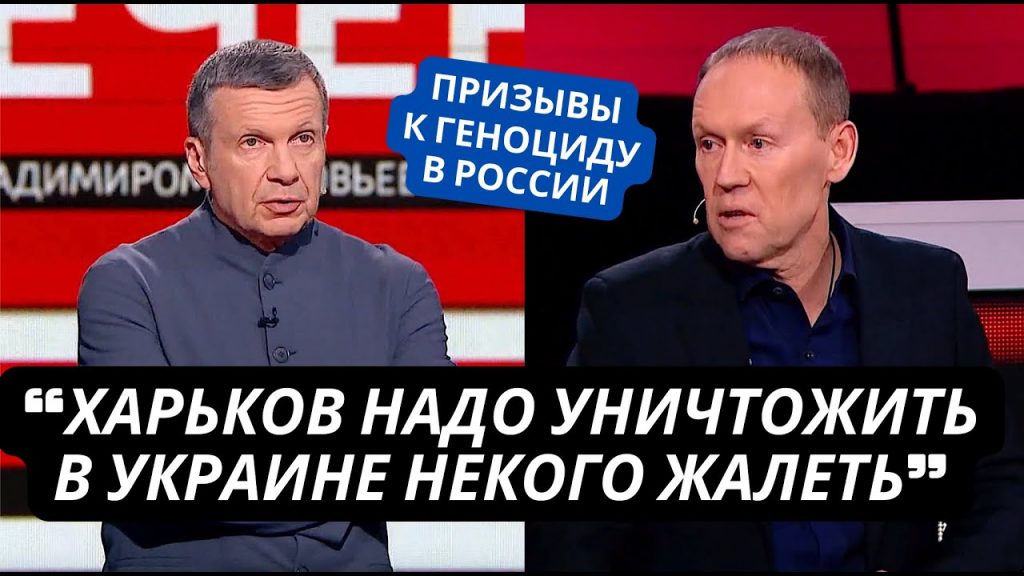
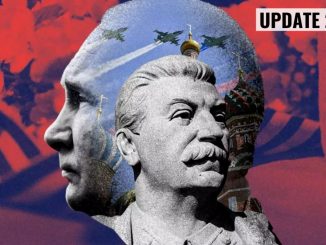
The disappointing results of the ‘special military operation’ are clear to everyone. After four years of war, Stalin had taken Berlin, while Putin’s troops have not even managed to control Kupiansk: the comparison is on everyone’s mind. Putin senses that discontent is growing. He unleashes his loyal propagandists. On the one hand, they are tasked with exonerating the ‘national leader’. As Solovyov explains, the meager results are due to the fact that “the whole country is not at war (…) Putin is at war. The government is at war. The presidential administration is at war. The governors are at war. But not the people.” The solution recommended by Solovyov is to return to Stalinist repression. More broadly, still in order to exonerate the president, propagandists aim to show that the West’s hostility has nothing to do with Putin personally, but is metaphysical. Here again, Solovyov is quick to respond: “The West does not understand that it is not at war with the leader of our country, but with our entire civilization. This is not a personal conflict, it is a conflict of civilizations. (…) Russia is currently the instrument of divine will in our world. (…) For a thousand years, the main goal of our state has been the salvation of humanity. (…) The Russian people are standing up against the absolute evil emanating from the West.” The propagandist moves on to Putin’s favorite talking point, betrayal by the elite: “That is why the West has always tried to corrupt our ruling class by persuading it to abandon our true values. It has partially succeeded. That is why we are accustomed to winning on the battlefield but losing the peace. We have ended wars not because of defeats but because of betrayal by the elite. (…) Those who imagine that we can return to the pre-war situation are mistaken.”
The Kremlin’s concern about a rebellion of the elite and the hope for his demise must be tremendous, judging by the heavy artillery of propaganda. A regular guest on Solovyov’s talk shows, Sergei Mikheyev, elaborates on the same topic: “We have often observed this strange illusion among Westerners that everything depends on Putin, that Putin is responsible for everything, that Putin is an accident of history. They don’t see that the causes are much deeper: part of Russian civilization [Ukraine] has become anti-Russia under the influence of a Western project, and as long as Ukraine is anti-Russia, it will be the target of our army, under Putin and after Putin.” He adds: “If they imagine that a wimp like Yeltsin will succeed Putin, they are deluding themselves. The veterans of the SVO [Special Military Operation] will come to power.” Mikheyev recommends using nuclear blackmail to destroy the EU, which will allow Russia to establish bilateral relations with European countries, “and Macron is moving in that direction, it seems to me.” Nuking degenerate Europe is also Sergei Karaganov’s favourite hobbyhorse. According to him, an overwhelming majority of Russians dream of turning Europe into radioactive ashes. The implication is that Westerners would be wise to stick with Putin, as his successor will be much worse, especially if he meets the expectations of the Russian masses eager to destroy Europe. Should Vladimir Putin be assassinated, Karaganov insists, “Europe would be wiped off the map of humanity. (…) They will start by attacking Europe with conventional weapons, then (with) waves of nuclear missiles.” Stalinist networks of influence spread similar disinformation in 1944-5 and then in 1952-3, portraying Stalin as a ‘moderate’ among hawks; the death of the Leader was commented on as follows by French Ambassador Louis Joxe in a dispatch dated March 5: “Insofar as only a strong man was capable of imposing moderation and even accepting certain concessions, and insofar as the small group of men who will take power will need to assert themselves, it can be assumed that the situation created by Stalin’s death portends difficult times ahead.”[02]
The shock of American actions
“When the gods wish to punish us, they answer our prayers.” Oscar Wilde
Maduro’s abduction on January 3 and the American attacks on the Russian ghost fleet are doubly unfortunate for Putin. First, he loses face as he has failed to protect his stooge in Latin America. More seriously, the U.S. initiative instills doubts about the strength of his hold over his American counterpart. It is important to understand that one of the Russian president’s main assets vis-à-vis his entourage, which is increasingly unhappy about having to foot the bill for the war in Ukraine, is his control over Donald Trump. Moreover the Kremlin is realizing that Putin’s policy of unilateral shows of force and faits accomplis were successful as long as he had a monopoly on inflicting blows against the international order. Now, with Trump, Moscow has a formidable competitor in this field, one who does not hesitate to expose Russia’s weakness in the open. This changes everything.
In Russia, it’s a shock. State patriots were quick to pick up on Trump’s response when a reporter asked him if the U.S. was preparing to remove Putin: “I don’t think that will be necessary,” replied the U.S. president. The Kremlin’s dismay can be gauged by the variety of reactions expressed. The lack of precise instructions from above means that everyone is elaborating on previously dictated themes. Military bloggers advocate following Washington’s example. There is no longer any need to hold back. Trump has broken the taboo that prohibited attacking leaders. “In this game, you have to take a stand without delay: either you’re one of the hunters, or you’re one of the prey.” Zelensky must be removed, otherwise what will we look like? Dugin believes that Trump has switched to the neoconservative camp and broken with MAGA. He is having a hard time accepting it: “Maduro is ours. Iran is ours. What is happening is terrible. But most importantly, Ukraine is ours. Trump is showing us how we should act.” As for Dmitry Medvedev, he proclaims, “Long live nuclear weapons!” and suggests that the Americans remove Zelensky.
Some see the silver lining. Alexander Naumov, a member of the International Affairs Council, believes that “Russia will not feel out of place in this new world, a world of sovereignty, a world of strength, an honest world”. Propagandist Olga Skabeieva has the merit of being frank: “This new world where the Americans control the Western Hemisphere suits us, provided that the rest of the world is allotted to us.” Naoumov corrects her: “As to China.”
Solovyov believes that foreign investment should be abandoned. “If you invest somewhere, you have to occupy that country militarily and control everything.“ The CIA deceived Trump because it was the CIA that organized the strike on Putin’s residence. Solovyov strongly criticizes the hysteria that has swept Russian social media, but he stumbles awkwardly when trying to justify the Kremlin’s passivity. Russia is a land power; it does not have a fleet large enough to rescue Venezuela. After all, the oil tankers seized by the Americans may not be Russian. Then he reveals his concern: the Americans will use the same destabilization techniques in Russia that they used in Iran: the economy, sanctions, inflation, unemployment. It is essential to improve the Russian economy. “It is the economy that ensures victory in war. We must understand that we have to scratch our oil revenues and build another economy.” Solovyov is on firmer ground when he talks about Ukraine: “We must destroy the enemy, physically exterminate more Ukrainians than the Kiev government and its European sponsors can supply.” We must act as the Americans: take what we want and rebuild Russia’s sphere of influence. “The most important thing for us is our near abroad. The loss of Armenia is a huge problem for us, more so than Venezuela. The problems in Central Asia are enormous for us. (…) We must say it openly: we don’t care about rules and international law. In addition to Ukraine, which we need for our security, why not launch special military operations in other regions that are part of our sphere of influence? We must not care what Europe thinks, stop sparing the Ukrainians. (…) We will not tolerate any anti-Russian regime in our sphere of influence. We must clearly state our objectives. No more kid gloves.” Solovyov may have flair, but he did not sense that the tide was turning in the Kremlin. After he made these inflammatory remarks, he was banned from the airwaves for a few days.
The most interesting reaction came from economist Dmitry Demushkin, a rare voice among Russian nationalists, , as he does not lack common sense and independent judgment. He has a keen sense of Russia’s weakness and does not share the Kremlin’s illusions: “Just because one dude has proclaimed the Western Hemisphere as his sphere of influence does not mean that someone else will automatically inherit the Eastern Hemisphere.” Only Europeans can appeal to international law because they comply with it. Unlike Russia, which considers that international law does not apply to its actions: “We live as we like,” says Russia, “but international law must be respected by others”. “But it doesn’t work that way,” insists Demushkin. “Russia should have been the last country to question international law,” given the number of countries that can make territorial claims against it: “We have a sparse population, territories that are poorly connected to each other, and woe betide us if the law of the strongest prevails in the world.” Russia has excluded itself from the global market, and the rest of the world has realized that it can do without us. The reverse is far from true: Russia is strictly incapable of manufacturing advanced technology products. Demushkin estimates that the country spends half of its budget on the war. This is becoming increasingly ruinous. The weapons from the Soviet period are exhausted. The regions are unable to repay the loans taken out in previous years. Russia will only be able to continue this war for a year at most. The moment of truth will come when it becomes impossible to pay the siloviki. Then Ukraine will take a back seat. To sum up: “An economy based on the export of raw materials is not the economy of a superpower, it is a third-rate economy. (…) There are countries that supply raw materials and do very well. But these are countries that do not stick their nosein geopolitics and do not claim a share of the world… Without an independent judiciary, there is no business.”
Thus, a Russian nationalist can agree with the conclusions of Maxim Katz, a liberal opponent of Putin, who recently gave a catastrophic assessment of Russia’s trajectory since the war against Ukraine, recalling that in 2021 Russia had earned $125 billion from its hydrocarbon exports (compared to $93 billion in 2025), that it had lost its leverage over the West after the confiscation of Western companies in Russia, and that it had freed Europe from its gas dependence on Moscow by cutting off gas supplies. “It is Putin who has accustomed the international community to managing without Russia,” Katz said.
The Kremlin’s new strategy
“Pope Alexander VI [Borgia] made a game of deceiving people throughout his life, and despite his well-known infidelity [to his word], he succeeded in all his schemes. Protests, oaths, nothing cost him anything; never has a prince so often broken his word and so little respected his commitments. Yet his deceptions always had a happy outcome, for he knew this part of the art of governing perfectly well.” Machiavelli, The Prince, XVIII
Amidst this media frenzy, Putin remains silent. As always in times of crisis, he disappears from public view and secretly plans the series of ‘special operations’ that the situation demands. The first signal is the bombing of western Ukraine with an Orechnik missile: a reminder that Russia is one of the big players, that it wants to be at the table sharing the spoils instead of being on the menu, and that Europeans had better behave themselves. The second signal is the release of French scientist Laurent Vinatier [who was arrested in Russia in 2024 and released in 2026]. Then the propagandists receive their instructions. As usual Putin is lucky. The crisis between Europe and the United States over Greenland could not be more timely for him.
The Kremlin has understood that the immense wave of detestation Trump has stirred up around the world and in Europe can be exploited, channeled, and diverted to serve as a vehicle for expanding Russian influence. In his first speech of 2026 mentioned above, Putin expressed his desire to improve relations with European leaders, borrowing their language and demonstratively referring to ‘international law’. He revived the old Russian project of a ‘new European security architecture’ without the United States, a long-standing Kremlin plan to institutionalize Russian dominance on the European continent. Gone are the European ‘piglets’ stigmatized three weeks earlier! The Kremlin’s policy reversal is comparable to that of 1935, when Stalin abandoned his policy of ‘class against class’ confrontation and put forward the slogan of the ‘anti-fascist united front’ against Hitler, while adopting, the following year, the ‘most democratic constitution in the world’. This policy led to a prodigious advance of Soviet influence in Europe. Communist parties ceased to be marginal and extended their hold over trade unions and the intelligentsia. Today, we are already seeing the first shifting of the Kremlin’s policy. A Kremlin statement described as “positive” the willingness of some European countries, including Italy and France, to restore dialogue with Russia. “If this truly reflects the strategic vision of Europeans, it is a positive development in their position,” Russian presidential spokesman Dmitry Peskov told reporters, stating he had “taken note of the statements made in recent days by several European leaders.” “In Paris, Rome, and even Berlin, they have said that it is necessary to talk with the Russians to ensure stability in Europe. This is entirely in line with our vision.”
The change in stance appears clearly in a revealing talk show about the Greenland crisis. One of the guests pointed out that Europe finds itself in the same situation as Poland in 1939: by preparing for war against the USSR, it found itself defenseless in the West against Hitler. Political scientist Kirill Yakovlev remarked: “If Trump is building an empire, it is certainly not for Vance or any other successor. I doubt there will be another election. It’s clear that Trump doesn’t want to leave power (…] All of this is advantageous for Russia. We are already hearing voices in Europe saying, ‘Since the danger comes from a country we didn’t expect, let’s resume dialogue and look for solutions.’ And our president is right to take the outstretched hand.” Historian and political scientist Sergei Stankevich rejoiced: “The important thing is that the United States is dealing a catastrophic blow to NATO,” and hammered home the message of the day: “It is this problem of Greenland that Europeans should be focusing on, and that is why they need to negotiate with Moscow.” “All of this is to our advantage. Our principle is ‘Eat each other’.”One only wishes that Trump doesn’t change his mind. As for Dmitry Medvedev, he goes about it in his usual truculent way: “The Gallic rooster crowed and proclaimed that if Denmark’s sovereignty is threatened, the consequences will be unprecedented. Oh dear, what are they going to do?! Kidnap the U.S. president? Bomb the United States? Of course not. They’ll just shit their pants and hand over Greenland. And that would be quite a European precedent!”
The shift initiated by the Kremlin is a delicate one. Admittedly, in some respects it is enough to continue the propaganda work already underway, for example by reinforcing Europeans’ sense of weakness, so as to instill in them the idea that their only recourse is to rely on Russian power. The launch of the Orechnik paved the way. The same goes for Karaganov’s rants. In Russian politics, intimidation is never far from seduction. When asked by Tucker Carlson about the possible end of the war, Karaganov went on his usual ravings: “This war will only end when Russia achieves the unconditional defeat of Europe. Hopefully, without destroying it. We are not fighting Ukraine or Zelensky, we are once again fighting Europe, which is the source of all evil in the history of humanity.”
But at the same time, as Russia is preparing to ride the anti-Trump wave in Europe, it must act behind the scenes so as not to antagonize Trump until he has forced Ukraine to capitulate. Putin is no stranger to this double game. In 2003, when the United States wanted to start a war against Iraq, Putin encouraged France and Germany to step up and try to block American action, while Russia remained in the background, earning him the gratitude of President Bush: “You have been very successful in avoiding inflaming anti-American sentiment, but in some [European] capitals they have not been as careful. (…) There is a difference between expressing disagreement and unnecessarily stirring up passions with anti-American slogans and insults to American leaders. You have been firm in your opinion but respectful of our relationship, and I want to thank you for that,” George Bush told him in a telephone conversation on March 18, 2003.
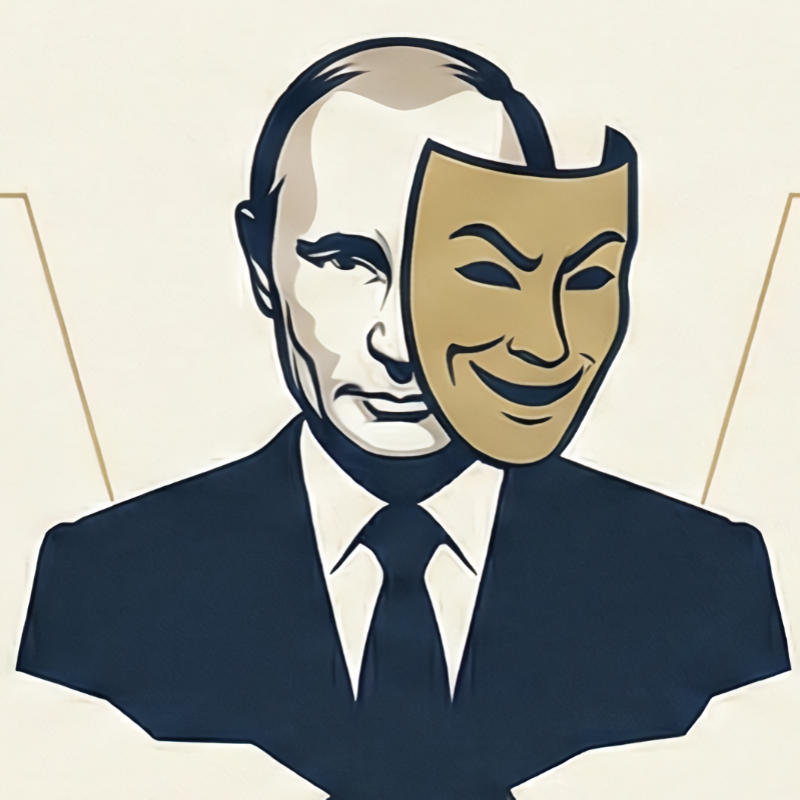
Today, Russian duplicity is even more evident. While on January 6 Putin was indignant that “strong countries are increasingly beginning to impose their will on weaker countries,” an undisguised appeal to Europe, Peskov issued a statement saying that “the Kremlin agrees with those who believe that Trump will secure his place in world history if he resolves the issue of Greenland’s ownership.”
Illustration © European-Security
The print media reinforced this sentiment: “Europe is in disarray, and in truth, it’s a pleasure to see,” rejoiced Moskovski Komsomoletz, while the very official Rossiiskaya Gazeta ran the headline: “Greenland is NATO’s graveyard.” “If Trump succeeds in annexing Greenland by July 2026,” writes the newspaper, “he will become one of the historical figures who built the greatness of the United States (…) Everyone will quickly forget the current diplomatic exchanges with the Danes. (…) If Greenland becomes part of the United States, it will be forever. Americans will not forget this great achievement. But standing in the way of this historic success are Copenhagen’s intransigence and the ridiculous solidarity of certain uncompromising European capitals, including the so-called friends of the United States, France and Great Britain.” Russian editorialist Evgeny Chestakov advises Trump not to give in on Greenland, otherwise the Republicans could lose the midterm elections, whereas the annexation of Greenland will ensure their victory in the elections. It is understandable why the Kremlin wants Trump to remain in power for as long as possible. In a recent talk show, MP Alexei Zhuravlev explained that Russia is not taking Odessa because “it is very important for us to keep Trump in his neutral position, which is rather positive for us. It’s not easy, but for now we’re succeeding. (…) We will take Odessa, but we have to do it gradually.” This is why Putin is bombing Ukraine like a madman. He is in a hurry to crush the country so that he can move on to the next stage of his grand plan, the vassalization of Europe, which Trump seems to be offering him on a silver platter.
Unfortunately, the vacillations of some European leaders give President Putin reason to hope. The catastrophic state of their economies has reminded Russian leaders of their dependence on Europe. But we should not forget that, in their pride, they want to control those on whom they depend. Nor should we forget the lessons of history: while Stalin was deploying anti-fascist fronts across Europe, he was secretly making overtures to Hitler. He eventually got his way with the Ribbentrop-Molotov Pact, which shocked Europe. Europeans find themselves in the same situation as in the 1930s, when many believed they had to choose between Hitler and Stalin. Democracies cannot come to terms with the idea that they have an enemy. All the more so if there are two of them! But the precedent of the 1930s teaches us that it is fatal to choose between a rock and a hard place. Let’s stand up together to both gangsters, for now, by defending Ukraine, which is martyred by the cold inflicted by Putin.
Françoise Thom
[01] We reproduce this article with the author’s permission — Courtesy of DeskRussia.
[02] MAE Europe 1944-1960, sub-series USSR, 114, f. 7
See also:
- « La lutte finale du président Poutine » — (2026-0131)
- « President Putin’s Final Battle » — (2026-0202)
- « Der letzte Kampf von Präsident Putin » — (2026-0131)
- « Последняя битва президента Путина » — (2026-0131)
Decryption: Europe Facing Strategic Solitude
To extend Françoise Thom’s unsparing diagnosis, it seems that Europe, during the Davos and Brussels summits, has finally grasped the existential urgency of the moment. Usual timidity has given way to unprecedented firmness: in the face of new tariff threats from Washington, Europeans did not hesitate to invoke the “bazooka” of trade retaliation. This psychological shift crystallized in the masterful interventions of Emmanuel Macron and Canadian Mark Carney—who received a standing ovation—who, alongside a Zelensky with his dignity intact, marked the end of the Atlanticist illusion.
It is time to face reality: the transatlantic bond will not be resurrected. Donald Trump has made his choice: to bet on Vladimir Putin to dismantle the old order. In response, Europe can no longer settle for being a spectator; it must accept this strategic solitude.
As Françoise Thom demonstrates, standing up to both “gangsters” simultaneously is no longer just a diplomatic option, but the strict condition for the continent’s survival.
- « La lutte finale du président Poutine » in DeskRussie — (2026-0131)
- « President Putin’s Final Battle » in DeskRussia — (2026-0202)
- « Der letzte Kampf von Präsident Putin » — (2026-0131)
- « Последняя битва президента Путина » — (2026-0131)

Desk Russie would like to remind you that Françoise Thom will be presenting a series of five lectures entitled ‘The Kremlin’s instruments and methods of power projection from Lenin to Putin’ as part of the Université Libre Alain Besançon. .For more details and to register (in person)