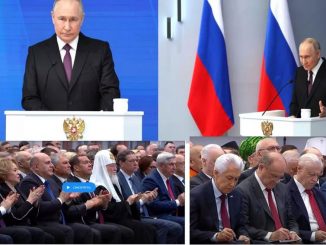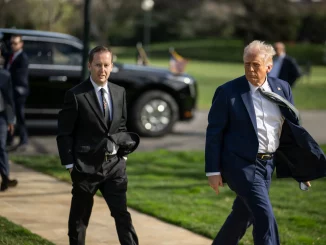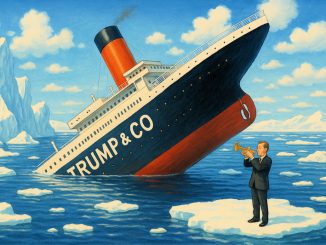
While Davos 2025 marked the triumph of Donald Trump’s return, the 2026 edition will be remembered for his isolation. His rambling, “kitchen-sink” long speech left the audience—from Swiss hosts to captains of industry—in a state of awkward lethargy. The malaise turned into diplomatic defiance during the gala dinner, where his Treasury Secretary watched Christine Lagarde pointedly leave the table before ending the night being booed by the room. The contrast was striking compared to the standing ovation reserved for Canadian PM Mark Carney and the bipartisan acclaim greeting Emmanuel Macron’s return to Paris.
History will record that Europe yawned through the American litany but was electrified by the surprise guest, Volodymyr Zelensky, whose masterful address definitively eclipsed the old master of Washington.
Table of Contents
by Joël-François Dumont — Paris, le 22 janvier 2025
Introduction
In Davos, on January 20, 2026, history didn’t just stutter—it screamed. If there is one phrase to summarize the glacial atmosphere in the Swiss Alps during the interventions of Mark Carney and Emmanuel Macron, it is this: Enough is enough.
For decades, Canada and Europe have lived in the comfort of a security architecture guaranteed by Washington and a global trade system regulated by law. That era is over. What we heard this week was the sound of two loyal allies who, with their backs against the wall, have decided to stop apologizing for their existence.
The “Target” Club: From Greenland to the Canadian North
The convergence between Mark Carney and Emmanuel Macron is no coincidence. It stems from a common existential threat.
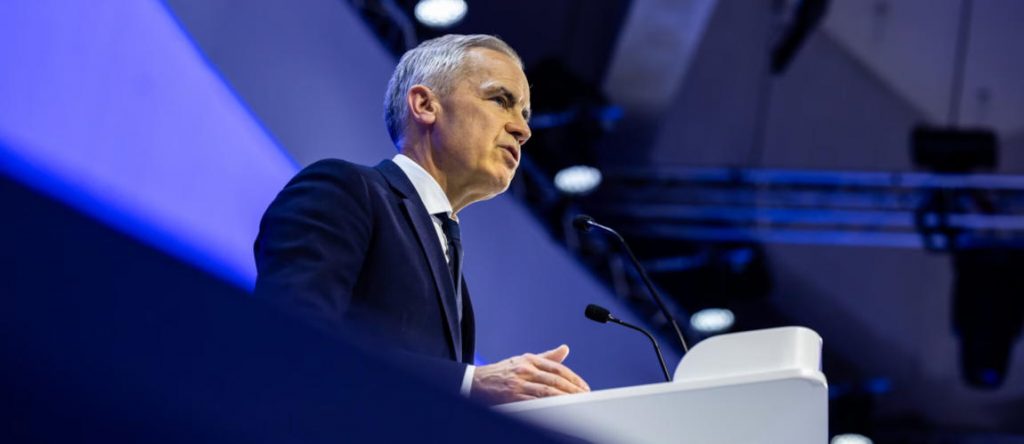
Europe watched the U.S. administration treat Greenland as potential real estate, using tariffs as leverage. Mark Carney masterfully highlighted that Canada is in the same boat, warning his peers that we can no longer “live a lie”—pretending that economic integration guarantees security when it is becoming the very vehicle of our subordination.[01]
By asserting that “if we’re not at the table, we’re on the menu,” Carney wasn’t just talking economics, but survival. Macron echoed this by refusing to “passively” accept the law of the strongest, leading to vassalization”.[01] For Ottawa just as for Paris, territorial and economic integrity is no longer a taboo suject for their great neighbord or systemic rivals.[02]
The Pushback: The End of Naivety
In the face of this, the response was scathing. Emmanuel Macron shattered the Old Continent’s idealism with brutal frankness: “Europeans are the only ones not protecting their own companies and their own markets”.[02]
The two men are drawing a new map: an “independent” West, capable of defending its own red lines. It is the end of polite submission.
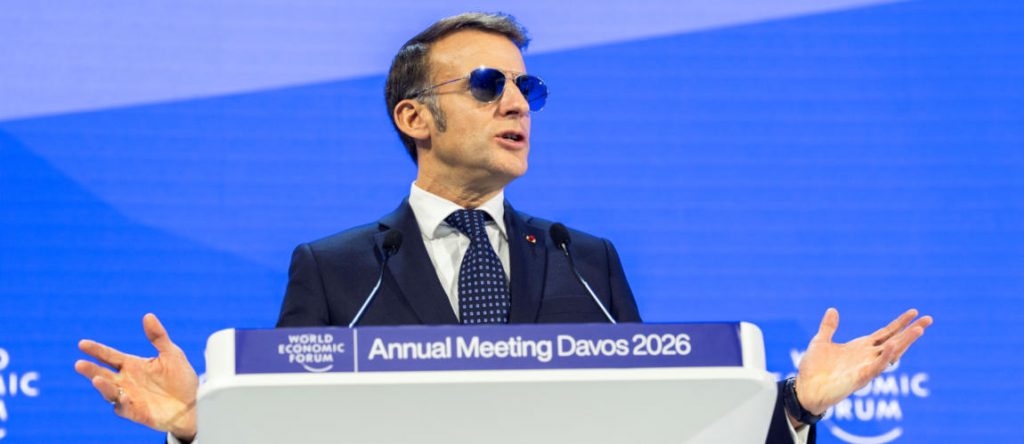
As the French President hammered home in his conclusion, finalizing this moral divorce from Trump’s America: “We prefer respect to bullies, science to conspiracy, the rule of law to brutality”.[02]
Decryption: Will Canada become the EU’s 28th State?
This is the question on every observer’s lips after this wild week. While geography says “no,” geopolitics is starting to scream “yes.”
1. The Alignment of Planets (and Values)
During the Ukrainian President’s visit to Paris in early January 2026, Mark Carney’s decision to join the “Coalition of the Willing” (offering security guarantees to Kiev, thereby bypassing the American deadlock) was a foundational moment. That day, Canada acted not as a North American power, but as a European one.
2. Is Public Opinion Ready?
Recent polls (like those from Abacus Data in early 2025) already showed that nearly one in two Canadians would not be hostile to the idea, viewing the EU as a bulwark against American instability. The idea, once absurd, has become a rational “hedging” option.
3. The Likely Scenario: The “Reverse Norwegian Status”
It is unlikely that Canada will officially become the 28th member in the treaty sense.
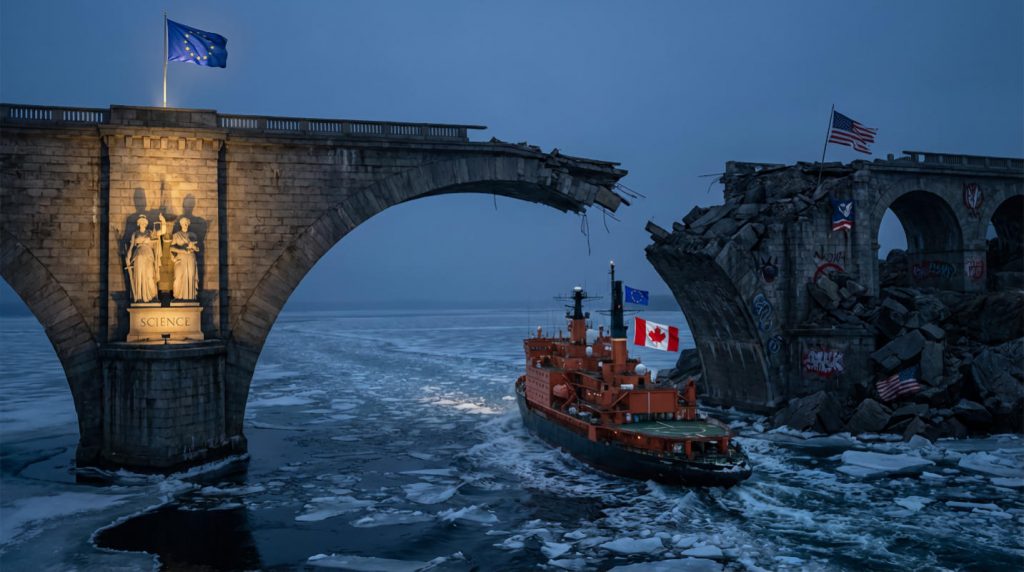
However, we are heading toward a de facto integration:
- Defense: Canadian accession to pillars of European defense (PESCO), necessitated by NATO uncertainty.
- Economy: A fusion of CETA with the Single Market for strategic sectors (energy, critical minerals), creating a “North Transatlantic Economic Area” that excludes the U.S.
Canada may not be the 28th State on paper with MEPs in Strasbourg. But spiritually and strategically? It effectively became one this Tuesday at Davos. Mark Carney crossed the Atlantic not as a visitor, but as a partner of “House Europe,” leaving the keys to “House America” with its current landlord.
Joël-François Dumont
Sources:
[01] Speech by Canadian Prime Minister Mark Carney — Sources CBC and World Economic Forum.
[02] Speech by French President Emmanuel Macron at the World Economic Forum in Davos — Source: Élysée.
See also:
- « Trop, c’est trop : La fin de l’innocence transatlantique » — (2026-0122)
- « Enough is Enough: The End of Transatlantic Innocence » — (2026-0122)
- « Genug ist genug: Das Ende der transatlantischen Unschuld » — (2026-0122)