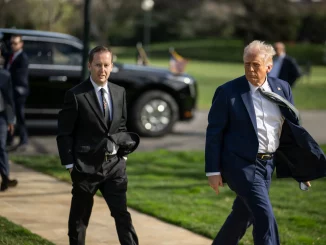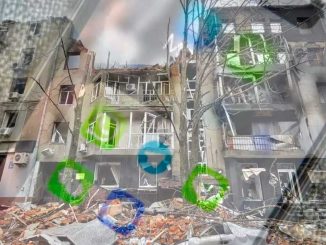
On May 27 and 28, an informal meeting of EU foreign ministers was held in Cyprus. Among other things, they discussed the possibility of resuming dialogue with Russia as part of efforts to resolve the Russian-Ukrainian war. For now, the 27 member states have not agreed on the principle of a European negotiator, nor on holding negotiations with Russia in any form. However, the global oil crisis caused by the war in the Middle East could push Europeans to resume negotiations on terms favorable to Russia, with disastrous consequences, warns Françoise Thom.
Table of Contents
by Françoise Thom [01] — Paris, May 31, 2026.
Samuel Johnson said that remarriage was “the triumph of hope over experience.” One could make the same quip about the “dialogue” with Vladimir Putin, which the European Union is preparing to resume because it is necessary to “talk with Russia,” not to leave that monopoly to President Trump. Do Europeans realize the perilous path they are embarking on by seeking to follow in Steve Witkoff’s footsteps?
There is much talk these days of the various difficulties facing Putin’s regime. The economy is collapsing, the Ukrainians are now dealing serious blows to Russia, and enthusiasm for the “special military operation” is evaporating. But we must not get carried away by premature optimism in the face of these undeniable signs of weakness. For the Kremlin, the overall picture is far from negative.
The Pretense of Russian Weakness
To gauge how far things have come from Moscow’s perspective, let’s look back at Russian policy in 2021. Putin wanted to pressure France and Germany into forcing Ukraine to implement Russia’s interpretation of the Minsk agreements—that is, to revise its constitution and establish a federalized state where the secessionist regions controlled by pro-Russian warlords would have a veto over the Ukrainian government’s decisions. When the Europeans refused to play this infamous role, Putin turned off the gas taps, hoping that a freezing Europe would come to Moscow begging for Russian gas and oil. These expectations were dashed.
Putin then opted for escalation. On December 17, 2021, the Russian Ministry of Foreign Affairs issued an ultimatum to the United States and NATO. Moscow demanded that the following be “legally enshrined: the renunciation of any NATO expansion [to the east], the cessation of military cooperation with post-Soviet countries, the withdrawal of U.S. nuclear weapons from Europe, and the withdrawal of NATO forces to the 1997 borders.”
The ultimatum was accompanied by explicit nuclear blackmail. Andrei Kartapolov, chairman of the Duma’s Defense Committee, did not mince words: “Our partners need to understand that the longer they delay reviewing our proposals and adopting real measures to create these guarantees, the greater the likelihood that they will face a preemptive strike. .“The Kremlin’s intentions are just as transparent: ”The Russian initiative could help the Americans quietly withdraw from Central and Eastern Europe,” reads the headline of the highly official think tank Russtrat. The idea is to make Europeans doubt the validity of the U.S. security guarantee to Europe and thus allow Russia to have the upper hand in European affairs.
Since the West did not comply with this ultimatum, the Kremlin launched its offensive in Ukraine. The Russian army’s capture of Kyiv was intended to demonstrate Putin’s power and prove the illusory nature of American support. Europeans would then have no choice but to bow to their eastern neighbor and accept Russian hegemony on the continent.
The Washington-Moscow Axis and Europe’s Forced Awakening
Things did not go as planned. But Putin regained hope with Trump’s reelection. Trump seemed willing to grant him anything. The new president insulted Volodymyr Zelensky, agreed with Moscow that the Ukrainian president was illegitimate, and hinted that he was ready to recognize the annexation of Crimea. The Pentagon stopped providing the Ukrainians with vital intelligence, while Russia set out to retake the Kursk region. Emboldened, Putin pretended to negotiate in order to extract new concessions from Trump.
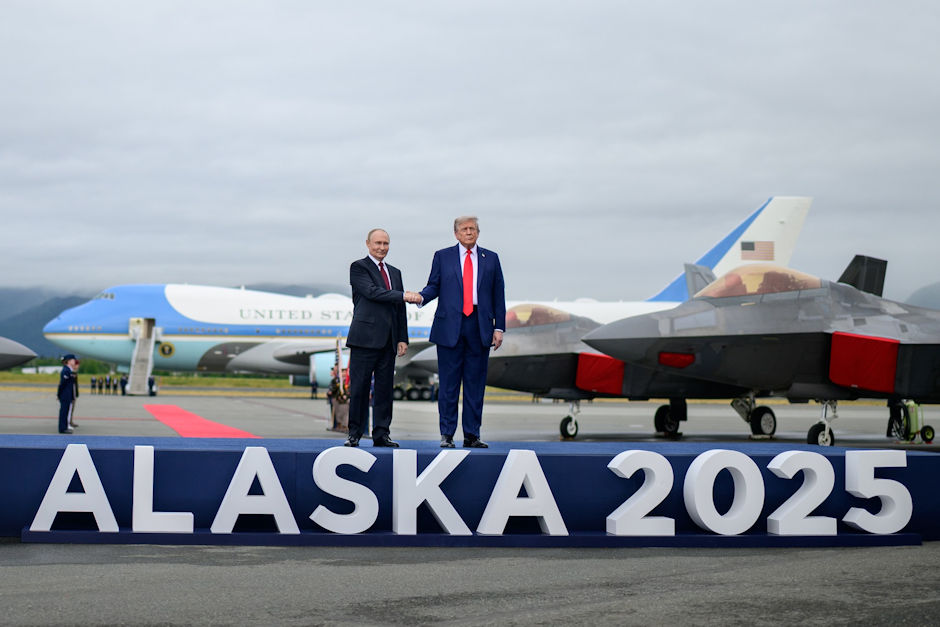
At the Anchorage summit, he secured U.S. agreement to drop the demand for a ceasefire before negotiations could begin. Even better, Trump agreed to pressure the Ukrainians into completely evacuating the Donbas. Putin, euphoric after these successes, bombed Ukraine furiously, expecting Ukrainian morale to crumble after the American betrayal. But Europe came to Kyiv’s aid, much to the surprise of the Russian president, who until then had regarded Europeans as Washington’s lapdogs. The Ukrainians’ resistance fueled that of the Europeans. Worse still for Moscow, the Ukrainians, abandoned by the Americans, now had a free hand and could strike Russian territory—something they were forbidden to do under Biden. Things were looking grim for Putin.
The Taming of the Elites: Diplomacy as a Weapon of European Capitulation
But, once again, he gets lucky: the United States is launching a disastrous war against Iran.
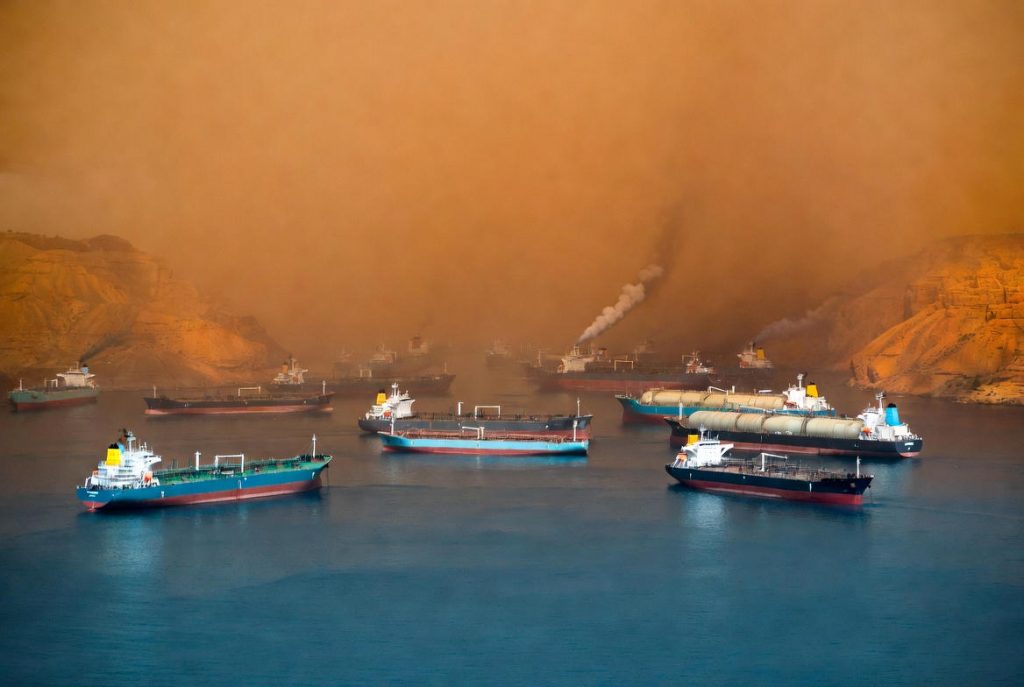
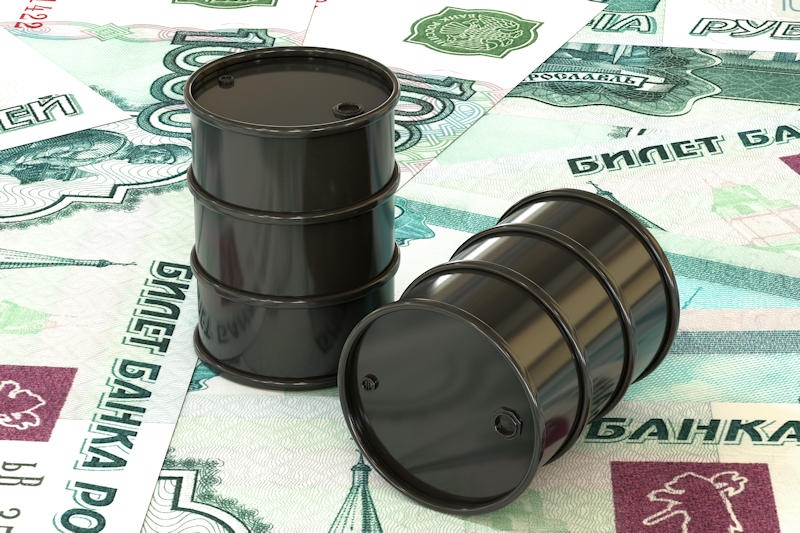
The wind is in his sails. Now the situation looks even better than it did in 2021. The gas and oil shortage is choking Europeans because they no longer have their alternative suppliers in the Middle East—particularly in Qatar—thanks to the Iranian strikes guided by Moscow.

Putin regains his self-confidence. He has succeeded in getting the Americans to cut off their aid to Ukraine and finally throw in the towel, weary of fruitless negotiations. All that remains is to force the Europeans to abandon Ukraine in order to finally defeat the “Nazis” in Kyiv. The “training of European elites,” as it is called in the Kremlin, is shifting into high gear.
Nuclear threats are being brandished, Oreshnik missiles are being launched near Kyiv, drones are raining down on NATO countries, and, at the same time, rumour has it that Russia is ready to mend fences with Brussels. Putin is eagerly watching for signs of European weakness, already evident in the failure to seize Russian assets. At a time when Russia is stepping up its intimidation tactics, and as some U.S. troops are being withdrawn from Europe—a development that suits Moscow just fine—the European willingness to negotiate with the Kremlin is interpreted by the Russian president as proof that Europeans feel they are in a position of weakness and are beginning to fold. The moment is approaching to present them with the terms of their surrender.
At the very least, let the Europeans embark on this slippery path with their eyes wide open, rather than lulling themselves into the illusion that they can puff out their chests by wresting the monopoly on foolishness from Trump.
Let them remember that, for Putin, diplomacy is war by other means. That compromise is impossible with the Kremlin’s godfather. That the European negotiator must be approved by Putin, meaning he will be either a useful idiot or a figure tied to Russia by financial interests (Putin has suggested former Chancellor Schröder, the architect of Germany’s energy dependence on Russia).
- That the primary condition for the supply of Russian gas and oil will be the abandonment of Ukraine.
- That importing Russian energy resources implies the crystallization in every European country of a powerful nexus of corruption whose tentacles will extend into governments, the media, and political parties.
- That Putin is seething with vengeance not only toward Ukraine but toward those he recently called the European “piglets.”
- That Putin’s regime is crumbling and that Europe will save it in extremis because, without Europe, Russia is nothing, and it has understood this.
Already the Kremlin is considering the price it will make the Europeans pay for their support of Ukraine. As early as March 26, Kirill Dmitriev predicted that the UK and the EU would come begging Russia to supply them with hydrocarbons and that the time had come to propel pro-Russian parties into power in Europe: “It is important to make Europeans understand that the energy crisis they are about to face is the result of Ursula von der Leyen’s Russophobic policy.”
The Kremlin’s networks in Europe, sensing victory within reach, are proclaiming all over the place that European countries must regain their “sovereignty” by buying Russian gas and oil, turning their backs on the so-called “Biden policy.” What this “sovereignty” means can be seen in the recent example of Armenian Prime Minister Nikol Pashinyan: the Kremlin is threatening to cut off gas to Armenia if Erevan continues its policy of rapprochement with Europe. We must face the facts: buying Russian gas and oil means agreeing to surrender our independence. And, as the example of Georgia—which has adopted most of Putin’s freedom-suppressing legislation—shows, the Kremlin will not be satisfied with a “Finlandization” of Europe, that is, control over our nations’ foreign policy. It is our freedoms that it will seek to eradicate.“
“The power of a prince or a state lies not so much in its own strength as in the weakness and ruin of its neighbors,”[02] observed the chronicler Michel de Castelnau. Russia has made this maxim its own.
Françoise Thom
[01] This paper was originally published in French on Desk Russie, translated by us, and is reproduced here with the permission of the author and Desk Russia.
[02] Michel de Castelnau, Mémoires, Prodinnova, 2019, p. 62.
See also:
- « L’Europe à l’épreuve » — (2026-0531)
- « Europa auf dem Prüfstand » — (2026-0531)
- « Europe Put to the Test » — (2026-0602)
Decryption : Europe on Trial: Blindness in the Face of Moscow’s Diplomatic Warfare
In her analysis titled Europe on Trial, historian and Sovietologist Françoise Thom issues a solemn warning to the leaders of the European Union. She examines the growing temptation among the Twenty-Seven to renew diplomatic dialogue with the Kremlin, notably following an informal ministerial meeting in Cyprus, under the pretext of not leaving a monopoly on discussions to Washington. The author warns against premature optimism regarding the apparent weaknesses of Vladimir Putin’s regime. She demonstrates how Moscow, capitalizing on a global oil crisis exacerbated by conflicts in the Middle East, seeks to grip Europe by the throat on the energy front. According to Françoise Thom, giving in to this diplomatic mirage would amount to an outright surrender, sacrificing Ukraine’s independence and, ultimately, abdicating the very sovereignty of European nations. Reminding us that compromise is structurally impossible with the godfather of the Kremlin, she urges Europeans not to harbor illusions: for Russia, negotiation is merely the continuation of war by other means, the ultimate goal of which remains the eradication of our democratic freedoms.