What a French Ambassador Saw Coming
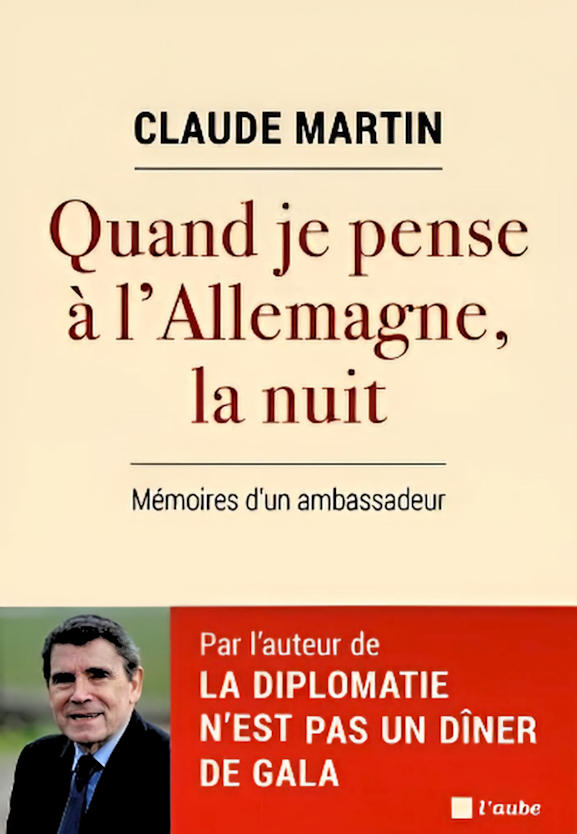
Claude Martin was France’s ambassador to Germany from 1999 to 2007. But long before holding that post, he had already been a quiet witness to it — a young diplomat in Bonn in the 1960s, a member of the Quai d’Orsay’s “Centre d’analyse et de prévision” in the 1970s, a deputy secretary-general in the 1990s. In his memoirs, Quand je pense à l’Allemagne, la nuit (L’Aube, 2023), he recounts, scene after scene, six decades of the same German reflex toward Washington — a reflex that runs through every government, every political color, and that no chancellor, not even the most Gaullist-compatible, has ever truly broken. What Bush was opening at Mainz in 1989 without naming it, Claude Martin had seen coming, patiently, for thirty years already.
The Essentials
- As early as the beginning of the 1960s, young Claude Martin perceived a generational fracture in Germany: a rising generation that “believed only in American protection,” against the Gaullist-Adenauerian camp still attached to Franco-German independence.
- The 1963 preamble, which drained the Élysée Treaty of its Gaullist substance, is recounted from the inside: the Americans demanding the insertion of a clause of submission to NATO’s rules, de Gaulle furious that anyone would dare dictate the content of a bilateral agreement.
- As early as 1973, Kissinger’s attempt to “globalize” the transatlantic relationship ran up against a structural divergence: Germany, anxious not to lose the American “umbrella,” was receptive to it; France rejected it.
- At the Franco-British summit in Saint-Malo in 1998, European defense was built without Germany, which stayed on the sidelines — the exact opposite of the leadership dynamic it claims today.
- Claude Martin himself situates, in 2017-2018, the definitive breaking point of the Franco-German motor, at the precise moment when the Bundeswehr chose overwhelmingly to buy American equipment.
Contents
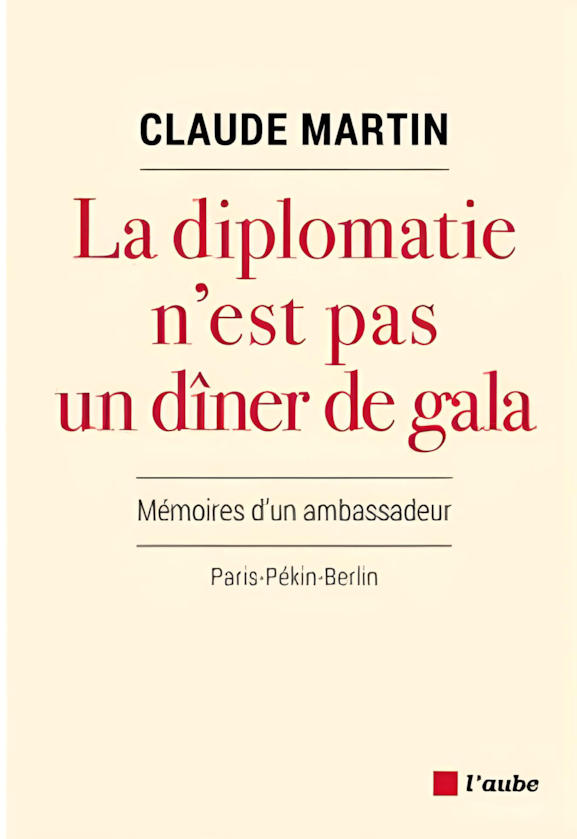
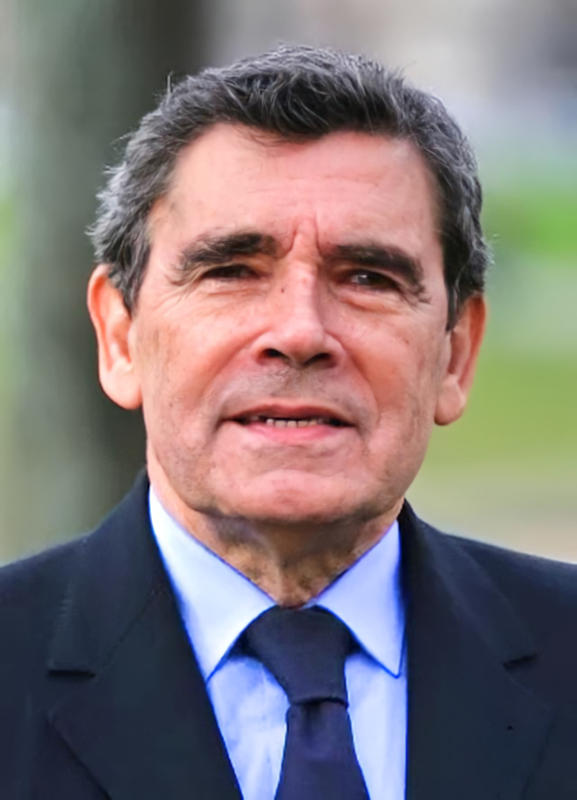
Photo © L’Aube Editions
1. A Friend Named Georg
At the very beginning of the 1960s, young Claude Martin debates, on a café terrace, with a German friend he calls Georg. The conversation turns on the rapprochement sought by de Gaulle and Adenauer, and on whether the other members of the Atlantic Alliance — the United States chief among them — would have any say over its pace and terms. Claude Martin bristles at the idea that a third power could claim any right of oversight over a bilateral relationship between two democratically elected leaders. Georg, more world-weary, tells him the old chancellor doesn’t have long left, and that the rising generation in Germany no longer believes in anything but American protection — a view, he adds, that every German officer at SHAPE would confirm.
The scene seems slight. But it dates, with almost clinical precision, the moment when absolute Atlanticism took hold in the generation of Germans about to inherit power — two years before the crisis over the Élysée Treaty would even break into the open.[01]
2. The 1963 Preamble, Seen from the Inside
A few months later, Sciences Po invites Ambassador Roland de Margerie, one of the architects of the Franco-German treaty negotiations, to speak to students about his experience. Claude Martin, in the audience, hears him defend the idea of a “special link” between France and Germany within the Atlantic Alliance itself — a cautious formula, but one that already betrays the difficulty of the moment. The negotiation is in fact entering its most delicate phase: the Americans, furious, are demanding the insertion into the text of a clause reaffirming that both countries remain NATO members bound by its rules. De Gaulle rebels at the idea that a foreign power could dictate the content of a bilateral Franco-German agreement.
The outcome of this battle is well known: the preamble passed by the Bundestag in June 1963 would drain the treaty of its Gaullist substance, mere months after its signing at the Élysée. Claude Martin’s testimony, added to what the archives of the era already documented, confirms that American pressure on this exact point was known, discussed, and dreaded within the corridors of the Quai d’Orsay well before the blow actually fell.[02]
3. 1973, the Umbrella Already Named
Ten years later, Claude Martin joins the newly created “Centre d’analyse et de prévision” under Foreign Minister Michel Jobert. The subject closest to Jobert’s heart is the Euro-American relationship. Henry Kissinger has just proclaimed 1973 the “Year of Europe” and proposes a new “Atlantic Charter,” meant to bundle diplomacy, defense, trade, currency, and energy into a single, all-encompassing negotiation among allies. Claude Martin notes that the proposal, in reality, amounts to asking European allies to pay in economic concessions for American military protection.
The reaction of the two capitals, he observes, diverges sharply: Germany is receptive, “anxious not to lose the American umbrella”; France firmly refuses to tie its trade negotiations to its security policy, which it largely provides for itself. The word “umbrella” is already there, in 1973 — fifty years before it resurfaces in every commentary on Germany’s post-2022 rearmament.[03]
4. Schmidt, Giscard, and Dependence as a Permanent Condition
In 1977, Chancellor Helmut Schmidt returns dissatisfied from an international meeting on European defense. Claude Martin describes him frustrated that nothing in France’s proposals — including an offer to deploy French neutron bombs on German soil — can compensate for what really matters: Germany’s structural dependence on its American protector, which limits its room for maneuver on every strategic question. Nothing Giscard can offer, in Schmidt’s eyes, rivals the protection provided by the great American ally.
A Social Democratic chancellor, in the middle of détente, thus already articulates exactly the same diagnosis that structures today’s debate over European strategic autonomy: German dependence on Washington is not an accident of recent history — it is a continuous condition spanning half a century.[04]
5. Reunification and a Border Locked Down in Haste
In the autumn of 1989, as the Wall has just fallen, Claude Martin takes part in the meetings where French diplomats — François Scheer, Bertrand Dufourcq, Gabriel Robin — worry about Kohl and Genscher’s maneuvers to present their partners with a fait accompli. The questions raised then foreshadow exactly those in your Mainz dossier: could a reunified Germany remain in NATO? Should one fear, instead, some form of neutralization of German territory demanded by Moscow?
François Mitterrand, haunted by the memory of the Danzig Corridor, makes an official visit to East Berlin as early as December 1989 — a gesture many misunderstood at the time — for the sole purpose of locking in, before it was too late, East Germany’s recognition of the Oder-Neisse border with Poland. This is a fresh, independent testimony, apart from the British archives already cited in “Europe at Germany’s Hour,” confirming just how widely Mitterrand’s foresight about the risks of reunification was shared, in real time, across the entire French diplomatic apparatus.[05]
6. Saint-Malo, or European Defense Without Germany
In December 1998, Hubert Védrine and Britain’s Robin Cook secure approval from Chirac and Blair, at the Saint-Malo summit, for a founding text: the European Union must be able to act militarily on an auto-nomous basis, including by drawing on NATO’s own assets. This decisive step is taken without Germany, which stays on the sidelines — its defense minister at the time, surrounded by generals Claude Martin describes as unconditionally “NATO-minded,” has no wish to take part. Schröder, piqued at not having been consulted, sees it as a maneuver hatched behind his back.
Védrine confides to Claude Martin the lesson he, Cook, and Fischer draw from Europe’s failure in Bosnia: the French, Germans, and British had all let themselves be manipulated by the warring parties, “until the United States finally stepped in to play the arbiter.” This is proof, as early as 1998, that Europe’s reflex in the face of its own powerlessness has always been to wait for American arbitration — the very same reflex that has no safety net left today, at the precise moment Washington is withdrawing.[06]
7. The Breaking Point, 2017-2018
Claude Martin himself identifies, with rare clarity, the moment the Franco-German engine stops turning for good. Despite Emmanuel Macron’s efforts to relaunch the relationship after his election, joint armament projects stall because, as he puts it bluntly, the Bundeswehr dreams of nothing but American equipment. France watches, without intervening, as Germany struggles alone against American pressure over the Nord Stream pipeline and over its auto industry, already under fire from Trump’s tariffs. His conclusion fits in one line: well before the Zeitenwende, it was already every country for itself.[07]
Claude Martin ends his book on a sentence that could just as easily close this article: “I had delivered my testimony. It could end there.” Ours, on this particular subject, is only just beginning.
Joël-François Dumont
Notes
All notes below refer to Claude Martin, Quand je pense à l’Allemagne, la nuit, Éditions de l’Aube, 2023.
[01] On the scene with “Georg” and the generational fracture in Germany over American protection, at the turn of the 1960s.
[02] On Roland de Margerie’s talk at Sciences Po and American pressure during the final negotiation of the Élysée Treaty, late 1962-January 1963.
[03] On Henry Kissinger’s proposed “Atlantic Charter” of 1973, and Germany’s receptiveness contrasted with France’s refusal.
[04] On Chancellor Helmut Schmidt and Germany’s dependence on its “American protector,” 1977.
[05] On the debates at the Quai d’Orsay and François Mitterrand’s visit to East Berlin, December 1989.
[06] On the Franco-British Saint-Malo summit and Hubert Védrine’s account, December 1998.
[07] On the observation of “every country for itself” between France and Germany, and the American orientation of the Bundeswehr, 2017-2018.
See also:
- « Sechzig Jahre gewählte Vasallentreue (1) » — (2026-0913)
- « Soixante ans de vassalité choisie (1) » — (2026-0913)
- « Sixty Years of Chosen Vassalage (1) » » — (2026-0913)
Decryption — When I Think of Germany, and Not Only at Night…
France has always known how to appoint, in Berlin as in London, exceptional ambassadors — men and women who left their mark on the post through sheer charisma or human quality, far beyond technical competence alone. Claude Martin left, on departing Berlin, a void that many felt. His worthy successor today, François Delattre, is cut from the same cloth. It should be added, to properly measure the task facing each of them, that Claude Martin, on his arrival, had to rebuild a Franco-German relationship badly deteriorated by time. The same challenge has faced his successor since his own arrival in 2022 — who, against all odds, strives to maintain that privileged link, just as he did throughout his career.
Unlike the diplomats, for the past three or four years French military officers have stopped hiding, among themselves, their disillusionment with Germany — despite a very real fraternity of arms in the field, despite joint projects underway. But those projects remain limited, both in scope and ambition. The French army long counted its Germanists among its ranks; it barely counts any today. There is no longer any reason to count on Germany for major joint military programs — a conclusion the facts on the ground were already forcing four or five years ago. When one hears Dassault’s CEO speak as he did once again before the National Assembly after the collapse of the FCAS fighter-jet program, anyone who thinks they know the subject knows he is right. Claude Martin’s testimony, reaching all the way back to the 1960s, only confirms, with the depth of an additional half-century, what direct observation had already revealed.
One figure alone is enough to measure the scale of the abdication: across sixteen years as chancellor, Angela Merkel scarcely concerned herself, ever, with defense or security. That vacuum, Germany now claims it can fill overnight, by demanding leadership of the continent’s armed forces. What Bush was opening at Mainz in 1989 without naming it, a French ambassador had already seen the outlines of thirty years earlier — and readers curious to learn more about what this means today will not have to wait long: a second piece, continuing this one, is due out tomorrow.