“I’m growing tired of writing about Arabia and Yemen because I feel like I’m repeating myself every time“: these were the words Hedy Belhassine used a few days ago when he sent us eight of his pieces written between 2013 and 2022. Far from being a weariness to lament, this sense of repetition is in fact the best proof of how right he has been all along: what Hedy was already observing back then, the news of September 2026 has just confirmed, almost point for point.
The Essentials
- Since 2013, Hedy Belhassine has documented, across his blogs, a single recurring story: a heavily armed but structurally fragile Saudi kingdom, and a Yemen no one has ever managed to subdue.
- For forty years, he has moved closely among most Arab heads of state and accompanied numerous French delegations on official trips.
- 2013: “the overequipped Saudi armed forces would be hard-pressed to operate without the help of their foreign instructors.”
- 2015: without its auxiliaries, the Saudi army — the world’s fourth-largest military budget — is nothing but “a paper tiger.”
- September 2017: Hedy predicts MBS will win his imperial bet — “at least, as long as Donald Trump occupies the White House.” Nine years later, “Thank You, Donald” documents precisely this dependency.
- 2019: the Patriot and THAAD shields, purchased for $15 billion, “saw nothing coming” during the attack on Abqaiq.
- Aden, 1986: a local civil war, an early warning sign of the USSR’s collapse four years later. USS Cole, 2000: a prelude, eighteen months ahead of schedule, to September 11th. Yemen as the world’s seismograph.
- 2019: Salvator Mundi, a $450 million painting of Christ bought by MBS — later vanished aboard his yacht.
- Not all predictions came true: in 2022, Hedy announced MBS’s imminent fall. That is precisely what makes the whole body of work credible.
Contents
by Joël-François Dumont | Paris, September 20, 2026.
A Correspondent of Chaos, Ahead of His Time
There are observers who follow the news. There are others, rarer, who follow a single story — for years, sometimes decades, never letting go, until the same names, the same mechanisms, the same fragilities return, again and again, under a different date. Hedy Belhassine belongs to this second category.
This is not the view of a distant observer. For forty years, Hedy Belhassine has crossed paths with most Arab heads of state, accompanied numerous official French delegations on their travels, and sat at the tables where major contracts between France and the Arab and Gulf countries were negotiated. Few French observers know Yemen and Arabia this closely, and for this long — not from a desk in Paris, but from inside the very relationships that, precisely, took shape where he writes. He has belonged to this Arab world since childhood, a world he never had to learn from the outside.
The Man Behind the Pen
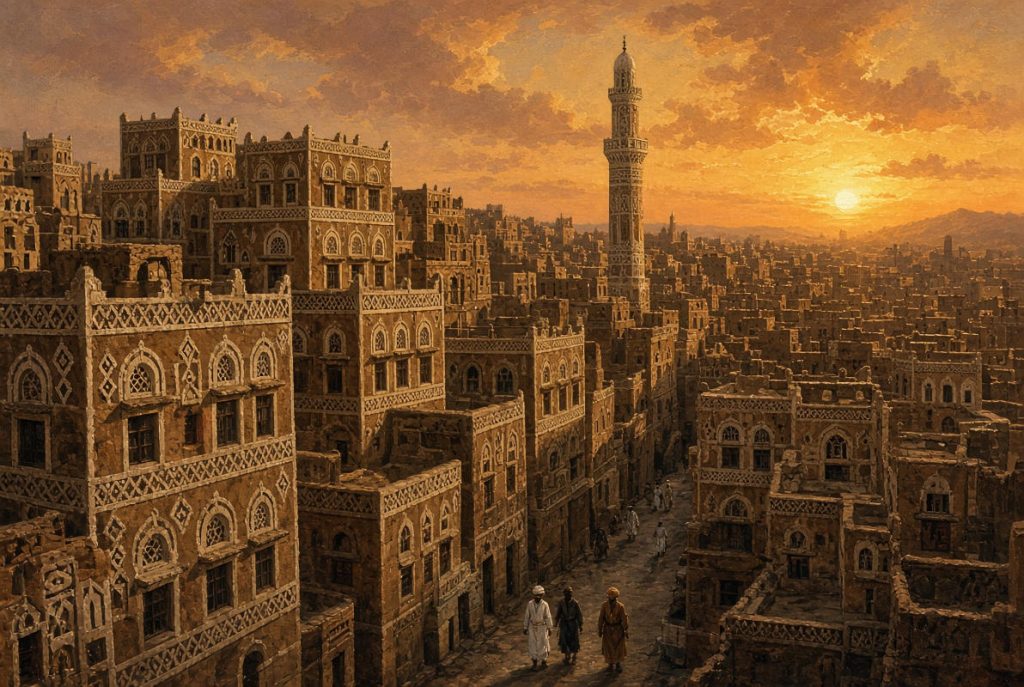
Hedy speaks little, but he listens — a rare quality in someone who has crossed paths with so many heads of state. His culture is not merely literary: it is the culture of the entire world, of the way men and women live, farm their land, and invent their customs from one continent to another.
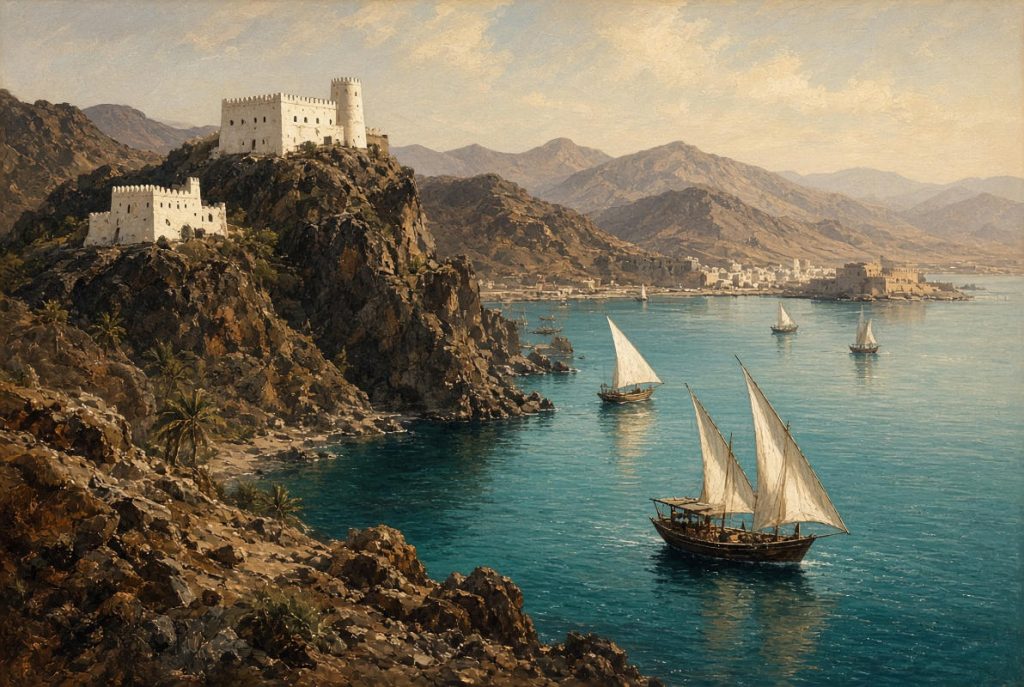
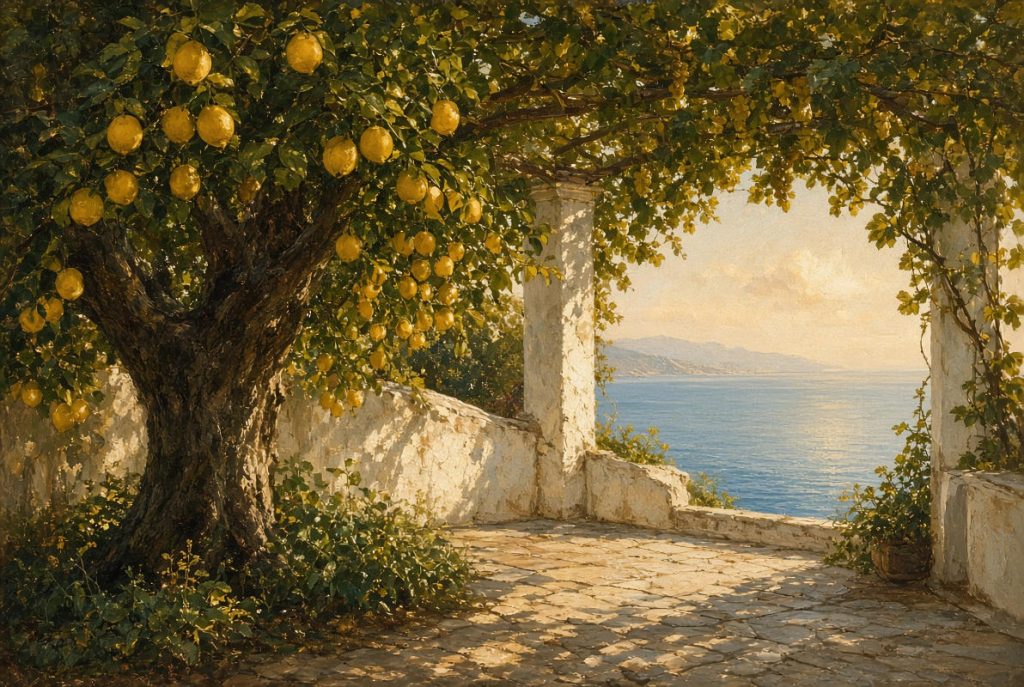
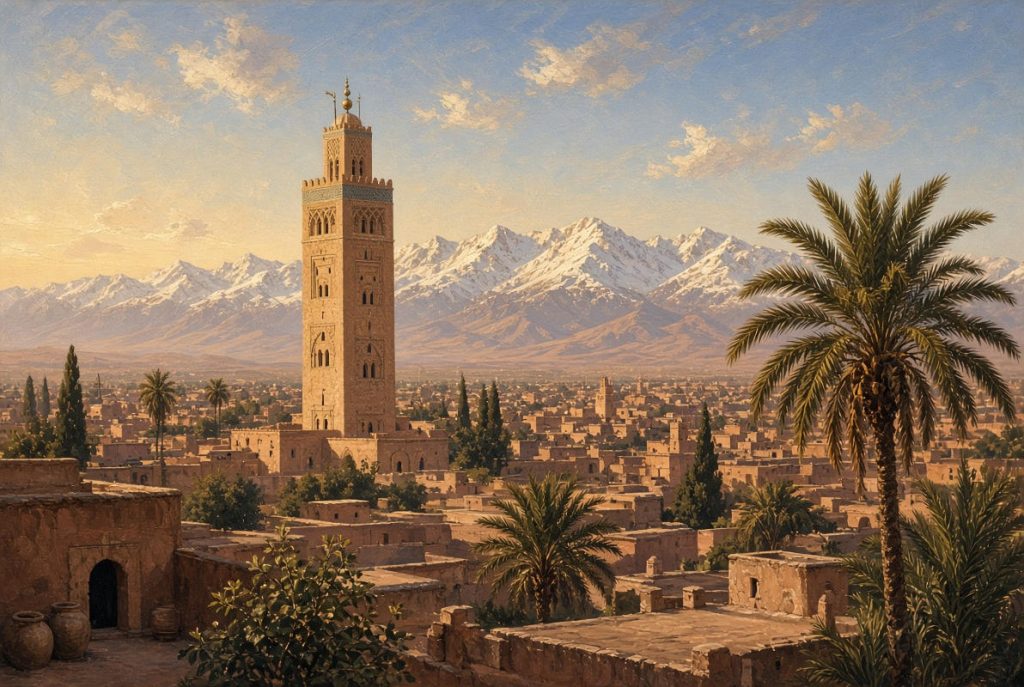
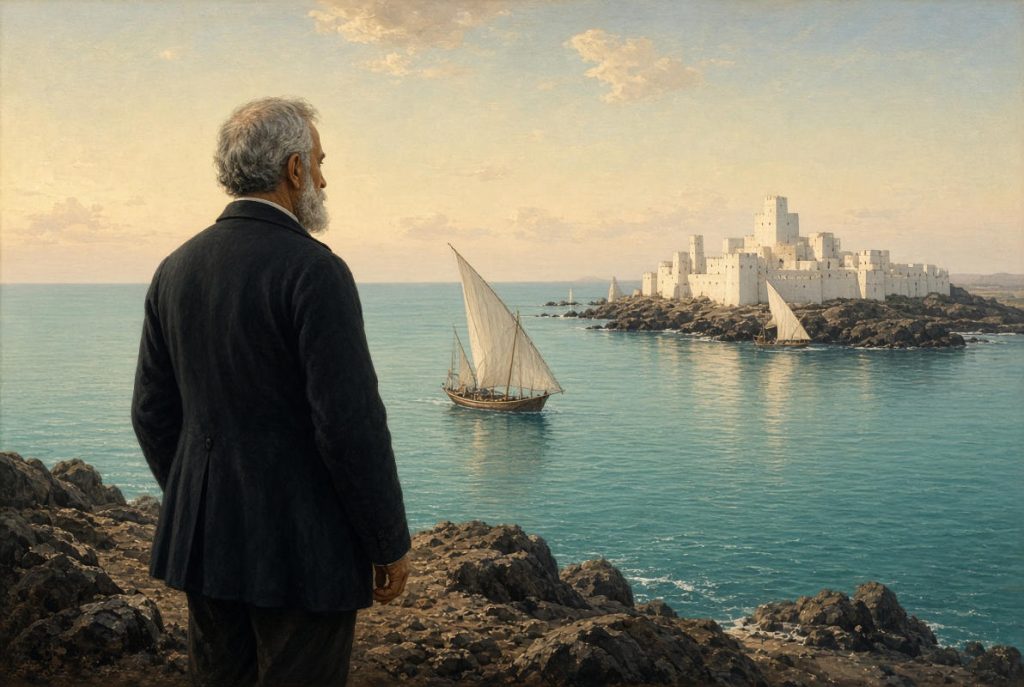
He carries a visceral aversion to dictatorships, whatever their stripe — he is a man of a single loyalty. His judgment of the Arab world, which he nonetheless knows better than almost anyone, remains severe and selective: apart from sweet Djerba, Morocco, and Oman, no country, however modernized, finds favor in his eyes — that is the whole flavor of his piec “There, the Air Is So Soft It Keeps You From Dying“. Behind his understated manner lies a wit he dispenses with art rather than displaying it. And if our site had a food section, he would be its chef: few know, as he does, how to conjure such memorable flavors from a simple stovetop.
A Memory, Too
It was morover at Ravensbrück, on the 80th anniversary of the camp’s liberation, that Hedy wrote in 2025 one of his most personal pieces — “A Morning at Ravensbrück.”

Since 2013, he has documented, across his blogs (Mediapart, then his own site HYB), a single recurring story: that of a heavily armed but structurally fragile Saudi kingdom, of a Yemen no one has ever managed to subdue, and of an American guarantee that, even then, hinged on one man rather than on a treaty. Rereading these eight texts today in light of what we documented this very week — the 300 Saudi strikes in September, the F-15 shot down near Marib, Trump’s refusal to step in against the Houthis — the sensation is unsettling: none of this is really new. It already had a name, a date, an author.
Two of these eight pieces are already in our archives from their original publication — “Yemen, the Blood of Weapons, the Tears of Words” (2018) and “Mohammed bin Salman on the March Toward an Arabian Empire” (2017). The other six, until now confined to his personal blogs, deserve today to be republished here, on their original dates, for what they say about the consistency of a gaze.
First Thread: The Paper Tiger
As early as 2013, in “Saudi Arabia and Israel, the Devil’s Temptation,” Hedy noted that “the overequipped Saudi armed forces would be hard-pressed to operate without the help of their American, British, Pakistani, or French instructors.” Two years later, in “The War of Happy Arabia” (2015), the diagnosis sharpens: without its auxiliaries, the Saudi army — the world’s fourth-largest military budget — is nothing but “a paper tiger.”
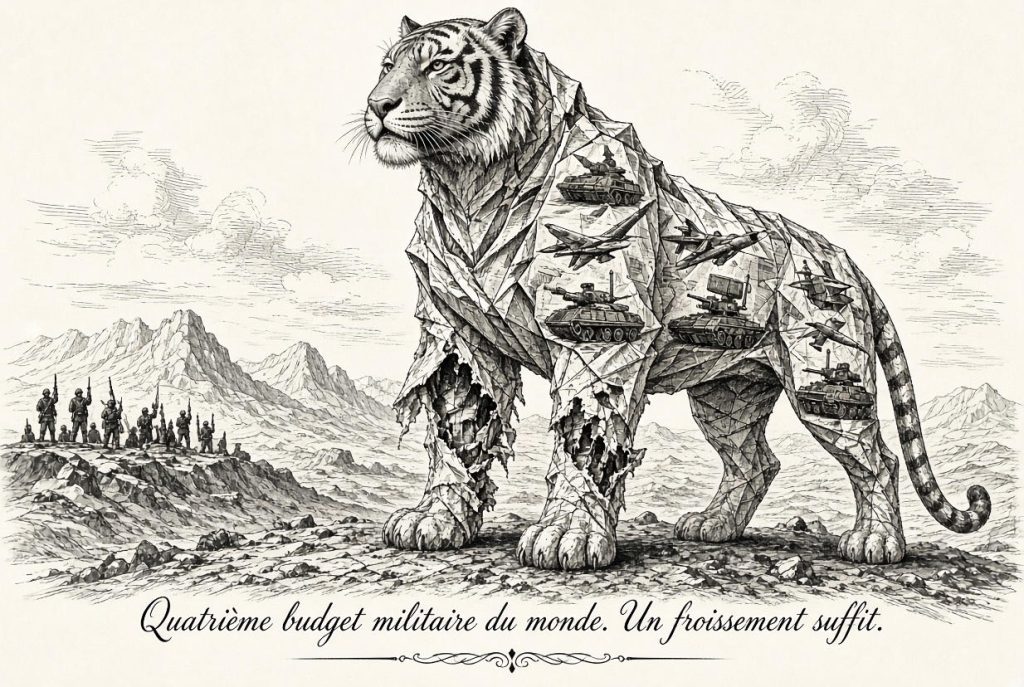
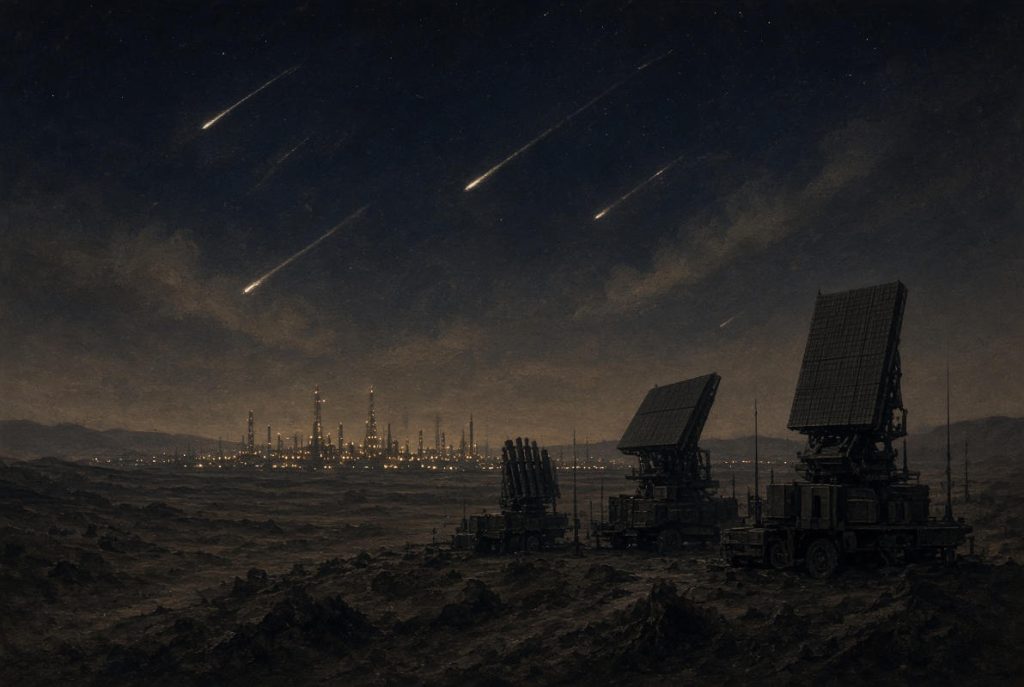
In 2019, in “How Yemen Defeated Trump and MBS,” he documents, backed by a CSIS report, that the Patriot and THAAD shields, purchased for fifteen billion dollars, “saw nothing coming” during the attack on Abqaiq.
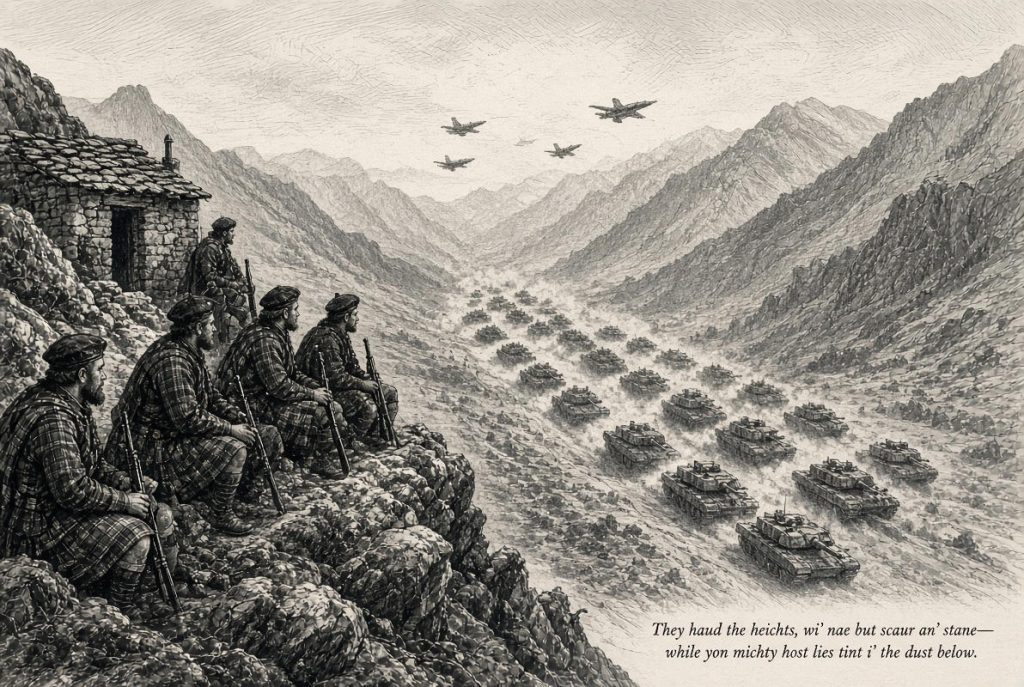
This very week, we reported that American Patriot and THAAD stockpiles are more than 60% depleted by the Iranian war — and that Saudi Arabia, this time, had to conduct 300 strikes alone against the Houthis, losing an F-15 near Marib in the process. The paper tiger of 2013 has still not changed its nature.
Second Thread: A Man, Not an Alliance
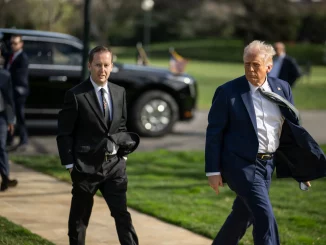
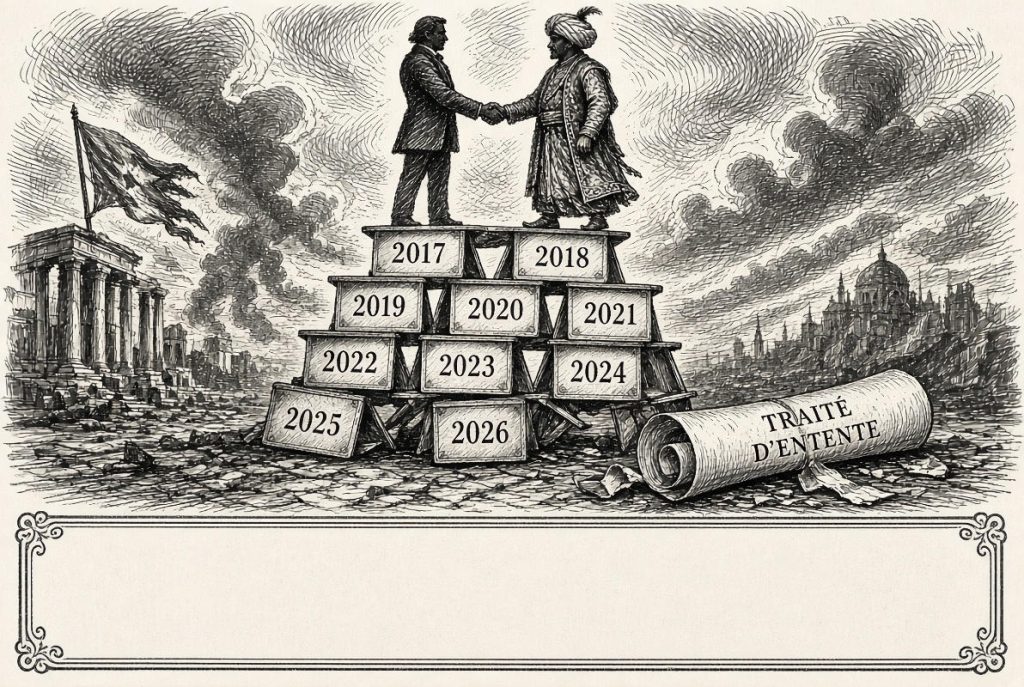
This is perhaps the most prescient line in the whole series. In September 2017, concluding his portrait of Mohammed bin Salman, Hedy wrote that the crown prince would win his imperial bet — “at least, as long as Donald Trump occupies the White House.” Nine years later, our own dossier “Thank You, Donald: The Chaos That Reshuffled the World’s Cards” documents precisely this personal dependency: MBS’s public humiliation in Miami in March 2026, the American refusal in September to back him against the Houthis, the total absence of any institutional guarantee behind the relationship. Hedy saw it coming without knowing either Miami or 2026 — simply by observing that no alliance built on one man survives that man.
Third Thread: What We Already Knew
On March 6, 2015, three weeks before Arabia launched its offensive, “Yemen, Tomorrow’s Latest News…” already described every piece then falling into place: the Houthi takeover of Sana’a, the government’s flight to Aden, the budding alliance with Tehran. On April 1 of that same year, “In Yemen, the Sky May Fall on Our Heads” introduced, for the first time, the comparison to Asterix and the indomitable Houthis — a motif that would return, like a signature, in the 2019 text on Abqaiq.
Not all of Hedy’s predictions came true in the same way — in 2022, in “Yemen: Toward the End of the Seven-Year War?” he announced an imminent Saudi collapse and the end of MBS’s ambitions, which, as we now know, never came. This is precisely what makes the whole body of work credible rather than suspect: a man who has followed a story for thirteen years with honesty, not an oracle who claims to always be right.
Fourth Thread: Yemen as a Seismograph
There is perhaps something even more unsettling than the consistency of his military or political diagnoses. In “Yemen, Tomorrow’s Latest News…” (March 2015), Hedy recounts the 1986 Aden civil war —[01] the guns that started speaking in the middle of a Central Committee meeting, the evacuation of foreigners aboard the British royal yacht and the French Jules Verne — before adding this line: “no diplomat could then have imagined that this tragic episode was one of the first warning signs of the collapse of the Soviet empire. The wall had cracked in Aden before it fell in Berlin four years later.” He performs the same move with the attack on the USS Cole in December 2000: a shock judged local at the time, which was in fact merely the prelude, eighteen months ahead of schedule, to September 11th.
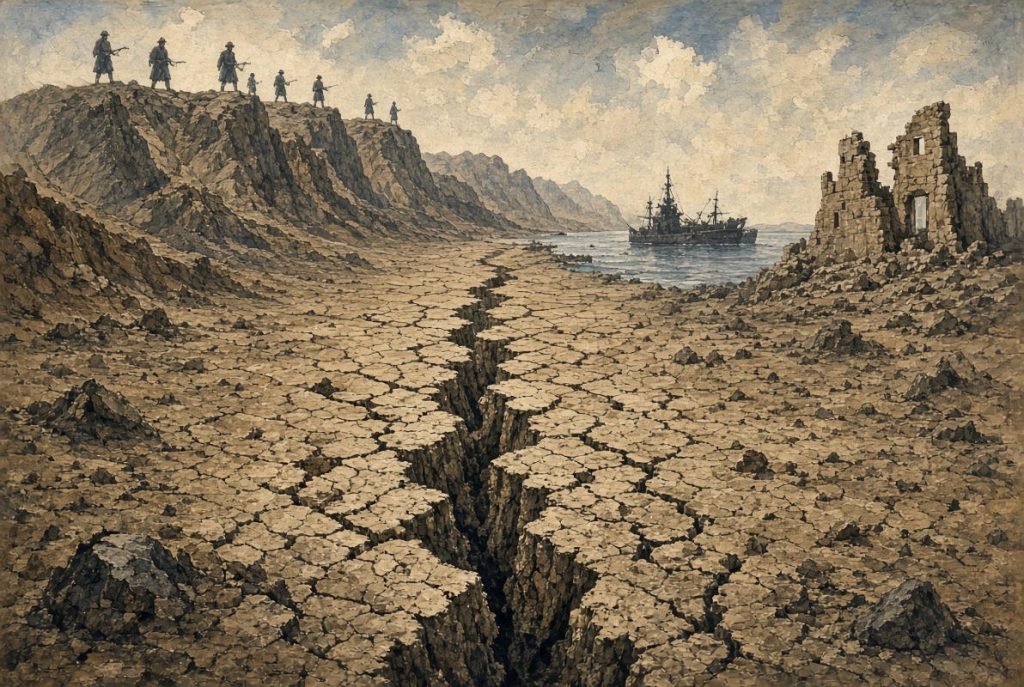
Yemen is therefore not, for Hedy, merely a forgotten stage of the world. It is a place from which the great turning points of history send their first signal — before anyone elsewhere notices. If this thread proves true a third time, the question raised by the ongoing 2026 war is no longer simply “what is happening in Yemen?” but “what, once again, is Yemen warning us about?”
Fifth Thread: The Trophies of Opacity
There is one last thread, more discreet than the others, but one that illuminates a different facet of the same man. In July 2019, in “Ben Salman, Salvator Mundi, and Donald Trump” (already published on this site), Hedy mocked MBS’s purchase, for 450 million dollars, of a painting attributed to Leonardo da Vinci depicting Christ — a Christian icon acquired by “the chief of Khashoggi’s butchers,” who had overnight become a “lover of the arts.” The painting, it would later be revealed, was transferred by night onto the prince’s yacht, the Serene, before disappearing into a Saudi warehouse awaiting a museum that has yet to be built.
[Illustration © European-Security]
This anecdote is not an isolated one: it belongs to a far vaster and well-documented system, that of freeports — high-security warehouses near the airports of Geneva, Luxembourg, Singapore, or Delaware, where the artworks of the world’s greatest fortunes sit, sometimes for decades, without ever paying VAT, customs duties, or being subject to any tax declaration — so long as they remain, legally, “in transit.” MBS’s painting did not, strictly speaking, land in one, but the spirit is the same: a fortune that buys trophies without always understanding their meaning, and that has organized, elsewhere, its own lasting opacity.
The military paper tiger has its financial mirror: a power that buys itself symbols — a painting, an empire, an alliance — none of which, in the end, withstands the test of time or of the gaze turned upon it.
Why Republish Them Now
We are republishing these six texts on their original dates, under the “Hedy Belhassine” section, with the source credit that has always accompanied Hedy’s contributions to this site. Nothing will be altered — not even the forecasts that did not hold, because the honesty of an archive lies precisely in leaving it untouched after the fact.
What we are adding, however, is this thread that a retrospective reading allows us to see: thirteen years of consistency, a paper tiger that has never changed its substance, an alliance that never rested on anything but one man, and a Yemeni people whose staying power, time and again, no one had foreseen.
Joël-François Dumont
[01] The French ambassador who had just left his post a few weeks earlier was none other than Commandant Charles Jeantelot, Commander of the Legion of Honor, a veteran of the 5th Moroccan Rifle Regiment on the Colmar front (1944) and later in Indochina (1951–1954); three combat wounds, three escapes, three citations. An exceptional Arabic-speaking diplomat who had served in Tripoli, Jeddah, Moroni, Tananarive, Oman, and Khartoum, he was universally respected for his boldness and outspokenness.
He was succeeded by Ambassador Pierre Audebert, likewise a legendary diplomat, a former Resistance fighter who had volunteered for the Free French 22nd North African Marching Battalion. In Aden, leading his team, he pulled off the now-forgotten feat of evacuating 81 French nationals by sea at night, with the help of the British SAS, during the civil war of January 1986. (Source: Hedy Belhassine)
These six texts by Hedy Belhassine mentioned here have been republished separately, on their original publication dates:
- “Saudi Arabia and Israel, the Devil’s Temptation” — (November 21, 2013)
- “Yemen, Tomorrow’s Latest News…” — (March 6, 2015)
- “In Yemen, the Sky May Fall on Our Heads” — (April 1, 2015)
- “The War of Happy Arabia” — (May 26, 2015)
- “How Yemen Defeated Trump and MBS” — (September 28, 2019)
- “Yemen: Toward the End of the Seven-Year War?” — (February 2, 2022)
Decryption: The Art of Making People Laugh Without Ever Lying
Coluche would have loved Hedy Belhassine’s Yemen. Thierry Le Luron, no doubt, would have dreamed of impersonating his princes. For there is, in Hedy, a very French art of the killer line — one that says everything while appearing to say nothing — an art once thought reserved for cabaret stages, which he has methodically applied, for thirteen years, to one of the bloodiest files in the world.
Who else would have dared to sum up thirty-five months of bombing as “the stick and the carrot, to tame the donkeys”? Who would have thought to offer, in a single sentence, a $200,000 Bentley to every Saudi pilot “traumatized by having incinerated his Yemeni brothers” — without ever specifying which of the two, the trauma or the gift, is the more obscene? Who, finally, would have dared write that the army of the world’s fourth-largest military budget is, without its auxiliaries, nothing but “a paper tiger” — a phrase so accurate it took thirteen years to stop being true, and still hasn’t?
Hedy’s humor is never gratuitous. It is the vehicle, not the goal — a way of delivering an unpleasant truth without ever seeming to hammer it home. It is humor that triggers laughter first, and then, a second later, an uneasy silence: the one you feel upon realizing you just laughed at something that should make no one laugh. That, perhaps, is the real talent — and it is a rare one.
Hedy Belhassine’s columns on Saudi Arabia and Yemen (All his columns):
- « Le parc des loisirs de Macron et Ben Salmane » — (2026-0902)
- « “Qui perd gagne” — Comprendre le sentiiment de revanche de Trump » — (2025-0410)
- « Trump et les damnés de la terre » — (2025-0201)
- « Yémen: vers la fin de la guerre de 7 ans ? » — (2022-0202)
- « Comment le Yémen a vaincu Trump et MBS » — (2019-0928)
- « Là-bas l’air est si doux qu’il empêche de mourir » — (2019-0830)
- « Ben Salman, Salvator Mundi et Donald Trump » — (2019-0711)
- « Mohamed Ben Salman d’Arabie chez Macron » — (2018-0407)
- « Yémen, le sang des armes, les larmes des mots » — (2018-0121)
- « Opérations mains propres en Arabie » — (2017-1126)
- « Arabie saoudite, la théorie du complot » — (2017-1111)
- « Mohamed Ben Salman en marche vers l’empire d’Arabie » — (2017-1109)
- « Trump d’Arabie » — (2017-0530)
- « Le crépuscule de l’Arabie saoudite » — (2016-1223)
- « De Fillon à Ben Salem, le combat du salafisme à Paris, Djakarta et Tunis » — (2016-1125)
- « Pierre Conesa, Dr Saoud et Mr Djihad » — (2016-0919)
- « Arabie Saoudite, la mise au pilori des Ben Laden » — (2016-0506)
- « Arabie salafiste: Valls a raison, Trump n’a pas tort » — (2016-0412)
- « Arabie Saoudite, la stratégie du Mistral perdant » — (2016-0222)
- « La guerre de l’Arabie heureuse » — (2015-0526)
- « Au Yémen, le ciel risque de nous tomber sur la tête » — (2015-0401)
- « Yémen, les dernières nouvelles de demain… » — (2015-0306)
- « La révolution arabe aux portes de la monarchie saoudite » — (2014-0917)
- « L’Arabie Saoudite et Israël, la tentation du Diable » — (2013-1121)
- « La maison de Raimbaud à Aden » — (2013-0819)